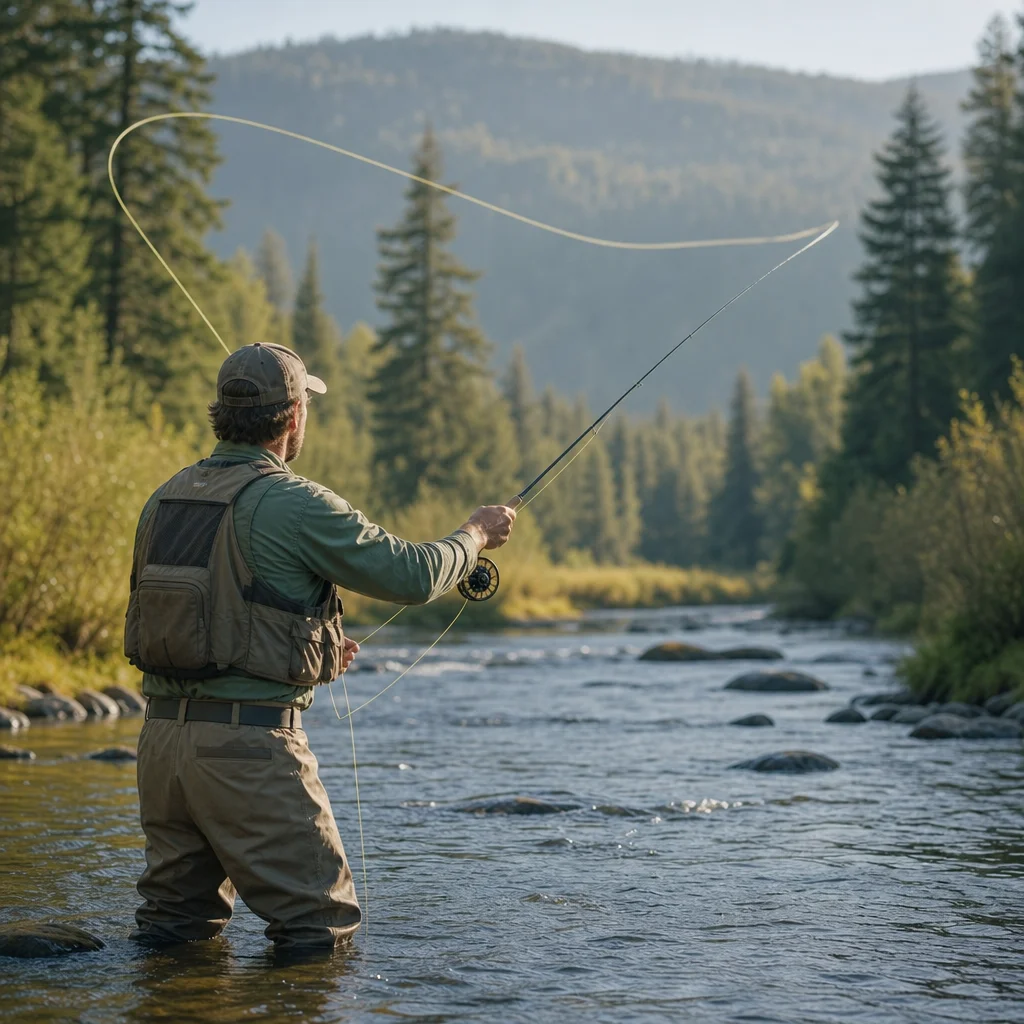
When fast current meets softer water, trout often gather where food and shelter overlap rather than anywhere along the bank. I’ll show you how to read that seam, choose its depth and drift lane, and fish the most promising water first.
Read article →
I’ll compare the river positions trout commonly use as freestone flows rise after rain, from soft banks to current seams and flooded margins. You’ll learn what to observe first, where food is likely moving, and how to balance productive water with safe wading.
Read article →
A cold front can rearrange a warm river without making trout vanish. I’ll show you how to check temperature, current, depth, cover, and feeding signs in a reliable bank-to-riffle search.
Read article →
Cloud cover can either spread trout through a run or make them harder to read; I’ll show you how to adjust your search, approach, and fly choice as clear water loses its bright afternoon glare.
Read article →
Extra false casts can improve control—or quietly cost you distance, energy, and a wary trout. I’ll show you when to keep the line moving, when to deliver the cast, and how to replace unnecessary air time with cleaner choices.
Read article →
A heater may dry wet waders quickly, but gentle airflow usually protects them better. I’ll explain the first steps for drying breathable waders inside and out, avoiding heat damage, and storing them so the next fishing trip starts without a mildew surprise.
Read article →
Cold mornings and mild afternoons reward clothing that can change with the day rather than a heavier load. I’ll show you how to build a compact layering system with rain protection and accessible storage for shoulder-season trout fishing.
Read article →
I’ll compare waterproof packs, ordinary fishing packs with dry bags, and lighter water-resistant options so you can match access, durability, and cost to your usual bank, wade, or boat fishing conditions.
Read article →
I’ll clarify what to do with loose fly line, leader, and tippet after a break-off, from recovering material safely to disposing of what you can’t retrieve. You’ll also get a quick cleanup routine that reduces wildlife-entanglement risks without turning a missed trout into a shoreline excavation.
Read article →
A perfect-looking drift can still fail when the fly, leader, approach, depth, or timing is wrong for the trout. I’ll show you how to isolate one variable at a time and turn refusals into useful information on clear, technical water.
Read article →