Where Do Trout Go When a Cold Front Hits a Warm-Weather River?
A cold front can rearrange a warm river without making trout vanish. I’ll show you how to check temperature, current, depth, cover, and feeding signs in a reliable bank-to-riffle search.
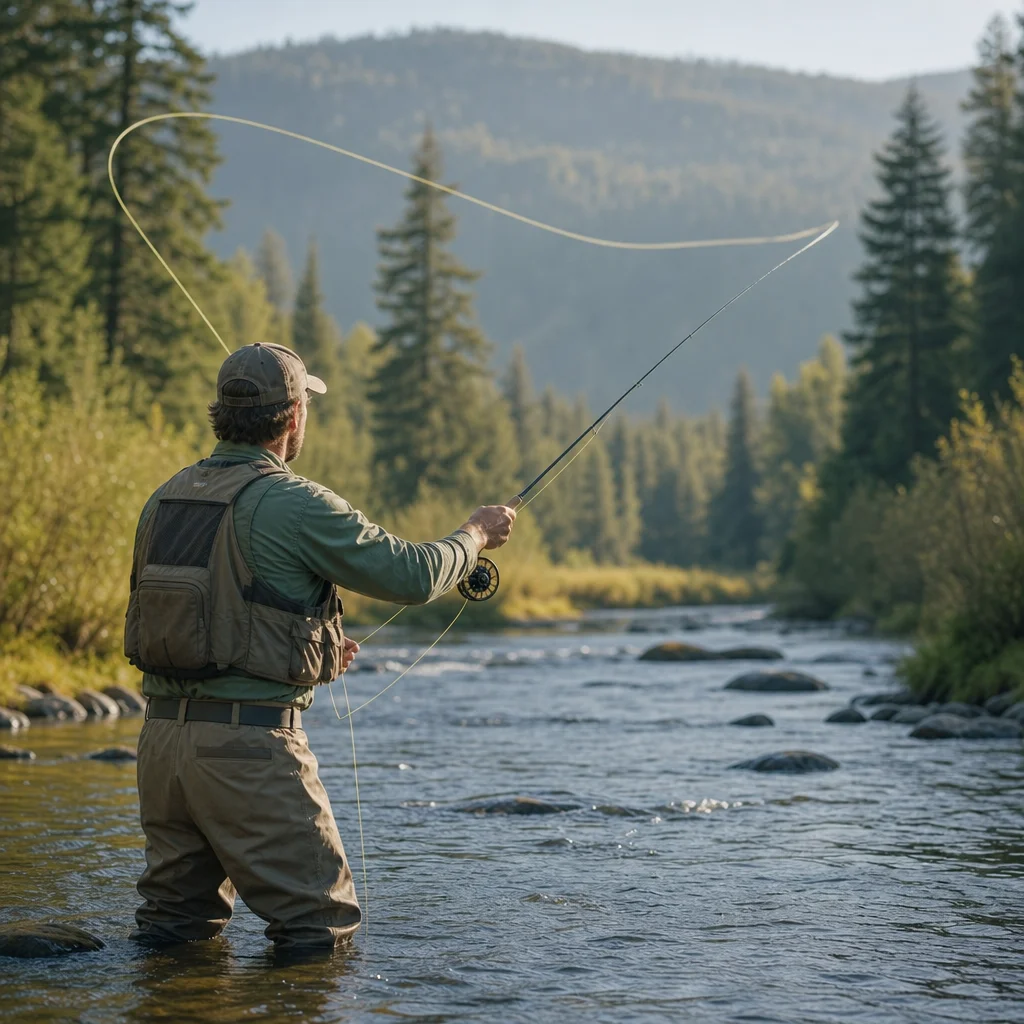
A cold front arrives, the wind changes, and the trout that were rising in familiar water seem to disappear. The instinct is often to cover more river or change flies repeatedly. A better first move is to assume the fish have adjusted their position—not abandoned the river.
In a warm-weather river, an abrupt weather change can alter several things at once: surface temperature, insect activity, water level, wind exposure, and the speed or clarity of tributary inflows. The most dependable response is to read those changes in sequence and look for trout holding where the river now offers the best combination of food, shelter, and manageable current.
Start with the water, not the weather report
“Cold front” describes a weather change, but trout respond to conditions in the river. Air temperature may drop quickly while the main current remains relatively warm because the river has considerable thermal mass. A brief cool spell doesn’t automatically send trout into deep winter-style holding water.
At the same time, the front may bring rain, runoff, wind, or a change in cloud cover. Those effects can matter more than the air temperature itself. Before deciding where to fish, make a quick assessment of four conditions:
- Water temperature: Has the river actually cooled, or is the change mostly atmospheric?
- Flow: Is the river stable, rising, or falling? Did a side stream add water?
- Clarity: Is the water clear, lightly stained, or carrying suspended sediment?
- Surface activity: Are insects moving, and are trout showing themselves?
If you carry a thermometer, take readings in similar water each time rather than comparing a shallow sunlit edge with a shaded pool. The purpose isn’t to chase a magic number. It’s to notice whether the river is changing and whether the change is consistent from one section to another.
What may change after the front
Trout may leave exposed feeding lanes
Before the front, trout may hold in shallow riffles, slicks, or the heads of pools where food is easy to intercept. A sudden change in light, wind, or flow can make those positions less comfortable. Fish may slide a short distance into softer water while remaining close to the same food source.
Look first beside the familiar feeding lane, not several hundred yards away. The trout may be along the edge of the current, behind a rock, under a cut bank, or just inside the pool rather than in the fastest water.
Trout may favor depth and cover more strongly
If the water cools, rises, or becomes unsettled, depth and structure can become more valuable. Deep slots, undercut banks, log edges, boulder shadows, and the lower ends of pools give trout a way to reduce exposure while still reaching passing food.
This doesn’t mean every trout moves to the deepest hole. Deep water without food or reasonable current is often unproductive. Think in combinations: depth beside a seam, cover beside a feeding lane, or a slow cushion immediately next to faster water.
Feeding can become brief and localized
A front may reduce visible insect activity, particularly if wind or rain disrupts adult insects on the surface. Trout can still feed, but the feeding window may be shorter or concentrated in a few softer seams.
A quiet surface isn’t proof that fish aren’t eating. It is a reason to watch the water closely and avoid treating a lack of rises as a verdict on the whole river. Nymphing, swinging a small wet fly, or presenting a streamer near cover may make sense when surface feeding has stopped, but location remains more important than rapidly changing patterns.
A reliable bank-to-riffle search sequence
Use this sequence when you arrive at a familiar river after a sharp weather change. It is designed to prevent two common problems: walking past nearby fish and making too many changes at once.
1. Observe from the bank
Spend a few minutes looking before you wade. Note the direction and strength of the wind, the surface texture, water color, visible rises, and any new debris or foam lines. Compare what you see with the river’s normal appearance if you know the section.
Also look for changes in water level. Freshly wetted banks, submerged grass, or unusually strong flow along the inside of a bend can tell you more than the air temperature does.
This pause isn't wasted fishing time. It protects the rest of the outing from a poor first assumption.
2. Check the nearest soft water
Start with water that is easy to overlook: the inside of a bend, the edge of a pool, a shallow shelf beside a deeper trough, or a slow pocket behind a large rock. These areas can become useful when trout no longer want to spend energy in the main push of current.
Fish the near bank carefully before wading. A cold front may change a trout’s position by only a few feet, and your first step can disturb the water you intended to fish.
3. Follow the seam into the pool
Next, trace the boundary between fast and slow water. Seams provide a natural conveyor belt for food while allowing trout to hold with less effort than they would in the center of a riffle.
Pay particular attention to:
- The head of a pool where faster water spreads and slows
- The side of a seam protected by a rock or ledge
- The softer inside edge of a bend
- The tailout, especially where depth remains adequate
- Small depressions between larger stones
Make a few controlled presentations before moving. If the water is clear, vary your angle and keep your line and leader away from the holding area. If it is lightly stained, a closer approach may be possible, but don’t assume reduced visibility makes careless wading harmless.
4. Test the adjacent riffle
After checking the softer water, fish the riffle—but don’t begin with its fastest center. Start at the margins, then work toward the stronger current. Trout may still be in the riffle if food remains available, but they could be holding in the slower pockets within it.
Search for broken water rather than uniform turbulence. A riffle with alternating stones, depth changes, and small cushions offers more likely holding positions than a shallow, even sheet of current.
5. Finish with depth and cover
If the near-bank water, seams, and riffle margins produce no information, move to deeper cover. Fish the protected side of logs, the shadow beneath an undercut bank, and the edges of plunge pools. Use shorter casts and accurate drifts when possible; a front is a poor reason to sacrifice presentation quality.
If you find trout here, look for the nearby route to food. The most useful clue is often not the deepest point itself but the connection between that point and a seam, inflow, or shelf.
Check the river’s changing risks: Before wading farther after rain or a rapid flow change, reassess footing, water level, and the exit route. Cold water, slick rocks, and stronger current can turn a familiar crossing into an unsafe one.
Adjust your presentation in a controlled order
Once you’ve identified a likely holding zone, change one variable at a time. A dependable order is:
- Improve your position and reduce disturbance.
- Adjust the depth of the presentation.
- Change the drift speed or angle.
- Try a different fly category or size.
- Reassess the holding water before moving far.
This order keeps you from blaming fly selection for a location or presentation problem. If your nymph is passing too high, changing to another nymph may accomplish little. If your dry fly lands in the wrong current, a new pattern may simply fail in a different way.
After a front, a slightly deeper presentation may be more useful than a dramatic change in fly size. In clear water, a smaller or less conspicuous offering can help if trout are cautious. In stained water, visibility and movement may matter more. Let the river’s clarity and the fish’s response guide the adjustment.
Common mistakes after a cold front
Assuming the temperature changed everywhere equally
A shallow side channel can cool or warm faster than the main river. A tributary may be noticeably different from the receiving water. Treat each distinct water type as its own small experiment rather than applying one conclusion to the entire section.
Abandoning the riffle too quickly
Some anglers move directly to deep pools after a front. That can work, but it overlooks riffle margins, pocket water, and the softer water immediately below a rapid. Trout often shift within a productive area before leaving it.
Wading through the best evidence
Fresh tracks aren't the only sign of disturbance. A clouded seam, displaced stones, or a sudden lack of activity can result from your approach. Work outward from the bank and fish the water you can reach before entering it.
Chasing a remembered hatch
A hatch that was reliable yesterday may be delayed, shortened, or scattered after a weather change. Insects are useful clues, but don’t let an expected hatch keep you anchored to empty shallow water. Watch what is happening now.
Making too many changes at once
Changing flies, depth, tippet, location, and casting angle together leaves you with no useful feedback. A repeatable process may feel slower, but it builds a better record of what the river is doing.
Make the pattern reliable over time
The long-term advantage of this approach isn't one successful response to one cold front. It is the record you build. After each outing, note a few practical details:
- Approximate air and water conditions
- Whether the flow was rising, falling, or stable
- Water clarity and the presence of tributary color
- The type of water that produced fish or signs of fish
- Whether activity was near the surface or below it
- The time of day and how long the front had affected the river
You don’t need a complicated log. A short note such as “cool wind, stable main flow, clear water, fish moved from riffle center to seam edge” is more useful than a vague statement that the fishing was slow.
Over several outings, you may find that a particular river responds consistently. One section may retain warm water and keep fish in shallow structure. Another may receive cold tributary flow and push trout toward depth. Those local patterns are more dependable than a general rule about all cold fronts.
Your next time on the river
When a cold front hits a warm-weather river, begin close to familiar water and look for small positional changes. Observe from the bank, check soft edges, follow seams, test riffle margins, and then examine deeper cover. Let temperature, flow, clarity, and current speed determine your next move.
Keep your adjustments orderly and record what you learn. A reliable search routine won’t make every front easy, but it will help you spend less time guessing—and more time presenting a fly to the water trout are most likely to use.