Using Shade, Light, and Bank Cover to Find Trout on Bright Days
I’ll explain how bright sunlight shifts trout toward shade, depth, and protective cover, then show you how to build a repeatable bank-to-bank search routine. You’ll learn which shadows deserve attention, how to approach them, and how to avoid wasting casts on attractive but empty cover.
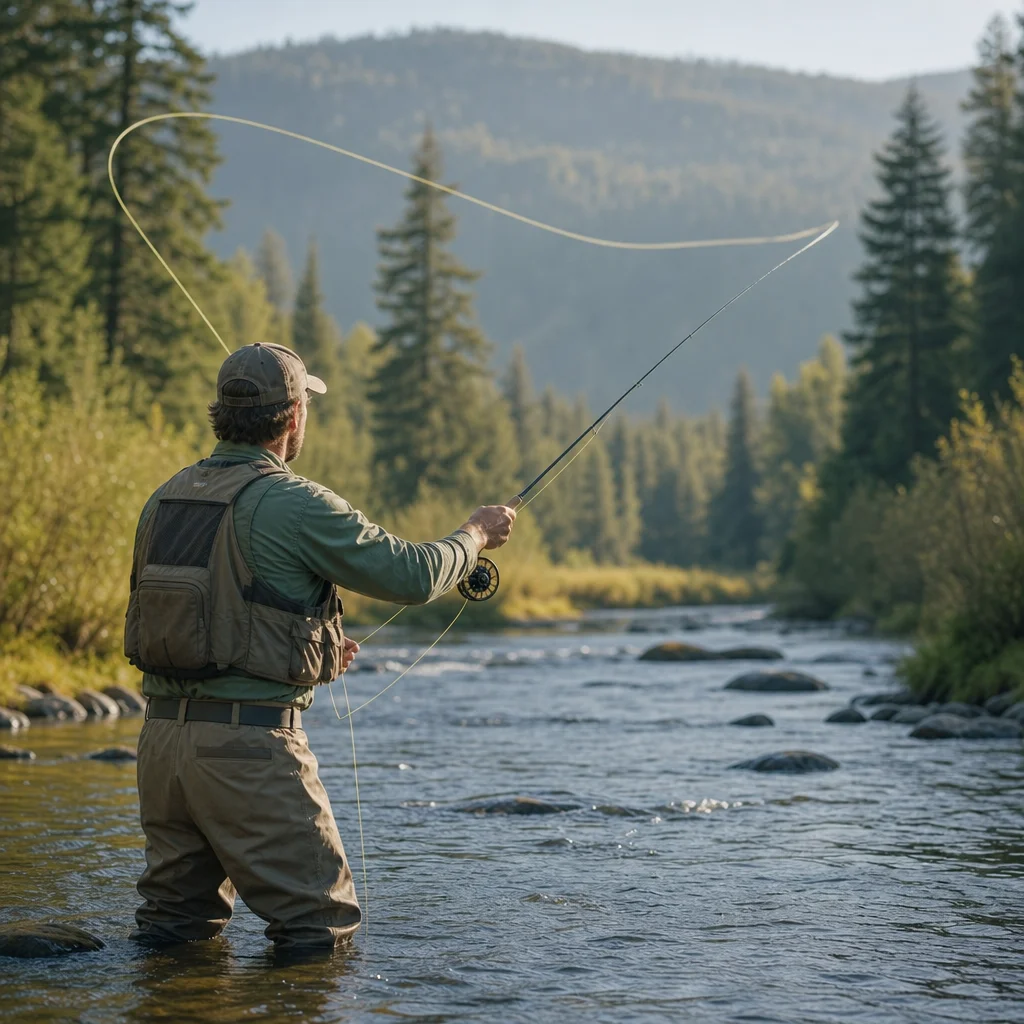
Bright days can make a familiar lowland stream feel suddenly unhelpful. The water looks clear, every rock seems visible, and the trout you found yesterday have apparently filed for relocation. In many cases, they haven’t gone far—they’ve moved toward places that reduce glare, exposure, and the effort required to hold position.
On sunny days, shade and bank cover become useful clues rather than decorative scenery. If you learn to read how light reaches the water, you can narrow your search and develop a dependable routine that works beyond one lucky cast.
Why bright light changes trout location
Sunlight affects trout in several overlapping ways. Clear overhead light can make fish easier for predators to spot, especially in shallow water. It can also make trout easier for you to see, which usually means they can see you just as well. Bright conditions may increase glare at the surface and make open water feel less secure.
Trout don’t necessarily avoid sunlight altogether. They still need suitable water temperature, oxygen, food, and current. But when those basics are available in several parts of a creek, they often favor positions with some protection from above and from the bank.
That protection may come from:
- An undercut bank
- A grass or root overhang
- A fallen branch or log
- A bridge shadow
- A deep slot beside a shallow flat
- A boulder that breaks the surface view
- Shade cast across the current by trees or steep banks
The important point is that shade isn't automatically the fish-holding feature. It is a sign that another useful feature may be nearby. A dark patch over very shallow, slow water might hold nothing. A narrow shadow beside a deeper current seam may be excellent.
Read the light before you read the water
Before making a cast, look at the creek as a changing pattern of light and cover. You’re trying to answer three simple questions:
- Where can trout avoid direct overhead exposure?
- Where can they hold without spending too much energy?
- Where can they feed while remaining close to protection?
Start with the bank closest to you. On bright days, it’s easy to stare at the most visible midstream pocket and overlook the water tucked beneath your own bank. An undercut edge may be dark because it is deep, because the bank blocks the sun, or both. Those differences matter, but all deserve a closer look than bright, featureless water.
Then follow the shadow downstream. The shape of shade changes as the sun moves, and a location that is protected in the morning may be fully exposed later. This gives you a useful way to prioritize water without treating your first impression as permanent.
A dependable habit is to note not only where the shade is, but why it exists. A tree-cast shadow can disappear. A deep undercut remains useful even after the sun moves. Long-lasting structure generally deserves more attention than temporary darkness.
Give undercut banks priority
An undercut bank is one of the best bright-day targets because it can combine depth, overhead cover, and a low-energy holding position. The bank may look like a simple dark line from above, but the trout may be several inches or several feet beneath the visible edge.
Approach these banks carefully. Stay low, keep your movements smooth, and avoid standing directly over the water you plan to fish. On a clear creek, your outline can travel across the surface even when your cast is accurate.
Work the water closest to you first if the bank allows it. A long cast across the creek can cross productive water, spook fish near your feet, and leave the best part of the bank unfished. Cast only as far as needed to place the fly near the edge, current seam, or darker opening.
Look for small variations within the undercut:
- A deeper pocket beneath a shelf
- A root that creates a narrow entrance
- A current line passing along the bank
- A slow cushion of water behind a protruding stone
- A darker section where the bank extends farther over the creek
You don’t need to fish every inch equally. A reliable approach is to identify the most protected section, make a controlled presentation, and then move to the next distinct feature.
Use overhangs as both cover and direction
Grass, bushes, and low branches provide overhead protection, but they also influence how food enters the stream. Insects can fall from vegetation, and the current may gather that food along the edge of slower water. Trout may hold just outside the cover, where they can feed without getting trapped in the branches.
Avoid assuming that the fish is directly beneath the thickest vegetation. Often, the better target is the transition between cover and open water. This edge gives a trout access to food and a quick retreat.
When fishing a low overhang, keep your cast compact. A short sidearm cast, roll cast, or carefully controlled bow cast may be more useful than a full overhead cast. The best technique depends on your space and skill, but the goal is consistent: place the fly under or beside the cover without repeatedly striking the branches.
If the overhang is too tight for a clean presentation, don’t force it. Fish the downstream edge, the pocket immediately beside it, or the current seam leaving the cover. A clever angle is usually more productive than a heroic tangle.
Separate useful shade from empty shade
Not all shade is equal. Bright-day trout still need a reason to occupy a specific patch of water. Use a quick quality check before spending several casts on a shadow.
Depth
A shadow over water that is only a few inches deep may hold a fish briefly, but it can also be empty. Look for depth changes, darker bottom, or a visible drop at the edge of the shade.
Current
Trout prefer places where they can feed without fighting unnecessary current. A shadow beside a smooth feeding lane is more promising than shade in turbulent water with no stable holding position.
Escape cover
The best bright-day lies often offer more than one kind of protection. A trout may sit beside shade, under a bank, and near a submerged root at the same time. Multiple layers of cover make a location more dependable.
Food access
Watch for drifting insects, foam lines, small eddies, and seams where faster water meets a slower edge. Cover without food may be a resting place, while cover next to a feeding lane can be a primary lie.
Water temperature and depth
On warm, sunny days, deeper water and spring-influenced flows may matter as much as shade. Don’t reduce every trout decision to sunlight. If the covered water is warm, stagnant, or poorly oxygenated, a brighter riffle or spring-fed seam may be the better choice.
Adjust your approach as the sun moves
Shade is temporary, but bank structure is relatively dependable. This distinction helps you build a repeatable plan instead of chasing the darkest patch on the creek.
Early in the day, focus on banks and objects that block the low-angle sun. Later, prioritize the side of the stream receiving less direct light and the permanent cover that remains useful after shadows shift. If you fish the same stretch regularly, notice which banks stay protected longest. That information becomes more valuable than a single observation from one afternoon.
Clouds can also change the balance. When the sun disappears, trout may spread into slightly more open water, particularly if they no longer feel exposed. You don’t need to abandon cover, but you should expand your search beyond the darkest edges.
A practical long-term habit is to keep a simple mental or written record of productive locations: morning shade, afternoon shade, permanent undercut, deep edge, or cover beside a feeding seam. Over time, you’ll learn the stream’s recurring patterns rather than relying on guesswork each visit.
A reliable bright-day search sequence
Use this sequence when you arrive at a clear, sunny lowland or spring creek:
- Pause before wading. Identify the nearest covered water and the direction of the current.
- Scan the bank edges. Look for undercuts, roots, grass, logs, and darker water.
- Rank the cover. Give priority to protection combined with depth, a feeding lane, or manageable current.
- Start close. Fish the nearest likely water before making longer casts.
- Work distinct targets. Move from one pocket, seam, or undercut to the next instead of repeatedly covering empty water.
- Change angles before changing flies. A poor approach can spook fish or pull the fly away from the holding area.
- Reassess after the light changes. A productive shadow may fade, while another bank becomes more attractive.
This routine makes your search more efficient and reduces unnecessary casting. It also helps you identify whether a quiet period is caused by fly choice, presentation, or simply fishing water that lacks a good combination of cover and holding conditions.
Common mistakes on bright days
Fishing only the deepest-looking middle water
Midstream depth can be productive, but clear sunlight often makes open water less comfortable. Check protected edges before committing to the center of the creek.
Standing in the shade while casting into the sunlit bank
Your position may feel comfortable, but your shadow or movement can still reach the fish. Choose an approach that keeps you low and minimizes disturbance.
Casting directly into every dark patch
A shadow is a clue, not a guarantee. Look for depth, current, food, and an escape route before deciding it deserves repeated casts.
Ignoring the bank you’re already beside
Many anglers wade past fish to reach the opposite bank. Examine the near edge first; it may contain the safest, most protected water in the stretch.
Treating light as more important than temperature and flow
Sunlight helps explain trout behavior, but it doesn’t replace a complete reading of the water. A bright riffle with good oxygen and food can outperform a shaded pocket with poor flow.
Practical next steps
On your next bright-day outing, choose one short stretch and map it with your eyes before you fish. Mark the permanent cover, then note which areas are shaded at the time you arrive. Start with the closest protected lie, make a careful presentation, and move methodically through the best combinations of cover, depth, current, and food.
The goal isn’t to fish every shadow. It’s to recognize which pieces of cover will remain useful, return to those patterns as conditions change, and make your decisions more reliable each time you visit the creek.