How to Read a Trout Lake When There Is No Shoreline Cover
Open banks can look featureless, but wind, depth, bottom changes, and drifting food still reveal where trout may gather. I’ll show you how to build a safer, more deliberate search plan when shoreline cover offers no obvious starting point.
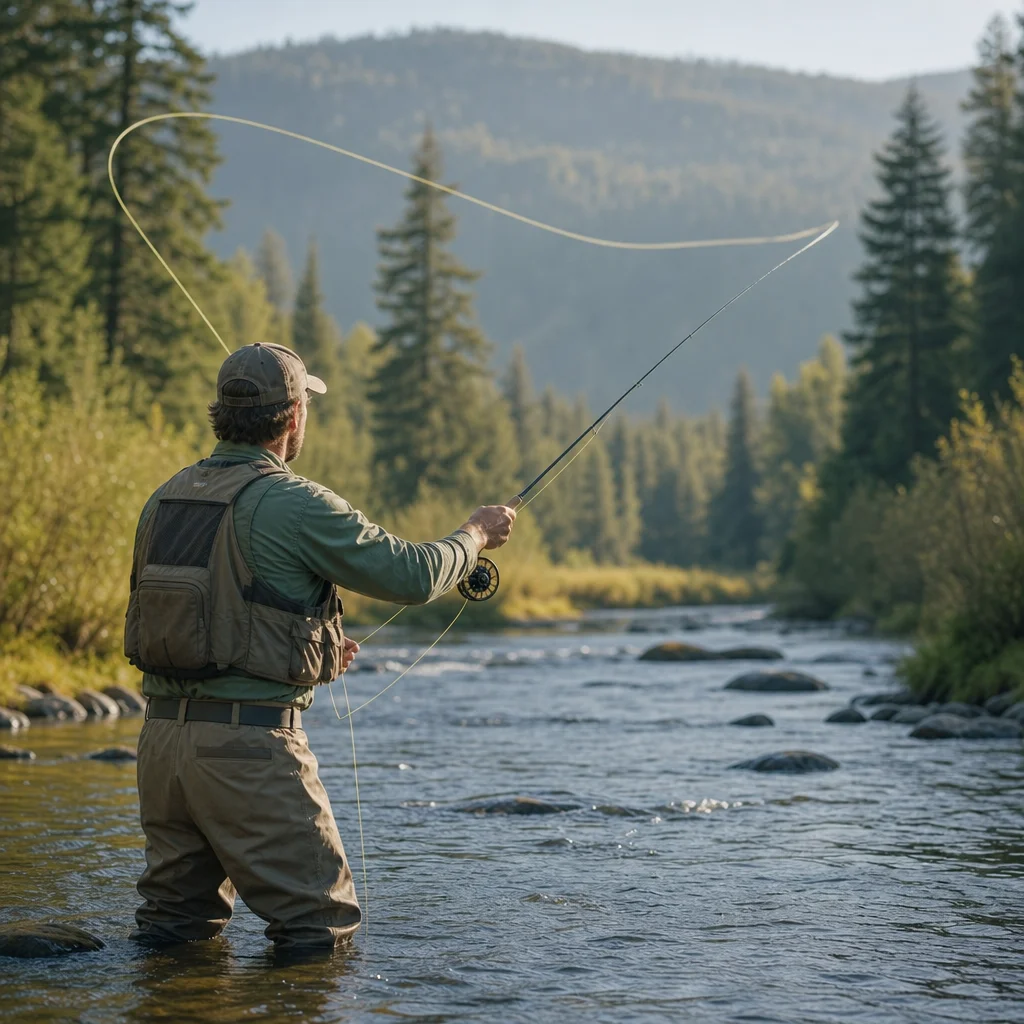
A bare shoreline can make a trout lake feel impossible to read. Without reeds, fallen trees, undercut banks, or visible weed beds, you have fewer obvious clues—and more reason to pay attention to the clues that remain.
On an open bank, trout are often positioned by wind, depth, bottom contours, temperature, and food movement. Your job isn’t to guess one perfect spot from shore. It’s to identify the features that concentrate fish, test them efficiently, and avoid turning a simple search into an unnecessary wade or boat trip.
Start with the wind, not the cast
Wind is often the most useful first clue on an exposed shoreline. It pushes surface water toward the downwind bank, creating a broad zone where floating insects, pollen, small terrestrial insects, and other food can collect. The wind can also move warmer or cooler surface water, depending on the season and conditions.
That doesn’t mean the downwind shore always holds trout. Strong wind may make the bank difficult or unsafe to fish, and trout may prefer a nearby depth break rather than the shallowest water. Still, the wind gives you a logical starting point instead of leaving you to fish an entire featureless shoreline at random.
Look for three related areas:
- The downwind shoreline, where floating food and surface debris gather.
- The windward side of a depth change, where current-like movement can develop underwater.
- Sheltered corners or small indentations where food may collect without obvious shoreline cover.
Watch the surface for lines of foam, drifting insects, pollen, or small debris. These can reveal how the wind is moving water. A subtle gathering line may be more useful than a dramatic patch of choppy water.
Treat wind as a clue, not a rule
Trout may move away from a downwind bank if waves make feeding difficult, if the water becomes too turbid, or if the shallow area is too warm. Wind direction can also change during the day. Recheck the surface rather than assuming the first pattern will remain in place.
If the bank is exposed to breaking waves, keep a safe distance from the edge. A calm-looking lake can produce an occasional larger wave, especially when wind is pushing directly toward shore. You don’t need to stand at the waterline to benefit from the wind pattern.
Find depth changes before searching empty water
On a bare bank, a depth change is the underwater equivalent of structure. Trout can travel along a drop-off, pause near a flat-to-deep transition, or move into shallower water to feed when light, temperature, and food conditions are suitable.
You’re looking for changes such as:
- A shallow shelf that ends in deeper water.
- A gradual slope leading toward the basin.
- A narrow band where the bottom changes from shallow to moderate depth.
- A channel, depression, or old stream bed entering the lake.
- A deep pocket beside an otherwise uniform flat.
From shore, depth changes may reveal themselves through water color, wave shape, or the way the surface behaves. Waves often break differently over a shallow shelf than over nearby deeper water. A line of calmer water can indicate a depression, while a sudden change in wave height may mark a contour transition.
If you have access to a depth map, study it before arriving. Look for contours that approach the bank, not just the deepest point in the lake. A deep area far offshore may be less useful than a modest drop-off you can reach with a cast.
From a boat, move slowly across likely areas and watch a depth sounder if one is available. You don’t need to map every contour. Mark the changes that are close to food, wind influence, or a practical casting position.
Fish the edge of the change
A depth break is a zone, not a single line. Trout may be on the shallow side, the deep side, or moving across it. Start by covering the transition itself, then vary your retrieve or indicator depth to test both sides.
If you’re fishing a sinking line, count it down consistently and note when it contacts the bottom or begins to hang up. Repeated counts can help you estimate where the contour changes. With an indicator, adjust depth in small steps rather than making one dramatic change that passes over the likely feeding layer.
Use bottom composition as hidden cover
A shoreline without visible cover may still have a productive bottom. Trout often respond to transitions between different bottom types because these areas can support aquatic insects or alter how food moves.
Useful transitions include:
- Sand beside gravel.
- Gravel beside rock.
- Firm bottom beside soft sediment.
- Clean bottom beside submerged vegetation.
- Darker, deeper water beside a lighter shallow flat.
You can sometimes identify these changes by observing the lakebed through clear water. In deeper or stained water, pay attention to what your fly tells you. Frequent contact with a firm bottom, occasional taps against rock, or soft resistance can help distinguish the substrate. Do this carefully; repeatedly dragging hooks through the bottom is hard on flies and may disturb fish.
A bottom transition becomes more compelling when it overlaps with a contour change or wind-driven food path. One clue can be coincidence. Two or three clues pointing to the same area deserve a measured test.
Look for food sources that don’t need shoreline cover
Open banks can be productive because food isn't always tied to visible structure. Trout may feed on insects drifting in the surface film, emerging from the bottom, or carried by wind and wave action.
Watch for:
- Adult insects riding the surface.
- Small insects trapped in foam or wind lanes.
- Rising trout, even if the rises are scattered.
- Birds working over a particular section of water.
- Small baitfish or forage pushed into a shallow area.
- Weed edges or submerged vegetation just below the surface.
A few rises can tell you more than a long stretch of apparently empty water. Note whether the fish are rising near shore, over a depth break, or along a wind line. Then place your first casts to intersect that pattern rather than aiming at the last rise you saw.
When there are no visible rises, search methodically. A streamer can cover water and help reveal whether trout are willing to chase. Nymphs or wet flies can test the depth near a contour. If the surface shows steady insect activity, a dry fly or emerger may be appropriate even when the bank itself provides no cover.
Build a safe search plan
Open shorelines create a temptation to keep walking, wading, or boating until you finally find a better-looking feature. That approach can add risk without adding useful information. Set a plan before you begin.
Start with one downwind area and one depth change. Fish each with a few deliberate variations in distance and depth. If neither produces a sign, move to the next feature rather than making random casts along the entire bank.
From shore, preserve a margin from the edge where waves, mud, ice, steep banks, or loose rock could cause trouble. Wear footwear suited to the actual bottom, and avoid assuming that a shallow-looking area is easy to cross. Water clarity can hide sudden drop-offs.
From a boat, keep track of wind strength, your route back, and the distance to shelter. Open water offers little protection if conditions deteriorate. A promising trout line isn't worth crossing a dangerous stretch of lake to reach it.
Check the lake before you commit: Review the current forecast, wind direction, water conditions, access restrictions, and local fishing regulations before wading or launching. Conditions can change faster on an exposed lake than the shoreline suggests.
Compare shore and boat positions
The same contour may fish differently from shore and from a boat. From shore, your casts usually reach only the near side of a break, and your line angle may pull the fly across the contour. A boat can approach the break from deeper water, but it may also disturb fish in clear, shallow conditions.
Shore anglers should prioritize contours that come close to land, wind lanes within casting range, and areas where a longer leader can reach the feeding depth. Keep your movements quiet, especially on calm days when trout can see silhouettes and hear footfalls through shallow water.
Boat anglers can position along the contour and work parallel to it, allowing the fly to remain in the likely depth for longer. Drift speed matters. A fast drift can make a productive line appear empty, while anchoring or using a controlled drift may let you cover the same feature more effectively.
Neither position is automatically better. The useful question is which option lets you fish the feature safely and keep the fly in the likely feeding zone.
Common mistakes on open banks
Fishing the deepest water by default
The deepest point is easy to identify on a map, but trout may be elsewhere because of food, temperature, light, or oxygen conditions. Start with a depth change connected to other clues.
Ignoring small contour details
A minor shelf or depression can be more fishable than a dramatic drop far offshore. Open shorelines reward close attention to subtle changes.
Moving too quickly between spots
If you change depth, retrieve, fly, and location at the same time, you won’t know what produced a response. Change one main variable at a time when conditions allow.
Standing on the best shallow water
On clear lakes, your position can spook fish before your first cast. Approach quietly, stay back from the edge, and begin with the water closest to shore before stepping forward.
Letting the wind dictate unsafe decisions
Wind can create a food path, but it can also make wading, casting, and boating hazardous. Fish the edge of the pattern from a protected position if possible, or leave it for another day.
A simple decision checklist
When an open bank gives you no obvious cover, work through this sequence:
- Which bank is receiving the wind, and what is the surface carrying there?
- Where does shallow water become deeper within practical casting range?
- Can you identify a bottom or vegetation transition?
- Is there visible insect, baitfish, bird, or rise activity?
- Can you fish the area without unsafe wading, climbing, or boating?
- What depth and retrieve will test the feature most efficiently?
If several answers point to the same area, start there. Fish it methodically, record what the fly and surface are telling you, and move only after you’ve tested the likely depth. On a shoreline without cover, the lake may look blank—but wind, contours, and food still leave a readable pattern.