How to Read a Lake Shoreline for Trout in the Morning
The calmest bank isn't always the best one; wind, depth, weeds, and morning light often point elsewhere. I’ll show you how to read those shoreline clues and make a sensible first move before trout settle into their daytime routines.
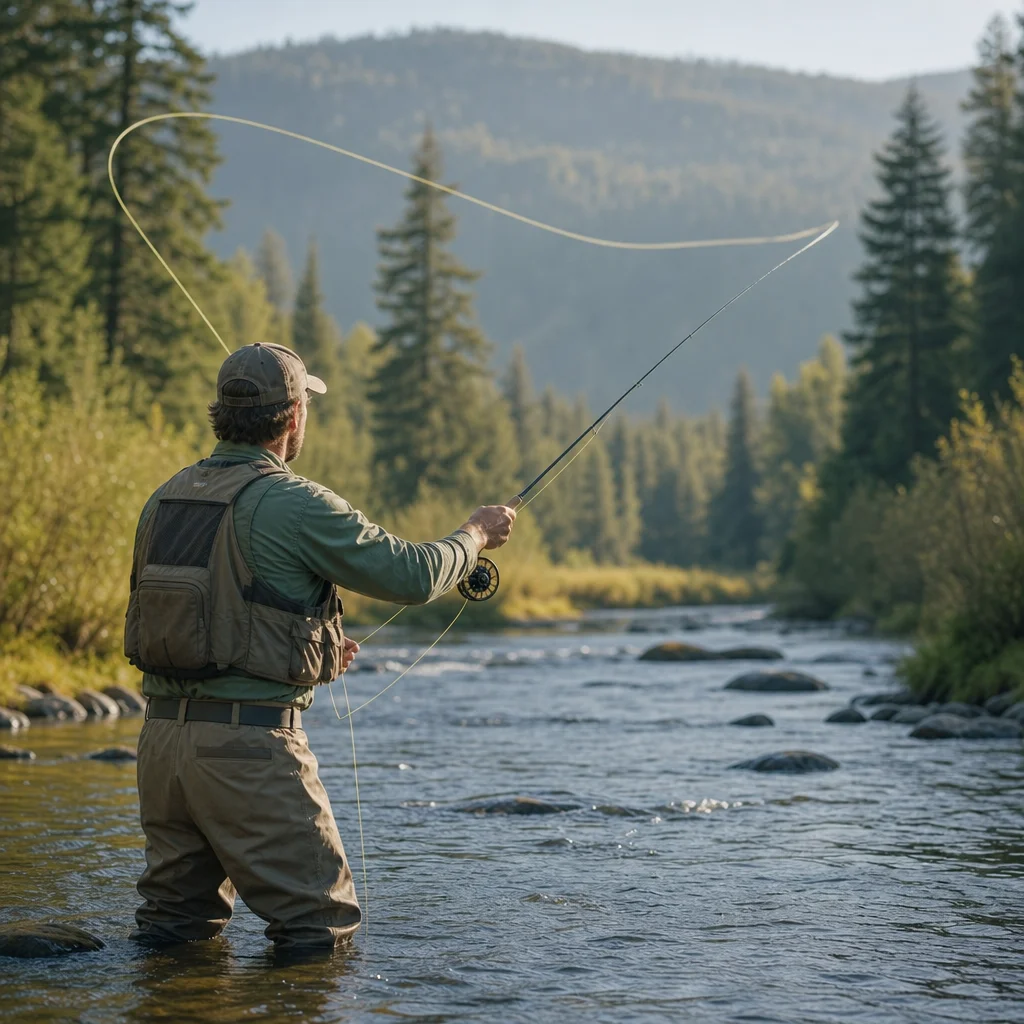
Morning lake fishing can leave you staring at a beautiful shoreline with no idea where to cast first. The water may look uniform, but trout often use a few specific features: windward banks, sudden depth changes, weed edges, inlet influence, and areas where changing light gives them cover.
You don’t need a depth finder or a perfect map to begin. Start by treating the shoreline as a set of clues, then narrow your search instead of fishing every piece of water equally.
Begin with the shoreline’s shape
Before tying on a fly, walk or look along the bank and note how the land meets the water. A straight, featureless shoreline may hold fish, but a point, bay, cove, or change in bank angle usually gives you more information.
Points and corners
A point extending into the lake can concentrate both food and trout. Water moving around the point may create a seam, while the underwater extension can act like a shallow feeding shelf beside deeper water.
Fish the point from several angles rather than standing directly on its tip. Cast along the shoreline, across the point, and toward the deeper side. Trout may be on the shallow inside edge early in the morning, then move slightly deeper as light increases or anglers disturb the area.
Small bays and coves
Coves can collect insects, pollen, and other drifting food, especially when wind pushes surface material into them. They can also be less productive if the water is warm, stagnant, or heavily disturbed.
Look for signs that a cove has useful structure: a narrow opening, a darker drop-off, submerged vegetation, or a visible change in surface texture. A small bay with no depth change or food movement may be less interesting than a nearby bank exposed to the wind.
Give the windward bank your attention
The windward bank is the side receiving the wind. It’s often a strong first choice because wind can push floating insects, plankton, and other food toward that shore. It can also mix the upper water and create a more active feeding zone.
That doesn’t mean the roughest water always holds trout. Strong wind may make casting difficult, stir up too much sediment, or push food past the area quickly. Look for the useful part of the windward shoreline rather than automatically choosing the most exposed spot.
Good places to investigate include:
- A shallow shelf where wind-driven food can collect
- A point or corner that interrupts the drift
- A weed line receiving floating debris
- A windward bank beside a deeper section
- A protected pocket just outside the main wave action
A light ripple can be especially helpful in the morning. It breaks up your outline and makes surface feeding activity easier to miss, so watch carefully for dimples, cruising shadows, or insects caught in the film.
Find the first meaningful depth change
The most important feature may be underwater rather than visible from shore. Trout often use a drop-off as a travel route between shallow feeding water and deeper refuge.
You can estimate depth changes from shoreline clues. A steep bank often continues into deeper water, while a flat grassy or muddy bank may extend farther before dropping. Look for dark water, a change in bottom color, submerged rock, or a line where vegetation ends.
Fish the edge, not only the deepest water
Beginners commonly cast straight toward the deepest-looking water. That can be useful, but trout aren't required to sit in the middle of the lake. In the morning, they may move shallow to feed, particularly when the water is cool and low light gives them confidence.
Start by covering the transition:
- Cast parallel to the drop-off.
- Make a few casts just inside the shallow side.
- Cover the edge itself.
- Then work slightly deeper.
This sequence helps you discover where fish are holding without immediately dragging your fly over the deepest water. Retrieve at more than one depth, and allow the fly to pause if the pattern and tackle make that practical.
If you can’t identify a drop-off visually, use your casts as a simple depth survey. Count the fly down at a consistent rate, note when it contacts vegetation or bottom, and compare those counts at different distances from shore. You’re not building a bathymetric chart; you’re looking for a change.
Treat weed edges as feeding lanes
Healthy aquatic vegetation provides cover and attracts insects and small organisms. Trout may patrol the outside edge, move through open pockets, or hold just beyond the weeds where food drifts out.
The best edge isn’t always the thickest vegetation. A clean line between weeds and open water is easier to fish and may be more important to trout than a solid mat. Pay attention to:
- Gaps or channels through the weeds
- A sharp outside edge
- Weeds beside a drop-off
- Floating insects or trapped debris
- Open water downwind of vegetation
Cast along the weed line before casting directly into it. This reduces snags and lets you cover the route a cruising trout is likely to follow. If the fly hangs repeatedly, change the angle, shorten the retrieve, or move a few steps rather than continuing to foul the same patch.
Check for inlet influence
An inlet can be one of the clearest shoreline clues, but its value depends on conditions. Incoming water may bring oxygen, cooler water, food, or a temperature difference that attracts trout. It can also create current and a visible mixing line.
You don’t need to fish directly in the mouth of the inlet. Begin by examining the nearby water:
- The seam where inflowing water meets the lake
- The edges of the current
- Nearby depth changes
- Banks receiving the inlet’s drift
- Protected water just outside the flow
Trout may hold in slower water beside the current rather than in the fastest flow. Present your fly across or along that transition, allowing it to move naturally with the water instead of ripping it through the seam.
Inlets can also involve slippery rocks, soft bottoms, strong current, or restricted access. Keep your footing and avoid assuming that shallow-looking water is safe to cross.
Check the inlet before wading: Confirm local access, current conditions, and any posted closures or water-quality advisories before entering the water. When the bottom or flow is uncertain, fish from shore and keep a stable route back.
Use morning light as a moving clue
Light changes quickly after sunrise, and that changes how trout use the shoreline. Early low light can encourage fish to move into shallower water. As the sun rises, they may seek depth, shade, vegetation, or a darker bank.
Watch how shadows move across the water. A tree line, steep bank, or rock wall can create a strip of shade that remains productive after nearby shallow water is brightly lit. The shaded side of a point or weed edge may be worth more than an otherwise similar feature in direct sun.
Light also affects your approach. Keep a low profile when fishing shallow water, avoid casting your shadow across the area, and use the shoreline itself as concealment when possible. Even if you’re using a sinking fly, a trout in clear, shallow water can notice movement above it.
Don’t treat sunrise as a single magical window. Think of it as a period of adjustment. A spot that was promising at first light may fade, while a nearby edge becomes better as the sun changes the angle and temperature of the water.
Combine clues instead of chasing one feature
A windward bank by itself is useful. A windward bank with a drop-off, weed edge, and inlet influence is much more compelling. When several clues overlap, start there.
A simple ranking system can help:
- Multiple features: Choose a shoreline where wind, depth, cover, or current overlap.
- One strong feature: Fish a clear drop-off, productive weed edge, or inlet seam carefully.
- Featureless water: Use it only after checking more structured areas or when trout are visibly cruising.
This approach keeps you from making a common mistake: moving constantly because the first cast didn’t produce. Give a promising feature enough casts to cover different angles and depths, then change one variable at a time.
For example, keep the location but change retrieve speed. Then try a different depth. If nothing changes, move along the same structure before abandoning it completely.
A simple first-hour plan
When you arrive, spend a few minutes observing instead of immediately wading in or casting. Note the wind direction, surface activity, visible insects, shade, and any changes in water color.
Then work through this sequence:
1. Start near structure
Choose the strongest combination of features you can reach without a difficult approach. A windward weed edge beside a drop-off is a better first experiment than a random stretch of open water.
2. Cover the nearest water
Fish the water close to shore before making long casts. Trout may be in the first few yards, and a long cast can pull your line over fish you haven’t yet reached.
3. Change depth methodically
Use your fly, leader, retrieve, or casting angle to search shallow, edge, and deeper water. Avoid changing the fly, location, and retrieve simultaneously; you won’t know which adjustment mattered.
4. Reassess with the light
After the sun rises, check whether trout activity has shifted toward shade, deeper water, or a different shoreline angle. Follow the changing conditions rather than staying loyal to your first spot.
Common shoreline-reading mistakes
Choosing the calmest bank automatically
Calm water can be comfortable to fish, but wind often delivers food and creates useful surface movement. Compare the calm bank with the windward side before deciding.
Casting only to the middle
The middle may be deeper, but the shoreline edge often offers food, cover, and a travel route. Begin with the structure you can identify.
Wading too early
Entering the water can spook shallow trout and destroy the advantage of observing from shore. Fish the bank first, and wade only when it gives you a clear benefit.
Ignoring your own disturbance
Repeated casts, footsteps, and noisy line handling can make a productive area less productive. Move carefully, keep false casts away from the fish when possible, and give a spot time to settle after a disturbance.
Overvaluing a single clue
Wind, weeds, depth, current, and light all matter, but none is a guarantee. Use them to form a better starting hypothesis, then let actual signs—follows, rises, takes, or changing conditions—refine your decision.
Practical next steps
On your next morning lake trip, don’t try to read the entire shoreline at once. Pick one section and identify three things: the wind direction, the nearest depth change, and any weed or current edge. Start close, cover the feature from shallow to deep, and watch how the light changes it.
If the shoreline offers several overlapping clues, stay and work it methodically. If it offers none, move until you find a better combination. Reading a lake is less about guessing the perfect cast and more about making the next sensible decision.