How to Read Undercut Banks Without Wading Into Them
When an undercut bank looks promising but the footing is awkward, I’ll show you how to read its shape, current, shade, foam, and surface clues from safer ground. You’ll learn where trout may hold without treating a risky wade as part of the plan.
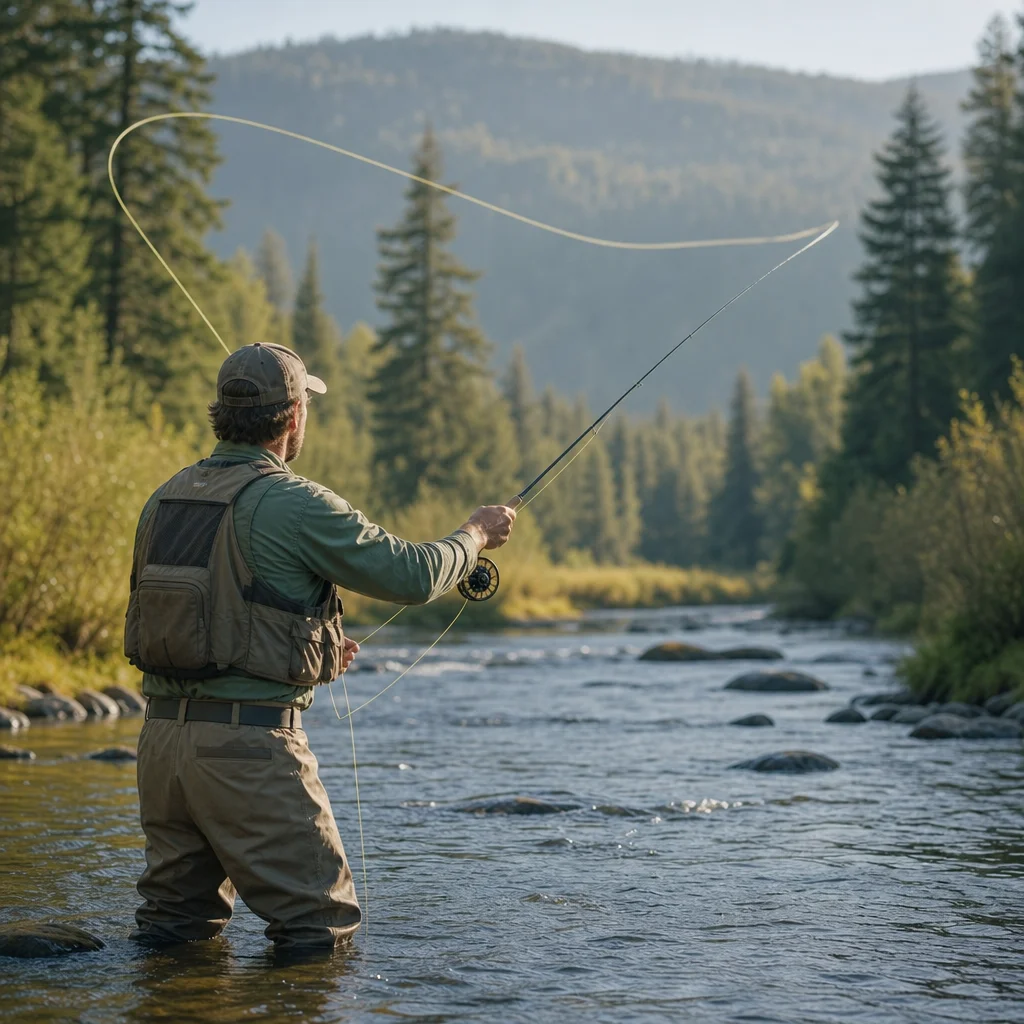
An undercut bank can look like the best piece of trout water on the stream—and sometimes it is. The problem is that its appeal often comes from the same features that make it unsafe to approach: steep edges, slippery roots, deep water, and a current pushing toward a hollow you can’t see.
You don’t need to wade beneath every promising bank to fish it well. By reading the bank’s shape, the water beside it, and the clues drifting past, you can make a sound estimate of where trout are likely to hold while keeping both feet on more dependable ground.
What makes an undercut bank attractive to trout?
An undercut bank is a bank whose lower edge has been worn away by current, floods, ice, or erosion. The upper bank extends over a recessed space, creating a narrow roof or cavity along the waterline.
That shape can offer several advantages to trout:
- Cover: The overhanging edge hides fish from birds, animals, and anglers.
- Reduced current: Water close to the bank may be slower than the main flow.
- Depth: Erosion often scours a deeper channel beneath or beside the bank.
- Food delivery: Insects, worms, and other food can enter the current upstream and pass along the edge.
- Temperature relief: Shade from vegetation, a high bank, or a bend may keep water cooler during bright conditions.
An undercut bank isn’t automatically a trout lie. If the water is too shallow, too turbulent, or clogged with debris, fish may use another part of the seam. Think of the bank as one part of the holding equation rather than a guarantee.
Start with the bank, not the fish
Before studying the surface, inspect the land from your position. You’re looking for signs of how stable the bank is and how much of the undercut you can actually understand from shore.
A relatively stable bank may have a continuous sod edge, established roots, or a broad, gradual slope behind the lip. A more concerning bank may show fresh cracks, exposed soil, leaning trees, collapsed sections, or a thin shelf with water directly below it.
The most useful question is simple: If the edge gave way, where would you go? If the answer is into deep water, a pile of branches, or a fast chute, you’re too close. Move back and work from an angle.
You can often see enough without standing at the lip. A few extra yards of distance may give you a better view of the current and a safer casting position.
Read the water beside the undercut
The bank’s visible shape tells you where cover exists. The water tells you whether trout can comfortably use it.
Look for a soft edge beside faster water
A likely lie often sits where faster current meets a slower strip along the bank. This may appear as a narrow color change, a line of bubbles, or a subtle difference in surface texture.
Trout can hold in the softer water while moving slightly into the faster seam to intercept food. The best section may be only a foot or two wide, especially in a small stream.
A completely dead pocket can hold fish, but it may receive little food. Conversely, a bank with strong current pressed hard against it may be difficult for trout to occupy unless there’s a protected recess, rock, root mass, or deeper notch.
Find depth changes
Depth is difficult to judge under a dark overhang, so use nearby clues. Watch how the surface changes as the current passes the bank. A smooth, darker band may indicate depth, while a shallow shelf can produce a lighter bottom or visible stones.
Don’t assume the deepest-looking water is directly beneath the bank. The channel may swing away from it, leaving the undercut shallow. In other places, the deepest water may be several feet out from shore, with the bank acting as a visual boundary rather than the actual lie.
Notice the current direction
At a bend, current commonly presses into the outside bank and creates erosion. This is where undercuts often develop, but the current can also be too powerful for trout to hold directly against the wall.
Look for a secondary current: a slower back eddy, a narrow cushion, or a seam just downstream of a protruding root or rock. Fish may be in that protected water rather than in the darkest part of the bank.
Use shade and light as supporting clues
Shade can make an undercut more valuable, particularly during bright conditions or when trout are wary. A shaded bank may provide overhead concealment and reduce the contrast between a fish and the surface.
Treat shade as a modifier, not a rule. A shaded bank with poor current or no depth may be less useful than a sunny bank with a strong food lane. Also remember that the shadow moves during the day. A bank that is shaded in the morning may be exposed by afternoon, while a high bank may continue to shade the water longer.
Approach from the darker side when possible. Your outline is harder for fish to detect, and your shadow is less likely to fall across the lie. Keep your movements slow, especially near clear, shallow water.
Follow foam, bubbles, and floating debris
Surface clues can reveal how food and water move along an undercut bank.
A continuous line of foam or bubbles often marks a current seam. If it travels close to the bank and disappears beneath the overhang, that can indicate a useful food route. A broken line may show a turbulent seam, an eddy, or submerged structure.
Watch leaves, twigs, and other harmless floating material. If they drift steadily beneath the edge, food may take a similar path. If they circle, stall, or reverse, you’ve found an eddy. That pocket may hold trout during a hatch or after food has been washed into the water, though its usefulness depends on depth and cover.
Surface debris can also warn you away. A bank collecting branches, fencing, or other material may be difficult to fish and dangerous to approach. The safest interpretation is usually the simplest one: identify the current from shore, then keep your position out of the debris path.
Check Your Shoreline Position: Before making a cast, confirm that the ground behind you is stable, your footing has room for a step back, and no branch or steep drop will trap you if the bank shifts. Rising water, recent rain, ice, and loose soil can change a familiar edge quickly.
Estimate the lie from multiple clues
No single clue is dependable enough on its own. Give an undercut bank a stronger rating when several features line up:
- The bank provides a shaded or concealed recess.
- A softer strip of water runs beside a faster current.
- The edge appears deep enough for a trout to hold comfortably.
- Foam, bubbles, or debris show food moving along the bank.
- The water is clear enough for fish to detect danger, but not so clear that they have no cover.
- You can reach the likely lane from a stable casting position.
That last point matters. A perfect-looking lie that requires you to stand on a crumbling edge isn’t a practical target. Fish a slightly less obvious seam if it lets you stay balanced, quiet, and in control.
Fish the bank from safer ground
Your casting angle usually matters more than distance. Stand well back and cast along the bank, upstream, or slightly across the current so the fly reaches the likely seam without a heavy splash.
For a dry fly or lightly weighted nymph, place the presentation near the current lane feeding the undercut rather than directly onto the dark recess. Trout often move a short distance to intercept food, and a fly landing on the bank can spook fish or become stuck.
A downstream presentation may allow the fly to drift beside the edge, but it also increases the risk of dragging the fly or lining fish. Keep the cast short enough that you can control the drift and lift the line cleanly.
If branches make a conventional cast difficult, try a roll cast, a sidearm cast, or a short reach from an open position. Don’t force a long back cast near unstable ground. A lost fly is cheaper than a lost footing.
Approach one section, make a few deliberate casts, and then move on. Repeatedly covering the same pocket from a poor angle usually creates more disturbance without improving the presentation.
Common mistakes to avoid
Treating the darkest water as the only target
The deepest shadow may be empty if the current is too strong or the bottom is filled with debris. Start with the seam and work toward the recess only when the drift supports it.
Standing directly over the lie
An overhanging bank can hide you from fish, but standing at its edge may make the bank unstable and your profile obvious. Use distance, shade, and an angled cast instead.
Ignoring the downstream escape route
Before moving closer to any bank, consider where water would carry you if you slipped. A deep pool with open shoreline is different from a fast chute ending in roots or branches. If the consequence is serious, don’t make the approach.
Assuming yesterday’s bank is today’s bank
Floods and high flows can remove soil, expose roots, or deepen the channel. Reassess the edge each time you visit, particularly after substantial rain or rapid water-level changes.
A simple shore-reading routine
When you reach an undercut bank, pause before casting. First, identify the safest place to stand and a clear route back. Next, compare the current speed at the bank with the speed a few feet out. Then look for shade, depth changes, and a foam or debris line.
Choose the most likely seam that you can reach without crowding the edge. Make a controlled cast, watch the drift, and adjust your angle before changing flies. If the current gives you no usable presentation—or the bank continues to look unstable—leave the lie alone.
Reading undercut banks well isn’t about getting closest to the fish. It’s about recognizing where cover, depth, current, and food come together, then choosing a position that keeps the cast and the angler under control. On your next walk, spend a minute studying those clues from shore before you decide whether the bank deserves a fly.