What Foam Lines Reveal About Depth and Current
I’ll help you read foam lines, seams, and surface texture as clues to current speed and depth, so you can choose better casts without buying extra gear or assuming every visible line is a feeding lane.
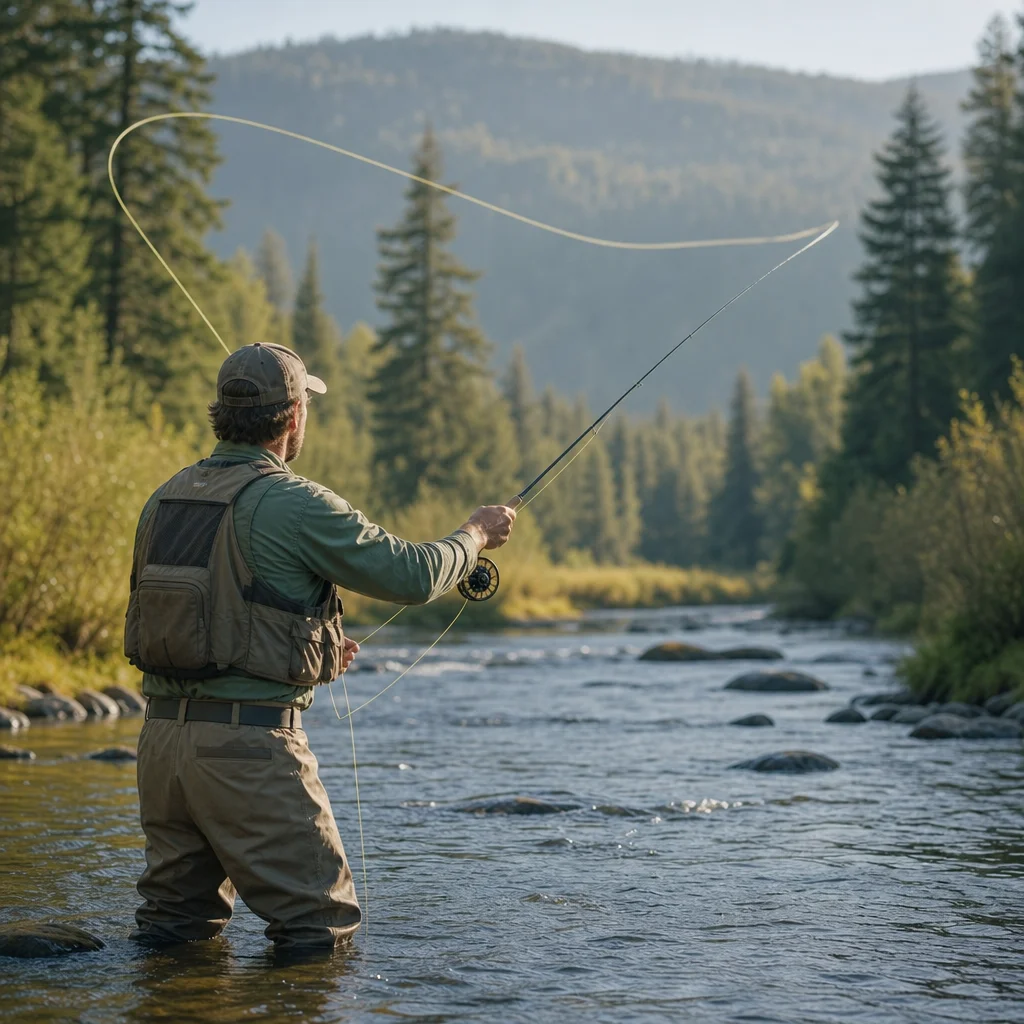
When you reach a river and see a bright ribbon of foam drifting downstream, it’s tempting to cast straight at it. Foam is easy to notice, and trout do sometimes feed where drifting material collects. But a visible line isn't automatically a feeding lane. It may mark a shallow riffle, a deep channel, a back eddy, or simply the path of floating debris.
The useful question isn't just Where is the foam? It’s What is making the foam move that way? By studying its speed, shape, and relationship to nearby water, you can make better decisions with the gear you already have.
Start with foam as a current marker
Foam reveals the movement of surface water. A patch may form from natural organic material, turbulence, or water entering from another channel. Once it is on the surface, it travels with the current, but not always at the same speed as the water below.
Watch one piece of foam rather than the whole line. Follow it for several seconds and compare its movement with leaves, bubbles, or small twigs. If everything travels together, the surface current is fairly consistent. If foam stretches, stalls, or gathers in one area, different current speeds are meeting.
That meeting point is often more useful than the foam itself.
A long, steady foam line can show a fairly stable seam. A broken, wandering line may indicate uneven depth, submerged rocks, changing current direction, or an eddy. None of these observations proves that trout are present, but each can help you understand where a fly will travel and how difficult it will be to control.
What foam movement can suggest about depth
Foam doesn’t measure depth directly. It provides clues when you combine it with surface texture, bank shape, and the speed of the current.
Fast foam often marks shallow or constricted water
If foam shoots through a narrow chute or over a visibly broken surface, the river may be shallow, steep, or restricted by rocks. Fast surface movement can also occur over deeper water, so don’t treat speed as a depth gauge by itself.
Look for supporting evidence:
- A bright, broken surface often indicates rocks or shallow turbulence.
- A narrow line squeezed between banks may reflect a constricted channel.
- Foam moving quickly through smooth water may be riding a strong current over an unseen drop or channel.
- Wading difficulty and visible structure can confirm that the area deserves caution.
Fast water may carry food, but it also gives you less time to present a fly. If your cast lands in the fastest part of the line, the fly can drag immediately. A slightly slower edge may offer better control and still be close to drifting food.
Slow or gathering foam can indicate slack water
Foam that collects in a pocket, rotates in place, or moves slowly along one bank often points to an eddy or reduced-current zone. These areas can be deeper than the surrounding water, especially near undercut banks, bends, large rocks, or the inside edge of a seam.
Slack water isn't automatically better water. A trout may avoid a stagnant pocket if it provides little food or poor oxygen exchange. It can also be difficult to present a fly cleanly when several small currents pull in different directions.
Treat a foam-filled pocket as a place to investigate, not a guaranteed target. Watch whether insects, leaves, or bubbles enter the pocket and remain there. If food is being delivered, the area becomes more interesting. If foam simply circles without other drifting material, it may be a visual distraction.
A stable line can reveal a channel edge
When foam travels along a consistent boundary between fast and slow water, it may mark a seam. The seam can form beside a deeper channel, behind a submerged obstruction, or where two currents meet. In many cases, the most useful water isn't the center of the foam line but the slower edge beside it.
That edge gives a trout a way to hold with less effort while remaining close to drifting food. It also gives you a better chance of keeping a fly in the strike zone without excessive mending.
Still, current boundaries can move. A recent change in water level may shift the seam toward the bank or away from it. Recheck the surface rather than relying on where the line appeared earlier in the day.
Read the seam, not just the foam
A seam is a change in current speed or direction. Foam makes that change visible, but the seam may continue below the surface even when the foam disappears.
Stand back and identify three zones:
- The fast side: Water moves quickly and may carry food, but it can overpower your presentation.
- The boundary: Water speeds and directions change. This is often the most promising area to examine.
- The slow side: Trout may hold here to conserve energy, though food delivery can be less consistent.
Try to determine whether the boundary is clean or mixed. A clean seam has a distinct edge, with foam moving in a narrow strip. A mixed seam has swirls, crosscurrents, and irregular patches. Clean seams are usually easier to fish. Mixed seams may hold fish but demand more precise casting and mending.
You don’t need to buy a current indicator, depth finder, or specialized gadget for this exercise. A few seconds of observation can prevent a costly sequence of blind casts and lost flies.
Use surface texture to add context
Foam is only one part of the picture. Surface texture helps explain what lies beneath it.
Smooth water
Smooth water may indicate depth, but it can also cover a shallow glide with little visible turbulence. Look at how foam behaves as it enters the smooth section. If it slows and spreads, the water may be deeper or less confined. If it continues quickly in a narrow path, a strong subsurface current may be present.
Smooth water can also make trout more cautious because your movement and line are easier to see. Approach quietly and keep your casting distance practical.
Broken or sparkling water
A broken surface often hides your leader and fly from fish, which can make it forgiving for beginners. It may indicate shallow rocks, uneven depth, or faster water. Study where the surface becomes smoother again. That transition can mark the lower end of a riffle or the start of a deeper run.
Foam moving out of broken water and settling into a smoother tongue can show where the current consolidates. That downstream transition is worth comparing with the riffle itself.
Swirls and converging ripples
Small circular swirls may indicate eddies, submerged rocks, or water pulling over an uneven bottom. Converging ripples can reveal where separate flows meet. If foam repeatedly gathers at one point and then escapes downstream, you may be looking at a holding pocket with a defined exit current.
Make your first cast to the edge of the feature, not the most chaotic center. You’ll learn more about the current and reduce the chance of an immediate drag.
A simple observation-and-cast routine
Use this sequence before committing to a foam line:
1. Watch before you cast
Spend 30 to 60 seconds following individual pieces of foam. Note where they speed up, slow down, rotate, or disappear. Look for drifting insects or other natural material traveling on a different path.
2. Find the current boundaries
Identify the fast water, the seam, and the slower water beside it. Check whether the boundary is stable or constantly shifting.
3. Estimate depth from several clues
Combine foam behavior with bank contours, visible rocks, water color, surface texture, and the way the current changes around structure. Your estimate only needs to be good enough to choose a fly depth and casting angle.
4. Make a low-cost test cast
Start with the presentation you can control: a short cast, a light mend, or a drift along the seam’s edge. Watch the fly line and leader. If they swing or accelerate before the fly reaches the likely holding water, the current is more complicated than it looked.
5. Adjust one variable
Change only one thing at a time. Cast farther upstream, shorten the drift, alter your position, or add a mend. If you change distance, angle, fly, and depth together, you won’t know what solved the problem.
Before You Commit to the Line: Follow several pieces of foam from entry to exit, then compare their path with nearby bubbles or leaves. If the line only marks floating debris rather than a stable current boundary, choose your cast from the water’s structure instead.
Common mistakes to avoid
Assuming the largest foam line is the best target
Large lines are easier to see, not necessarily more productive. A small seam beside a rock or along a channel edge may offer better food delivery and a more manageable drift.
Casting directly into the foam
The foam itself may sit in water that is too fast, too shallow, or too turbulent. Aim for the edge where a trout could hold with less effort while watching food pass.
Treating foam as a precise depth reading
Surface movement can disguise depth. A deep pool may have a fast surface tongue, while a shallow glide may look smooth. Use foam to form a hypothesis, then test it with your presentation and observations.
Ignoring changing conditions
Wind can push surface foam away from the actual current. Rising or falling water can relocate seams. New releases, rain, or runoff can also change how a familiar stretch behaves. Re-read the water whenever the surface pattern no longer matches your earlier assumption.
Spending money before improving observation
Better reading often comes from slowing down, changing your angle, and making shorter test casts. Those adjustments cost nothing and can help you use your existing flies and tackle more effectively.
Practical next steps
On your next outing, pick one foam line and describe it in plain terms: fast or slow, stable or wandering, clean or mixed, connected to a seam or isolated from one. Then fish the slower edge first and watch how your line behaves.
If the drift works, repeat it before moving. If it fails, don’t immediately blame the fly. Reconsider the current path, casting angle, and depth. Foam is a clue—not a promise—and learning to interpret the clue will usually improve your fishing more than chasing every bright line on the surface.