How to Read a Trout Stream Before You Wade In
When a trout stream looks shallow and simple from the bank, the best holding water may be easy to overlook. I’ll show you how to read current seams, depth, structure, and entry points before your first step disturbs the water.
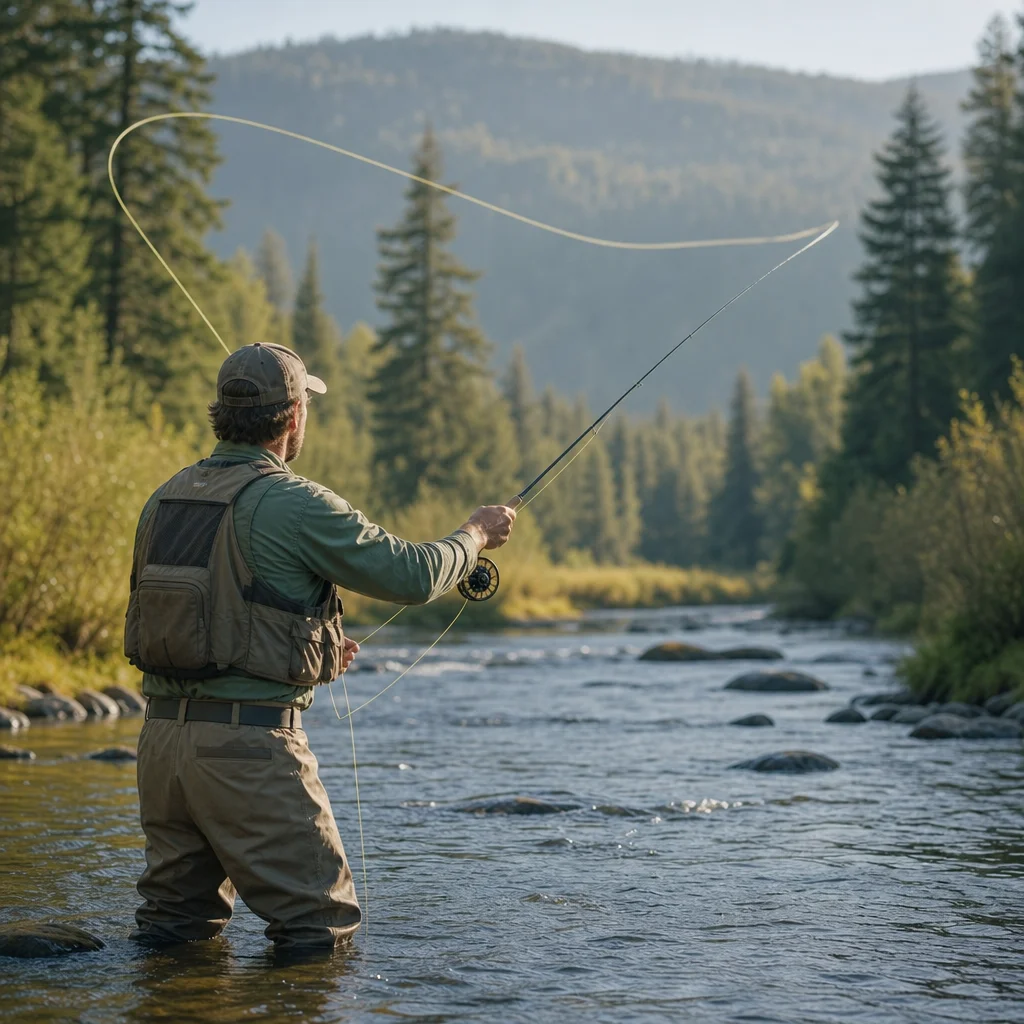
The first few minutes beside a trout stream can matter more than the first few casts. If you wade in immediately, you may scatter fish, cloud the water, or lose sight of the clues that explain where trout are feeding.
Reading water isn’t about memorizing a perfect list of features. It’s about building a picture before you disturb it: where the current is fastest, where food can collect, where trout can rest, and where you can enter without trampling likely holding water.
Start by observing from the bank
Before putting on your wading gear, spend a few quiet minutes looking at the stream. Begin upstream if you can, then work your eyes across the entire section rather than focusing only on the most obvious riffle.
Look for:
- Changes in surface speed
- Darker patches that may indicate depth
- Boulders, undercut banks, logs, and submerged branches
- Foam lines and drifting debris
- Bends, side channels, and confluences
- Places where shallow water drops into a deeper pocket
- Fish-shaped shadows, flashes, or brief rises
Trout often hold where they can get food without spending unnecessary energy. That usually means a balance between current and shelter, not simply the deepest water in the stream.
The surface can mislead you. A smooth, dark area may be deep, but it may also be shaded water over a relatively shallow bed. A broken surface may hide a pocket behind a rock, while a calm-looking margin may contain little usable cover. Treat every visual clue as a question to investigate, not a guaranteed answer.
Identify the main current lanes
Most streams contain several speeds of water at once. The fastest flow may run down the middle, along one bank, or through a narrow chute. Slower water may sit beside it, behind rocks, along the inside of a bend, or beneath an overhanging bank.
A trout’s likely position is often near a boundary between speeds. These boundaries are called current seams. Food drifting in the faster lane can spill into slower water, while a trout positioned on the edge can feed and still use less energy than it would in the strongest current.
To find a seam, watch floating leaves, bubbles, or foam. If two bits of debris travel at noticeably different speeds, you may be looking at a productive boundary. Also watch for a visible line where rough water meets smooth water.
Not every seam is equally useful. A broad, slow seam with no depth or cover may hold little. A narrow seam beside a rock, ledge, or deeper trough is more interesting because it combines food delivery with protection.
Read seams below the surface
Some current changes are subtle. A seam may disappear from view where the surface becomes smooth, yet the streambed can still guide water around a submerged rock or depression. Look for small clues:
- A bubble line that bends or breaks
- Leaves that pause, circle, or collect
- A slight change in surface texture
- Water that appears to push toward or away from the bank
- A narrow strip of calmer water beside a faster tongue
These details help you imagine what the current is doing underneath. The visible surface is only the top layer of the stream’s structure.
Estimate depth without stepping in
You don’t need an exact measurement. You need to distinguish water that is too shallow to provide much security from water deep enough to offer cover and a stable lie.
Color is one starting point. In clear water, a darker section often suggests greater depth, but bottom color, shade, algae, and cloud cover can create the same effect. Compare nearby areas rather than judging one patch by itself.
Surface behavior also helps. Deep water may look smooth, but so can shallow water over a fine, even bottom. Conversely, a deep run can have a broken surface if current passes over uneven rocks. Combine color, texture, visible bottom, and drifting objects before deciding what you’re seeing.
Pay special attention to transitions:
- The head of a pool, where fast water enters deeper water
- The tail of a pool, where depth gradually decreases
- A shallow shelf beside a deeper channel
- The outside of a bend, where erosion may create a trough
- A depression immediately behind a rock or log
These areas can be valuable because trout can move between feeding and resting positions without traveling far. A fish may sit in softer water near the edge of a current and dart into faster flow to intercept food.
Find structure and overhead cover
Structure gives trout security and changes the current. It can be obvious, such as a large boulder, or nearly invisible, such as a small ledge or depression in the bed.
Useful structure includes:
- Boulders and rock clusters
- Woody debris that remains stable in the flow
- Undercut banks
- Submerged root systems
- Overhanging grass, branches, or bankside vegetation
- Drop-offs and shelves
- The edges of deep pools
Look for the water immediately downstream of an obstruction. A rock can create a cushion of slower water behind it, with faster flow passing around both sides. Larger trout may use that protected pocket, while smaller fish may hold in the surrounding current.
Structure also affects your presentation. A fly drifting beside a boulder may reach a fish more naturally than one cast directly into the strongest flow. An undercut bank may require a low, accurate cast, but it can also be difficult to approach without making your silhouette obvious.
Don’t assume every log is safe or every bank is stable. A fallen tree can be excellent fish habitat and a poor place to wade or land a fish. Read it as both an underwater feature and a potential hazard.
Look for feeding lanes
Once you’ve identified current speed, depth, and structure, connect them. Ask where food is likely to travel and where a trout could intercept it with minimal effort.
A feeding lane might run:
- Along the edge of a riffle
- Beside a rock in a faster run
- Through a narrow seam entering a pool
- Along an undercut bank
- Where two currents merge
- Near the edge of a submerged shelf
Watch the drift for a moment before casting. If leaves and foam move smoothly through a lane, drifting insects may follow a similar route. If debris swirls or stalls, the area may contain an eddy. That can hold food, but it may also produce complicated currents that make a natural fly drift difficult.
A promising feeding lane must be fishable, too. The best-looking water upstream may be unreachable without crossing a shallow flat. The far bank may hold fish, but a poor angle could force repeated false casts over the area. Reading the stream includes matching the likely fish position with a sensible way to present a fly.
Plan your entry point carefully
Your entry point should protect both the fish and your balance. Avoid stepping into the shallow water directly above a likely holding area when another route is available. Wading disturbance travels downstream, and your boots can dislodge sediment or insects from the bed.
A good entry point usually has:
- A gentle bank or gravel margin
- Moderate depth and manageable current
- A firm, visible bottom
- Enough room to maintain balance
- A path that doesn’t cross the water you intend to fish first
If you must cross, cross at the shallowest practical location and avoid walking through obvious lies. Move slowly, keep your steps deliberate, and use a wading staff if appropriate. Don’t make a crossing merely to reach the opposite bank if the fishing advantage is small.
Your first casts are often best made from the bank or from very shallow water. Fish the water closest to you before moving farther out. Trout can hold in the near margin, especially where shade, depth, or a submerged edge provides cover.
Check the stream before stepping in: Review local access rules, seasonal restrictions, weather, water conditions, and any current wading or boating advisories for the specific river section. Conditions can change quickly, and regulations vary by water and jurisdiction.
Account for edge cases
Low, clear water
In low, clear conditions, trout can see movement and may have fewer places to hide. Shadows, bright clothing, sudden steps, and repeated false casts can matter. Stay low when practical, use available cover, and favor a longer observation period before entering.
The fish may also move into deeper slots or stronger current than you expect because those areas provide security. Don’t ignore shallow water, but don’t assume every visible fish is feeding there.
High or stained water
After rain or snowmelt, the stream may change shape and clarity. Fish often seek softer current near banks, behind large structure, or in slower inside bends. The streambed may be unstable, and familiar crossings may no longer be suitable.
In poor visibility, rely less on judging depth by color. Watch current speed, avoid questionable footing, and choose conservative routes. A promising lie isn’t worth a difficult crossing.
Cold or unusually warm water
Temperature can influence trout activity and responsible fishing decisions, but the relevant thresholds and restrictions vary by species, region, and current conditions. If water temperatures are extreme, check current local guidance and consider whether fishing is appropriate before focusing on tactics.
Small streams
In a narrow stream, your approach may affect nearly every likely lie. Fish from farther back, use vegetation for concealment, and avoid wading unless it’s necessary. A small change in position can be more valuable than a longer cast.
Complicated currents
A pool may contain several conflicting currents, especially near a bend, tributary, or large structure. Don’t judge a drift by the surface alone. If your fly repeatedly drags, watch how bubbles move at different distances and adjust your position or casting angle rather than simply adding more line.
A simple bank-side sequence
Before you wade, run through this order:
- Scan the whole section. Note depth changes, cover, current lanes, and possible fish activity.
- Track floating debris. Use leaves, bubbles, and foam to identify seams and eddies.
- Mark likely holding water. Combine current relief, food access, depth, and cover.
- Choose the first target. Start with the nearest fishable lie, not necessarily the most dramatic one.
- Select an entry route. Avoid crossing or standing in water you plan to fish.
- Make a few controlled casts. Learn how the current affects your fly before changing locations.
- Reassess after each move. Your position changes the angles, drift, and water you can reach.
Reading water is a process of narrowing possibilities. You begin with the whole stream, then identify current, depth, structure, and feeding lanes until you have a reasonable first cast.
Practical next steps
On your next outing, delay wading for five minutes and deliberately observe one stream section. Pick three possible lies, identify the current seam feeding each one, and decide how you’ll reach them without crossing them first.
Then fish the closest, safest option before moving. You may find that the stream offers more useful water than it first appeared to—and that a careful look from the bank saves both a few casts and a few startled trout.