How to Read a Bouldery Run Before You Step Into It
When a mountain run is broken by slick boulders, shifting depth, and competing currents, it can be hard to know where trout are holding or where to wade. I’ll show you how to read the water before disturbing it.
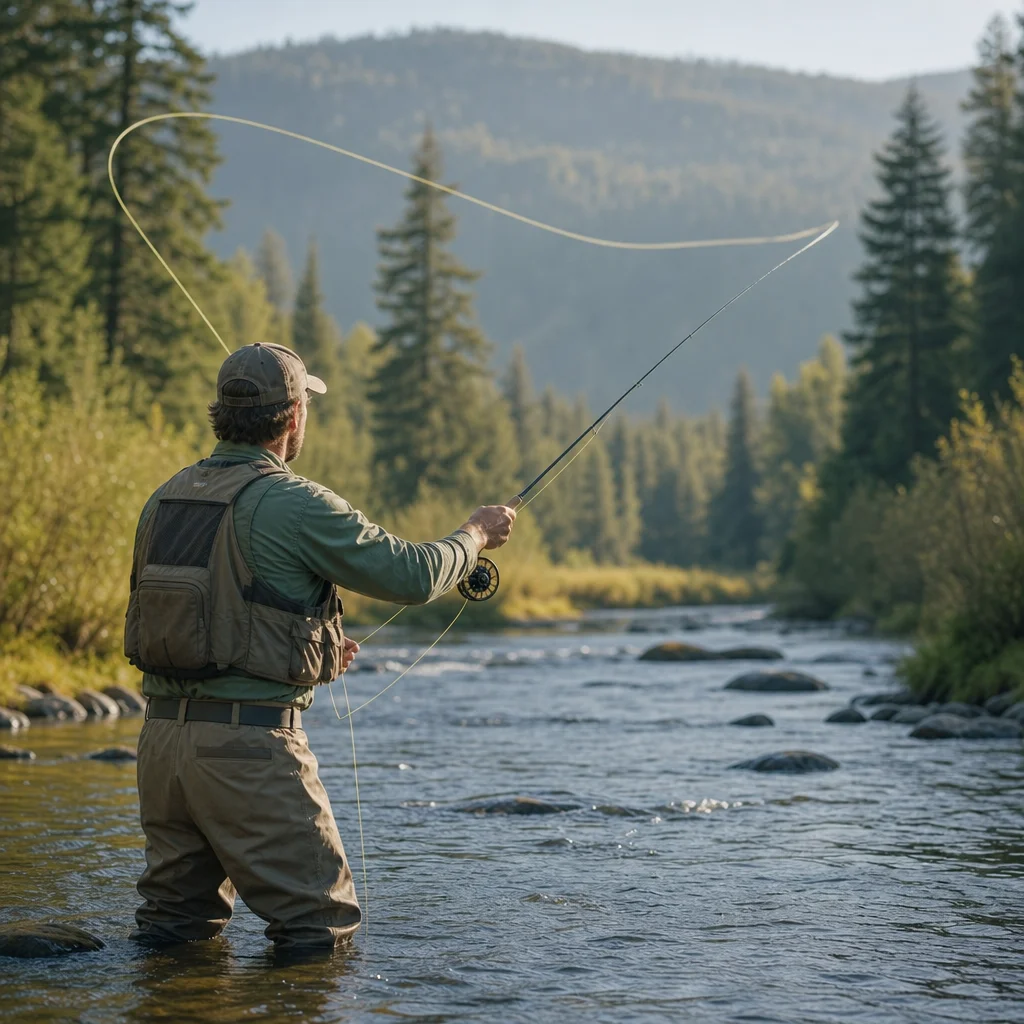
A bouldery mountain run can look inviting from the bank and awkward—or unsafe—once your boots are in it. Water folds around every rock, depths change within a few steps, and the best trout lies may be only a narrow cushion or quiet pocket beside the main current.
The useful habit is to slow down before you wade. Read the run as a series of current changes, identify likely holding water, and choose a route that keeps you out of the most forceful flow. Your first step should gather information, not scatter fish.
Start at the Bank
Before stepping into the stream, study the entire section from a few different angles. A higher bank, a gravel bar, or a large rock can reveal depth changes that disappear when you’re standing at water level.
Look for:
- Surface texture that changes abruptly
- Darker water suggesting greater depth
- Pale seams where fast and slow currents meet
- Foam or leaves collecting in a line
- Water piling up on the upstream side of a boulder
- Smooth, quiet water behind or beside an obstruction
- Gravel shelves that may provide a wading route
Try not to focus only on the obvious whitewater. Trout often hold close to it rather than inside its strongest push. The productive water may be a thin cushion in front of a rock, a soft edge beside the tongue, or a pocket behind a boulder where the current has lost energy.
Give your eyes time to adjust. In broken water, the first impression is often “everything is moving.” After a minute, the run starts to separate into faster and slower lanes.
Check the Run Before Wading: Water levels, weather, and stream conditions can change quickly in mountain country. Confirm that the crossing and wading conditions are appropriate for the day, and choose a different section if the current is rising, unusually turbid, or stronger than you can comfortably control.
Read Surface Texture as a Map
Surface texture is one of the quickest ways to estimate what is happening below. It won’t tell you the exact depth, but it can show where current speed and bottom shape change.
Broken, White Water
Whitewater usually marks shallow rock, a steep drop, or a fast chute. It can still attract trout, especially where food is being carried through, but the strongest part is often difficult for a fish to occupy efficiently.
Instead, examine the edges. A trout may sit where the turbulent water meets a calmer lane, using the seam as a conveyor belt for insects and other food. Cast to the softer edge first rather than charging into the froth.
A Smooth Tongue
A tongue is a smooth, often slightly darker stream of water flowing between rougher sections. It may lead into a deeper pocket or run over a relatively even bottom.
The head of the tongue, where water begins to accelerate, can be worthwhile. So can its sides, where a trout can hold near moving food without spending energy in the center of the flow. If the tongue narrows, pay attention to what happens downstream; that constriction may create a deeper slot.
Dimpling and Glassy Patches
Small dimples can indicate feeding fish, but they can also come from current passing over uneven stones. A glassy patch may be deep, slow, or simply sheltered by a rock.
Treat these clues as questions rather than conclusions. Note the spot, then compare it with nearby water. If a smooth patch sits immediately behind a large obstruction and food is drifting into it, it has a stronger case as a lie than an isolated slick with no visible current connection.
Find the Depth Changes
Trout usually need enough depth to feel secure, enough current to deliver food, and a manageable flow that doesn’t waste energy. In a bouldery run, those conditions may occur within a few feet of each other.
Look for transitions such as:
- A shallow shelf dropping into a darker slot
- A fast chute entering a deeper pool
- A gravel bottom changing to larger cobble
- A bank edge falling away beneath overhanging vegetation
- A pocket that looks small on the surface but widens below a foam line
Color can help, but it’s unreliable by itself. Sun angle, cloud cover, glare, and bottom color all affect how deep water appears. Polarized glasses can reduce glare, but they won’t turn every pool transparent. Use several clues together and leave room for uncertainty.
A useful sequence is to fish the shallow water first, then the deeper water behind it. Trout in a shallow lie may move when you cast, and your approach can disturb fish farther downstream if you wade across their holding water.
Identify Cushions and Seams
A cushion forms where current presses against the upstream face of a boulder or another obstruction. The water may appear slightly raised, smoother, or more aerated than the flow around it.
The best cushion is rarely the exact center of the push. Look along the sides, especially where the fast water meets a slower pocket. A trout can face into the current there, collect food, and use the rock to reduce the force of the flow.
Seams are similar opportunities on a larger scale. They form where two current speeds or directions meet. One side may be fast and rippled; the other may be slower and smoother. The line between them is often visible as a narrow change in surface texture.
Start with the near edge of a seam, then work toward the center only if your casts and drift require it. You’ll cover likely water without immediately putting your line, shadow, or boots over the fishiest part.
Search the Quiet Pockets
Quiet pockets aren't necessarily still water. They may have a gentle inward swirl, a slow surface, or a small back-current behind a boulder. Their value comes from shelter and access to food, not from complete calm.
Check three places around each substantial rock:
- The upstream cushion, where current meets the rock
- The side seam, where fast water slides past the obstruction
- The downstream pocket, where the current regroups
The downstream pocket often looks easiest to fish, so it can receive attention from several anglers. It may still hold trout, but don’t assume it is the only option. A narrow side pocket can be just as useful and may be less disturbed.
Also inspect the space between boulders. A fish may hold in a slot that is difficult to see from above but connected to the main current. If you can’t identify a safe way to reach it, fish it from the bank or leave it alone. A promising lie isn’t worth an unstable crossing.
Plan Your Wading Route Around the Fish
Once you’ve identified likely lies, decide how to reach them without walking through them. In a bouldery run, the safest-looking route and the best fishing route are often related: both usually follow the slower, shallower margins.
Before moving, choose a route with several stable reference points. Aim for gravel, bedrock, or broad, settled stones rather than rounded rocks covered in algae. Keep each step short and deliberate. Test the next surface before shifting your full weight, and maintain three points of contact when conditions call for extra stability.
Avoid stepping on the upstream faces of rounded boulders. Current can push against your legs while the rock gives your boot little dependable purchase. A gap between rocks may also be deeper than it appears, particularly where the surface is broken by foam.
If you’re using a wading staff, place it where you can test depth and stability before committing to the step. Don’t rely on the staff to compensate for water that is too deep, too fast, or beyond your comfort level. Retreating to the bank is a sound decision, not a failed approach.
Choose the Safer Line: Before crossing a bouldery section, compare the route with the fishable water. If reaching a lie requires entering the strongest current, climbing onto unstable rocks, or making a step you can’t clearly assess, fish from shore or move to another run.
Fish the Run in a Deliberate Order
A simple order helps you cover water while minimizing disturbance:
1. Fish the Bankside Water
Start with the water closest to you. Trout may hold along the bank, beneath grass, beside roots, or in a narrow cushion that is easy to overlook. These fish are the most vulnerable to your approach, so cast before moving.
2. Cover the Near Seams and Pockets
Work the softer edge of the nearest current seam, then the pockets around visible rocks. Keep your presentation short and controlled if the run is tight; long casts can put your line across several conflicting currents.
3. Examine the Main Slot
After the edges are covered, fish the deeper slot or central tongue. Look for a drift that enters the current at the right depth and exits naturally. In broken water, a perfect-looking cast may still drag if it crosses multiple speed changes.
4. Move Only After the Water Is Covered
When you do move, step into water you’ve already fished rather than through water you plan to fish. Keep your body low and your movements quiet. If the surface changes dramatically after one step, stop and reassess rather than continuing on habit.
Common Reading Mistakes
Mistaking Whitewater for the Whole Lie
Fast water attracts attention, but the trout may be on its edge. Focus on transitions and cushions instead of casting repeatedly into the strongest push.
Assuming Dark Water Is Always Deep
Darkness can come from shade, glare, or a darker bottom. Confirm depth by comparing surrounding features and watching how the current behaves.
Walking to the Best-Looking Rock
The largest boulder is obvious, but the fish may be in the quieter water beside a smaller obstruction. Study the current around several rocks before committing to a route.
Wading Before Fishing the Near Water
Your boots create vibration, displaced water, and disturbance. Cast from the bank or shallow margin first, especially where the water is clear and the current is compact.
Treating Every Pocket as Equal
A pocket connected to food-bearing current is more promising than an isolated patch of calm water. Ask how food enters, where a trout could face the flow, and what shelter the lie provides.
A Simple Bank-to-Run Checklist
Before your first step, ask:
- Where are the shallow shelves and deeper slots?
- Which seams connect fast water with slower holding water?
- Where are the cushions, side pockets, and downstream shelters?
- Which fishable water is closest to my position?
- What route avoids the strongest current and unstable rocks?
- Can I reach the next step without guessing about its depth?
You don’t need to decode every rock in the stream. Start by identifying current changes, then match them with depth, shelter, and a food path. Fish the water nearest you before moving, and treat wading as a separate decision from casting.
On your next mountain stream, spend an extra minute at the bank. Mark the likely lies in your mind, choose the quietest safe route, and let the structure of the run—not impatience—decide where you step.