How to Read a Lake Inlet for Trout in Early Summer
The coolest water isn't always the best-looking water, and the deepest edge may not be the most productive. I’ll show you how to assess an early-summer lake inlet by temperature, current, depth, and shoreline structure before choosing where to fish.
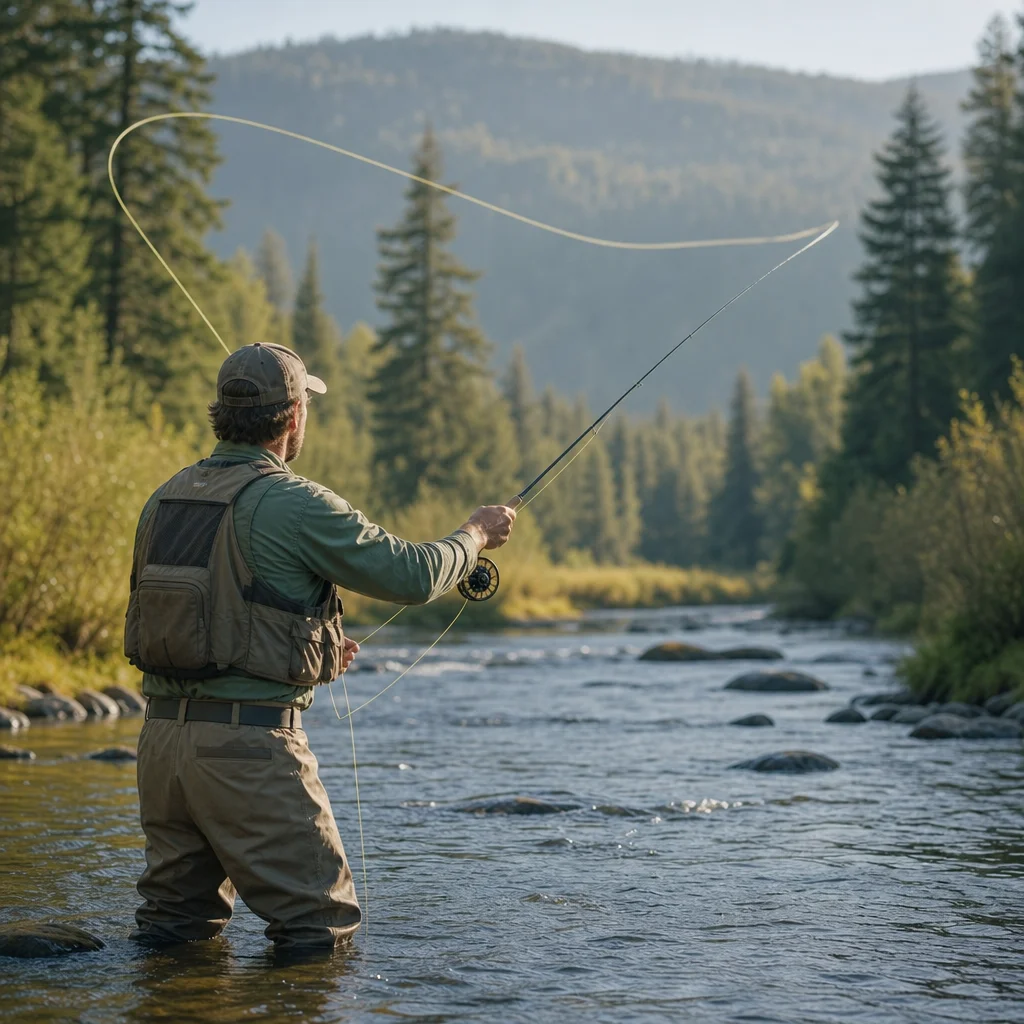
Start with the inflow, not the obvious mouth
A lake inlet can look like a single fishing spot, but trout often use several distinct zones around it. The stream mouth may be crowded, shallow, or too turbulent, while the most consistent fish hold along a temperature boundary, a current seam, or a submerged shelf a short distance away.
In early summer, begin by asking four questions:
- Where is the coldest suitable water?
- Where does moving water meet slower lake water?
- What depth lets trout feed without spending more energy than they gain?
- Where can fish find cover from light, wind, and predators?
The answers can change by late morning, after a rain, or when reservoir releases alter the inflow. Treat the inlet as a connected system rather than a single target.
Find the temperature advantage
Inflowing water is often cooler than the lake during the first part of summer, but “cooler” doesn't automatically mean “better.” Trout still need enough oxygen, food, and comfortable holding water. A narrow, cold trickle may attract little attention if it carries heavy silt or has too much velocity for fish to hold efficiently.
Use a thermometer to compare the tributary, the immediate plume, and nearby lake water. Take readings at similar depths and allow the thermometer time to stabilize. A single surface reading can mislead you, especially when wind has mixed the upper layer or the inlet is shaded.
Look for a useful temperature transition rather than the coldest number available. Trout may sit where cool inflow spreads over warmer lake water, particularly when that boundary also concentrates drifting insects or disoriented baitfish. The productive zone can be just inside the current, just outside it, or beneath the visible surface plume.
Early summer conditions are especially variable:
- Snowmelt or cold high-country runoff: The inlet may be too cold and fast in the morning, with better holding water where the current loses energy.
- Warm, clear tributary flow: Trout may favor the deeper lake edge or a shaded bank instead of the stream itself.
- Rain-swollen inflow: Fresh food can draw fish in, but high turbidity and unstable flow may push them away from the strongest current.
- Reservoir drawdown or release changes: The inlet’s depth and current pattern can shift enough to invalidate yesterday’s observations.
If you find a temperature transition but no signs of life, keep looking for the combination of temperature and manageable current. Trout aren't required to admire your thermometer.
Map the current edges
The most visible current is usually the least subtle feature. It is also only part of the picture. A lake inlet may create several seams:
- The edge between fast tributary water and slow lake water
- A secondary seam behind a rock, point, or submerged log
- The downstream side of a shallow bar
- A deep trough beside the inflow channel
- A rotating pocket where wind pushes surface water against the current
Trout commonly position just outside the fastest flow, where they can intercept food without holding in the full force of the inflow. In clear water, you may see this as a faint line of drifting debris, foam, or different-colored water. In stained water, feel and depth changes become more important than visual boundaries.
Approach the seam from the side when possible. Casting directly across the strongest current often gives you a short, awkward drift and pulls the fly unnaturally toward shore. A quartering cast upstream or across the seam can keep the fly in the transition longer. Adjust your angle before changing flies; presentation problems often masquerade as fly-selection problems.
Don't ignore the downwind side of the inlet. Wind can push floating insects, plankton, and warm surface water toward one bank, creating a second feeding lane that has little to do with the stream’s centerline. If wind and inflow oppose each other, inspect the area where the two movements meet rather than assuming one pattern has canceled the other.
Read depth as a holding decision
A productive inlet usually offers trout a choice of depths. They may feed shallow during low light, move onto a shelf when insects are active, and drop into a channel as brightness increases or boat traffic rises.
Look for these depth features:
The shallow entry shelf
A shallow delta or gravel fan can be excellent when water is dim, the surface is calm, and food is moving. It may also be too exposed once the sun reaches it. Fish on a shelf often move quickly between feeding and deeper refuge, so avoid wading across it before you have covered the edge.
The channel beside the fan
Where inflow has cut a trough through the lakebed, trout can hold near the bottom or along the upper lip. This is often more reliable than the center of a broad, featureless plume. Use a depth finder from a boat, a long cast from shore, or careful observation of shoreline contours to identify the drop.
The first deeper break
The first substantial depth change outside the inlet may be the best all-day feature. It gives trout access to moving food while providing a nearby escape from bright light, warm water, or sudden disturbance. On a reservoir, the break may shift as the water level changes, so compare the current shoreline with visible old banks, submerged trees, or contour information.
The thermocline edge
As the lake warms, it may develop layers with different temperatures and oxygen levels. A thermocline can concentrate fish, but its depth isn't fixed and may vary across the lake. An inlet can also disrupt or deepen the local layering. If surface water looks empty, test progressively deeper rather than assuming the inlet has failed.
Avoid treating a particular depth as a universal rule. The useful depth is the one that combines tolerable temperature, adequate oxygen, food delivery, and protection from current.
Use shoreline structure to predict cover
Shoreline structure helps trout conserve energy and avoid exposure. At an inlet, prioritize structure that changes either current speed or visibility:
- Undercut banks and root systems
- Large boulders that split the inflow
- Fallen trees along the lake edge
- Reed lines or flooded brush
- Steep banks that shade the water
- Points that interrupt the plume
- Submerged roadbeds, walls, or old channels in reservoirs
Structure doesn't have to be dramatic. A small shadow line beside a bright gravel flat can be enough to hold a fish. In clear high-country lakes, the shadow may matter more than a modest temperature difference during the middle of the day.
Look for the intersection of features. A rock beside a depth break is more interesting than a rock alone. A shaded bank with a current seam deserves more attention than a shaded bank with no food delivery. An inlet channel that meets a submerged point can create a predictable travel lane.
Adjust for light, wind, and water clarity
Early-summer inlet fishing changes throughout the day. Low light usually expands trout movement onto shallow shelves and exposed current edges. As light increases, fish may retreat toward depth, shade, structure, or the lower edge of the plume.
Wind can either improve an inlet or flatten its advantages. Moderate wind may distribute food and reduce the visibility of your approach. Strong wind can create dangerous shore conditions, muddy the shallows, or push warm surface water away from the inflow. Watch the water you intend to fish, not just the weather at the parking area.
Clarity helps determine how close you can approach and how much weight or fly movement is sensible. In clear water, keep a low profile, lengthen the leader when practical, and cover the outside edge before stepping closer. In stained water, fish may hold tighter to structure and respond better to a fly that creates a clear silhouette or slight vibration. Excessive weight can foul in debris and drag unnaturally through a variable seam.
A systematic way to fish the inlet
Rather than casting randomly, work from low-risk observations to more committed presentations.
- Watch first. Spend several minutes identifying current lines, surface food, cruising fish, bait, and possible escape water.
- Measure and compare. Check temperatures and estimate depth changes without disturbing the shallow margins.
- Start on the outside edge. Cover the lake side of the plume or the nearest structured seam before entering the water.
- Fish the upper options first. Begin with the depth and fly style that match the light, insects, and visible activity.
- Move through the seam. Change casting angle and position so the fly crosses different current speeds naturally.
- Probe the first break. If shallow water is quiet, work the channel lip, deeper edge, or shaded structure.
- Recheck after conditions change. Rising wind, sun on the water, a flow increase, or a hatch can move fish within the inlet system.
This sequence protects the best water from unnecessary disturbance and gives you useful information even when trout don't cooperate.
Check this season’s inlet conditions: Before wading or launching, confirm current local regulations for tributary mouths, artificial-lure or bait restrictions, seasonal closures, access limits, and boating requirements. Also check flow changes, weather, and water conditions through the responsible land or water-management agency; inlet rules and hazards can vary by lake and year.
Edge cases worth testing
Some inlets break the usual pattern. A small tributary may be unproductive because it is warmer than the lake. A large plume may hold no trout when its sediment load is high. A spring-fed inflow may be most valuable several yards below the visible mouth, where its water mixes with the lake.
If the inlet is crowded, don't assume the fish are gone. Check the first downstream point, the opposite side of the plume, or a deeper parallel channel. If every angler is casting into the mouth, lightly pressured fish may be holding on the seam behind them.
If you see trout but can't get them to eat, first examine your approach and drift. Fish near an inlet see repeated presentations, unnatural drag, and excessive wading disturbance. Change your position, reduce splash, and present from a different current angle before cycling through a box of flies.
Practical next steps
On your next early-summer lake trip, bring a thermometer, polarized glasses, a way to estimate depth, and a simple plan for recording conditions. Note the time, inflow temperature, lake temperature, wind direction, water clarity, and the depth where you found activity.
Prioritize intersections: cool water with a manageable seam, a depth break with food movement, or structure that provides both cover and an easy feeding lane. Start outside the obvious mouth, protect shallow water from unnecessary wading, and let changing light and current tell you when to move. That approach turns an inlet from a promising-looking patch of water into a set of testable decisions.