How to Read a Tailwater When the Current Looks Uniform
I’ll compare the subtle lies and useful clues in a uniform-looking tailwater, from depth and bottom texture to weed lines and bank structure, so you can locate trout efficiently without burning through a box of flies or a long stretch of river.
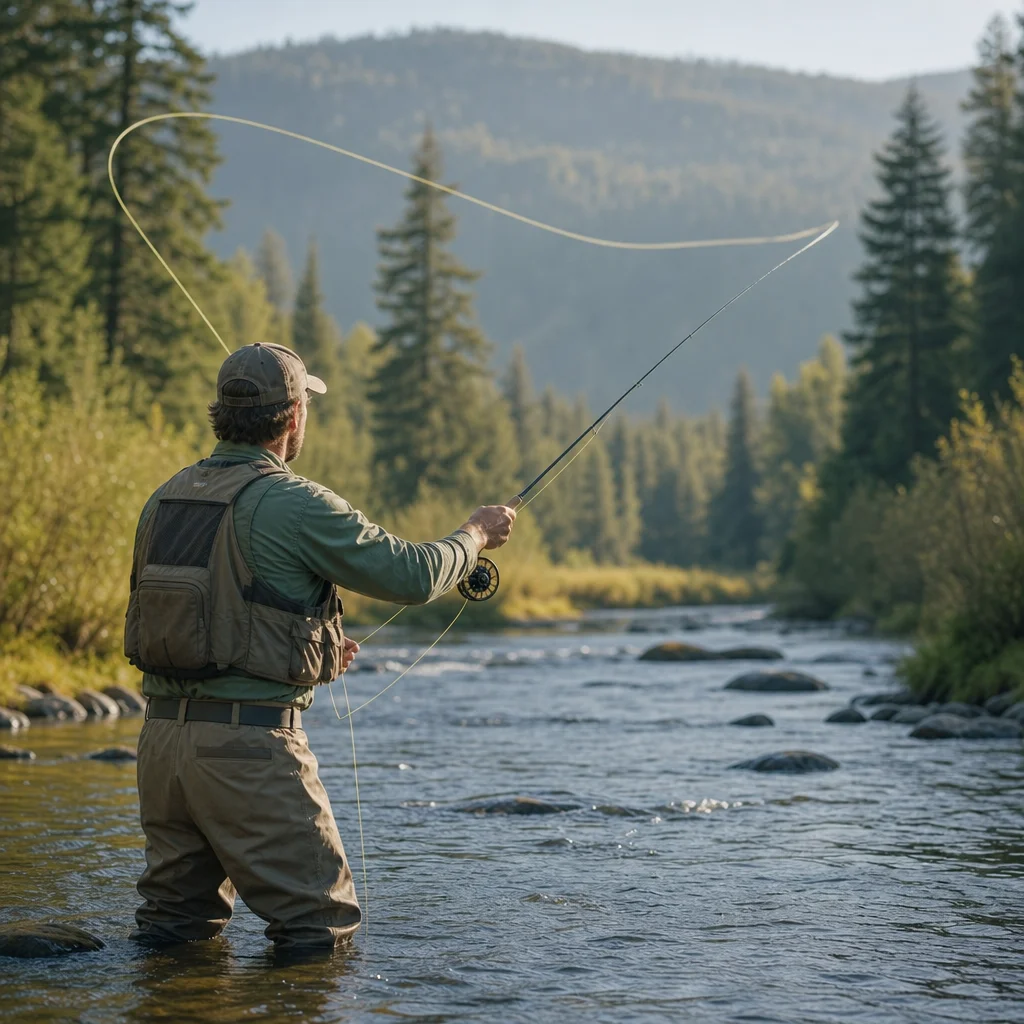
The hardest tailwaters to read are often the ones that look easiest. When the surface runs at a steady pace from bank to bank, you lose the obvious riffle, pool, and seam cues that usually organize a search. That doesn’t mean the river lacks structure. It means the useful structure is underwater, along the edges, or revealed only by how the current behaves around it.
Your goal isn't to inspect every square foot. It’s to identify the places where trout can hold with reasonable security while spending as little energy as possible. On a regulated river, small changes in depth, bottom texture, bank shape, and flow speed can matter more than a dramatic-looking surface feature.
Start with the river’s shape, not the fly box
Before changing flies, spend a few minutes studying the reach. Look for differences in the bank angle, water color, surface speed, and the amount of vegetation. A uniform current viewed from downstream may look very different when you walk upstream or change your angle.
Break the river into manageable questions:
- Where is the deepest water likely to be?
- Where does the bottom appear to rise or flatten?
- Which bank offers cover or a softer current?
- Where does water slow, accelerate, or change direction?
- Which features are likely to remain useful at the current flow?
This approach saves time because it gives you a reason to fish a location. If you wade in and cast randomly, every unproductive drift tells you very little. If you target a particular depth change or weed edge, the same empty drift helps you refine your reading.
Depth changes are often the primary holding feature
In a tailwater with few visible pools, depth is frequently the closest equivalent. Trout can hold in deeper water for protection, temperature stability, or relief from the current. The deepest section isn’t automatically the best place, but a sudden or gradual depth change deserves attention.
Look for clues such as:
- A darker band running parallel to the bank
- A clean drop-off beside a shallow flat
- A sharp change in surface color
- Submerged objects that disappear into deeper water
- A bank that falls steeply below the surface
A long, featureless deep channel may hold fish, but it can be inefficient to search. Focus first on where depth changes. A trout may sit near the lip of a drop rather than at the deepest point, especially if food is moving from shallow water into the channel.
Approach these spots from the shallow side when possible. Cast across or slightly upstream so your fly reaches the depth transition before drag becomes a problem. If you wade directly onto the flat or drop-off, you may disturb the fish you intended to target.
Use surface clues carefully
Dark water can indicate depth, but it can also reflect cloud cover, a different bottom material, or surface glare. Confirm your interpretation by watching the current and, where conditions allow, checking with a polarized lens. Don’t assume that every dark patch is a trench or that every light patch is shallow enough to cross.
Bottom texture tells you more than a smooth surface
A uniform surface can conceal a bottom that changes every few feet. Gravel, cobble, sand, bedrock, and fine silt each influence how trout hold and how aquatic insects move.
A gravel or cobble edge may provide feeding opportunities, especially where the bottom changes from one material to another. Bedrock can create smooth lanes and pockets around cracks or ledges. Sand may form broad, less structured areas, but the edge between sand and rock can be worth more than either material alone.
Pay attention to where the current seems to slow just above the bottom. Water moving over uneven rock can create small pockets that are invisible from a distance. These may be only a few inches deeper or slower than the surrounding river, but that difference can reduce the energy a trout spends holding position.
If you can see the bottom, imagine how food would move across it. Would nymphs tumble over the rocks, collect in a depression, or be swept along a clean lane? That question often gives you a better starting point than choosing a fly based only on what is hatching.
Weed edges create dependable boundaries
Aquatic vegetation is one of the most useful forms of structure in a regulated river. It provides cover, changes current speed, and can concentrate drifting food. The outside edge is often more productive than the thickest interior because it combines access to food with a clearer holding lane.
Fish the weed line in sections rather than covering it all with repeated casts. Start with the upstream end, downstream end, and any notch or opening in the vegetation. Then test the edge where the current appears to press against or peel away from the weeds.
A weed edge can produce several different lies:
- Trout may hold just outside the vegetation in a clean current.
- They may sit in a slower pocket within an opening.
- They may face into flow along the upstream end.
- They may use the darker water beneath or beside the plants as cover.
The best presentation depends on which of these you’re targeting. A long drag across the entire edge may look efficient, but it often gives the fish a poor view of the fly and alerts them to your presence. Shorter, deliberate drifts let you cover distinct pieces of structure without wasting casts.
Bank structure matters even when the middle looks better
Uniform tailwaters often push anglers toward the center because that’s where the visible current appears most interesting. The banks may be better because they offer reduced current, overhead cover, undercut edges, or a narrow band of depth that the middle lacks.
Inspect places where the bank changes from gradual to steep. Roots, rock, fallen limbs, shade, and undercut soil can all create holding water. A small indentation may slow the current enough for a trout to remain there while feeding into the faster flow beside it.
Don’t overlook the downstream side of bank objects. A root wad or rock may create a small cushion of slower water, while the upstream side can produce turbulence or a tight food lane. Test both sides, but begin with the area where the current looks controlled rather than chaotic.
Bank structure also affects your approach. If you can fish from shore or a shallow margin, you may reach the lie without entering the water. That costs less in disturbed fish and reduces unnecessary wading, particularly when the river is flowing strongly.
Find flow features that are too subtle to call seams
A tailwater doesn’t need a visible V-shaped seam to have meaningful current differences. Watch for:
- A line of bubbles moving at a different speed
- Leaves or foam collecting briefly, then releasing
- Surface dimples that change direction
- A narrow slick beside broken water
- Water that pushes against one bank and slides away from it
- A slight color change where two velocities meet
These clues can reveal current boundaries beneath an otherwise smooth surface. Trout often hold beside the boundary rather than in the fastest water. Their position may be only a foot or two from the visible line, so adjust your casts gradually instead of covering a broad area with the same drift.
A useful test is to watch one piece of foam or leaf for several seconds. If it accelerates, stalls, or shifts sideways, the water underneath is probably more complex than it looks. That feature is worth a few carefully placed drifts.
Compare the most efficient search order
When you have limited time, use a consistent order that starts with the cheapest information. First inspect the banks and surface. Then identify depth changes, weed edges, and current boundaries. Only after those clues have been tested should you commit to a long run of casts through featureless-looking water.
A practical sequence is:
- Observe from shore before wading.
- Fish the nearest promising bank structure.
- Test visible depth transitions and weed edges.
- Work subtle current boundaries with short, controlled drifts.
- Expand into the middle only when the structure justifies it.
This isn’t a rule that trout never hold in open water. They can. The point is to avoid spending an hour searching a broad, uniform section when the edge offers clearer odds and a simpler presentation.
Change one variable at a time. If depth looks right but the drift is poor, fix the cast before changing flies. If the presentation is clean and the depth is wrong, adjust the indicator, leader, or angle. Random changes consume time and make it difficult to learn what the river is telling you.
Check the day’s flow before you wade: Tailwater depth, velocity, generation schedules, access, and wading conditions can change quickly. Review the current local river information and regulations, and treat yesterday’s safe crossing or familiar holding water as unconfirmed until you assess it again.
Adjust your reading when flows change
A feature that works at one discharge may disappear or move at another. Higher flows can cover shallow shelves, strengthen bank currents, and push trout closer to protected edges. Lower flows may expose weed beds, spread fish across flats, and make bank approach more important.
Rather than memorizing a single “best spot,” learn how the spot changes. At increased flow, inspect the inside of bends, bank indentations, and areas behind substantial structure. At reduced flow, look for newly defined drop-offs, weed boundaries, and narrow lanes beside shallow water.
The same principle applies to water clarity. In clear conditions, trout may use shade, depth, and cover more heavily. In stained water, a fish may hold closer to structure and be less willing to move far for food. Your reading should determine both where you cast and how close you can get.
A short checklist for a featureless-looking reach
Before moving on, ask yourself:
- Did I identify at least one depth transition?
- Did I inspect both the inside and outside of any weed edge?
- Did I check bank changes, shade, roots, and undercuts?
- Did I watch bubbles or debris for changes in speed?
- Did I fish the likely holding side of each feature first?
- Did I change my presentation before changing several flies?
Uniform current is rarely truly uniform. The productive clues are simply quieter: a darker strip, a different bottom, a weed boundary, or a bank that bends by a few feet. Start with those low-cost observations, make precise casts, and move only when the available evidence runs out. Over time, you’ll spend less effort searching empty water and more time presenting a fly to the places trout can use.