Where Trout Hold When a Creek Is Low and Clear
I’ll compare the few pieces of cover, depth, positioning, and approach that matter most when you’re looking for trout in a low, clear creek, with late-summer disturbance kept to a minimum.
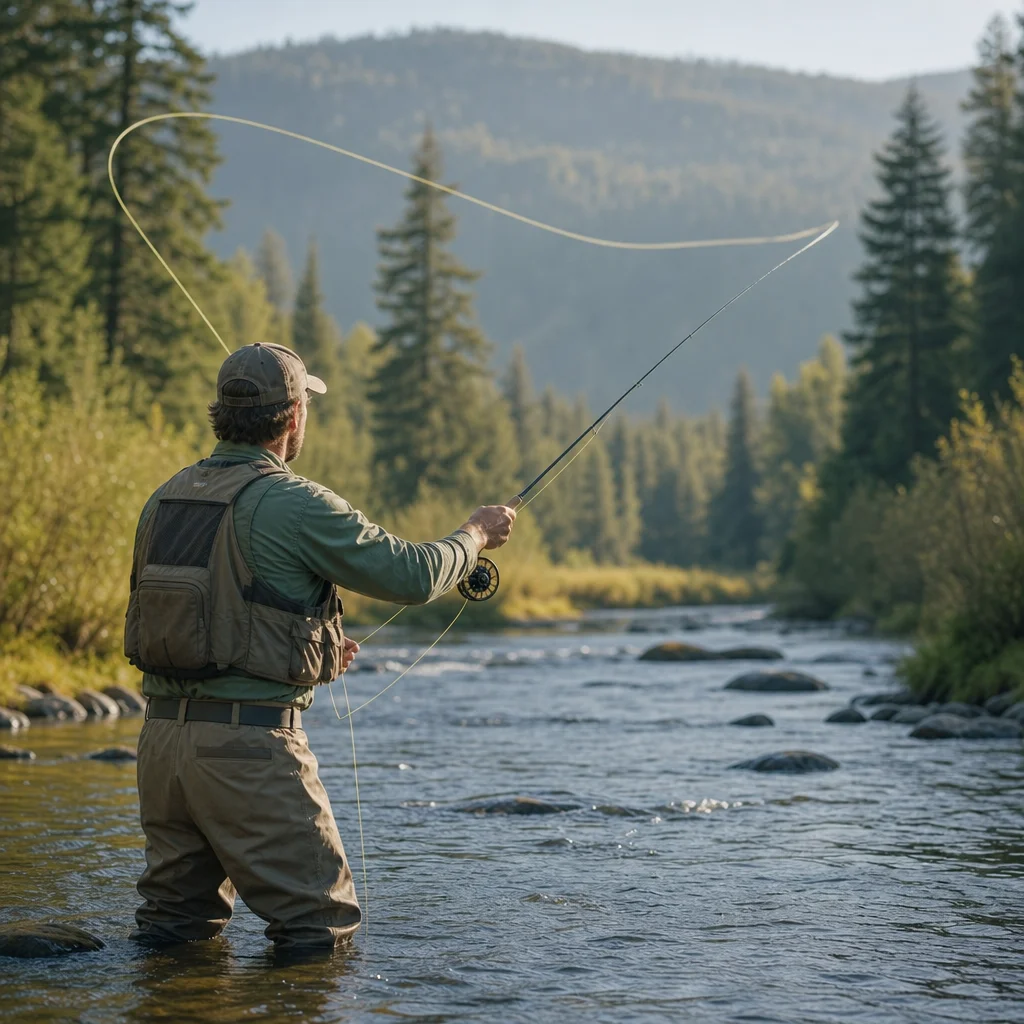
Low, clear water makes trout easier to see—and easier for them to see you. When a creek drops in late summer, familiar holding water can shrink, shift, or become exposed. The best response usually isn’t carrying more flies or covering every inch of water. It’s identifying the limited places that still offer depth, shade, current, and security, then reaching them without announcing your arrival.
Start with the new shape of the creek
Reduced flow changes a creek in several connected ways. Riffles become shallower, pools lose some of their depth, and current seams may narrow or disappear. Water that once spread across a broad run can be forced into a few distinct lanes around rocks, undercut banks, and woody cover.
That concentration is useful. Trout may have fewer comfortable places to hold, which means you can often narrow your search. But low water also removes much of the visual confusion that protects an angler. Your outline, shadow, bright clothing, and poorly placed cast are more obvious.
Before stepping into the creek, spend a minute looking from the bank. Note:
- The deepest remaining water
- Shade from bankside vegetation, rocks, or overhanging trees
- Undercut edges and submerged roots
- Narrow current seams beside slower water
- Dark shapes that could be trout, submerged structure, or both
- Escape routes that let a fish move away from danger
The goal isn't to map the entire creek. It’s to find the handful of places where a trout can spend energy efficiently while remaining difficult to approach.
The minimalist holding-water checklist
In low, clear conditions, prioritize four features: depth, cover, current, and access to food. A spot doesn’t need all four to hold fish, but the more of them it combines, the more attention it deserves.
Depth
Depth provides security and often moderates temperature. It doesn’t have to mean a deep pool. A six-inch depression beside a shallow riffle can be important if it is the only place nearby where a trout can sink below the strongest light and current.
Look for:
- The head and tail of pools
- Scoured pockets behind larger rocks
- Slots between boulders
- The inside edge of a bend where the bottom drops away
- Small depressions beneath a shelf or undercut bank
In very low water, the deepest section may be only a foot or two deeper than its surroundings. That difference can still matter, especially when the creek offers little other protection.
Cover
Cover is anything that breaks a trout’s outline or gives it a quick escape route. Shade is one form, but it isn’t the only one. A trout may use a submerged log, a dark bank, a cluster of grass, or the downstream side of a rock even when the water looks too shallow at first glance.
Pay particular attention to cover that is connected to moving water. A trout tucked beside a log with a clean feeding lane may be more likely to hold there than one sitting in an isolated patch of shade with no useful current.
Current
Trout still need food delivered to them, and low water doesn’t eliminate the value of current. It makes the best current easier to identify.
Focus on the narrow tongues and seams where faster water meets a slower cushion. A fish may hold just inside the soft edge, allowing the current to bring food while reducing the effort required to stay in position. The useful lane may be only a few inches wide.
Watch the surface for subtle clues: a line of bubbles, a slight change in texture, or floating debris moving at a different speed. Those details can reveal a seam that is difficult to see from a standing position in the water.
Food access
A protected lie is more valuable when it gives a trout access to food. Look for spots below riffles, beside submerged vegetation, near the edges of foam lines, and at the junction of two current speeds.
Don’t assume the most obvious feeding lane is the best target. In clear water, a trout may sit just outside it, particularly if the center of the current is too exposed or turbulent. The quiet edge often matters more than the fastest water.
Approach the best water before you enter it
The most important low-water adjustment is often your route, not your rig. Once you wade through a likely lie, you may cloud it with silt, push a pressure wave toward the fish, or force trout into less favorable water.
Work from the bank whenever possible. Move slowly, keep a low profile, and avoid crossing the creek simply because the opposite bank looks convenient. If you must enter, step in well downstream of the water you intend to fish and give it time to settle before presenting a fly.
Manage your profile
Keep your body below the skyline, especially when approaching open banks or shallow pools. Wear subdued clothing that doesn’t create a sharp contrast with the background. Your shadow can be just as alarming as your body, so consider the sun’s position before moving into casting range.
A low crouch helps in some situations, but repeated exaggerated movements can also draw attention. Controlled, ordinary movement is usually better than creeping theatrically along the bank. Trout aren't grading your posture; they’re responding to changes in their surroundings.
Stay on the dark side of the creek
Whenever possible, approach from shade and keep the sun in front of or to the side of you rather than directly behind you. A backlit angler can cast a long shadow across the water, particularly in the morning or late afternoon.
Use bank vegetation as concealment, but don’t trample it or lean heavily into unstable edges. Low summer flows can expose soft banks and undercut sections that look solid from above.
Fish the near water first
Before making a long cast, inspect the water closest to you. Trout often use the near bank, the edge of a pool, or a small pocket beside your position. Casting over that water to reach the far side can waste the opportunity and may spook fish you could have reached easily.
A useful sequence is to fish the nearest likely lie, then the middle distance, and finally the far edge. Change your position rather than repeatedly lengthening your cast when a better angle is available.
Choose the simplest presentation that works
Low, clear creeks reward precision and punish unnecessary movement. Start with the lightest, least disruptive presentation that allows you to reach the target and control the drift.
Keep casts short when the water permits. A short cast gives you better control, reduces false casting, and keeps more line off the surface. If you need distance, consider moving your feet first—carefully and downstream—before adding more line.
A drag-free drift remains important, but avoid making multiple corrective casts over the same fish. One clean presentation is generally better than a series of increasingly urgent repairs. If the trout refuses, change one variable at a time: angle, distance, depth, fly size, or your position.
For surface presentations, land the fly away from the fish when possible and let it enter the feeding lane naturally. For subsurface work, avoid crashing the rig into the small pocket you’re trying to fish. In clear water, the entry point can matter as much as the drift.
Don’t overlook shallow water—but read it carefully
It’s tempting to ignore water that appears too thin to hold a trout. That can be a mistake, particularly where shallow water leads directly to deeper cover or provides a feeding lane along a bank.
The key distinction is between exposed shallow water and protected shallow water. A trout may use a shallow riffle with broken surface and shade, while avoiding a flat, bright section with no structure. Look for depth changes, broken current, and nearby escape cover rather than judging by depth alone.
Move around these areas with extra care. A wading boot in six inches of clear water can send vibration and silt well beyond the point of contact. Fish the water before entering it, and treat every quiet margin as a possible holding lie until you’ve observed it closely.
Check the creek before you wade: Late-summer conditions can bring unusually warm water, low-flow restrictions, or local rules about where and how you may fish. Confirm current regulations and consider avoiding active fishing when water temperatures are unsafe for trout; local fisheries guidance is the appropriate source for those decisions.
When a spot looks perfect but produces nothing
A promising lie can be empty for several reasons. The fish may have moved to a cooler section, shifted deeper, or already been alerted by another angler. Low water makes these changes easier to notice but not always easier to interpret.
If you see a trout and it refuses, stop before changing everything. First check your position and line. A fish that turns away as the fly approaches may be reacting to drag, an unnatural leader angle, or your presence rather than the fly itself.
If you see no fish, make only a few well-planned presentations before moving. In clear water, repeated casts can turn an uncertain opportunity into a certain refusal. Move to the next likely lie and return later only if the creek offers a different angle or the light has changed.
A compact plan for low, clear water
Use this sequence when you reach a late-summer creek:
- Observe from the bank before wading.
- Identify the deepest, darkest, most current-connected lies.
- Plan your route so you don’t cross or disturb them.
- Fish near water before adding distance.
- Keep casts short and presentations quiet.
- Change one variable at a time after a refusal.
- Move on before repeated casts create more disturbance than opportunity.
- Handle any trout quickly and gently, keeping it in the water as much as practical.
Low, clear water doesn’t require a complicated system. Find the few places that still provide security and food, approach from the side that keeps you hidden, and make the first presentation count. In late summer, doing less—wading less, casting less, and disturbing less—often gives you more useful information and a better chance at the trout holding in the creek’s remaining comfortable water.