How to Read a Small Spring Creek Without Spooking Its Best Fish
Clear small spring creeks reward observation before presentation: depth changes, weed edges, feeding lanes, and escape routes all shape where trout feel secure. I’ll show you how to balance stealth, positioning, and casting choices without turning every approach into a slow-motion military operation.
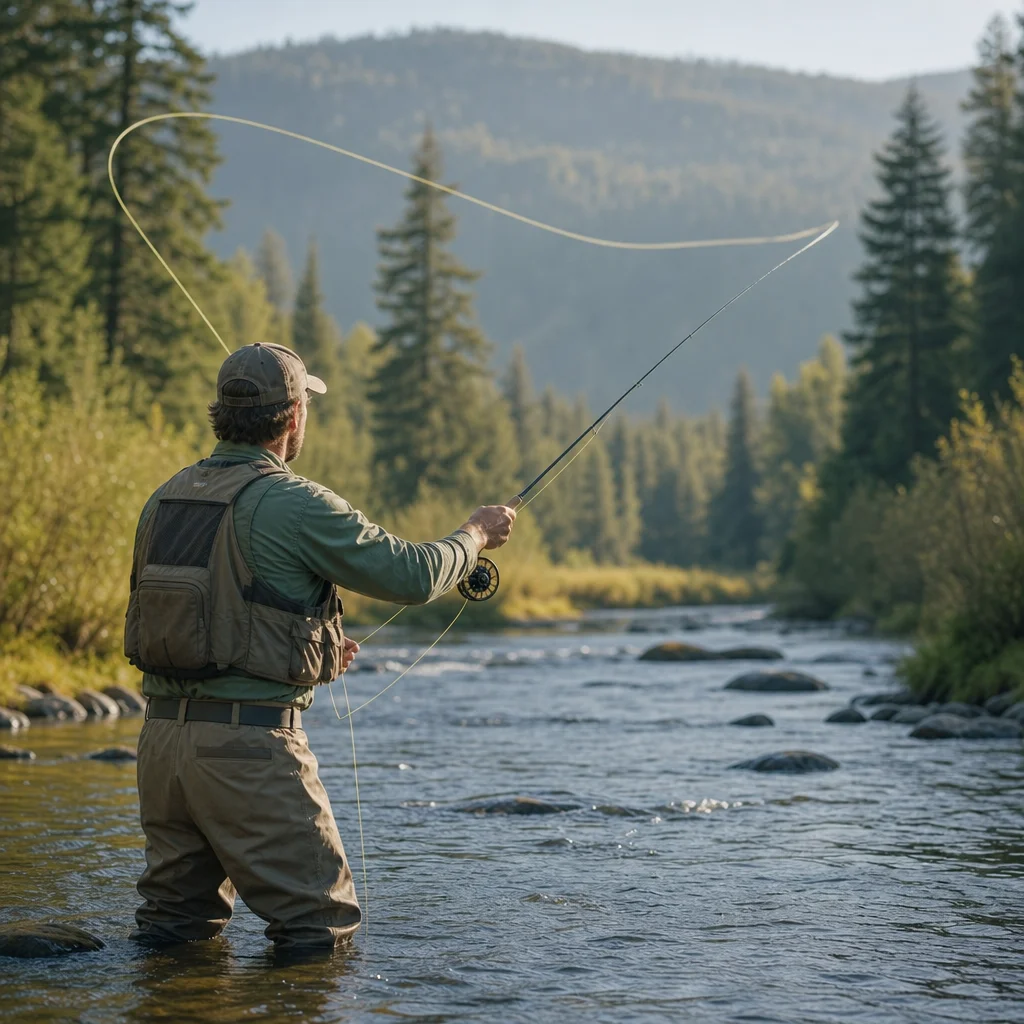
Small spring creeks can look deceptively simple. The water is narrow, the current seems gentle, and the trout may be visible. Yet that clarity gives fish plenty of time to inspect your legs, leader, fly line, and any shadow that arrives before the fly does.
The challenge isn’t simply finding trout. It’s deciding which features matter most, where you can stand without ruining the water, and whether a longer cast is actually safer than a closer one. On a small Mid-Atlantic spring creek, the best approach usually comes from combining several modest clues rather than relying on one obvious holding spot.
Start by reading the creek from a distance
Before stepping into the water, spend a few minutes looking from the bank. Small spring creeks often have more structure than they first appear to contain: a shallow gravel shelf beside a darker trough, a mat of submerged vegetation, a cut bank, or a quiet pocket behind a slightly raised bottom feature.
Look for three things first:
- Depth changes: darker water, a visible drop in the streambed, or a seam where shallow water meets a deeper channel.
- Food-concentrating features: weed edges, current breaks, soft pockets, and narrow lanes where drifting insects pass predictably.
- Security features: undercut banks, overhanging grass, roots, shaded margins, and deep water that gives a trout a quick escape route.
The most attractive water isn't always the best water. A broad, dark pool may hold fish, but an exposed approach can make it nearly impossible to fish. A less dramatic lane beside a weed bed may offer better feeding conditions and enough cover to keep a trout calm.
Check your approach before wading: Look for a stable bank, avoid stepping into visible holding water, and confirm the creek’s current access, wading, and seasonal regulations before you begin.
Identify the creek’s depth changes
Depth is relative on a small creek. A change of only a few inches can create the slower water, overhead security, or temperature difference a trout prefers. You don’t need to locate a dramatic hole. You need to notice where the bottom stops being uniform.
A shallow riffle often feeds a deeper run. The transition may be only a narrow darker strip along one bank. Trout can sit just below the change, facing upstream and letting the current deliver food while the deeper water gives them room to retreat.
When you see a depth change, ask:
- Where is the fastest current entering it?
- Where does that current slow down?
- Is the deeper water close enough to cover that a trout can hide from overhead threats?
- Can you reach the feeding lane without standing in the fish’s likely escape route?
Those questions help you separate a place that merely looks deep from a place that connects food, current, and security.
Approach depth changes from the side
A direct upstream walk toward a dark trough can push fish out before you ever make a cast. Whenever possible, approach from the bank, stay low, and fish the near edge first. If the far side is more promising, work toward it gradually rather than crossing the entire creek in one move.
There’s a trade-off here. Staying on the bank preserves the water but may force a difficult angle or a longer cast. Wading can improve your position, but every step creates pressure waves, displaced debris, and movement that clear-water trout may notice. On a very small creek, preserving the water is usually worth more than gaining a few feet of casting distance.
Use weed edges as both food lanes and boundaries
Aquatic vegetation can make a creek look untidy, but it often organizes the entire feeding situation. The upstream side of a weed bed may intercept drifting food. The downstream edge can form a softer current where trout hold with less effort. The open-water side may provide an easy lane for insects and a clear view of approaching danger.
Don’t fish only the visible outside edge. Inspect the vegetation for openings, channels, and darker slots. A trout may sit in a small gap where current brings food over the weeds without forcing the fish into the fastest flow.
The best cast is often parallel to the weed edge rather than directly across it. A parallel presentation can keep the fly in the feeding lane longer and reduce the amount of line that lands on top of the fish. It also gives you a clearer way to mend or manage slack without dragging the fly through the vegetation.
Decide between the inside and outside edge
The inside edge, where the weed bed meets slower water or the bank, may offer more security and less current. The outside edge can provide a cleaner feeding lane and an easier drift. Neither is automatically superior.
Choose the inside edge when:
- The bank provides shade or overhead cover.
- The water is deep enough for a trout to feel protected.
- The current carries food tight to the vegetation.
- You can present without standing over the fish.
Choose the outside edge when:
- The open water forms a distinct seam.
- Insects are collecting along the vegetation.
- The inside edge is too shallow or exposed.
- You need a cleaner drift and more reliable fly control.
Watch the water for several seconds before casting. Small flashes, a faint opening in the weeds, or repeated bubbles can reveal a feeding lane that is easy to miss when you’re focused on the most visible structure.
Find the feeding lane, not just the feeding fish
A rising trout attracts attention, but the lane that supplies it is often more important than the rise itself. On clear spring creeks, trout may move several inches to intercept food while remaining almost invisible. If you identify where the food is traveling, you can often make a controlled presentation without casting directly at the fish.
Look for subtle evidence:
- Leaves or foam moving along a consistent line.
- Bubbles splitting around a submerged obstruction.
- Insects collecting beside a seam or weed edge.
- A trout’s window opening and closing in the same position.
- Small changes in surface texture that mark slower water beside faster flow.
Your fly should enter the lane before it reaches the trout’s position. That means you may need to cast upstream of the visible fish, even when the fish appears to be your obvious target. A short, accurate drift through the correct lane is generally more useful than a long drift that crosses several conflicting currents.
Account for the trout’s escape route
A wary fish doesn’t only watch for danger upstream. It may bolt toward deeper water, a weed bed, a cut bank, or the opposite margin. If your position blocks that route, the trout can detect you before your fly matters.
When you study a likely holding spot, imagine the fish’s quickest exit. Then look at your own position from that angle. Your legs may be hidden from your perspective but obvious from the fish’s low viewpoint. A bright shirt, moving rod tip, or shifting shadow can be just as damaging as a careless step.
This is why the best position isn’t always the one that gives you the shortest cast. A slightly downstream or side-on position may preserve the escape route and allow a cleaner presentation, even if it requires more precise line control.
Choose upstream or downstream deliberately
Approaching upstream generally keeps your movement behind the trout’s forward field of view and helps you fish into the current. It can be an excellent choice when the bank offers cover and the water ahead is clear.
Approaching downstream may give you a better view of submerged structure or make a difficult bank accessible, but it increases the chance that your body, leader, or shadow enters the fish’s view. It can still work when you stay low, use bank cover, and cast from a distance.
The trade-off is simple: upstream approaches often improve stealth but limit your view of the water you’re entering; downstream approaches can improve visibility but demand stricter control of your profile and movement.
Reduce the signals that spook fish
Stealth on a small creek is mostly about removing unnecessary signals. You don’t need to creep dramatically, but you should make each movement intentional.
- Keep your profile low, especially against an open sky.
- Avoid false casting over fish or likely holding water.
- Keep the rod tip from waving above the surface.
- Use the bank, grass, and shadows as visual cover.
- Step around shallow margins instead of through them when possible.
- Pause after moving; disturbed water and displaced debris need time to settle.
Wading noise matters too. Gravel shifting underfoot can travel through the creek, particularly in shallow water. If you must wade, move slowly and place your feet carefully. Take the minimum number of steps needed to reach a useful casting position.
Match the presentation to the water you found
Once you’ve read the creek, let that information determine your tactic. A dry fly may be ideal when a clear feeding lane has consistent surface activity. A light nymph can make more sense when trout are holding below a weed edge or depth change without showing themselves. A small streamer may cover a deeper cut or undercut bank, but its movement and profile can also alert fish in very clear water.
The main question isn't which method is universally best. It’s which method lets you keep the fly in the right lane while disturbing the least water.
If the cast requires repeated false casts, a shorter setup or a different angle may be more effective. If a long leader leaves you unable to control the drift, extra length isn’t helping. If a close approach puts your shadow across the pool, backing away and simplifying the cast may produce a better result.
A practical sequence for the next pool
Use this routine when you reach a new section:
- Stop well short of the water you want to fish.
- Watch for depth changes, weed edges, seams, and surface activity.
- Identify where a trout could feed and where it could escape.
- Decide whether the bank or a shallow wading position offers the safer angle.
- Fish the nearest useful lane first.
- Make the fewest false casts possible.
- After a refusal or spook, leave the water alone and reassess rather than immediately adding more casts.
Small spring creeks reward restraint. You’re not trying to dominate every feature at once. You’re choosing one feeding lane, one approach, and one presentation that fit together.
Practical next steps
On your next outing, pick a short stretch and deliberately study it before fishing. Mark the depth changes, trace the weed edges, and imagine each trout’s escape route. Then compare two approaches: one that gives you the shortest cast and one that gives the fish more security.
The better choice will often be the less convenient one. On clear water, a quiet position with a modest cast usually beats a perfect-looking cast made from the wrong place.