What a Sudden Drop in Water Temperature Can Tell You About Trout Behavior
I’ll explain how to read a sudden cooling trend without assuming every trout has simply stopped feeding. You’ll learn how to measure the change consistently, adjust depth and presentation, and avoid choosing flies based on temperature alone.
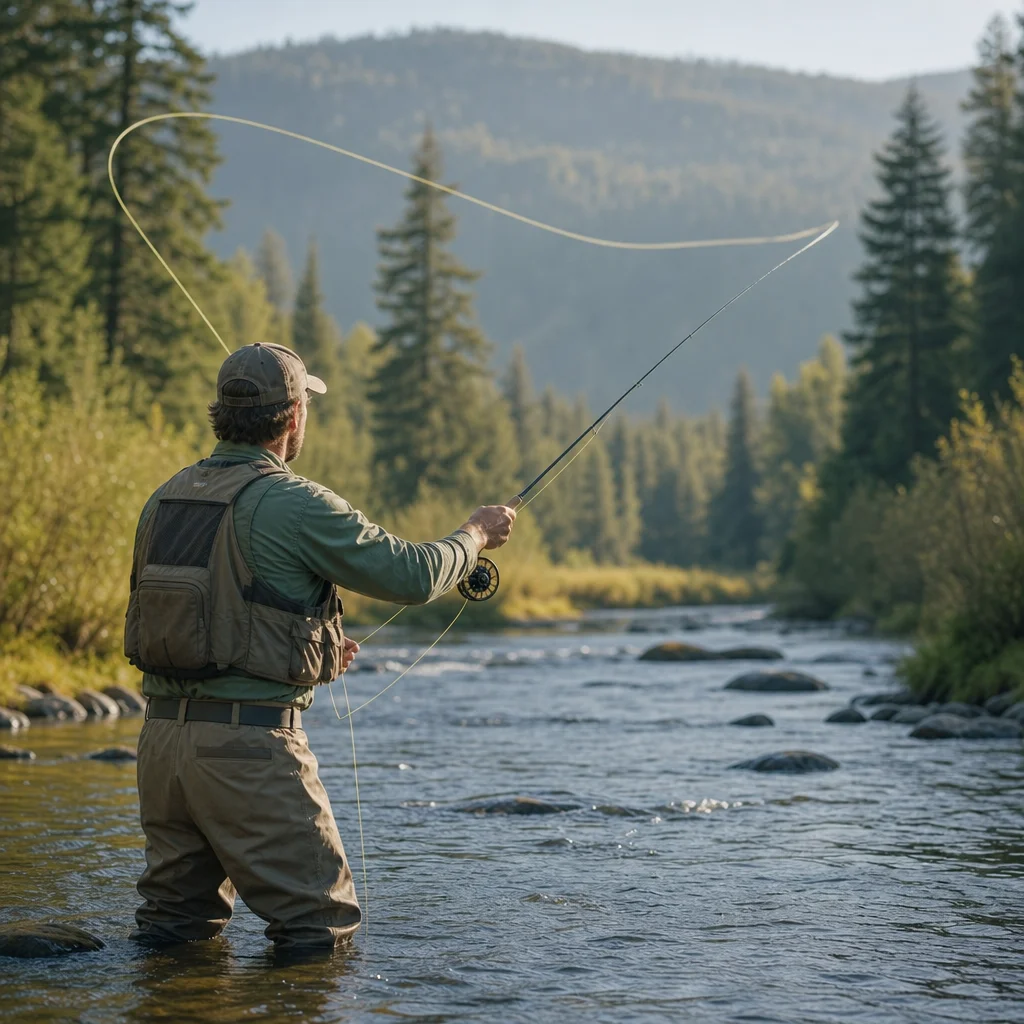
A sudden drop in water temperature can make trout seem to disappear. The fish may stop showing in familiar feeding lanes, ignore a fly that worked yesterday, or move deeper and become less willing to chase. It’s tempting to respond by changing flies repeatedly, but temperature is usually more useful as a clue than as a complete explanation.
Cooling can help trout when water has been too warm, yet a rapid change may briefly disrupt their routines. Your job is to separate those two effects: Is the water moving toward a more comfortable range, or did it change quickly enough to make the fish cautious and less active?
Start by confirming that the water really cooled
Air temperature can change dramatically while the river or lake changes only slightly. A cold morning doesn’t necessarily mean the water experienced a sudden drop. Rivers are influenced by groundwater, tributaries, runoff, shade, flow, and upstream conditions. Lakes may show different temperatures at the surface and below it.
Measure the water rather than using the weather as a substitute. Take a reading in the area you intend to fish, and note the time, depth, weather, flow, and location. A single number tells you less than a comparable series of readings.
Check the temperature trend first: Take readings with the same thermometer, at similar depth and location, and give the sensor time to stabilize. Compare today’s result with a recent reading from the same area before making a major tactical change.
If you’re using a digital thermometer, follow its instructions for calibration and care. Keep the sensor out of direct sun, avoid holding it against the streambed, and don’t take a shallow shoreline reading in a lake and treat it as representative of the whole water column. In moving water, check whether a cold tributary or spring is creating a local temperature difference.
What a rapid cooling event can do to trout behavior
It can reduce activity temporarily
Trout are cold-blooded animals, so water temperature affects their metabolism, digestion, and movement. When conditions change quickly, they may feed less aggressively while they adjust. That doesn’t mean they stop eating. It often means the feeding window becomes shorter, the fish hold in more predictable places, or they require a more convincing presentation.
The effect depends on the starting point. Cooling from unusually warm water may improve conditions over the course of a day or two. Cooling from already cold water may make trout even less active. The speed of the change matters, but so do the absolute temperature, season, flow, available food, and species.
Avoid treating a particular temperature as a universal switch. A temperature that encourages feeding for a brown trout in one river may produce a different response from a rainbow trout in a high-elevation stream or a lake-dwelling trout in autumn.
It can change where trout hold
After a fast drop, look for places that offer stability and low energy costs rather than assuming every fish has moved to the deepest water. Useful areas may include:
- The slower edges of a current seam
- Deeper pools or the lower portions of runs
- Undercut banks and wood that provide shelter
- The softer water behind rocks
- Spring-influenced areas or tributary mouths
- Lake depth changes, especially near a temperature boundary
The best location is often a compromise between shelter, current, and food. Trout still need to eat, so a deep pool with no drifting food may be less productive than a moderate-depth seam where insects are being carried past at an easy speed.
In a river, start by checking the nearest softer water beside a productive feeding lane. In a lake, consider fishing vertically through the water column rather than moving immediately to the deepest basin. If you can identify a temperature break, fish the area where comfortable water meets an available food source.
It can shorten the distance trout will chase
A trout that chased a streamer or rose confidently during stable conditions may switch to a tighter feeding radius after rapid cooling. The fish may still be willing to eat, but it may not move far or fast to do so.
That makes drift quality especially important. Get the fly into the feeding lane, reduce drag, and let the fly travel at a speed that matches the water. A smaller casting adjustment can matter more than another fly change.
Adjust fly choice without overreacting
Temperature should influence your fly selection, but it shouldn’t replace observation. First ask what food is available. Look for nymphs in the margins, inspect rocks, watch the surface, and pay attention to the season. Then use the temperature change to adjust size, movement, and depth.
Nymphs: slow down before you downsize
Nymphing is often a sensible first adjustment when cooling reduces surface activity. Try flies that represent food already present, and place them near slower water where trout can feed without spending much energy.
A smaller nymph may help if fish are inspecting flies closely or natural insects are small. However, downsizing automatically can make your fly harder to see and may not solve a poor drift. Begin with a manageable pattern and focus on getting it to the correct depth and speed.
If the water has become higher or cloudier from rain, a slightly larger or more visible nymph may be more practical. In clear, low water after a cold night, a smaller, less conspicuous offering may be appropriate. These choices are driven by visibility and food supply as much as by temperature.
Dry flies: expect timing to matter
A temperature drop can delay or reduce a hatch, but it doesn’t make every surface opportunity disappear. Watch for brief feeding periods, especially during the warmest part of the day if the weather is stable and insects are present.
If trout are rising intermittently, resist covering the whole river with hurried casts. Identify a feeding rhythm, present a reasonably matched fly, and allow time between casts. A sparse rise form may indicate occasional surface feeding rather than a full hatch.
When surface activity fades, change depth before changing through every dry fly in the box. Trout may still be feeding below the surface on the same insects that brought them up earlier.
Streamers: reduce speed and distance
A rapid cooling event doesn’t automatically rule out streamer fishing. It may simply change how you should retrieve. Trout that are less willing to chase often respond better when the streamer is worked slowly near cover, along a seam, or through a depth where fish can intercept it without a long pursuit.
Use pauses and watch the line closely. If the water is clear and the fish are cautious, a smaller or more subdued streamer may be useful. If flow has increased and visibility has fallen, a larger profile or more visible color can help the fish locate the fly. Let the water conditions—not a temperature number alone—guide that decision.
Use a simple decision process on the water
When you notice a sudden temperature drop, work through these questions:
- Is the reading reliable? Measure again using a consistent method.
- How large is the change? Compare it with recent readings from the same location.
- What was the starting condition? Cooling from excessive warmth can be beneficial; cooling from already cold water can suppress activity.
- Did flow, clarity, or water level change too? These factors may explain the behavior better than temperature.
- Where is the food now? Inspect current seams, margins, rocks, and the surface.
- Can trout feed there without spending much energy? Prioritize stable holding water near food.
- Is your fly reaching that water at the right speed? Correct depth and drift before making several fly changes.
This process keeps you from blaming temperature for every slow period. A cold front may arrive with wind, pressure changes, rain, rising water, or reduced insect activity. Trout are responding to the entire combination.
Common mistakes after a sudden drop
Assuming colder always means better
Coldwater trout generally need cool conditions, but “cooler” isn’t automatically “more active.” A rapid change can interrupt feeding even when the new temperature is ultimately more comfortable. Give the fish time, and look for short feeding windows rather than expecting immediate improvement.
Measuring only once
One reading may reflect a shallow pocket, a warm surface layer, or a cold tributary. Repeated readings help you find patterns and identify local differences. In a lake, a temperature profile can be more informative than a surface measurement.
Fishing only the deepest water
Depth can offer stability, but trout still need food and suitable oxygen conditions. Fish the transition between deep refuge and feeding water, along with nearby current breaks and structure.
Changing flies before changing presentation
A perfect pattern won’t help if it’s drifting too high, moving unnaturally, or passing several feet from the fish. Adjust depth, weight, leader length, retrieve speed, and position before concluding that the fly is wrong.
Ignoring responsible handling in cold conditions
Cold water doesn’t make fish immune to stress. Keep trout in the water as much as possible, wet your hands before touching them, avoid unnecessary fights, and release them facing into gentle current when appropriate. Follow local rules for seasons, tackle, harvest, and bait; those requirements vary by water and can change.
Turn the temperature change into useful information
Record the temperature, flow, clarity, fly, depth, and result each time you fish. Over several trips, you may notice that a particular river fishes well after a modest cooling trend, while a lake produces better once trout settle near a specific depth. Your own log will become more useful than a rigid rule copied from another water.
For your next outing, bring a reliable thermometer, take comparable readings, and begin with the least disruptive adjustment: find stable water near food, slow the presentation, and check depth. If the evidence points to a temporary shutdown, move methodically and wait for a feeding window instead of abandoning the water after a few quiet casts. A sudden drop isn't a verdict that trout won’t feed; it’s a signal to fish more precisely.