Where Trout Move During a Sudden Cloudy Afternoon
Cloud cover can either spread trout through a run or make them harder to read; I’ll show you how to adjust your search, approach, and fly choice as clear water loses its bright afternoon glare.
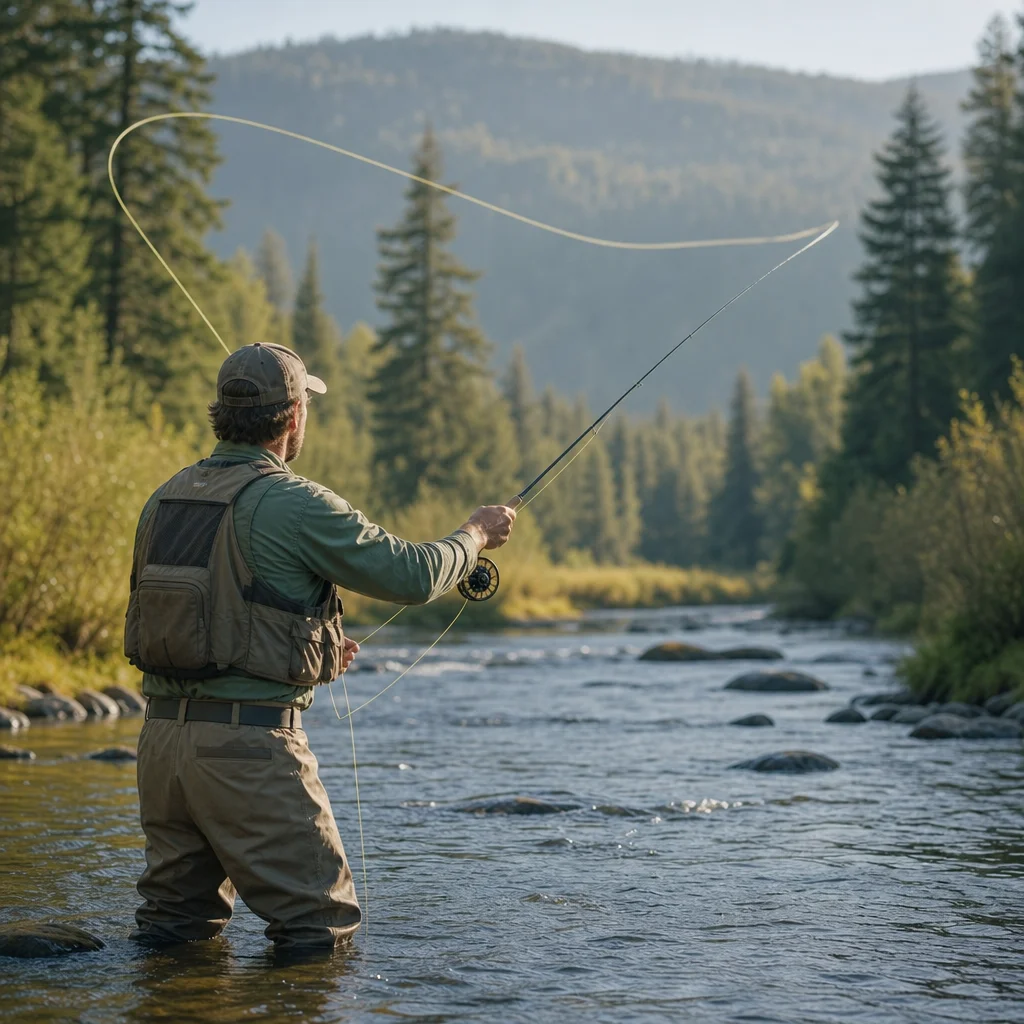
A sudden cloud bank can feel like a gift, especially after a bright afternoon has kept trout tucked under banks, rocks, and overhanging vegetation. But changing light doesn’t automatically make every fish leave cover. In clear rivers and spring creeks, the useful question is more specific: which trout gain confidence, where can they move safely, and how quickly should you follow them?
Start by separating light change from weather change
Clouds alter more than visibility. They soften the contrast between open water and shade, reduce the sharp shadow cast by your body, and change how clearly trout can see both food and danger. At the same time, a passing front may bring wind, falling temperature, rising water, or a change in insect activity.
Those influences can point in different directions. A brief layer of clouds may encourage trout to leave deep shade and inspect shallow edges. A cold, windy shift may make them less willing to move. If you treat every cloudy afternoon as one standard pattern, you’ll miss the useful details.
Watch the water for the first several minutes before changing everything. Look for:
- Trout appearing in previously empty margins
- Fish rising in water that was quiet under bright sun
- A reduction in visible fish without a matching reduction in feeding signs
- Insects becoming more active on the surface or along banks
- Wind pushing food toward one bank or seam
Your first adjustment should usually be measured. Move a little farther from the bank, change your casting angle, or search one piece of cover beyond your original target. You don’t need to abandon the entire river because the sun disappeared.
Where trout commonly reposition
From hard shade to softer edges
Under bright light, a trout may hold beneath a cut bank, a log, a bridge shadow, or a deep rock shelf. When the overhead glare fades, the fish may move toward the edge of that cover rather than into the middle of the current.
These transition lines deserve close attention:
- The boundary between shade and open water
- The shallow side of a deep pocket
- The downstream edge of a log or boulder
- The seam beside a bank with hanging grass or brush
- A riffle tailout where depth changes gradually
Think of these places as doorways. A trout can feed outside cover while keeping a short route back to safety. Start at the doorway before searching the room.
From deep slots to moderate-depth feeding lanes
Bright conditions often make deep water attractive because it conceals fish. Cloud cover can make moderate-depth water more comfortable, particularly where the current delivers food efficiently.
That doesn’t mean shallow is always better. A trout in clear water still needs protection from overhead threats and strong current. Look for moderate depth combined with structure, broken surface, or a nearby escape route. A six-inch shelf beside a deeper trough may be more productive than a broad, featureless flat of the same depth.
On spring creeks, where the water can be remarkably clear and the current comparatively even, depth changes may be subtle. A depression only a few inches deeper can matter if it sits beside a feeding lane. Use surface texture, weed lines, and changes in the riverbed to identify these small holding areas.
Toward banks that collect insects
Clouds don’t create insects by themselves, but lower light can make terrestrial insects more willing to move and easier for trout to inspect. Wind may also push ants, beetles, small moths, or other land-based food from vegetation onto the water.
Check the bank that receives the wind, especially where grass, shrubs, or low branches hang over the current. Don’t assume every windblown bank is active, though. If the wind is strong enough to disturb the surface and your line, it may also make feeding difficult.
A sheltered bank with light wind can be more useful than the most exposed bank on the river. Look for food delivery without excessive surface turbulence.
Read insect visibility, not just insect presence
Changing light affects what you can see, but trout experience the change differently. Under bright conditions, a trout may have a clear view of a drifting insect and your leader. Under clouds, surface food can become harder for you to track while remaining easy enough for fish to find.
That creates two common mistakes. You may assume there’s no hatch because you can’t see insects, or you may keep fishing a dry fly after the surface activity has become too sparse to justify it.
Use several clues together:
- Watch the surface film. Look for tiny dimples, drifting shucks, trapped adults, or insects collecting in foam lines.
- Check vegetation. Low branches and grasses can reveal insects even when the water doesn't.
- Observe rise forms. Delicate sipping suggests a different food source or feeding depth than sharp, aggressive takes.
- Track the duration. A short burst of surface activity may call for a targeted dry-fly presentation, not an immediate decision to fish dries for the rest of the afternoon.
- Notice what changes after the clouds arrive. The difference between before and after is often more informative than a single observation.
If the water gives you little evidence of surface feeding, keep your fly choice simple and fish the likely lane carefully. A small nymph, soft-hackle, or subsurface pattern may be more productive than forcing a hatch theory onto quiet water.
Adjust your approach before changing your fly
Cloud cover often gives anglers more confidence than it gives trout. You may feel less exposed and start wading or casting aggressively. In clear rivers and spring creeks, that can erase the advantage the clouds provided.
Make your first approach from the side with the best background and the least disturbance. Stay low when the bank is open, keep your profile away from the water, and avoid crossing the fish’s likely lane. If you must wade, enter well downstream and move slowly enough for the current to settle.
A cloudy sky can reduce the visibility of your outline, but trout can still detect pressure waves, flashes from clothing or rod movement, and the unnatural arrival of a line. Reduced glare helps; it doesn’t make you invisible.
Check Your New Angle
Before stepping closer, identify the fish’s likely holding lane, your line’s landing point, and your exit route. If your next move crosses the lane or forces repeated false casts over it, try changing position rather than closing the distance.
Cast with the new light in mind. A lower sun angle or a dark cloud background may make your leader harder for you to see, even if the trout can still detect it. Use the lightest practical setup for the conditions, keep your loops controlled, and choose a drift you can monitor without repeatedly lifting the line.
Search in layers instead of roaming randomly
When clouds change the river, use a structured search. Start with the water most likely to respond to the new conditions, then expand only if it fails.
Layer one: the edges of existing cover
Fish the outside edge of logs, rocks, undercut banks, and shade lines. These locations allow a trout to move only a short distance while maintaining security. Present from downstream or from a side angle that keeps your fly in the feeding lane without dragging it across the structure.
Layer two: moderate-depth seams
Next, inspect seams where faster water meets a slower cushion. Trout may shift into these lanes when softened light makes them more comfortable away from the deepest cover. Focus on the seam’s upper section, middle, and tailout separately. One cast through the whole area rarely gives every part a fair presentation.
Layer three: shallow margins and flats
Search shallow water only when it offers food, broken surface, a dark bottom, nearby cover, or an easy escape route. In a clear spring creek, an exposed flat can still be intimidating despite the cloud cover. Approach from farther away and make the first cast count.
Layer four: the original deep water
Don’t discard the places that worked under the sun. Some trout remain deep because current, temperature, or food delivery matters more to them than brightness. If the new edge pattern produces no response, return to the deeper slot and test it with a precise presentation.
Account for the edge cases
Not every cloudy afternoon produces more visible movement. A sudden thunderstorm, sharp temperature change, or heavy wind can make trout less willing to leave cover. Likewise, a cloud bank that lasts only a few minutes may not create a meaningful repositioning pattern.
Clouds can also make fish harder to spot. If sight-fishing becomes unreliable, don’t automatically wade farther or cast more. Let structure and current replace some of the information your eyes used to provide. Work one likely lane thoroughly, then move a short distance and repeat.
In heavily pressured clear water, the reduced light may help trout feed, but it may not remove their caution. Fish that have seen repeated flies can still prefer longer leaders, smaller patterns, quieter entries, and fewer casts. The opportunity may be improved confidence, not careless behavior.
A practical cloudy-afternoon checklist
Before moving to a new section, ask:
- Did the light change briefly or remain consistently softer?
- Which bank is receiving useful—not excessive—wind?
- Are trout using the edges of cover or leaving them entirely?
- Is there evidence of surface food, or only a change in visibility?
- Can you reach the target without crossing its likely lane?
- Are you changing position because the water suggests it, or because the first cast failed?
Start close to proven structure, fish the transition water carefully, and expand toward open areas only when the river gives you a reason. Cloud cover is best treated as an invitation to reassess—not a command to abandon everything that was working.
Your next steps are straightforward: pause when the light changes, identify the new cover and food lanes, adjust your approach before your fly, and search the river in layers. The trout may move several feet, or they may barely move at all. Your job is to notice which of those two stories the water is telling.