How Winter Low Flows Change the Places Trout Hold
Winter low flows reorganize trout water around depth, shelter, and energy savings rather than familiar summer structure. I’ll show you how to connect slower edges, deeper depressions, and protected lies so your search becomes more deliberate.
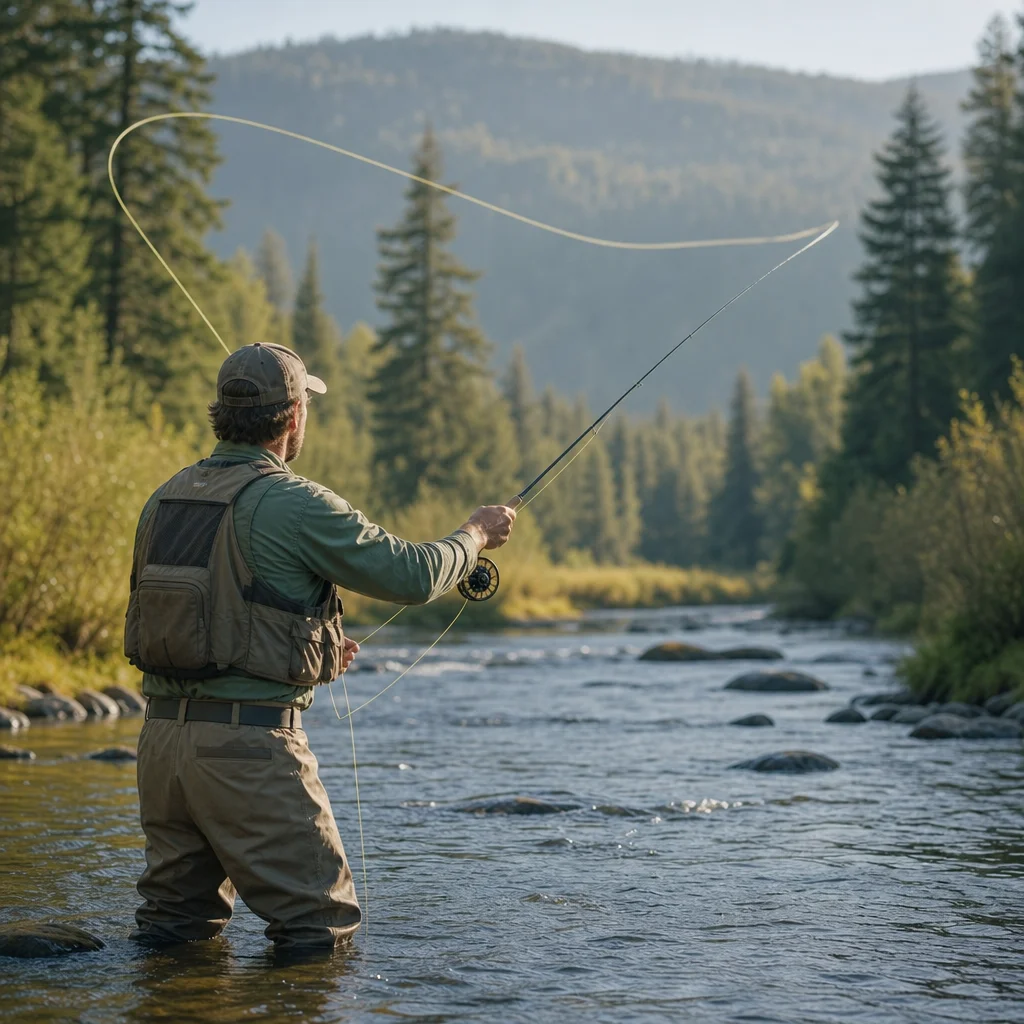
When winter flows drop, a familiar river can seem to lose its trout overnight. The riffle that produced all summer may be shallow and exposed, while the inside bend or a quiet seam suddenly looks more promising. The fish haven’t necessarily disappeared; the river has changed the cost of holding in each place.
Cold water, reduced current, and lower discharge alter both trout behavior and the shape of usable habitat. Your task is to identify where a trout can conserve energy, find enough depth, and still intercept food without sitting in the strongest flow.
Start with the flow, not your summer map
Summer observations remain useful, but they can mislead you in low winter water. At higher flows, trout may spread through riffles, banks, and current seams because the river offers more cover and food-carrying flow. When the level falls, much of that habitat becomes too shallow, too bright, or too exposed.
Begin by asking three questions:
- Where is the current slow enough to reduce energy use?
- Where is there enough depth to provide cover?
- Where can a trout reach drifting food without crossing strong current?
The best winter lie often answers all three. It doesn’t have to be completely still. A gentle, consistent push of water can be more valuable than dead slack if it delivers food and offers nearby protection.
Look at the river as a series of connected zones rather than isolated features. A deep pocket below a shallow run, a soft edge beside a main current, and a protected bank under low branches may all be part of the same winter holding area.
Check the river before you wade: Use the current gauge, access information, and local regulations available for the water you plan to fish. Winter levels can change quickly after rain, snowmelt, or an upstream release, and low flows may expose spawning areas or make fish easier to disturb.
Find the slower edges
Low winter flows often make the margins more important. Trout can hold along a bank where the current loses speed, particularly when the edge has depth, shade, undercut structure, or a nearby seam carrying food.
Not every slow bank is productive. A shallow, featureless shelf may provide little protection, even if its water looks calm. Focus on edges with one or more of these characteristics:
- A visible drop from the bank into darker water
- An undercut bank, root wad, or rock ledge
- A soft seam beside faster water
- Overhanging vegetation or shaded cover
- A change from gravel to finer bottom or bedrock
- A pocket deep enough to conceal a fish from overhead threats
The seam itself deserves careful attention. In low water, the trout may not be in the fastest line or the motionless water against the bank. They may sit just inside the transition, where the current carries food but doesn’t demand much effort.
Approach these edges from farther away than you might in summer. A low, clear river gives trout a better view of movement on the bank and across the surface. Keep your profile down, avoid unnecessary wading, and make the first cast to the water closest to you before stepping forward.
Search deeper depressions
A depression doesn’t need to be a dramatic pool to hold fish. A small bowl in the riverbed, a trough behind a boulder, or a deeper slot at the end of a run may provide enough depth and current relief to become valuable in winter.
Look for changes in surface texture. A long, smooth patch can indicate deeper water, but so can a darker section under broken flow. The most useful clues often appear where the riverbed changes abruptly:
- A shallow shelf dropping into a slot
- The downstream side of a boulder or log
- A scour hole near a bend
- The tail of a pool with a slow center line
- A narrow channel between exposed gravel and the main bank
Depth by itself isn’t the whole answer. A deep hole with heavy, uniform current may be less attractive than a modest depression with a calm interior and a reliable food lane. Trout generally benefit from being close to the boundary between conditions: deep water beside a seam, soft current beside a chute, or cover beside an open feeding lane.
Work these areas systematically. Start with the nearest edge, then cover the slower center, and finally examine the deeper or more distant seam. If you wade straight to the middle of a pool, you may cross the very water you intended to fish.
Identify protected lies
Protection matters more when low water removes the cover provided by depth and turbulence. Trout may use submerged wood, large stones, undercut banks, root systems, and shaded margins as substitutes for a broad, deep holding area.
A protected lie can be surprisingly small. One trout may occupy the slack pocket behind a rock while another uses the current tongue a few feet away. In clear water, you may see only a faint shape or a darker mark on the bottom. Don’t assume that visible fish are the only fish present; a better-hidden trout may be positioned nearby.
Pay particular attention to places that combine cover with a food route. For example, a log by itself may hold no fish if the water around it is stagnant. A log beside a gentle seam is more promising because it offers both security and access to drifting food.
Likewise, shade can help, but it isn’t a substitute for suitable current. A bright sunny bank with depth and a clean drift may outperform a shaded bank that is shallow and disconnected from the main flow.
Read the transition zones
Winter trout often make the most sense at transitions rather than in the obvious feature. These are places where two conditions meet and a fish can move between them with little effort.
Useful transitions include:
- Fast water meeting a slow pocket
- A shallow flat dropping into a deeper channel
- A gravel bottom changing to rock or clay
- Open water meeting a cut bank
- A riffle feeding a pool through a narrow tongue
- Sunlit water meeting shade
Imagine a trout facing into the current. Which nearby position lets it watch the food lane while keeping its body in reduced flow? That mental exercise helps you distinguish a fishable lie from a merely attractive patch of water.
The answer may be only a foot or two from the strongest current. In low flows, precise placement matters because the available holding water is smaller. A cast that lands several feet too far into the current can pull a nymph through the wrong speed and drag it out of the trout’s feeding window.
Adjust your approach and presentation
The change in holding water requires a change in how you reach it. Long casts aren’t automatically better. They can help you stay away from cautious fish, but they also increase slack, reduce accuracy, and make subtle drag harder to detect.
Use the shortest cast that keeps your position from disturbing the lie. From a bank, that might mean casting upstream along the edge rather than across the entire river. From midstream, it may mean covering the near seam before making a longer presentation.
Keep your movements deliberate:
- Observe the water for a few minutes before entering it.
- Identify the nearest likely lie and cast to it first.
- Work from shallow water toward deeper water.
- Change one variable at a time: angle, depth, speed, or fly.
- Move only after you’ve covered the realistic holding positions.
A natural drift is especially important in slow water because any unnatural movement is easier to notice. Mend only as much as needed. An oversized mend can pull the leader or indicator through a quiet lie and spoil the presentation.
If you’re using a dry fly, concentrate on soft seams, slow edges, and any winter feeding activity you can actually observe. For subsurface presentations, prioritize depth and drift control over simply adding more weight. The right depth is the one that reaches the holding lane without repeatedly scraping bottom or hanging in every piece of structure.
Don’t overlook the lower end of a run
Anglers often inspect the head of a pool first because it looks active and well oxygenated. In low winter flows, the lower section can be equally important. The tailout may contain a deeper central groove or a slow side channel where trout can hold with limited effort.
Approach tailouts carefully. They are often shallow, clear, and easy to wade through, which makes them vulnerable to disturbance. Fish the edges and deeper line before crossing. If the tailout is too shallow for comfortable holding, look just upstream for the transition into deeper water or downstream for a protected pocket beside the bank.
The same principle applies to riffles. Don’t write off a riffle simply because it is shallow, but don’t assume its summer holding pattern remains intact. Search for isolated depressions, side channels, and the slower margins where depth and cover persist.
Use current information without overreading it
A river gauge can tell you whether conditions are rising, falling, or holding steady, but it can’t identify every fishable lie. Two stretches at the same measured flow may offer very different depths, gradients, and cover. Treat the gauge as a way to understand the river’s current state, then confirm the details on the water.
Recent weather also matters. A cold rain, a thaw, or an upstream release can change both clarity and level. A river that is low in the morning may not remain low all day. If you’re fishing unfamiliar water, confirm access conditions and any current restrictions through the responsible land manager or fish-and-wildlife agency.
Don't rely on a remembered summer flow number as a universal boundary for safety or access. Gauge readings are location-specific, and conditions can differ markedly between the gauge and your fishing spot.
A simple winter search pattern
When you reach a new section, use a repeatable sequence instead of casting randomly:
1. Scan the margins
Check both banks for depth, shade, undercuts, and slow seams. Fish the accessible edge before wading.
2. Locate the strongest and weakest current
The contrast between them often reveals the likely holding lanes. Look for water that is slow but still connected to a food route.
3. Find bottom changes
Dark water, surface texture, and interruptions in the riverbed can indicate depressions or slots. Give priority to depth beside current relief.
4. Check structure and transitions
Examine the downstream side of rocks, wood, bends, and channel changes. Ask whether each feature offers both protection and access to food.
5. Cover the water quietly
Make short, accurate presentations first. Move slowly, keep wading to a minimum, and let the river’s layout determine your next position.
Practical next steps
On your next winter outing, choose one familiar run and deliberately ignore its summer reputation. Walk its edges, mark the deepest depressions, and identify every place where slow water meets a usable food lane. Fish those locations in order of depth, cover, and ease of approach.
Keep a simple note afterward: water level, clarity, weather, successful lies, and where the fish did not hold. Over time, you’ll build a winter map based on current hydraulics rather than warm-season habit. The river may look emptier in low flows, but its best water is often more concentrated—and easier to understand once you start looking for energy savings instead of familiar landmarks.