Where Trout Go When a River Rises Quickly After Rain
I’ll compare the river positions trout commonly use as freestone flows rise after rain, from soft banks to current seams and flooded margins. You’ll learn what to observe first, where food is likely moving, and how to balance productive water with safe wading.
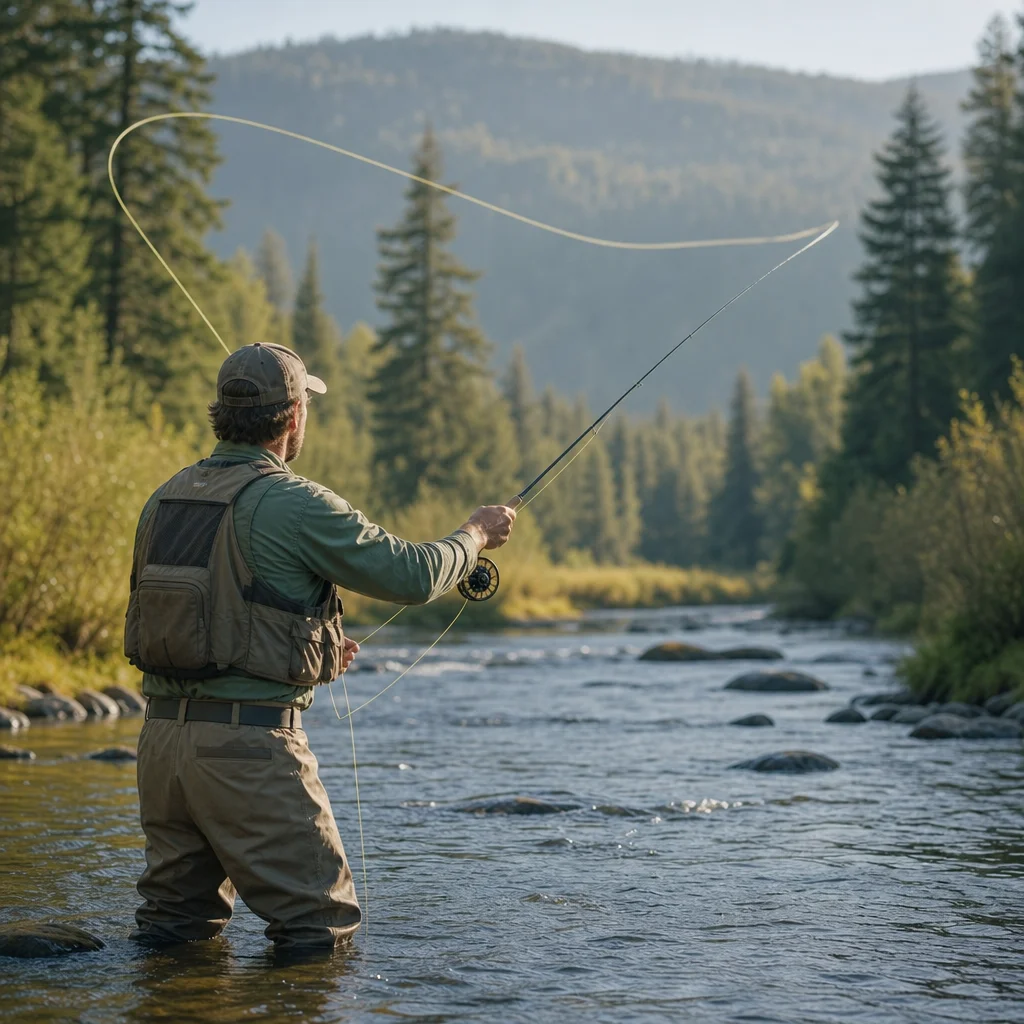
A river that rises quickly can make familiar trout water look entirely different. Current speeds up, banks disappear, water clarity changes, and the places that produced yesterday may become empty—or unsafe—to fish today.
The useful response isn’t to charge into the new flow and cast harder. Start by watching how the river is changing. Trout generally seek a better balance between food, oxygen, and the energy required to hold position. As water rises, that balance often pushes them toward softer edges, protected structure, and the inside of current transitions.
Begin with observation, not a favorite spot
Before you choose a position, spend a few minutes reading the river from a safe, stable place. Look for changes in color, floating debris, newly covered banks, and the way the main current is interacting with shorelines and structure.
A rising river is still changing while you fish. Water that appears merely higher at one moment may become noticeably faster a short time later, especially below tributaries, dams, steep side channels, or narrow canyon sections. Watch leaves, foam, and branches to estimate how quickly the surface current is moving. If those markers are accelerating or the river is visibly building, treat the situation as dynamic rather than settled.
Clarity is just as important as height. Slightly stained water may spread feeding opportunities because it carries food from the banks and riverbed. Heavy, opaque sediment can make trout less willing to move far for a fly and can make finding safe footing much harder.
Check the river before wading: Confirm current local regulations, weather and flood advisories, access restrictions, and any posted hazards before you fish. A productive-looking bank isn’t worth entering if the flow is still rising or the route out could be cut off.
Where trout commonly move as flow rises
Soft water along the bank
The first place to investigate is often the water immediately beside a bank, particularly where vegetation, roots, rocks, or a shallow shelf reduce current speed. A rising river can push insects, worms, and other small food items from the bank into this margin. Trout may move only a short distance to intercept them while avoiding the strongest flow.
Look for a narrow band where fast water meets slower water. It may be only a few inches wide near a steep bank or several feet wide along a shallow, gently sloping shore. Cast parallel to the bank when possible, keeping the fly in that softer lane rather than throwing into the middle of the river.
Don’t assume every bank is equally useful. A smooth, featureless edge may offer little protection. Prioritize banks with cover, a break in depth, an undercut, or a visible tongue of current delivering food.
Inside bends and shallow margins
On a bend, the inside usually has slower and shallower water than the outside. During a quick rise, that margin can become a temporary feeding area as the river spreads across gravel, grass, or low banks.
The productive water may not be right against shore. Search for the boundary between the newly flooded shallow margin and the deeper current beside it. Trout can hold on the slower side while watching food arrive from the faster water.
These areas are worth examining with a short, controlled cast before you wade toward them. A trout may be close to the bank, and entering the margin can push fish into deeper current or ruin the approach.
Current seams and foam lines
A seam forms where two currents meet at different speeds or in different directions. Rising water can strengthen existing seams and create new ones around rocks, islands, logjams, side channels, and flooded banks.
The best seam isn't always the most dramatic one. A broad, stable transition can be more useful than a violent line of breaking water. Watch the surface for foam or small debris traveling along a consistent track. That track often shows where food is being concentrated.
Present the fly so it enters the seam naturally. If you’re using an indicator, avoid landing it repeatedly in the fastest water and dragging the flies through the holding lane. A short cast from the bank can be more effective than a long cast that crosses several conflicting currents.
Behind rocks and other structure
Trout use the reduced pressure behind boulders, ledges, rootwads, and large woody debris. As flow increases, the protected pocket may shift or become larger, but the basic opportunity remains: look for a place where the fish can hold with limited effort while food passes nearby.
The most obvious whitewater is often the least useful part of the feature. Examine the softer cushion immediately upstream of a rock, the side pocket beside it, and the slower water behind it. The exact holding position depends on depth, current strength, water clarity, and the size of the trout.
Structure deserves extra caution after rain. Logs may be unstable, banks may be undercut, and a route that was easy to cross at normal flow can become difficult to leave. Fish around these features from a stable position whenever possible.
Eddies and the edges of backwaters
An eddy can provide shelter from the main current while circulating food through a relatively calm area. Pay attention to the seam at the eddy’s edge, not just the quiet center. Trout often hold where food enters the slower water and can return to cover with little effort.
Flooded side channels and backwaters can also attract fish, but they aren’t automatically safe or productive. Some are connected to the main river by strong, deep flow. Others may be too shallow, muddy, or isolated to offer much value. Study the entry and exit currents before approaching, and don’t step into water simply because it looks calm.
Match your search to the food delivery
Rising water can dislodge aquatic insects from the bottom and wash terrestrial food from the banks. Worms, beetles, ants, small minnows, and other prey may become available along the margins. What you see in the water should guide your first pattern more than a fixed “high-water fly” rule.
If the river is lightly stained and you see debris or insects moving along the edge, begin with a pattern that can be tracked at close range. A nymph, soft-hackled fly, worm imitation, or larger attractor may be sensible depending on the river and the flies you carry.
If the water is clear enough for trout to inspect a surface, don’t overlook newly flooded grass, bushes, and bankside vegetation. A dry fly can work when terrestrial insects are being displaced, but rising water doesn’t guarantee surface activity. Watch for natural insects, rises, or fish visibly working near the surface before committing to that approach.
In darker water, visibility becomes a limiting factor. Trout may hold tighter to cover or feed along predictable boundaries rather than chase a small fly through a broad current. Fish close to structure and use a presentation the trout can find without requiring a long pursuit. Larger, darker, or more visible patterns can be useful, but clarity and local insect activity should still control the decision.
A simple way to work a rising-water bank
- Choose a safe observation point. Identify the river’s direction, current speed, escape route, and any bank that looks unstable.
- Start at the nearest soft edge. Fish the bank, flooded margin, or inside seam before moving toward the main channel.
- Cover the water from close to far. Short casts reduce false disturbance and help you learn where the holding lane begins.
- Target transitions. Focus on the borders between fast and slow water, clear and stained water, shallow and deep water, or current and structure.
- Change one variable at a time. Adjust depth, fly size, or position before changing everything at once.
- Move only after the water gives you information. If the near bank produces no signs after a careful pass, shift a short distance along the same type of habitat rather than immediately wading across the river.
This sequence prevents a common mistake: assuming that a high river requires a dramatic relocation. Trout may be closer than expected, particularly where the rising current has delivered food to a protected edge.
Mistakes that make rising water harder
Wading out to reach “better” water
A higher river often makes the best water closer to shore, not farther away. Wading can also put you in the strongest current and remove your safest route back. Fish the accessible water thoroughly before considering any crossing.
Ignoring how quickly conditions are changing
A spot can be safe when you arrive and questionable later. Recheck the bank, current, and route out as you fish. If water begins covering new rocks or the current reaches places that were dry earlier, stop and reassess.
Fishing the middle because it looks dramatic
Fast central current may hold fish, but it usually requires more energy from them and more skill from you. Start with the current’s softer boundaries, then test stronger water only when the depth, clarity, and structure make it plausible.
Staying loyal to yesterday’s pattern
A fly that worked before the rain may still work, but the feeding lane may have moved. Let water color, drifting material, and trout behavior determine whether you need a different depth, size, or silhouette.
Approaching from the obvious bank
Rising water can make trout more alert along shallow edges because cover and escape routes have changed. Use available bank cover, keep your movements controlled, and cast before walking into likely holding water.
When to leave the river
Good reading of water includes recognizing when not to fish. Leave if the river is rising rapidly, visibility is poor, debris is increasing, banks are slumping, or you can’t identify a reliable way back. Avoid standing on unstable edges and never assume a calm-looking side channel is disconnected from the main current.
If you do hook a trout near heavy flow, keep the fight controlled and guide the fish toward calm water rather than chasing it into the main current. Handle it briefly with wet hands, keep it in the water as much as practical, and release it according to local rules and the fishery’s requirements.
Practical next steps
On your next post-rain outing, make the first part of the trip an observation exercise. Find a safe bank, note the direction and speed of the current, identify the newest soft-water margins, and watch where foam and debris collect. Then fish the nearest seam, edge, or piece of structure with short casts.
Remember the basic priority: as a freestone river rises, trout often move toward protection and food delivery rather than simply toward deeper water. Find the places where those two needs overlap, keep your position conservative, and let the river show you where the opportunity has shifted.