How to Choose Clothing for a Cold Morning That Warms by Noon
Cold mornings and mild afternoons reward clothing that can change with the day rather than a heavier load. I’ll show you how to build a compact layering system with rain protection and accessible storage for shoulder-season trout fishing.
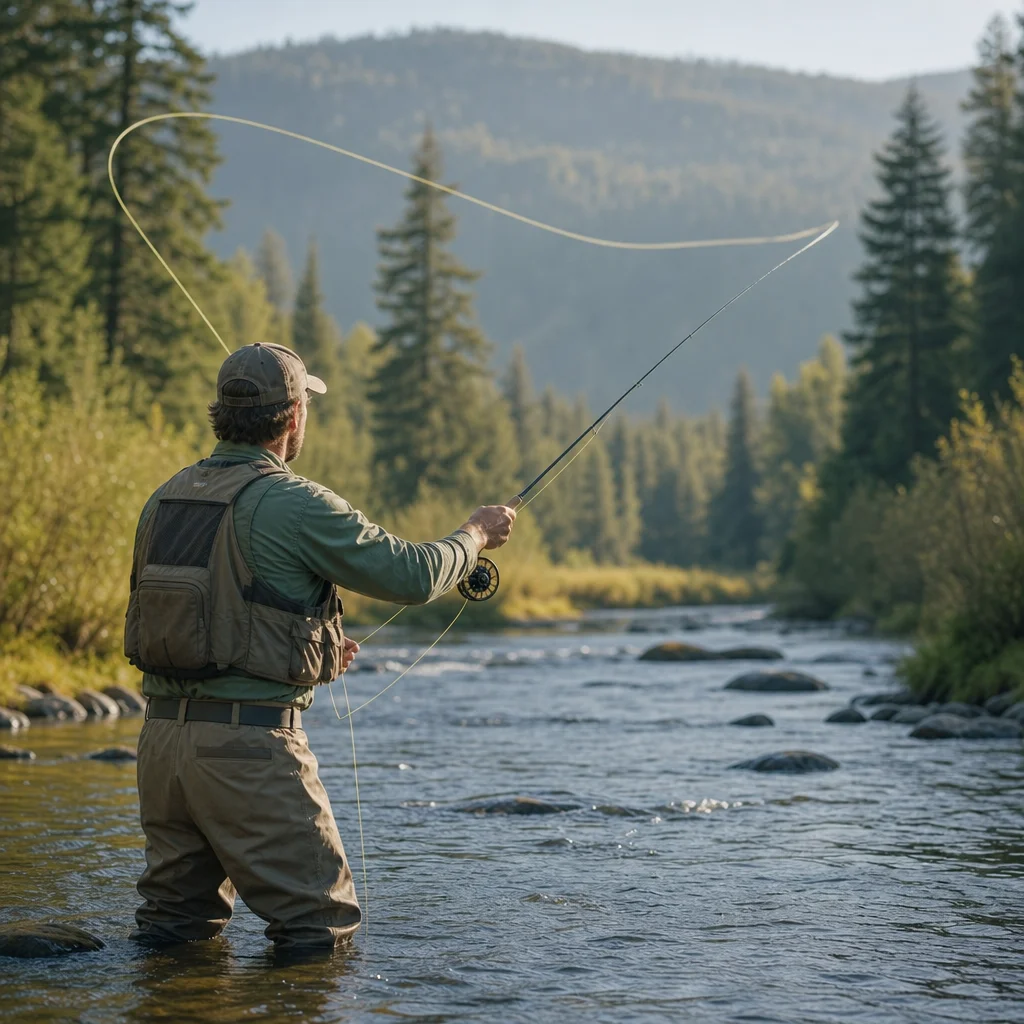
The hardest part of shoulder-season clothing is dressing for two different fishing trips at once. At dawn, you may need insulation, gloves, and a shell. By midday, that same clothing can leave you sweating, especially while hiking, wading, or casting repeatedly.
The answer isn’t simply carrying more layers. It’s choosing a small set of pieces that work together, vent easily, and pack away without turning your vest or pack into a closet.
Start with the day’s temperature swing
Look at more than the morning low. Check the expected temperature when you’ll arrive, the warmest part of the day, wind, precipitation, and whether cloud cover is likely to persist. A sunny, calm afternoon can feel very different from a damp day with a steady breeze, even at the same temperature.
Think in terms of three conditions:
- Cold and inactive: You’re standing around, rigging, walking slowly, or fishing from a fixed position.
- Cold and active: You’re hiking between pools or wading carefully but continuously.
- Mild and active: You’re moving, casting, and carrying equipment under stronger afternoon sun.
Your clothing should handle all three without requiring a complete change. Removable insulation and a breathable outer layer usually matter more than one exceptionally warm jacket.
Check the water-day forecast: Before leaving, compare the forecast for your launch time, the warmest expected hour, wind, and precipitation. Mountain and canyon weather can differ from the nearest town, so use the most local reliable forecast available and adjust your removable layer accordingly.
Build the system from the skin out
A simple system has three jobs: move moisture away from your skin, provide adjustable warmth, and block wind or rain. Each layer should have a clear role. If two garments do the same job, one may be unnecessary weight.
Base layer: manage moisture
Choose a lightweight or midweight synthetic or merino base layer according to conditions and personal comfort. The important feature is moisture management, not a particular fabric label.
Avoid cotton as your primary next-to-skin layer in cold or wet conditions. It absorbs moisture and dries slowly, which can make you cold when you stop moving. A damp base layer is especially uncomfortable under waders, where evaporation is limited.
For a warming day, a lighter base layer is often the better choice. You can add insulation over it in the morning, but you can’t make a heavy base layer disappear when the afternoon becomes warm.
A long-sleeved top also gives your arms some protection from sun, brush, and incidental contact with insects. In mild weather, it may be all you need while you’re active.
Midlayer: add warmth you can remove
Your midlayer should be easy to put on and take off. A lightweight fleece, grid fleece, synthetic active-insulation jacket, or thin wool sweater can work well. Choose based on how much you run cold and how much movement your fishing day involves.
For a cold morning that will warm by noon, avoid making the midlayer so bulky that it becomes difficult to store. A thin insulating piece often provides more flexibility than a large, heavily insulated jacket.
A full-zip midlayer is convenient because you can vent it without removing it. A hood can add useful warmth in wind, but it also competes with a rain-shell hood and may interfere with your view while casting. Decide whether that feature earns its space for your particular conditions.
If you use insulated waders, remember that they already provide substantial warmth around your legs and lower body. You may need less insulation underneath than you would with uninsulated waders and ordinary fishing pants.
Outer layer: block the weather
A shell protects the layers underneath from wind and rain. Even when rain is unlikely, wind protection can make a cool morning more comfortable and reduce the need for a thicker insulating layer.
For active fishing, look for a shell that allows movement through the shoulders and arms. Long sleeves, adjustable cuffs, and a hood that stays clear of your peripheral vision are useful features. Pit zips or other vents can help when you’re walking or casting in warming conditions.
A shell doesn’t have to be worn continuously. If the forecast is dry and calm, you might carry a lightweight wind-resistant layer rather than a heavier rain jacket. If rain is plausible, however, a genuinely waterproof shell is more useful than a garment that merely feels water-resistant when new.
Pack the shell where you can reach it quickly. A rain jacket buried beneath spare leaders and lunch isn't much protection when a shower arrives.
Treat your lower body as a separate system
Your upper-body layering plan won’t solve cold legs or uncomfortable feet. Lower-body clothing deserves its own decision.
Under waders
With breathable waders, use a moisture-managing base layer and enough insulation for the coldest part of the day. Fleece or synthetic fishing pants can add warmth without becoming as restrictive as bulky garments. Avoid ordinary cotton sweatpants if they’re likely to become damp.
Don’t overdress under waders merely because the morning is cold. Once you’re moving, excess insulation can lead to sweat and damp clothing. That moisture can make the return trip colder, even if the air temperature has risen.
If you expect a large temperature increase, choose an under-wader layer that can be removed before you put on your waders, or carry a lighter alternative for the afternoon. Changing beside the vehicle is usually easier than trying to manage excess clothing in the river corridor.
Without waders
For wet or brushy banks, quick-drying pants provide a useful compromise. If you wear shorts or lightweight hiking pants in mild weather, carry a thin rain pant or over-pant for sudden precipitation and wind.
Avoid clothing with loose cuffs that can catch on branches or become saturated while stepping through wet vegetation. Secure pockets also matter: anything stored in a low, open pocket is at risk when you sit, kneel, or cross shallow water.
Don’t overlook hands, head, and feet
Small accessories can make a bigger difference than another large garment.
- Gloves: Carry a thin pair for the cold start and remove them as your hands warm. Fingerless fishing gloves improve line handling but don’t provide complete warmth or weather protection.
- Hat: A warm cap helps during the first hours; a brimmed cap can reduce glare and help shield your face later. A compact beanie is easier to store than a bulky winter hat.
- Neck protection: A lightweight neck gaiter can block wind in the morning and provide sun protection later. It packs nearly flat.
- Socks: Use moisture-managing socks that fit your wading boots without compressing your toes. Carrying a dry spare pair is often more useful than carrying a second heavy layer.
- Feet: Leave room for natural movement in your toes. Tight boots and compressed socks reduce insulation and can make a tolerable morning feel much colder.
Cold hands can also affect your ability to manage hooks and line. If conditions may be wet or unusually cold, carry a dry pair of gloves in a sealed bag rather than relying on the pair you’re wearing to stay dry.
Design storage around removal, not just carrying
A minimalist clothing system works only if you have somewhere sensible to put the layers you remove. Otherwise, you’ll be tempted to keep wearing them or stuff them into a wet, inaccessible corner.
Use a simple priority order:
- Wear the base layer and essential fishing clothing.
- Keep the midlayer immediately accessible for the cold start or a long pause.
- Store the shell where you can reach it without unpacking everything.
- Protect spare gloves and socks in a waterproof bag.
- Separate damp clothing from dry insulation.
A vest with limited storage may suit a mild forecast but become frustrating when you need an extra layer. A small sling, waist pack, or daypack can add useful capacity without encouraging you to bring every garment you own.
Compressible layers are convenient, but don’t force wet clothing into a tightly sealed pocket for the rest of the day. If a garment becomes damp, give it a chance to air out when conditions allow, while keeping it available as backup insulation.
Choose between one warm jacket and several light layers
A single insulated jacket is simple and comfortable during a cold, stationary morning. It becomes less convenient when you’re hiking or when the temperature rises sharply. You may end up carrying it for hours after you stop wearing it.
Several light layers offer better adjustment but require more attention. They can also create more opportunities for lost gloves, loose sleeves, and overfilled storage.
For a day that starts cold and warms by noon, favor:
- A light or medium base layer
- One packable midlayer
- One weatherproof shell when conditions justify it
- Compact hand and head protection
- A dry spare for the items most likely to get wet
For a mostly stationary day in consistently cold weather, a warmer midlayer may be reasonable. For a mobile day with a large temperature swing, lighter pieces usually provide better control.
Common clothing mistakes to avoid
Dressing for the coldest possible moment
Preparing for an unlikely extreme can leave you carrying excessive insulation and overheating once you start moving. Dress for the forecast you’re actually facing, then add a compact contingency layer for changes.
Waiting until you’re sweaty to remove insulation
Take off or open a layer before you become overheated. Sweat is harder to manage than a brief period of coolness, particularly under waders or a shell.
Relying on a rain jacket as your only warmth
A shell blocks wind and precipitation but may add little insulation. Pair it with a base layer and removable midlayer rather than expecting the shell to do every job.
Ignoring wind and dampness
Air temperature alone doesn’t describe comfort. Wind, wet fabric, shade, and long pauses can make a mild forecast feel cold. Include those factors when choosing your midlayer and shell.
Carrying no dry backup
A spare pair of socks or gloves takes little space and can rescue the day after a wet crossing, unexpected rain, or a dropped item. Choose the backup based on the most likely failure, not on a desire to duplicate your entire clothing system.
A compact shoulder-season clothing checklist
Before leaving, confirm that you have:
- A moisture-managing base layer
- One removable insulating layer
- A shell appropriate for the forecast
- Comfortable pants or wader underlayers
- Suitable socks and footwear
- A hat or neck layer for changing exposure
- Lightweight gloves if the morning is cold
- A dry spare pair of socks or gloves when wet conditions are possible
- A waterproof bag for items that must stay dry
- Enough storage to carry removed layers without restricting your fishing
The best setup is the smallest one that keeps you warm when you’re cold, breathable when you’re moving, and protected when the weather changes. Start with a light base layer, add only the insulation you need for the morning, and keep the shell and dry backup within reach. At midday, remove layers before sweat becomes the next problem.