Do You Need a Six-Weight Rod for Windy Trout Lakes?
When a trout lake turns breezy, a heavier rod can feel like the obvious answer—but it may add more power than you need. I’ll help you weigh wind, fly size, casting distance, and fish protection before buying a six-weight.
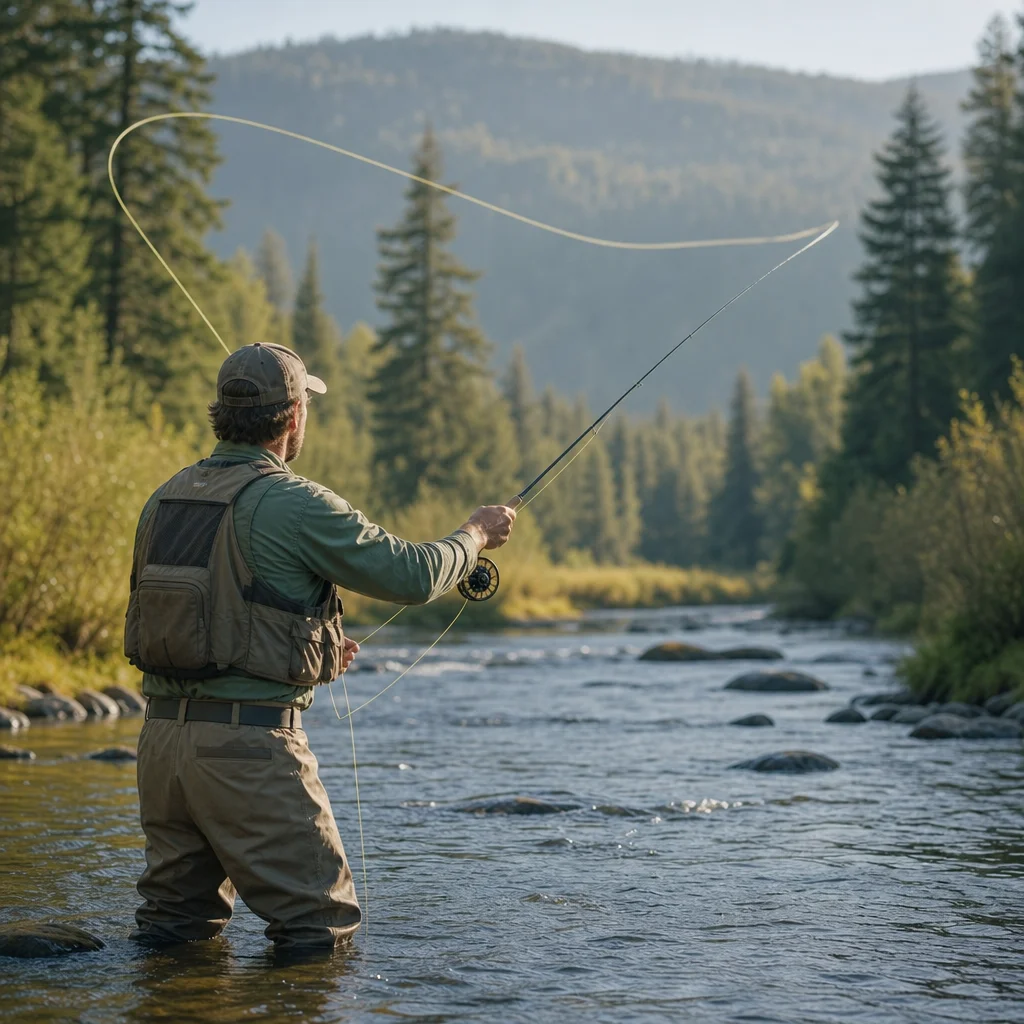
Wind makes a trout lake feel larger and more demanding. Your casts lose momentum, small flies become difficult to control, and a modest breeze can turn a comfortable afternoon into a workout. That doesn’t automatically mean you need a six-weight rod.
A six-weight can be a sensible tool for particular lake conditions, but it’s only one part of the solution. Line choice, rod action, casting technique, fly size, and the trout you’re targeting all matter. If your goal is minimalist gear, start by identifying the problem your current rod can’t solve.
What a rod weight actually changes
A rod’s weight rating describes the fly line it’s designed to cast, not the size of the fish it can catch. A five-weight rod is built around a five-weight line, while a six-weight is designed for a line one size heavier. The heavier line carries more mass and can load a stiffer rod more effectively.
That extra mass generally gives you more authority when casting into wind or turning over larger flies. It may also help you cast farther with less false casting, provided the rod, line, and casting stroke work well together.
But a six-weight isn’t automatically more accurate, more comfortable, or more protective of trout. It’s simply a somewhat more powerful system. The right choice depends on how often you need that power and what you give up by carrying it.
When a six-weight makes sense on a lake
A six-weight deserves serious consideration when several of these conditions regularly occur together:
- You fish exposed water where steady wind is common.
- You cast larger streamers, weighted nymph rigs, or bulky indicators.
- You need long casts to reach cruising or feeding trout.
- Your typical trout are large enough that a five-weight feels underpowered.
- Your current rod struggles to turn over the leader and fly cleanly.
- You want one rod that can handle both trout and occasional larger stillwater flies.
The key word is regularly. If the wind is a recurring feature of your fishing rather than an occasional inconvenience, the extra line mass and power can be worthwhile.
A six-weight is especially useful when you must cast into a headwind. In that situation, a heavier line can help maintain loop momentum, while a rod with a firmer butt section can recover more quickly after the cast. This doesn’t eliminate the wind, but it can make the conditions more manageable.
When your five-weight may be enough
Many lake anglers can stay with a five-weight by improving the rest of the system first. A five-weight is often sufficient for:
- Small to medium trout
- Dry flies and unweighted nymphs
- Moderate distances
- Sheltered shorelines or coves
- Light to moderate wind
- Delicate presentations near feeding fish
A five-weight may also be preferable when you fish a mix of lake and stream water. It usually offers a useful balance of casting ability, fly control, and enjoyment on ordinary trout-sized fish.
Before replacing it, test whether the problem is really rod power. An oversized or poorly matched leader, an underloaded line, a worn fly line, or a casting stroke that opens up in the wind can all make a capable rod seem inadequate.
Wind is more than a rod-weight problem
Wind direction and casting position often matter as much as rod weight. A tailwind can help a cast travel but may make turnover abrupt. A headwind can reduce distance and force you to cast tighter loops. A crosswind can create a safety problem if the fly travels toward you or another angler.
You can often make a five-weight perform better by changing your approach:
Keep the casting loop compact
Wide loops allow the wind to grab the line. Use a shorter, more controlled stroke and pause long enough for the line to straighten behind you. The goal isn’t to overpower the cast. It’s to keep the line moving efficiently.
Cast lower into the wind
A high forward cast gives the wind more line to push around. A lower trajectory can reduce that effect, although you still need enough clearance for the fly and leader. Keep the back cast high enough to avoid the water and nearby obstructions, then drive the forward cast on a tighter path.
Change your position
If possible, move along the bank or wade only where conditions and local rules make that safe. A slight change in angle can turn a difficult headwind into a more manageable quartering wind. Sometimes the least expensive wind-management system is a different place to stand.
Limit false casts
Every extra false cast gives the wind another opportunity to disrupt the line and places more fatigue on you. Carry more line in the air only when it helps. Otherwise, use a controlled pickup and delivery cast or a roll-style presentation suited to the available space.
Fly size may justify the upgrade sooner than distance
Large flies create air resistance even when they aren’t especially heavy. Streamers with bulky materials, articulated patterns, and weighted flies can be tiring and awkward to cast on a five-weight. A six-weight may turn these flies over more cleanly and reduce the temptation to force the rod.
This is one of the clearest reasons to choose a six-weight for lake fishing. The issue isn’t necessarily that you need to cast farther. You may simply need to deliver a fly safely and consistently.
Still, match the rod to the flies you actually use. If most of your fishing involves small dries, unweighted nymphs, or modestly sized wet flies, buying a six-weight for the occasional streamer day may be unnecessary. You could instead carry a limited selection of larger patterns and use them only when conditions suit your existing setup.
Distance matters, but don’t overestimate it
A six-weight can help with distance because the heavier line loads the rod more readily and carries momentum through the cast. That benefit is most noticeable when you’re throwing wind-resistant flies or when your current rod feels sluggish under the required load.
However, rod weight alone won’t create consistent long casts. Line profile, running line, casting mechanics, wind angle, and the size of the fly all contribute. A well-matched five-weight in skilled hands can outcast a poorly matched six-weight.
For many trout lakes, accuracy and fly control are more useful than maximum distance. Fish may cruise close to shore, follow wind lanes, or gather near drop-offs that don’t require a heroic cast. Before choosing a heavier rod, ask whether you’re solving a genuine distance problem or simply trying to reach fish that might be approached another way.
Consider fish protection and playing time
A heavier rod can land fish more quickly when its power is appropriate for the trout and conditions. Shorter fights can reduce exhaustion, especially in warm water or strong current. But a six-weight can also apply more pressure than necessary to smaller trout, and an overly stiff setup may reduce the cushioning that protects light tippets.
Your leader and tippet still matter. If you fish small flies on fine tippet, you need a smooth drag, controlled pressure, and a rod that doesn’t force every mistake into a break-off. If your typical trout are modest in size, a lighter or more moderate-action rod may make the fight more manageable and enjoyable.
Fish handling also depends on water temperature, local rules, landing technique, and how long the fish stays out of the water. Rod weight is only one piece of that responsibility.
Check the lake before you commit: Before fishing a new stillwater, confirm current access rules, tackle restrictions, seasonal closures, and any guidance about warm-water handling. Local conditions may matter more than the rod label.
A minimalist way to choose
If you’re buying one rod for windy trout lakes, use this sequence:
- Identify your most common flies. If they’re small and light, start with a five-weight. If they’re bulky, weighted, or difficult to turn over, a six-weight becomes more attractive.
- Estimate your ordinary casting distance. Choose based on the distance you fish most often, not the longest cast you hope to make once.
- Assess the wind you actually face. Occasional gusts may call for technique changes. Persistent exposure and headwinds may justify extra rod power.
- Consider your trout size and tippet. Choose enough power for responsible fish control without making delicate presentations unnecessarily difficult.
- Test the complete system. Cast the intended line, leader, and fly if possible. A rod that feels excellent with a bare practice line may behave differently with your actual lake rig.
A fast-action five-weight paired with a suitable line may handle more wind than a soft, underloaded six-weight. Conversely, a moderate six-weight may be easier for some anglers to cast than a very fast five-weight. The number gives you a starting point, not a complete performance description.
The case for carrying two rods
If you fish a wide range of lake conditions, a five-weight and six-weight can complement each other. Use the five-weight for smaller flies, lighter wind, and fish that benefit from a more forgiving presentation. Reach for the six-weight when wind, fly size, or trout size consistently pushes the lighter setup beyond its comfortable range.
That approach costs more and adds equipment to your kit, so it doesn’t fit a minimalist goal for everyone. If you’re buying only one rod, choose the setup that covers your most frequent conditions rather than the most dramatic day you can imagine.
Bottom line
You don’t need a six-weight rod merely because a trout lake is windy. You need one when wind combines with bulky flies, long casts, larger trout, or a current setup that can’t turn over your actual rig reliably.
Start by improving line matching, loop control, casting angle, and fly selection. If those changes don’t solve the problem—and you regularly fish exposed lakes—a six-weight is a practical upgrade. If your flies are small, your trout are moderate, and the wind is occasional, a well-matched five-weight is likely the more efficient choice.
Before buying, make three short lists: the flies you cast, the wind you usually face, and the trout you typically pursue. The rod that handles those three realities—not the rod with the biggest number—is the one you need.