When a Long Leader Helps—and When It Only Makes Casting Miserable
Long leaders can improve stealth on clear trout water, but they also increase wind resistance, tangles, and turnover problems. I’ll show how leader length, taper, tippet, fly choice, and casting ability work together so you can choose a setup that remains reliable on the water.
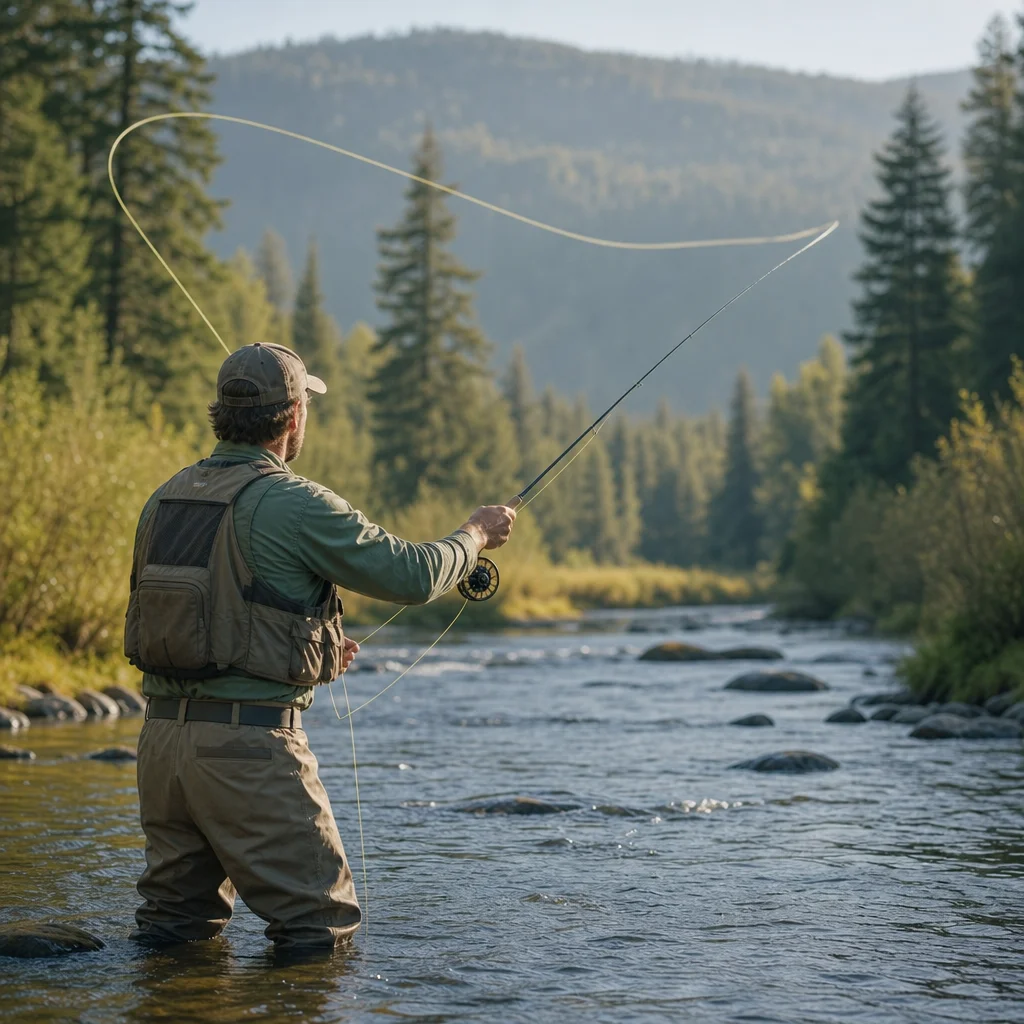
A long leader can help you fool wary trout, but it can also turn a simple cast into a loose pile of nylon. The right length depends on more than water clarity. Fly size, wind, current speed, casting space, and the condition of your leader all affect whether a longer setup behaves well.
The useful question isn’t simply, “How long should my leader be?” It’s, “How much length can I cast cleanly while still presenting the fly naturally?” A leader that works beautifully on a calm spring creek may be frustrating on a breezy river, even with the same fly rod and line.
What a longer leader changes
A leader creates separation between the fly line and the fly. That separation can make your presentation less obvious, particularly in clear, shallow water where trout have time to inspect anything drifting overhead.
Length also changes how energy travels through the cast. A well-tapered leader transfers energy from the thicker butt section toward the thinner tippet and fly. As the leader gets longer, that energy has farther to travel, and the final turnover becomes more sensitive to casting technique and conditions.
A longer leader generally gives you:
- More distance between the visible fly line and the fly
- A gentler landing when the cast is controlled
- More room for a natural drift in some situations
- Greater sensitivity to wind and sloppy casting
- More opportunities for tangles, weak connections, and damaged tippet
That last point matters for long-term reliability. A leader doesn’t become better merely because it is longer. Every extra connection, knot, and thin section is another part of the system that needs to be inspected and managed.
Start with the water, not a preferred number
Clear, slow water often rewards additional length because trout can see the fly line, leader, and angler more easily. A longer leader can help keep the fly away from the line and reduce the disturbance caused by a poor landing.
That doesn’t mean every clear stream calls for the longest leader you can buy. Tight banks, overhanging branches, pocket water, and short casting distances may favor a shorter setup that you can place accurately.
In faster or broken water, trout have less time to inspect the entire presentation. Current seams, riffles, and surface turbulence can hide the leader and reduce the need for extreme length. A shorter leader may also help you turn the fly over before it reaches a narrow target.
Consider these conditions together:
- Clear, calm, slow water: Longer leaders can improve stealth if you can cast them cleanly.
- Windy water: A shorter or more powerful leader usually turns over more consistently.
- Tight casting lanes: Shorter leaders are easier to control around vegetation and rocks.
- Fast, turbulent water: Accuracy and turnover may matter more than maximum separation.
- Deep or weighted presentations: A shorter, stronger setup can help deliver the fly and manage the drift.
Match leader length to the fly
Fly design strongly influences leader performance. A small, lightly dressed dry fly usually needs less energy to turn over than a large, bushy pattern. That makes it more compatible with a longer leader, assuming the wind is manageable.
Large dry flies create air resistance. Foam, rubber legs, bulky dubbing, and heavily hackled profiles can act like small sails during the cast. If the fly keeps landing short of the leader or the tippet folds into a knot, reducing length may solve the problem faster than changing your casting stroke.
Weighted nymphs and streamers create a different challenge. Their mass can pull the leader out of alignment, especially during a fast pickup or change of direction. Longer leaders can still be useful in clear water, but you’ll usually need smoother acceleration, wider loops, and more attention to where the fly is traveling during the cast.
A practical pairing looks like this:
- Small, streamlined dry fly: Longer leader is often manageable.
- Large or bushy dry fly: Moderate length improves turnover.
- Small unweighted nymph: Length can help with a delicate presentation.
- Weighted nymph or indicator setup: Shorter, stronger, or more specialized leaders are often easier to control.
- Streamer: Choose control and safe turnover over maximum length.
The more wind resistance or weight your fly has, the more carefully you should question an extra foot or two of leader.
Taper and tippet matter as much as total length
Leader length is only one part of the system. A tapered leader has a thicker butt section, a gradually narrowing middle, and a fine tippet section. That taper controls how efficiently energy moves from the fly line to the fly.
A long leader with a suitable taper may cast well. A short leader with an abrupt or poorly matched transition can still hinge, collapse, or land in a heap. If you add tippet to an already long leader, you’re changing both the total length and the way the system turns over.
The tippet section also affects presentation. Fine tippet can help a small fly drift naturally, but it has less resistance to wind, knots, abrasion, and heavy flies. Thick tippet turns over more decisively but may look less subtle in clear water or prevent a small fly from moving freely.
When extending a leader, avoid adding a long section of fine tippet simply because the water is clear. Add length in a way that preserves a reasonably smooth transition. If the leader has become excessively thin near the fly, replacing it may be more reliable than continually rebuilding it.
Use your casting ability as a real constraint
A leader should match the cast you can repeat, not the cast you hope to produce once in perfect conditions. Long leaders reward smooth acceleration and controlled loops. They punish abrupt stops, excessive force, and poorly timed starts and stops.
If your cast is struggling, watch what the leader does rather than blaming the fly immediately. A leader that straightens fully and lands ahead of the fly is transferring energy well. A leader that piles up, forms a hinge, or falls to one side may be too long, too soft, poorly tapered, or badly matched to the fly.
Before fishing a longer setup, practice a few false casts with the fly safely managed. Keep the loop open enough to avoid collisions, but don’t use a wide, uncontrolled motion that allows the leader to collapse. Smooth power is more useful than force.
A longer leader may be appropriate when you can:
- Maintain control through the stop.
- Keep the fly and leader from colliding with the rod or line.
- Turn the leader over without excessive false casting.
- Place the fly accurately at the intended distance.
- Mend or reposition the line without creating immediate tangles.
If you can’t do those things consistently, shorten the setup until the cast becomes predictable. Reliability is part of presentation quality.
When a long leader makes casting miserable
Certain symptoms point directly toward an overly ambitious setup.
The leader piles up before the fly
This usually means the final section lacks enough energy to turn over. A bulky fly, too much fine tippet, a soft taper, or a casting loop that opens too early can cause the collapse.
Try shortening the leader or removing some added tippet first. If the fly is large, changing to a less air-resistant pattern may help more than adding power.
The leader constantly tangles
Tangles can come from several sources: excessive slack, wind knots, poor timing, or a fly that catches the leader during the cast. A leader that is too long for the available casting space makes each problem harder to correct.
Straighten the leader by gently pulling it through your fingers and inspect every knot. Replace sections that are kinked or visibly damaged. If tangles return immediately, reduce length rather than accepting them as part of the setup.
The fly lands far behind the line
A fly that trails behind the line can indicate insufficient turnover or an overly soft presentation. You may be using a leader that is too long for the fly and conditions. A modest reduction in length often restores control without making the presentation noticeably less subtle.
The cast works only with excessive force
This is a warning sign. Forcing a long leader can create narrow, fast loops, damaged tippet, and poor accuracy. It also makes sudden contact with the fly or water more likely. A setup that casts smoothly with moderate effort is usually the more dependable choice.
Maintain the system, not just the length
A leader’s performance changes as it collects damage. Check the tippet after contact with rocks, branches, fish, or a rough net. Look for abrasions, flat spots, wind knots, and sections that have become curly or stiff.
A damaged leader can make a well-chosen length behave badly. Replace compromised tippet rather than repeatedly trimming away small problems until the taper no longer makes sense. When the remaining leader becomes short, uneven, or difficult to turn over, starting with a fresh leader is often the cleaner solution.
Store unused leaders in a way that prevents sharp bends and crushed coils. Keep them away from excessive heat and direct sunlight. When changing setups, label or separate leaders by type so you don’t mistake a delicate dry-fly leader for a stronger nymph or streamer setup.
Knots deserve attention too. Seat them carefully, trim tag ends cleanly, and inspect them after changing flies. A long leader may contain more connection points, so each one adds a small maintenance obligation. The strongest setup is the one you can inspect and trust quickly.
A simple way to choose your next setup
Start with a moderate leader that casts comfortably with the fly you expect to use. Fish it long enough to judge turnover, drift, and accuracy rather than changing length after one awkward cast.
If trout are refusing the fly in clear, calm water and the presentation appears too close to the line, add length gradually. Make one change at a time so you can tell whether the improvement came from extra separation, a better tippet, or a more careful approach.
If the leader tangles, fails to turn over, or makes accurate casts difficult, shorten it. You can also reduce the fly’s bulk, change the taper, or use a more suitable tippet section. Don’t treat length as the only adjustment available.
Before your next outing, use this checklist:
- Is the water clear and calm enough to reward extra length?
- Will the fly turn over cleanly on that leader?
- Can you cast the full setup without forcing it?
- Is the taper suited to the fly and tippet you’re using?
- Are the knots, tippet, and connection points free of damage?
- Will the leader be manageable in the available casting space?
The best long leader isn't the longest one. It’s the one that gives you useful separation while still turning over, drifting naturally, and surviving ordinary contact with trout water. Choose the shortest setup that meets your presentation needs, then extend it only when the conditions and your casting control justify the extra complexity.