How to Choose a Fly Line for Small Streams Versus Large Rivers
On a tight creek or a broad river, the same fly line can feel either graceful or frustrating. I’ll explain how taper, line weight, turnover, and presentation affect your choice—and where a versatile compromise makes sense.
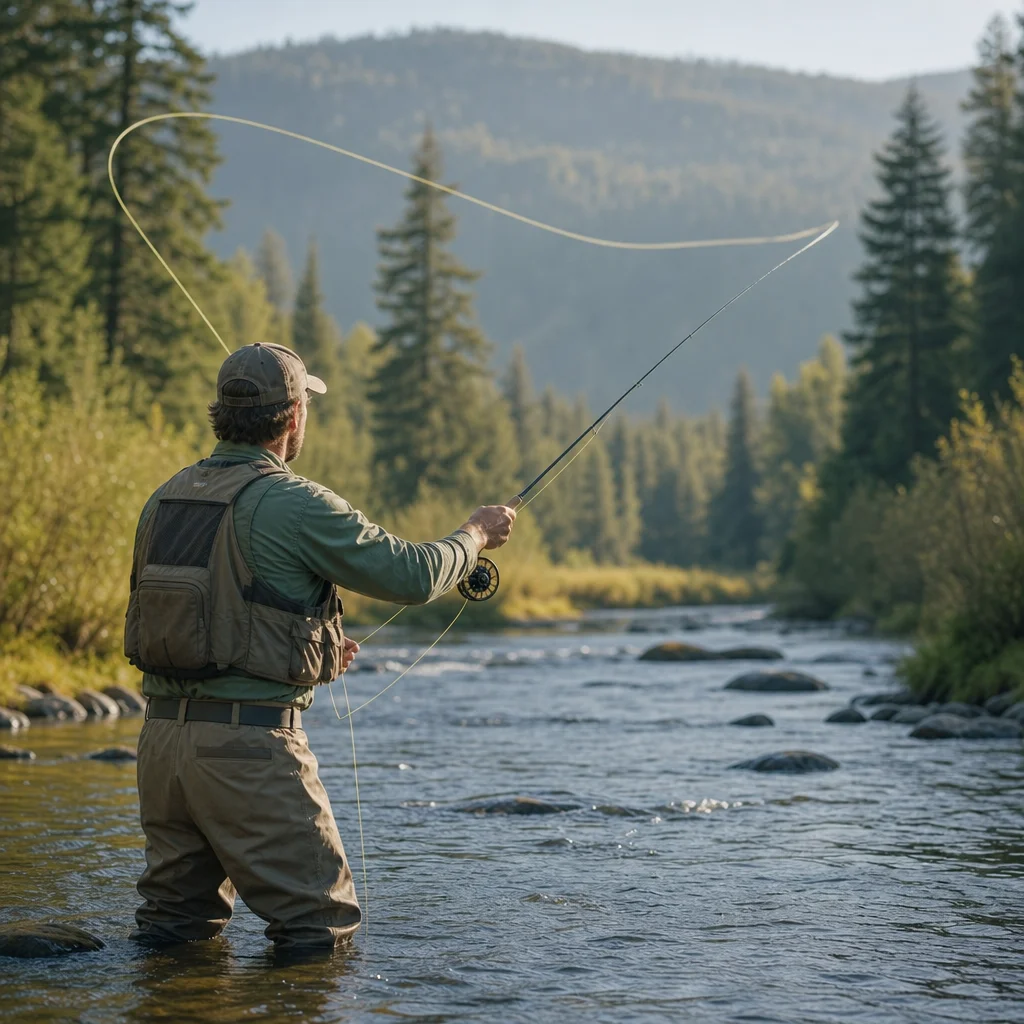
Small streams and large rivers ask different things from a fly line. On a narrow creek, you may need short, quiet casts that land without disturbing the pool. On a broad river, you may need distance, stable turnover, mending control, and enough line weight to handle wind or larger flies.
Choosing between those demands starts with understanding what the line is doing in the air and on the water. The right choice isn’t necessarily the most specialized line. For many trout anglers, one well-chosen floating weight-forward line can cover both settings, provided you accept a few trade-offs.
Start with the rod and line weight
Match the line’s labeled weight to the rod’s intended line weight before worrying about taper. A rod designed for a 5-weight line will usually perform best with a line built around that rating, and the same principle applies to 3-, 4-, and 6-weight outfits.
Line weight affects how much mass the rod feels during the cast. More mass can help load a rod and turn over larger flies, longer leaders, or bulky indicators. Less mass can make short presentations feel less forceful, but it won’t automatically make a cast delicate. Taper, casting tempo, leader design, and how much line is outside the rod tip matter too.
The rating is a starting point, not a guarantee of identical performance across every fly line. Specialty lines can distribute their weight differently, and some are designed to load a rod quickly with very little line beyond the tip. Check the rod maker’s recommendations when you’re considering a line with an unusual profile.
Check the pairing at home: Before fishing, thread the line through the guides and make a few short casts on grass or open ground. If the rod feels overloaded at close range or struggles to load with a normal amount of line outside the tip, reconsider the line profile or weight.
Why small streams favor control and quiet presentation
Small streams often limit your casting space. Trees, brush, steep banks, and overhanging branches can make a long back cast impossible. You may spend more time roll casting, bow-and-arrow casting, or using short sidearm casts than making a classic overhead cast.
A line that loads the rod efficiently at short distances can help. A compact weight-forward taper places more of the line’s mass close to the rod, allowing it to turn over when only a modest amount of line is aerialized. That can be useful when you’re making a quick cast to a pocket or lifting line over a bank-side obstacle.
However, a compact head isn’t automatically the best small-stream line. If the front taper is abrupt and the line turns over aggressively, it may land harder than you want on shallow water. This can be especially noticeable when trout are holding close to your feet or when the stream is low and clear.
For delicate small-stream work, look for a line with a front taper that softens the turnover without becoming so long that it refuses to load the rod at short range. A moderate taper is often easier for a developing caster to manage than an extreme presentation line or an unusually aggressive short head.
The line’s surface also matters. A floating line that lands quietly, floats high enough for easy pickup, and doesn’t collect excessive debris is generally more useful than a highly specialized profile you can’t control. On small streams, reliable handling often beats a narrow performance advantage.
Why large rivers favor distance, turnover, and mending
Large rivers give you more room, but they can require longer casts and more line control. Fish may be separated from you by a broad current, a deep channel, or a difficult wading position. You may also need to mend line across conflicting currents before drag reaches the fly.
A weight-forward line is a practical default for this environment because its concentrated front section helps load the rod and carry line. It can turn over longer leaders, split shot, indicators, and larger streamers more effectively than a very delicate line profile.
For dry-fly fishing, a longer front taper can help spread energy gradually and present the fly more gently. That can be helpful on a large, clear river where trout have time to inspect a drifting fly. The trade-off is that a long, delicate taper may feel less responsive when you’re trying to cast quickly, throw a bulky fly, or punch through wind.
Mending is influenced by more than taper. The amount of line on the water, the line’s surface design, rod length, leader arrangement, and your position relative to the current all affect how well you can mend. A line marketed for easy mending can help, but it won’t replace reaching the right angle or keeping unnecessary line off the water.
For many river situations, a standard floating weight-forward line with a balanced front taper provides a useful middle ground. It can make moderate-distance casts, turn over common trout rigs, and remain manageable when you need to mend or recast.
Taper: the main presentation decision
Taper describes how the line’s diameter and mass change from the tip toward the thicker body. You don’t need to memorize every section of a line, but three areas are useful to understand:
- Tip: The thin end that connects to your leader. A fine tip can help with smaller knots and a light connection, while a heavier tip may be more durable or better suited to larger flies.
- Front taper: The section that transfers energy toward the leader. Longer front tapers generally spread that energy more gradually; shorter front tapers tend to turn over more decisively.
- Belly and rear taper: The heavier working portion and the transition toward the running line. These influence how the line loads the rod, carries distance, and handles changes in casting length.
For small streams, a moderately short or medium front taper can make short casts easier while still avoiding a harsh landing. For large rivers, you might prefer a line with enough rear body and belly to carry distance and enough front taper to match the flies and leaders you commonly use.
Be cautious with labels such as “delicate,” “presentation,” “distance,” or “all-around.” They describe a line’s intended behavior, but they don’t replace considering your rod, casting style, and typical rig. One angler’s smooth distance line may feel too powerful to another angler using the same rod.
Can one line cover both waters?
Usually, yes—especially if you fish a single trout rod and want to avoid carrying multiple spools. A versatile floating weight-forward line matched to your rod is often the most sensible choice for a mixed small-stream and large-river schedule.
For that one-line setup, look for a profile with:
- A moderate front taper rather than an extreme distance or ultra-delicate design
- Enough body to load the rod during short casts
- A stable rear taper for carrying line farther when needed
- A tip and coating appropriate for the fly sizes you normally fish
- A floating design that supports dry flies, nymphs, and ordinary mending
This compromise won’t be perfect everywhere. On a tiny brushy stream, it may feel more substantial than a specialized short-line presentation line. On a wide river in strong wind, it may not cast as efficiently as a distance-oriented line. Still, it can keep your setup simple and reduce the temptation to solve every casting problem by buying another line.
If you regularly fish both environments and have a spare reel spool, a second line can target the biggest weakness in your main setup. Pair a more delicate presentation line with a rod used mostly on technical small water, or choose a more powerful taper if large rivers, wind, and bulky rigs dominate your fishing. Change the line only when the difference will solve a recurring problem.
Double taper versus weight forward
A double-taper line can be appealing for small streams. Its relatively even taper from the center toward both ends supports short casts, roll casts, and delicate presentations. When one end becomes worn, you can sometimes reverse the line, giving it a longer service life.
Its main limitation is distance. A double-taper line can cast well, but it generally won’t provide the same easy distance or aggressive turnover as a weight-forward line designed for that purpose. On a large river, especially when wind or heavy rigs are involved, that difference may become frustrating.
A weight-forward line is the more flexible default if you truly fish both small and large water. Choose double taper when close-range presentation, roll casting, and line control are more important than reaching distant lies.
Avoid solving the wrong problem
If your line lands heavily on a small stream, the issue may be a short leader, excessive casting force, or a fly that’s too bulky for the setup. If your large-river casts collapse, the problem may be poor timing, too little line outside the tip, an overly long leader, or a line that doesn’t match the rod’s action.
Before replacing the line, test the setup with a normal leader and the flies you actually fish. Observe whether the problem appears only at short range, only at longer distances, or only with added weight. That pattern gives you better information than a general feeling that the line “doesn’t cast well.”
Also inspect the line regularly. Cracks, rough sections, a damaged welded loop, or a coating that no longer floats can affect performance in both environments. A clean, serviceable line may outperform a newer but poorly matched profile.
A simple decision checklist
Choose a moderate weight-forward floating line matched to your rod if you want one line for varied trout waters. Favor a somewhat more compact, responsive taper if most of your fishing involves short casts, roll casts, and occasional bulky flies. Favor a smoother, more gradual front taper if delicate dry-fly presentation on larger, clearer rivers is your priority.
Choose a specialized small-stream line when tight quarters and quiet short casts are your regular challenge. Choose a specialized large-river line when distance, wind, heavy rigs, or long-line mending consistently limit your fishing.
Before buying, answer three questions:
- How much line do you usually have outside the rod tip when the cast works well?
- What is the largest or most wind-resistant fly you commonly use?
- Is your bigger problem delicate landing, short-range loading, distance, or turnover?
The best fly line is the one that addresses your most common limitation without creating a new one. Start with the rod’s rating, choose a taper suited to your usual flies and casting range, and treat a versatile line as a practical compromise—not a promise that every water will feel identical.