How to Choose a Fly Reel When You Fish Small Streams and Big Rivers
When one season takes you from tight brushy creeks to broad current and long runs, the reel choice becomes a compromise. I’ll compare arbor size, backing capacity, drag, weight, and durability so you can choose one reel without overbuying or underestimating your water.
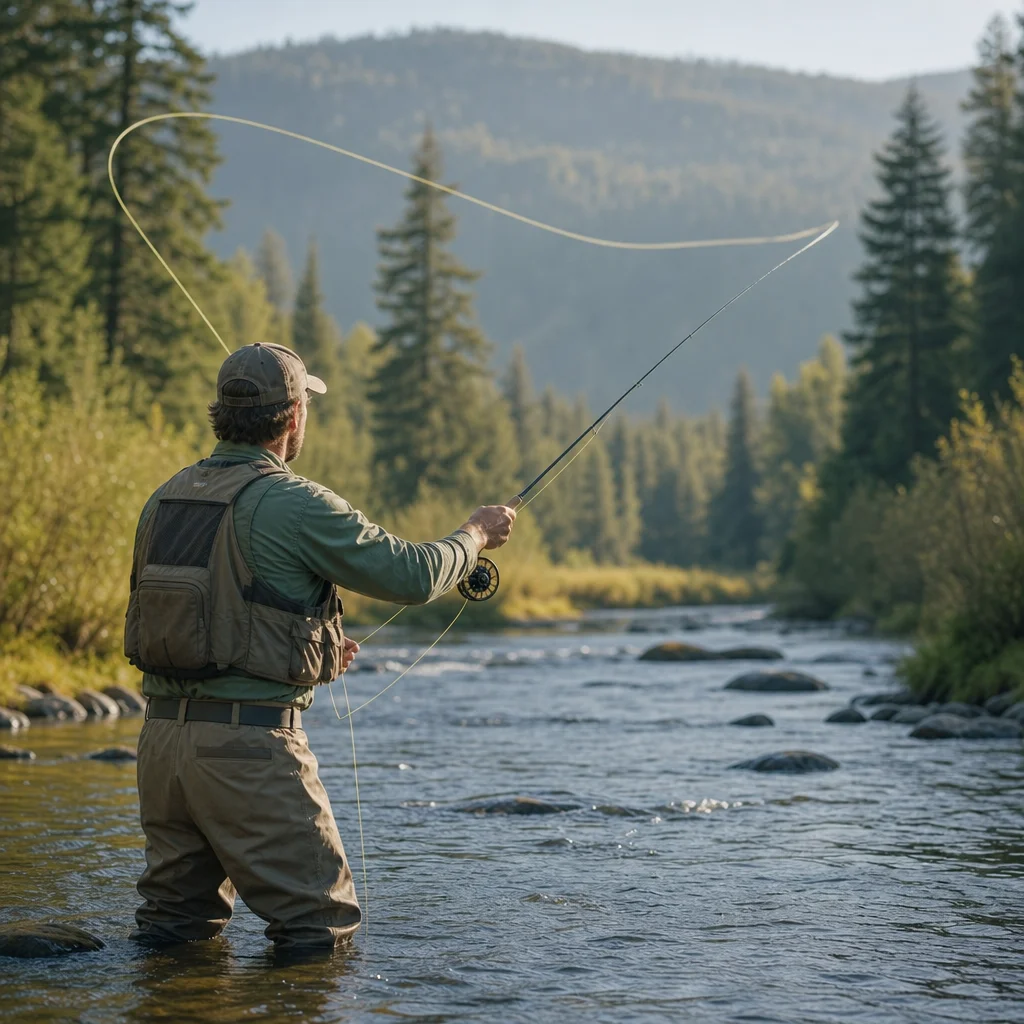
Small streams and big rivers ask different things of a fly reel. On a narrow creek, you may value low weight, compact dimensions, and a simple drag that won’t upset a light rod. On a large river, extra backing, fast line recovery, and dependable resistance can matter when a trout finds the current.
Choosing one reel for both settings means deciding which compromises you can live with. You don’t need the largest, strongest reel available, but a tiny creek reel may leave you short on capacity or uncomfortable balance when you move to broader water.
Start with the rod and line, not the river
A reel should first balance the rod and hold the line you intend to fish. The river matters, but it shouldn’t override the tackle’s basic requirements.
For most trout anglers, the reel’s rated line range should match the rod and line weight you use most often. A reel designed around a light trout setup may be ideal on small water but cramped with a heavier line and sufficient backing. A reel sized for a heavier rod may provide useful capacity on a big river, yet feel bulky on a short, delicate outfit.
Hold the assembled rod with the reel mounted if you can. The setup shouldn’t feel dramatically tip-heavy or tiring after several minutes of casting. Reel balance isn't a substitute for good technique, but it affects how pleasant the outfit is to carry and fish all day.
If you regularly switch between two rod weights, first decide whether one reel can reasonably serve both. Sometimes the better solution is one versatile reel with spare spools. In other cases, forcing one reel to cover two very different outfits creates more compromise than savings.
Arbor size: recovery speed versus compactness
The arbor is the central spool area around which the backing and fly line are wound. A larger arbor generally retrieves more line per rotation and helps reduce tight coils in the fly line after it has spent time stored on the spool.
That faster recovery is useful on big rivers. A fish moving downstream can take line quickly, and gaining line efficiently gives you more control when wading space is limited or the current is complicated. A larger arbor can also make the reel easier to use when you need to pick up slack between casts.
The trade-off is size and weight. A large-arbor reel may be physically wider and heavier than you need on a small stream. It can make a light rod feel less lively, catch more easily on brush, and take up more room when you’re moving through trees.
For mixed trout water, a medium or moderate large-arbor design is often the sensible middle ground. It provides better recovery than a traditional narrow spool without turning a small-stream outfit into a heavy piece of hardware.
What large arbor doesn't do
A large arbor doesn’t automatically make a reel stronger, improve casting distance, or guarantee better drag performance. It mainly changes line recovery, spool geometry, and the way line is stored.
Also consider the arbor after the line is loaded. Manufacturers may describe a reel as large arbor, but usable recovery depends on how much backing and line fill the spool. A nearly empty spool retrieves less line per turn than a properly filled one.
Backing capacity: plan for realistic runs
Backing gives a fish somewhere to go after it has taken all the fly line from the reel. On many small streams, backing is rarely used. The fish may be limited by shallow water, woody cover, pocket structure, or the practical need to keep moving with it.
Big rivers can change that calculation. A trout with access to deep current may travel farther, and you may have less control over where the fish runs. Extra capacity provides a margin for those situations, although it doesn’t replace sound fish-fighting decisions.
Don’t choose capacity based on an imaginary record fish if your typical quarry is modest trout in manageable water. Oversizing the reel just to carry a large amount of backing can add weight and reduce balance. Instead, think about:
- The line weight and physical bulk of your fly line
- The backing strength appropriate for your trout setup
- The depth and speed of the rivers you fish
- Whether a hooked fish can realistically make a long, unobstructed run
- How much spare capacity remains after the line is loaded
Published capacity figures can vary with backing diameter and how tightly the backing is wound. Treat them as useful estimates rather than absolute guarantees. The spool should be filled neatly, with enough clearance that the line won’t rub against the frame, but not so much that coils spill over the rim.
For a reel intended to cover both small streams and larger rivers, modest additional capacity is usually more useful than extreme capacity. You want room for a sensible backing load and your chosen line, not a saltwater-sized spool for freshwater trout.
Drag: control matters, but complexity isn’t always an advantage
A reel drag controls how much resistance the spool provides as line leaves under tension. On a small stream, you may mostly manage a fish with the rod, your fingers, and careful positioning. On a big river, a consistent drag can help when a trout runs into stronger current.
Look for a drag that starts smoothly rather than one that grabs suddenly. A jerky start can put unnecessary strain on light tippet, especially when a fish changes direction close to the rod. Useful adjustment should also be easy to make while you’re fishing, without needing to stare at a small dial.
Sealed and enclosed drag systems can reduce the exposure of internal parts to grit, moisture, and debris. That can be valuable if you wade often, fish sandy banks, or expect the reel to receive more than a polite splash. A simpler click-and-pawl-style system may be light, durable, and perfectly adequate for small-stream use, but it generally offers less adjustable resistance.
Neither system is universally better. Consider the kind of pressure you actually put on trout:
- Mostly small streams and light tippet: Low weight and smooth, predictable resistance may matter more than maximum drag power.
- Large rivers with stronger current: A broader adjustment range and reliable startup can provide more control.
- One reel for both: Favor a drag that remains smooth at low settings but has enough usable range for larger water.
More drag isn't automatically safer or more effective. If the reel is set too tightly, a sudden run can break tippet or pull a hook free. Your hand on the line and the angle of the rod remain part of the drag system.
Weight: balance the outfit, not just the reel
Weight is one of the clearest differences between a small-stream reel and a river-oriented model. A heavier reel may offer a larger frame, more capacity, and stronger construction, but those benefits come at the end of your arm all day.
For short rods and small flies, unnecessary weight can make the setup feel clumsy. It may also shift the balance enough that you grip the rod more tightly or cast with more effort. On a longer rod used on a broad river, a little additional reel weight may balance the outfit better and feel less noticeable.
Compare complete outfits rather than reel specifications in isolation. A reel that seems heavy on paper may balance a longer rod well, while a very light reel can make that same rod feel tip-heavy. The goal isn't the lowest possible reel weight; it’s a comfortable combination that doesn’t fight your casting stroke.
When comparing two reels with similar capacity and drag performance, the lighter model is often attractive for mixed use. But don’t sacrifice a well-balanced, durable reel merely to save a small amount of weight.
Durability: identify the abuse your reel will actually see
Small-stream fishing can be hard on gear in ways that have little to do with fish size. Reels get bumped against rocks, caught on branches, set down in gravel, and exposed to mud or fine sand. Big-river fishing may involve more wading, stronger current, and longer sessions where a failure is inconvenient and difficult to solve.
A reel for varied water should have a frame and spool that resist flexing under ordinary pressure. The spool should fit securely, the drag adjustment should feel consistent, and the handle shouldn't wobble excessively. Finish quality matters, but visible appearance is less important than sound construction and accessible maintenance.
You don’t necessarily need the most rugged reel in the product line. Added protection can mean added weight, cost, and bulk. Instead, match durability to your habits:
- If you mostly fish from clean banks and handle the reel carefully, a lighter construction may be sufficient.
- If you wade rocky rivers and regularly fish in poor weather, prioritize impact resistance and a drag that tolerates contamination.
- If you travel between waters, choose a reel with a case or pouch and a spool-release system you can operate without forcing small parts.
A durable reel still needs basic care. Keep grit away from the spool and drag area, rinse according to the manufacturer’s instructions after exposure to dirty or mineral-heavy water, and let the reel dry before storing it. Avoid applying lubricant where the manufacturer doesn’t recommend it; excess oil can attract grit or affect drag surfaces.
The most useful compromise for mixed trout water
For one reel covering small streams and big rivers, look for a balanced set of moderate capabilities:
- A line rating that suits your primary rod and line. Don’t size up dramatically just for hypothetical fish.
- A medium or large arbor. This provides useful line recovery without requiring the biggest frame.
- Enough backing capacity for your largest realistic water. Leave room for the actual fly line and a sensible margin.
- A smooth, adjustable drag. Low-end smoothness is important for light tippet; extra maximum pressure is secondary.
- A weight that balances your rod. Test the assembled outfit whenever possible.
- Construction suited to your handling habits. Wading, gravel, travel, and bad weather justify more protection.
- A spare spool option if you change lines often. This may be more practical than buying a second complete reel.
The best all-around reel may not be the one with the highest capacity or strongest drag. It’s the one that remains comfortable on small water while giving you enough control and reserve when the river opens up.
When one reel isn't the right answer
A single reel is convenient, but convenience has limits. If your small-stream setup uses a very light rod and your large-river setup uses a substantially heavier line, their balance and capacity requirements may be too far apart. Two appropriately sized reels can be more comfortable and may avoid replacing an overworked compromise later.
A spare spool can split the difference when the reel body suits both outfits. It lets you carry different lines or backing arrangements, but remember that the loaded spool still needs to balance the rod and fit the reel securely.
Practical next steps
Start by writing down the rod weights and fly lines you fish most often. Then measure your priorities: low weight, fast recovery, extra backing, sealed protection, or the ability to share a spare spool.
Mount candidate reels to your rod if possible. Check the balance, handle comfort, spool clearance, drag adjustment, and how easily you can remove the spool. Finally, choose the smallest reel that comfortably meets the demands of your largest regular river—not the largest river you might visit someday.
That approach keeps a mixed-water setup useful on a brushy creek, capable in open current, and restrained enough that the reel doesn’t become the most noticeable part of the outfit.