How to Choose a Net That Protects Trout and Fits Your Fishing Style
A long-handled net can solve one problem while creating another on a small stream. I’ll help you compare hoop shape, mesh, handle length, carrying methods, and fish-friendly materials so your next net suits both trout and your fishing style.
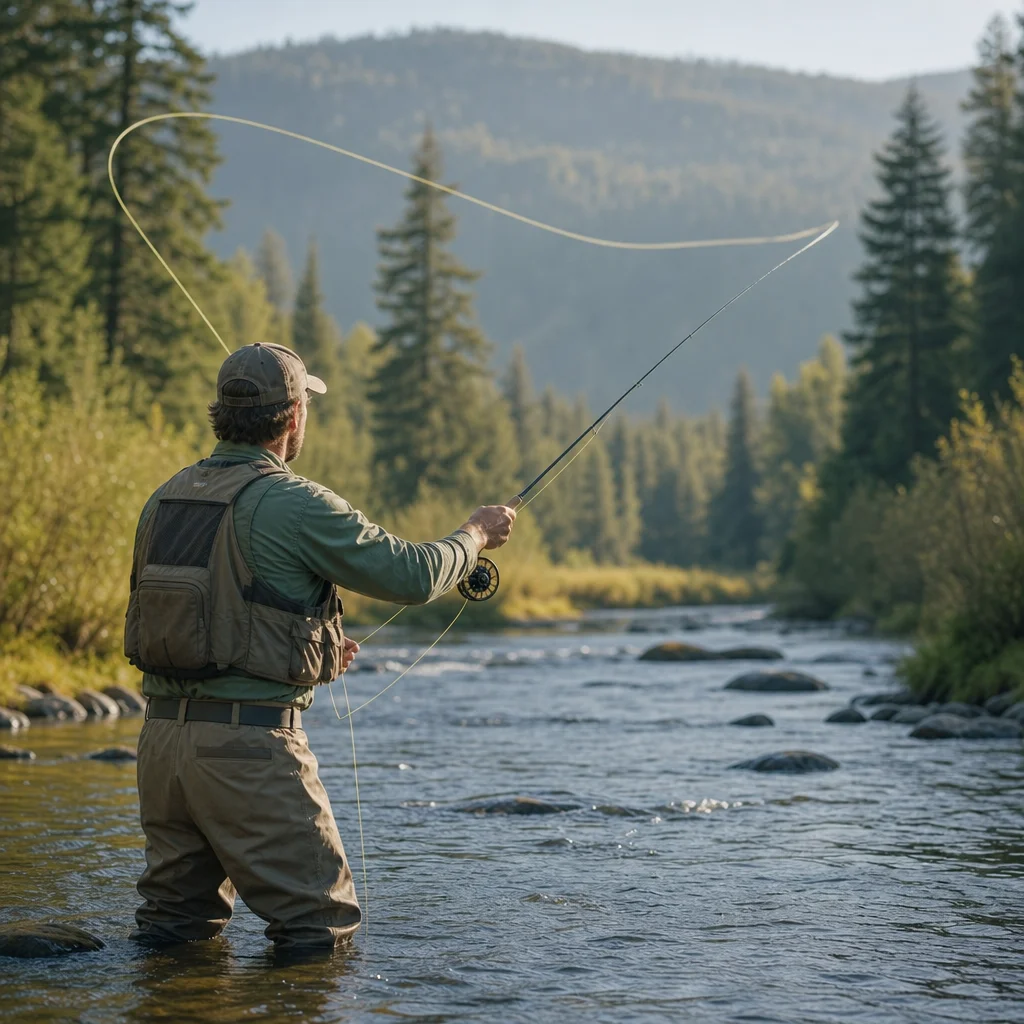
The right trout net should make landing a fish calmer, not turn the final few seconds into a wrestling match. A large, deep net may be excellent from a drift boat but awkward when you’re squeezing between branches, while a tiny stream net can leave a strong fish half-supported.
For most anglers, the best choice comes down to balancing four things: how you fish, how large the trout are likely to be, how you carry your equipment, and how gently the net handles fish. You don’t need the biggest or most expensive model. You need one that lets you secure a trout quickly and keep it in the water whenever possible.
Start with your fishing situation
Before comparing materials and measurements, picture where you spend most of your time. A net for a narrow mountain stream should solve different problems from a net used while wading a broad river or fishing from a boat.
Small streams and tight brush
A short-handled net with a compact hoop is usually easiest on small water. It won’t catch as often on alder, willow, or your pack, and you can maneuver it with one hand while keeping your rod under control.
A teardrop or pear-shaped hoop often works well here because the narrower end points toward the handle and the wider opening gives you useful netting area without making the frame excessively large. A compact round hoop can also work, especially if you prefer a simple, rigid shape.
The trade-off is reach. You may need to move closer to the fish, which isn’t always possible in deep or fast water. Keep your approach low and avoid chasing a trout around the pool simply because your net is small.
Larger rivers and wading
On a broad river, a medium-sized net with a somewhat longer handle gives you more reach. This can be helpful when you’re standing in current and trying to guide a trout toward the net without stepping into deeper water.
A longer handle adds leverage and reach, but it also adds weight and becomes more noticeable when attached to your back or vest. For many wading anglers, a medium handle is the sensible middle ground: long enough to help with a fish at arm’s length, short enough to carry without constant annoyance.
Boats and banks
Boat anglers can use larger, deeper nets because storage and reach are less restrictive. A deep bag is useful when a fish makes a last-minute run, but it should still be easy for the person holding the net to control. A net that is too large can sweep unpredictably around a boat and create trouble for hooks, passengers, or the fish.
From a steep bank, prioritize reach and a secure grip. You may not be able to step down to the water, so a short-handled stream net could force you to lift the trout too far. Lifting a fish by a net high above the water increases the chance of a fall and makes handling more difficult.
Choose a fish-friendly mesh
Mesh is one of the most important parts of the net because it contacts the trout, the fly, and sometimes your hands. Look for a smooth, knotless material with enough flexibility to cradle the fish rather than scrape against it.
Rubber mesh
Rubber mesh is a popular choice for catch-and-release fishing because hooks are less likely to become deeply tangled in it, and the material is generally smooth against a trout’s body and fins. It also tends to be easier to remove from flies than conventional knotted nylon.
Rubber bags are usually heavier than lightweight fabric bags, especially when wet. They can also feel less compact when folded or stored. Those drawbacks are worth considering if you hike long distances, but they may be a good trade for easier fish handling and fewer net-related tangles.
Coated and knotless fabric mesh
Some nets use knotless nylon or another soft fabric, sometimes with a coating intended to make the mesh smoother and more resistant to snagging. These bags can be lighter than rubber and may suit anglers who prioritize packability.
Inspect the mesh rather than relying only on the label. Run a finger over it and look for rough seams, exposed knots, or edges that could catch a fly. A smooth fabric bag can be a reasonable choice, but a coarse, knotted bag is more likely to create avoidable problems during release.
Mesh color and visibility
Clear, translucent, or subdued-colored mesh can make it easier to see where the trout is positioned. Bright colors may help you find a dropped net, but they can be visually distracting in clear water. Color isn't the main welfare factor; smooth construction, suitable depth, and careful handling matter more.
Match the hoop shape to the fish and water
The hoop determines how easily you can guide a trout into the bag. Shape is less important than using the net correctly, but it does influence maneuverability.
- Teardrop or pear-shaped hoops provide a broad opening with a narrower connection to the handle. They’re versatile for wading and small rivers.
- Round hoops are simple and predictable, with no obvious top or bottom. They can be easy to position when you’re learning.
- Flat-bottomed hoops help the bag sit open in the water and can support a fish without forcing it into a tight corner.
- Large boat nets offer room for bigger trout but demand more storage space and control.
For typical stream and river trout, choose a hoop that is large enough to contain the fish without repeated attempts but not so large that it is difficult to maneuver. If the trout barely fits, the net is too small for that water. A fish that fits comfortably can be secured with less chasing and less time out of the water.
Think carefully about handle length
Handle length affects both landing control and carrying comfort. A short handle is light and discreet, but you’ll need to reach farther with your arm or move closer to the fish. A long handle gives you reach but can snag on vegetation and swing around behind you.
For wading, consider where the handle will sit when you’re walking, casting, and kneeling. A net that constantly catches on your fly line or jacket isn’t helping, even if its length is theoretically useful.
The grip should remain secure when wet. A rubberized or textured handle can be more dependable than smooth hard plastic. Check whether the frame-to-handle connection feels solid, since looseness there can make a net twist just when you need it most.
Decide how you’ll carry it
A good net is only useful if you can reach it without fumbling. Common carrying options include magnetic or tethered releases, clips, holsters, and simple attachment points on a vest or pack.
A magnetic release is convenient for many wading anglers: pull the net free, land the fish, and let the magnet reconnect it afterward. Add a tether if losing the net would leave you without a way to land fish or create litter in the river.
A clip can be inexpensive and straightforward, but it may release accidentally when you brush against branches or rocks. A holster keeps the net in a consistent position and can be useful for anglers who dislike a net swinging from their back.
Whatever system you choose, practice drawing the net while wearing the clothing and pack you use on the water. If the release is difficult to operate with cold or wet hands, you’re likely to delay using the net when it matters.
Check the water’s local rules: Before fishing a new stream, confirm whether its regulations specify allowed net materials, mesh, or other fish-handling requirements. Rules can differ between states, agencies, and individual waters.
Use the net to reduce handling stress
A fish-friendly net can't compensate for rough technique. Keep the trout in the water whenever practical, wet your hands before touching it, and avoid squeezing the body. Support the fish horizontally rather than holding it vertically by the jaw, especially if it’s large or tired.
Guide the trout headfirst into the net. Don’t stab at it from behind or chase it around the pool. Once it’s contained, keep the bag submerged while you remove the hook. If the fly is difficult to remove or deeply embedded, cut the tippet as close to the fly as practical instead of prolonging the struggle.
The net should be deep enough to contain the fish without letting it spill over the rim, but excessive depth can make hook removal awkward. A moderate, flexible bag is often easier to manage than an extremely deep one.
A simple buying checklist
Before choosing a net, ask:
- Where will I use it most? Small streams call for compact maneuverability; broad rivers and steep banks may justify more reach.
- What size trout do I normally encounter? Choose an opening that comfortably fits your likely catch.
- Can I carry it securely? Plan the attachment method before buying the net.
- Is the mesh smooth and knotless? Rubber or soft knotless material is generally easier on fish and flies.
- Can I operate it with wet hands? Check the grip, release, and tether.
- Can I keep the fish in the water? A manageable net is more useful than an oversized one that encourages lifting.
Practical next steps
Start with your usual water, not an imagined trophy fish. For most beginner and intermediate wading anglers, a medium or compact teardrop net with a smooth rubber or knotless mesh bag, a secure grip, and a reliable tether is a sensible starting point.
Then test the carrying system at home. Practice drawing the net, extending it toward an imaginary fish, and returning it to its attachment point. If the movement is awkward in the driveway, it won’t become elegant when a trout is shaking a fly beside your knees.
Choose the smallest net that comfortably handles your expected fish and the longest handle you can carry without constant snagging. That balance will protect trout, simplify your release routine, and keep the net from becoming one more piece of gear you’d rather leave in the truck.