Is a Floating Line Enough for Most Trout Fishing?
I’ll compare floating, sink-tip, and sinking lines so you can spend wisely, match your setup to the water, and recognize when weighted flies solve the problem without adding another spool.
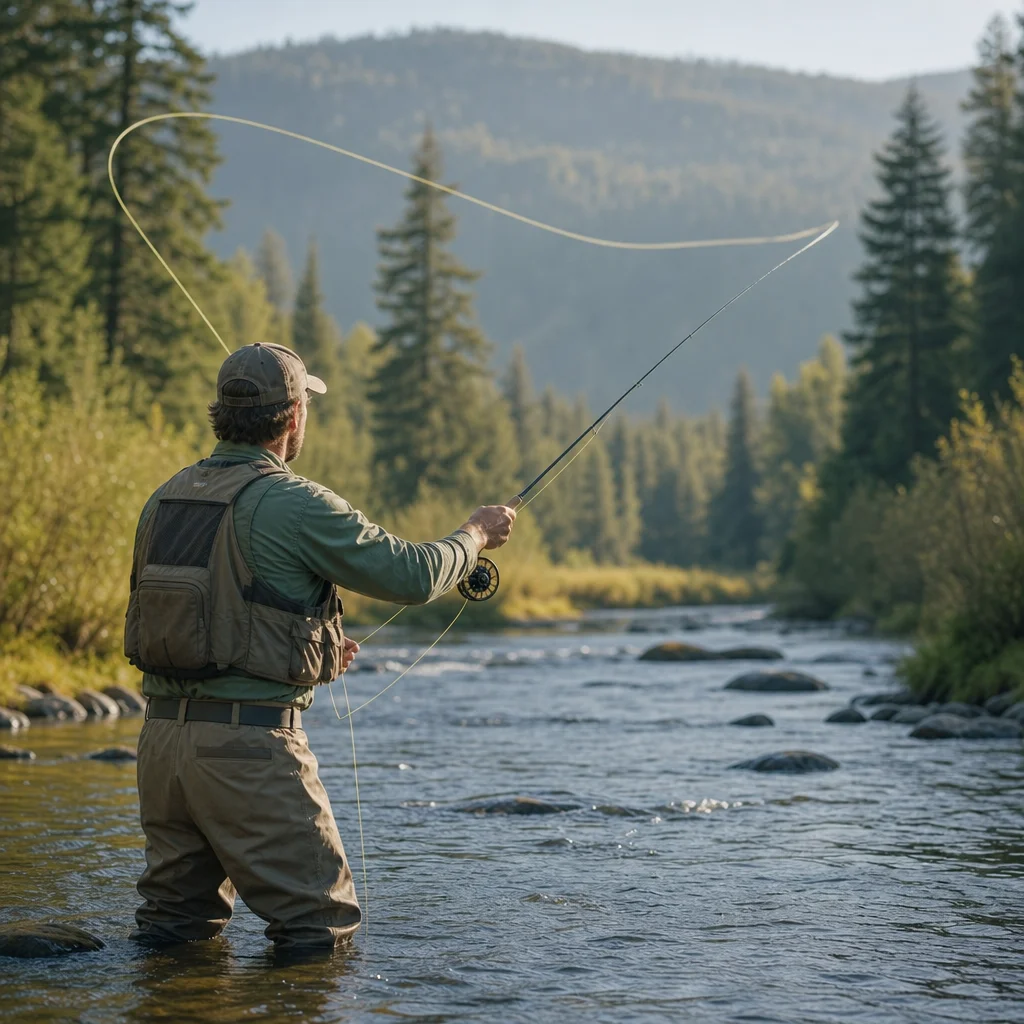
If you fish for trout with a standard floating line, you can cover a surprisingly wide range of situations. Dry flies, nymphs under an indicator, shallow streamers, and many light wet-fly presentations all work well from the same setup.
The limitation appears when trout are holding deeper than your fly can comfortably reach. At that point, you have several choices: add weight to the fly, use a sink tip, switch to a dedicated sinking line, or change your position and retrieve. None is automatically best. The sensible choice depends on depth, current, fly size, and how much control you need.
For many beginners and intermediate anglers, a floating line should be the starting point—not because it does everything, but because it handles the most common presentations and remains the easiest line to cast, mend, and manage.
What a floating line does well
A floating line stays on or near the surface while your leader and fly occupy the water below it. That simple arrangement gives you several advantages.
Dry flies and surface fishing
For dry-fly fishing, a floating line is the obvious choice. It lets you make a clean pickup, mend line without immediately disturbing the fly, and track the line on the surface. You can also false-cast to dry the fly when conditions allow.
A floating line is useful even when you aren’t fishing a dry fly. With a nymph under an indicator, the line remains manageable on the surface while the leader carries the flies down. This makes mending and detecting movement easier than it would be with a sinking line.
Shallow and moderate-depth nymphing
A floating line can handle many nymphing situations when the flies, split shot, or indicator system are properly balanced. In shallow riffles, pocket water, and the edges of deeper runs, you may not need a sinking section at all.
Your first adjustment should often be practical rather than expensive. Try a longer leader, a heavier or more streamlined fly, a small amount of approved weight where appropriate, or a better angle upstream. These changes can put the fly deeper while preserving the floating line’s control.
Streamers in shallow water
Small and moderately weighted streamers can be fished effectively on a floating line. You can cast across or slightly downstream, allow the fly to sink briefly, and retrieve it with strips or a swing. This setup is especially useful around banks, shallow structure, and the upper portions of pools.
The floating line also helps you see and control the presentation. You can mend to extend the drift, lift the rod to avoid shallow obstacles, or change the retrieve without the line itself pulling the fly rapidly toward the bottom.
Where a floating line starts to struggle
A floating line doesn't stop a fly from sinking, but it does limit how efficiently you can keep that fly deep and moving naturally. The line’s surface position creates a long connection between the rod and the fly, and that connection affects the presentation.
If the fly is heavily weighted while the line floats, the fly may reach depth but still swing upward, hang back, or move at an awkward angle. In current, the floating line can catch water and create drag before the fly has traveled through the strike zone.
You may notice a few warning signs:
- Your fly reaches the desired depth only briefly.
- You keep adding weight but still snag the bottom inconsistently.
- The fly rides high during the part of the retrieve where trout should see it.
- Mending helps one section of the drift but pulls another section out of position.
- Your cast becomes difficult, abrupt, or unsafe because the fly is carrying too much weight.
These problems don’t always mean you need a new line. They do suggest that the floating line may no longer be the most efficient tool for the presentation.
When weighted flies are enough
Weighted flies are usually the least expensive way to make a floating-line setup fish deeper. They’re a good solution when you need a modest increase in depth, want to preserve normal line control, or are fishing water where the fly must occasionally touch or approach the bottom.
A weighted fly also keeps your rig versatile. You can change flies without changing the line, and you can fish dry flies or lightly weighted nymphs later in the day.
The trade-off is that added weight changes casting. A heavy fly can create a wide loop, collapse the leader, or rebound toward you if your timing and casting space are poor. Slow down, open the loop slightly, and keep the rod tip controlled. Don’t compensate for a deep-water problem by continually making the fly heavier if the resulting cast is becoming difficult to manage.
Weighted flies work best when:
- You need to reach shallow or moderate depth.
- The current is manageable.
- You want to change flies frequently.
- You’re fishing from a boat or bank position that gives you a useful angle.
- The fly itself is part of the intended presentation, rather than just a weight attached to a leader.
When a sink tip is the better compromise
A sink tip has a sinking section at the front and a floating section behind it. Depending on the system, the tip may be integrated into the line or attached as a replaceable section. This arrangement helps the front of the rig get below the surface while keeping much of the line easy to control.
For many trout anglers, a sink tip is the most useful step beyond a floating line. It can improve streamer fishing in deeper runs, pools, and moderate current without requiring the handling changes of a full sinking line.
The sink tip is particularly helpful when you need the fly to stay down during a swing or retrieve. Because the sinking section is close to the fly, there’s less surface line for current to push around. You can often use a less heavily weighted fly and get a smoother, more predictable presentation.
The compromise is flexibility. A sink tip is less convenient for repeated mending and surface presentations, and it can make short casts feel different from a standard floating line. If you’re switching constantly between dries and deep streamers, carrying a spare spool or a separate reel may be more practical than trying to make one line do everything.
When a dedicated sinking line earns its place
A full sinking line sinks along most or all of its length. It’s designed to keep the connection to the fly below the surface, which can be valuable when trout are consistently holding deep and you need a controlled horizontal retrieve.
This approach is common for stillwater fishing, deep lake edges, and streamer presentations where the fly must remain in a particular depth band. A sinking line can also reduce the effect of surface chop and wind on the line itself.
The disadvantages are substantial for general-purpose trout fishing. You lose some of the easy line control that makes a floating line useful. Mending is limited, detecting subtle takes may be harder, and picking the line up for another cast can be less straightforward. You also need to choose a sinking rate that matches the depth and retrieve you intend to fish.
A dedicated sinking line makes sense when you repeatedly face the same deep-water problem. It’s less compelling as a first purchase if most of your fishing happens in shallow streams or involves mixed presentations.
A simple decision process
Use this sequence before buying another line.
1. Identify the depth problem
Estimate where the trout are holding and how long your fly needs to remain there. “I need to fish deeper” is less useful than “I need the fly two feet deeper for a slow retrieve” or “I need it to stay near the bottom through a long swing.”
2. Improve position first
Move upstream, change your casting angle, shorten or lengthen the leader, or alter the retrieve. A better angle can solve a depth problem without changing tackle. In some water, getting closer to the holding lane is more effective than adding a faster-sinking line.
3. Try a weighted fly
If the required depth is modest and the current isn’t overpowering the rig, a weighted fly may be all you need. Watch the cast and avoid adding weight faster than you can safely control it.
4. Choose a sink tip for recurring streamer work
If you regularly fish streamers in deeper or faster water, a sink tip offers a useful balance between depth and line control. It’s often the next logical addition to a floating-line setup.
5. Choose a full sinking line for a specific, repeated job
Reserve a dedicated sinking line for situations where keeping the entire connection below the surface consistently improves the presentation—especially deep stillwater or specialized streamer fishing.
Check the line match before you cast: Confirm that the line’s weight and configuration suit your rod, reel, leader, and casting ability. Manufacturer specifications can differ, and heavily weighted flies or sinking sections deserve more casting room and deliberate timing than a standard dry-fly rig.
A cost-conscious trout setup
If you’re building a first setup, one quality floating line is usually the most versatile purchase. Spend time learning how leader length, fly weight, mending, angle, and retrieve affect depth before buying several specialized lines.
A spare spool or inexpensive secondary reel can later make a sink tip or sinking line more convenient. That way, you aren’t rebuilding your entire outfit whenever the water changes. Keep the floating line ready for dries, indicators, shallow nymphs, and situations where precise surface control matters.
Label spare spools clearly and rinse lines according to the manufacturer’s care recommendations. Dirt and dried residue can reduce shooting performance, while careless storage can create memory and unnecessary tangles.
The short answer
A floating line is enough for most trout fishing if your fishing includes dry flies, shallow or moderate-depth nymphing, and lightly weighted streamers. It’s also the best line to learn with because it offers the widest range of basic control.
Add weighted flies when you need a modest depth increase. Choose a sink tip when streamers must stay down through current or a swing. Choose a dedicated sinking line when deep-water fishing is a regular, specific part of your season.
Start with the floating line, solve depth problems through position and presentation, and add specialized tackle only when the same limitation keeps returning. That approach saves money—and leaves fewer mysterious spools rolling around the back of the vehicle.