Do You Need a Waterproof Pack for Everyday Trout Fishing
I’ll compare waterproof packs, ordinary fishing packs with dry bags, and lighter water-resistant options so you can match access, durability, and cost to your usual bank, wade, or boat fishing conditions.
The short answer
You probably don’t need a fully waterproof pack for everyday trout fishing. For many anglers, a durable water-resistant pack paired with small dry bags protects the items that matter without adding the cost, weight, and sometimes frustrating access of a fully waterproof model.
A waterproof pack becomes more useful when your gear is regularly exposed to heavy rain, spray, accidental dunking, or a boat deck that never quite stays dry. The right choice depends less on the label and more on what you carry, how you reach it, and how wet your fishing usually gets.
Start with the conditions, not the product name
Think about your normal fishing day rather than the most dramatic one you can imagine.
Bank fishing
Bank anglers often have the easiest case for a conventional fishing pack. You may walk through wet grass, deal with occasional rain, and set the pack on damp ground, but you usually aren’t immersing it.
A water-resistant backpack, sling, or waist pack is often enough. Look for a fabric with a useful coating, covered zippers, and a base that won’t immediately absorb water. Put your phone, wallet, spare matches, and other vulnerable items in small waterproof pouches inside.
If you hike a long way to the river, comfort and organization may matter more than complete waterproofing. A pack that keeps every compartment dry but rubs your shoulders or makes it difficult to reach tippet can become expensive clutter.
Wade fishing
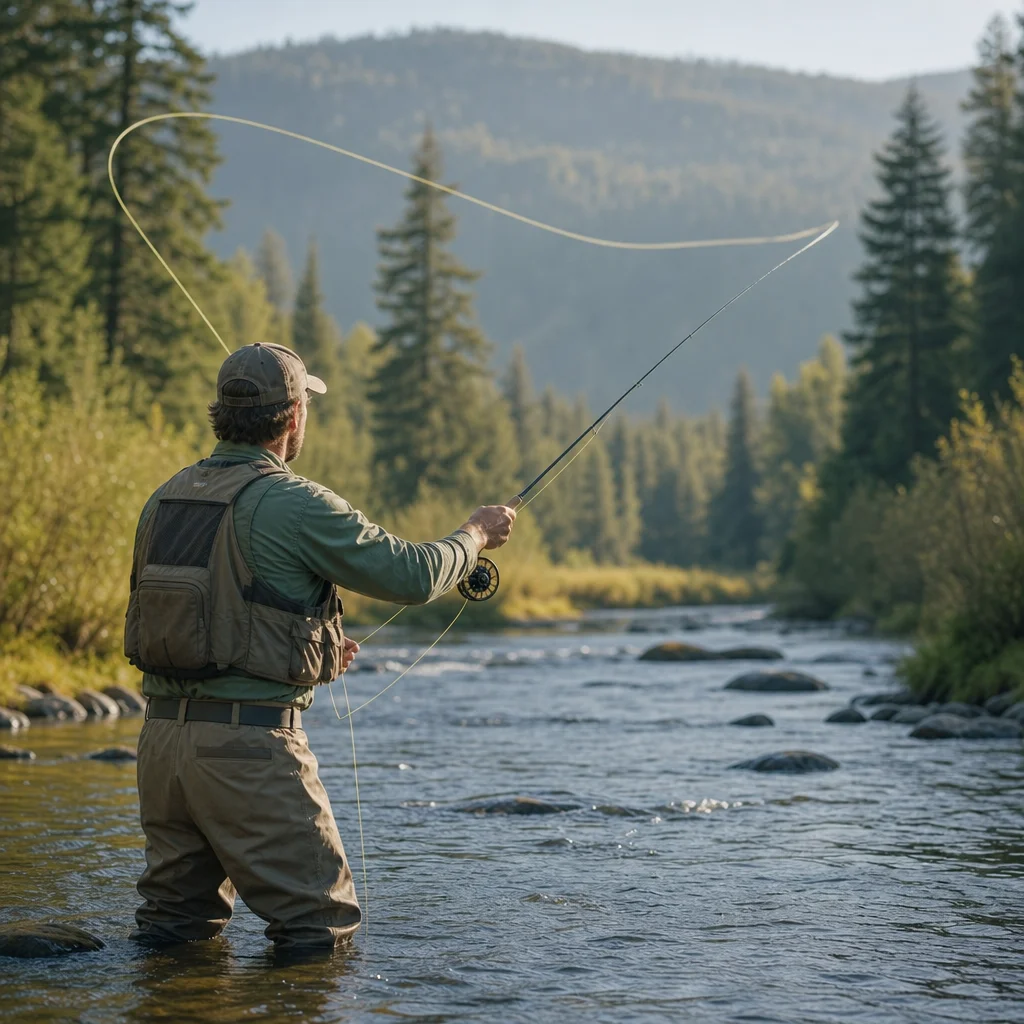
Wading creates a different risk. Even if the sky is clear, your pack may brush wet vegetation, get splashed while you cross shallow water, or fall in when you’re changing flies. A compact pack that stays high on your body is easier to manage than a large bag hanging low near the water.
For shallow, careful wading, a water-resistant pack with internal dry bags is a sensible budget setup. For deeper wading or places where a slip could put the pack underwater, stronger waterproofing is more valuable—especially for electronics, car keys, and spare clothing.
Remember that a pack’s advertised waterproofing doesn’t automatically make it suitable for submersion. Seams, closures, zippers, and pockets may have different limits.
Boat fishing
Boat anglers often face spray, wet seats, rain, and gear being placed on a damp deck. A waterproof pack or roll-top dry bag can be worthwhile here, particularly for clothing, food, and electronics.
Access is the trade-off. Roll-top bags protect well, but opening and closing them repeatedly while changing flies is slower than using a zippered fishing pack. A useful compromise is to keep frequently used items in a small accessible tackle pouch and reserve the waterproof bag for things that must stay dry.
Check the immersion claim: Before relying on a waterproof pack for a phone, camera, medication, or spare layers, read the manufacturer’s rating for rain, spray, and immersion. Closure design and correct sealing matter as much as the fabric.
The main options compared
1. Water-resistant fishing pack with internal dry bags
This is usually the best value for everyday use.
A conventional pack gives you quick access, multiple compartments, and a wide range of carrying styles. Add a few inexpensive dry bags or waterproof pouches for the items that can't get wet, and you have protection where it counts.
Advantages:
- Usually the lowest total cost
- Easier access to flies, tippet, tools, and leaders
- More comfortable and familiar carrying options
- Dry bags can be replaced individually
- Flexible for hiking, travel, and non-fishing use
Limitations:
- The outer pack can still become heavy when soaked
- Water may reach items outside the inner bags
- Protection depends on remembering to seal the pouches
- Not ideal if the entire load may be submerged
This setup works well when you can keep the pack reasonably upright and you want to spend money on fishing essentials rather than maximum protection.
2. Fully waterproof backpack or sling
A waterproof pack is designed to keep water out across most or all of its main compartment. Roll-top closures are common, while some models use waterproof zippers or welded seams.
Advantages:
- Better protection in sustained rain and spray
- Useful when the pack may be dropped or splashed
- Simple protection for clothing, food, and electronics
- Easier to trust when conditions are consistently wet
Limitations:
- Higher purchase price
- Less convenient access, especially with a roll-top closure
- Fewer small compartments in some designs
- Water can still enter if the closure is poorly rolled or the zipper is damaged
- A waterproof exterior doesn’t guarantee comfortable fishing ergonomics
Choose this approach when keeping the whole load dry is a recurring requirement, not merely a nice feature for one wet outing.
3. Small dry bag carried inside or alongside your fishing pack
A simple dry bag can protect clothing and valuables while your flies and tools remain in an open-access pack. This is particularly useful if you already own a comfortable backpack.
The drawback is organization. A dry bag is excellent at keeping things dry and less excellent at helping you find one small item quickly. Pack items in separate pouches, and avoid creating one large waterproof sack full of loose gear.
A small dry bag can also serve as a backup layer inside a boat bag or vehicle. It’s a modest purchase that remains useful even if you later buy a dedicated fishing pack.
4. Waterproof waist or chest pack
These packs keep a small load close to your body and can work well for minimalist wade fishing. They’re convenient when you need only a fly box, tippet, nippers, forceps, floatant, and a few personal items.
Their capacity and comfort become limiting factors when you add lunch, a rain shell, extra layers, or a larger fly collection. A smaller pack also gives you less room to separate wet and dry items.
For short outings in moderate conditions, a compact waterproof pack may be more practical than a large waterproof backpack. For full-day trips, check whether the load stays comfortable when the pack is completely filled.
What matters more than the waterproof label?
Closure design
A roll-top closure can provide strong water resistance when it’s rolled properly, but it takes a little more effort to open and close. Waterproof zippers offer faster access, though they may need more care and can be expensive to replace.
Ask how often you’ll open the main compartment. If the answer is every few minutes, a fully sealed design may annoy you enough that you leave it unclosed. That’s not a flaw in waterproofing; it’s a mismatch between the pack and your habits.
Access to frequently used gear
Your pack should let you reach the tools you use most without unpacking everything. Keep nippers, tippet, forceps, and your current fly box in an outer pocket or accessible pouch. Put spare clothing and emergency items deeper in the pack.
A pack with excellent water protection but poor access can slow you down and encourage overpacking. Trout rarely care whether your storage system is technically impressive.
Durability and repairability
Abrasion from rocks, branches, boat hardware, and sandy ground can damage any pack. Thicker material may last longer, but it can also add weight and stiffness.
Inspect the parts most likely to fail: shoulder straps, attachment points, zipper tracks, buckles, and the base. A pack with replaceable buckles or repairable straps may provide better long-term value than one with a more impressive waterproof claim but no practical way to fix it.
Rinse grit from closures and follow the manufacturer’s care instructions. Avoid forcing a zipper or storing the pack damp for long periods. Waterproof gear still benefits from ordinary maintenance; it isn’t a force field with shoulder straps.
Comfort when wet
A wet pack may weigh more, cling to clothing, and feel less comfortable against your back. Check ventilation, strap adjustment, and whether the pack stays stable as you move through current or over uneven banks.
For wading, a compact, stable load is often more useful than maximum capacity. For hiking to a remote bank, padded straps and a better frame may justify choosing a less waterproof pack and protecting the contents internally.
A budget-conscious buying strategy
If you’re replacing a pack, buy in stages rather than paying for every feature at once.
- List the items that must stay dry. Usually this includes your phone, keys, wallet, medication, spare clothing, and any electronics.
- Measure your normal load. Choose enough capacity for a rain shell and basic supplies, but don’t size the pack for every possible fly and gadget.
- Buy internal protection first. A few well-sealed pouches or dry bags can solve the most important problem immediately.
- Test your access needs. Arrange your frequently used tools where you can reach them with one hand when practical.
- Upgrade the outer pack if conditions justify it. Move to a fully waterproof design when repeated wet trips show that internal bags aren’t enough.
This approach also lets you reuse your dry bags in a boat, vehicle, camping kit, or ordinary travel bag.
When a waterproof pack is worth the money
Spend more for full waterproofing when several of these describe your fishing:
- You regularly fish in sustained rain or heavy spray.
- Your pack may be placed on a wet boat deck or exposed to waves.
- You wade where a fall or dunking is a realistic possibility.
- You carry expensive electronics or items that are difficult to replace.
- You need to keep spare clothing and food dry for long outings.
- You dislike managing several inner pouches and want one dependable dry compartment.
If only one of these applies occasionally, a water-resistant pack plus dry bags may still be the better value.
When it probably isn’t worth it
A fully waterproof pack may be unnecessary if you mostly fish accessible banks in fair weather, carry a small load, and can store valuables in sealed pouches. It may also be excessive if your main priority is rapid access to flies and tools.
In those conditions, spend the difference on items that directly improve your fishing: comfortable layers, reliable tippet, useful fly boxes, or a pack that fits properly. The best waterproofing is of limited benefit if the pack is uncomfortable enough to stay in the car.
A simple decision checklist
Choose a water-resistant pack with dry bags if you want the lowest cost, quick access, and flexible everyday use.
Choose a fully waterproof pack if heavy exposure, spray, or possible immersion is routine and protecting the entire load matters.
Choose a small waterproof waist or chest pack if you fish light and value compact access over carrying capacity.
Choose a dry bag inside an existing pack if you’re testing your needs or want to protect only a few important items.
Before buying, picture your wettest ordinary fishing day—not a once-in-a-lifetime storm. Match the pack to that reality, keep essential items sealed separately, and organize the gear you reach for most often. That will usually save more money and frustration than choosing the most waterproof label on the shelf.