False Casting Less: When Extra Air Time Hurts Your Trout Fishing
Extra false casts can improve control—or quietly cost you distance, energy, and a wary trout. I’ll show you when to keep the line moving, when to deliver the cast, and how to replace unnecessary air time with cleaner choices.
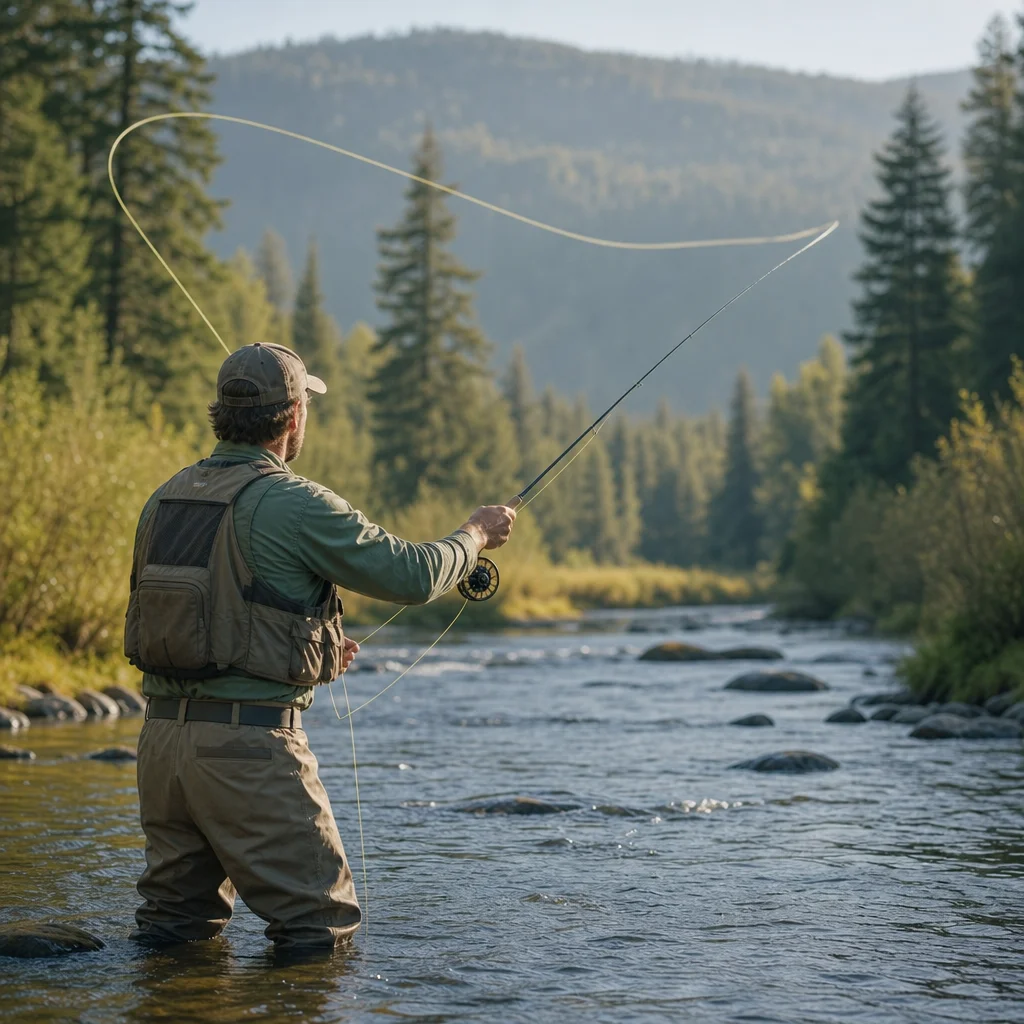
False casting can solve a real problem: it lets you adjust line length, dry a fly, change direction, and prepare for a precise presentation. But once the line is ready, another loop often adds movement without adding control. On clear trout water, that extra movement may be the thing that ends the opportunity.
The goal isn’t to eliminate false casts. It’s to recognize when they’re doing useful work and when they’ve become a habit.
What false casts actually give you
A false cast keeps the line in the air while you change its position or length. Each backcast and forward cast can help you:
- Increase or decrease the amount of line outside the rod tip
- Dry a fly that needs to ride on the surface
- Change the direction of the cast
- Match your casting rhythm to a new distance
- Prepare for a presentation without making the final delivery too early
Those are legitimate reasons to false cast. If you’re ten feet short of a rising trout, a controlled false cast may help you carry a little more line. If your dry fly has begun to sink, a few efficient casts can lift and dry it before the next presentation.
The trouble starts when the cast is already ready. If the leader is straightening, the fly is at the right distance, and the line is tracking well, another loop may be no more than delayed commitment.
The cost of unnecessary air time
More movement can mean more detection
Trout don’t need to see the fly to detect something unusual. They may notice the line, leader, fly, rod tip, or your silhouette. A line repeatedly passing over a feeding lane gives the fish more chances to see a pattern that doesn’t belong there.
This matters most in situations with little visual cover:
- Clear, shallow water
- Calm pools and slow seams
- Bright conditions
- Low flows where trout have more time to inspect objects
- Fish already showing caution after previous approaches
A single false cast won’t automatically spook a trout. Fish respond to context, and the line may pass well above them. Still, extra loops increase exposure. If you can make the presentation with less overhead activity, you usually reduce one source of disturbance.
Extra casts spend energy without improving the result
False casting is work. Repeated loops gradually fatigue your casting arm and make your timing less consistent. As fatigue builds, you may begin to:
- Creep your casting stroke longer
- Apply too much power
- Let the line fall behind the rod tip
- Collapse the loop
- Miss the target by trying to correct an earlier mistake
This is especially noticeable when you’re fishing a long day, casting into wind, or working a heavier fly. A shorter sequence of purposeful casts often produces better control than a longer sequence performed while tired.
More loops create more opportunities for tangles
Every airborne loop is another chance for a weighted fly, dropper, or long leader to find the rod, line, vegetation, or itself. Tangling becomes more likely when you’re casting with:
- Two-fly rigs
- Weighted nymphs or streamers
- Oversized indicators
- Long, fine leaders
- Wind from the side or behind
- Inconsistent loop shape
If you’re repeatedly correcting a tangle by making more false casts, stop and reset. The extra air time usually won’t repair a rig that is already losing organization.
A useful rule: cast only to solve a problem
Before each additional false cast, identify what it is accomplishing. You might be:
- Carrying more line.
- Drying the fly.
- Changing direction.
- Improving the loop or leader turnover.
- Waiting for the right delivery moment.
If none of those is true, make the forward cast.
This simple test is more useful than a fixed number of false casts. One extra cast may be necessary in a tight situation; five may be excessive in an open one. The question is whether the next loop improves the presentation enough to justify its cost.
When false casting is worth it
You need to adjust distance
Suppose your line is out at twenty feet and the trout is feeding at thirty. A false cast can help you carry additional line gradually instead of trying to shoot everything in one rushed motion.
Add line in small, controlled increments. Let the line straighten on the backcast, then feed or release a little line on the forward cast. When you reach the required distance, deliver the fly rather than continuing to rehearse.
If the target is close, false casting may be the wrong solution. Strip in line or reposition your body when doing so won’t disturb the fish. Keeping unnecessary line in the air often makes a short presentation harder, not easier.
You need to dry a dry fly
A dry fly that has become waterlogged may stop floating properly. A few efficient false casts can remove surface water, but avoid turning this into a long aerial routine.
Use a firm but relaxed loop and watch the fly. As soon as it rides correctly, place it on the water. If it refuses to float, the issue may be the fly’s material, treatment, or a fish-catching coating of slime—not a shortage of false casts.
You need to redirect the line
False casting is useful when you’re changing from one target to another. Rather than forcing a sharp direction change in a single delivery, use the backcast to move the line toward the new target and then complete the forward cast.
An open casting area makes this straightforward. In brushy streams, however, a roll cast, water haul, or simple repositioning of the rod may be cleaner. The best technique is the one that keeps the line away from branches and the fly away from your hat.
You’re waiting for the presentation window
Current, wind, and moving fish can make timing important. You may need one or two false casts while a drifting branch passes, a gust settles, or a trout finishes a previous rise.
Keep the line under control during the pause. Don’t continue casting simply because you’re waiting. If the delay becomes long, lower the rod and start the sequence again when the opportunity returns.
When to cast less
A trout is feeding within easy range
If the fish is close enough for a roll cast or short overhead cast, extra false casting is rarely necessary. Keep the rod tip low enough to maintain control without dragging the line, then make the presentation as directly as the situation allows.
Short-range fishing rewards restraint. The less line you have to manage, the fewer things can land in the wrong place.
The water is clear and calm
In clear, calm conditions, line control and concealment matter more than dramatic distance. A high backcast may be visible against the sky, and repeated passes can give a trout time to notice movement above its feeding lane.
Consider a lower trajectory, a sidearm angle where the surroundings permit it, or a cast that presents the fly with fewer loops. Also pay attention to your position. Reducing false casts can't compensate for standing in plain view or casting your shadow across the water.
You’re fishing a heavy or air-resistant fly
Large streamers, weighted nymphs, and bulky patterns require more attention than a small dry fly. They can disrupt loop shape and carry momentum into places you didn’t intend.
Use false casts sparingly with these rigs. A wider loop and smooth acceleration may provide enough control without repeated, forceful attempts. When the fly is close, a water-loaded cast or roll cast can often move it with less risk than lifting the entire rig into the air.
Wind is making every loop worse
False casting into a strong wind can be useful if it improves timing or helps you carry line, but it can also magnify poor technique. If each loop is collapsing, drifting sideways, or falling onto the water, more repetition won’t solve the underlying problem.
Change the angle, shorten the cast, or adjust your position when possible. A lower sidearm delivery can reduce the wind’s influence, though the available space and direction of the wind determine whether that’s sensible. Don’t trade a cleaner presentation for a cast that puts the fly near people, branches, or your own clothing.
Replace extra false casts with better options
Change your position
A few steps can eliminate the need for a difficult aerial correction. Move upstream, angle across the current, or find a clearer casting lane if your footing and surroundings allow it.
Positioning isn't always possible, especially when a fish is holding in a narrow pocket. But anglers often try to solve a geometry problem with their wrist when their feet could solve it more simply.
Use a roll cast
A roll cast keeps most of the line on or near the water and can be effective when there’s little room behind you. It’s useful for lifting line, changing direction modestly, or making a short presentation without repeatedly sending the line overhead.
It won’t replace every overhead cast. You need enough line and water tension to load the rod, and a heavy or tangled rig may still behave poorly. When the setup is suitable, though, it can reduce disturbance and simplify the delivery.
Shoot line on the final cast
If your loop is already stable, avoid carrying all the required distance through repeated false casts. Let the line straighten on the backcast, then release a controlled amount of running line during the forward stroke.
The final cast should be planned. Keep the shooting line organized, make sure it won’t catch on vegetation or your feet, and avoid releasing so much that the leader collapses onto the target.
Strip in instead of casting out
When you overshoot a target or decide to fish closer, retrieve line rather than trying to manage it through several false casts. This keeps the fly and leader predictable and gives you a fresh starting point.
It’s a small adjustment, but it prevents a common cycle: too much line, too many corrections, a poor loop, and a delivery that the trout never had a fair chance to eat.
A simple practice drill
You can practice casting less without putting a trout at risk. On grass or open water, choose a target and establish a comfortable line length. Make one false cast, then deliver. Repeat with two false casts, then three. Compare the accuracy and loop control rather than chasing distance.
Next, start with the line already at the required length. Make a single false cast only to confirm the loop, then deliver. The purpose is to teach your hands that the delivery cast isn't a special event requiring a long buildup.
For a more realistic exercise, add a brief pause before the delivery. Keep the line organized, watch the loop, and make the cast when your target is ready. This builds the habit of waiting without filling the pause with unnecessary movement.
The practical decision at the stream
Before you start false casting, ask three questions:
- Is the line at the right distance? If yes, prepare to deliver.
- Will another loop improve the fly or loop? If not, stop.
- Can I solve this more simply? Consider moving, stripping line, rolling the cast, or shooting line.
False casting remains one of the most useful tools in fly fishing. It helps you manage distance, direction, and fly condition. The improvement comes from using it deliberately rather than treating every cast as a rehearsal.
On your next trout outing, try ending the sequence one cast earlier than usual. If the fly is ready, send it. You’ll save energy, reduce opportunities for tangles, and give cautious fish fewer reasons to study the activity overhead. Sometimes the cleanest cast is the one you decide not to add.