Learning Distance Without Losing Loop Control
Distance casting stays useful only when the loop remains stable, controlled, and repeatable. I’ll show you how hauling, timing, line management, and practice habits fit together so added distance doesn’t become a maintenance problem for your cast.
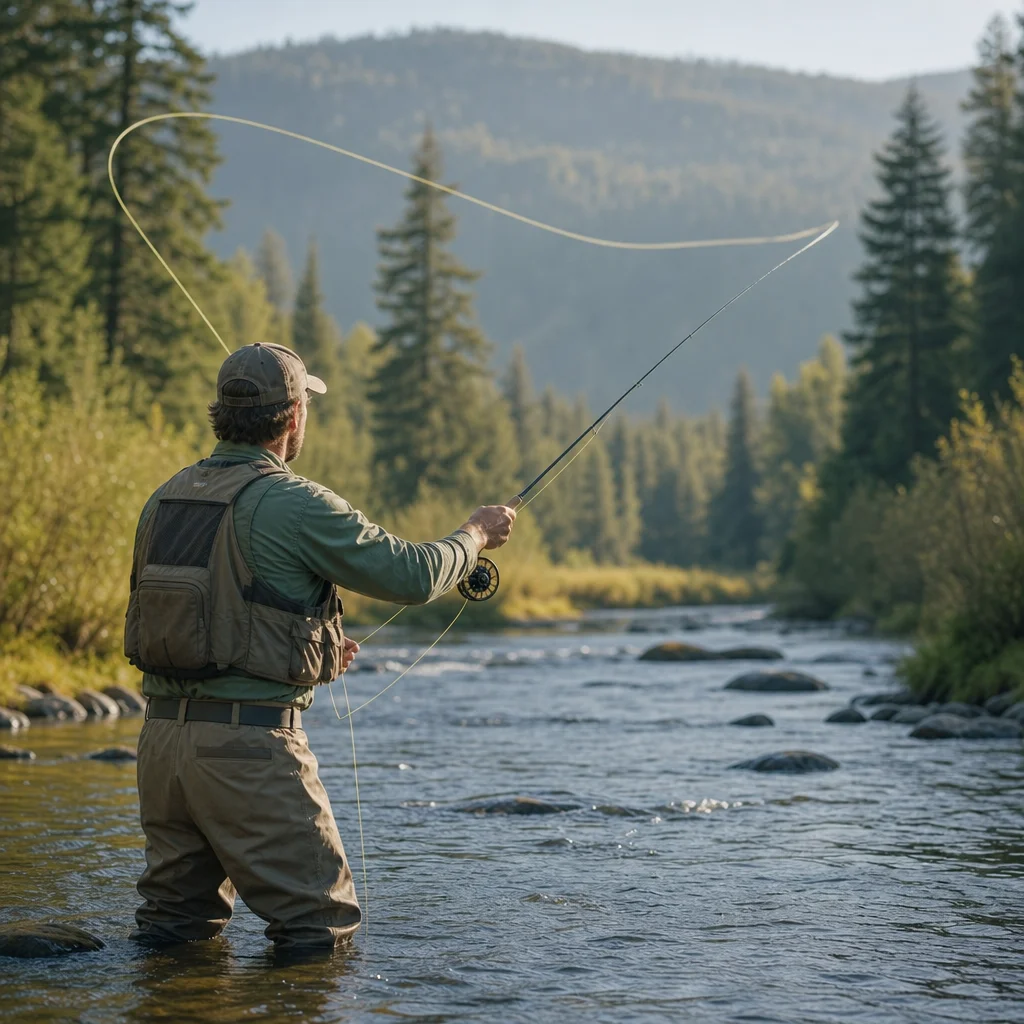
Distance is easy to chase and surprisingly easy to misuse. You add power, the rod bends harder, and the line may travel farther—but the loop opens, the leader lands heavily, and your next cast starts with a tangle or a rushed correction.
The better goal is dependable distance: a cast you can repeat without losing loop shape, tracking, or control of the line. That comes from fitting several parts together rather than treating the double haul as a substitute for timing.
Start with the loop, not the distance
A useful distance cast has enough line speed to carry the fly, but its loop still travels in a predictable path. The loop doesn’t need to be exceptionally tight. It needs to remain organized.
Watch for three qualities:
- The rod tip travels in a controlled path. A wandering or dipping tip usually produces a wide, uneven loop.
- The loop unrolls before the next stroke. Starting the next cast too early steals energy and often creates a tailing loop.
- The leader follows the line. If the leader piles up or kicks sideways, more force will usually make the presentation worse.
Distance exposes flaws that shorter casts can hide. A small timing error becomes a large loss of line speed by the time the loop reaches the end of a longer line. Before working on hauling, make sure you can false cast a moderate amount of line with consistent loop shape.
Build distance in small stages
Avoid jumping from a comfortable fishing distance to a full-length cast. Add line in manageable increments, then make the new amount feel ordinary before adding more.
A practical progression looks like this:
- Establish a comfortable baseline. False cast the amount of line you can control easily. Notice where the rod tip stops, how long the loop takes to unfold, and whether the line stays straight behind you.
- Add a short section of line. Carry the additional line with a relaxed stroke. Don’t haul yet. Your first task is learning the slower timing created by the longer line.
- Pause and observe the back cast. Let the line straighten behind you. You don’t need to wait for a dramatic tug, but you should feel the line load the rod before beginning the forward stroke.
- Add the haul after the timing is stable. Use the haul to increase line speed, not to compensate for a rushed stroke.
- Stop when control deteriorates. If the loop collapses, the line touches the water unexpectedly, or the haul becomes frantic, remove some line and rebuild.
This is less exciting than trying to reach the backing in one session, but it creates a cast that holds together when you’re tired, wading, or dealing with wind.
Understand what the haul is doing
The haul is a brief, sharp pull on the line with the line hand during the casting stroke. It increases line speed and helps the rod load more effectively. It doesn’t replace the rod hand, and it shouldn’t feel like you’re pulling the rod through the cast.
Think of the rod hand and line hand as working in sequence:
- The rod hand moves the rod through a controlled casting stroke.
- The line hand briefly accelerates the line during the power portion of that stroke.
- Both hands relax slightly after the acceleration so the loop can travel.
A common error is holding the line hand tight throughout the cast. That prevents the line from moving smoothly and can make the rod feel dead. Another is making a long, slow pull instead of a short acceleration. The first limits line movement; the second often disrupts the rod’s path.
The haul should be quick enough to add speed but not so aggressive that it changes your body position or pulls your rod tip off track.
Match the haul to the stroke
Your haul and rod stroke should finish together. If the line-hand pull ends well before the rod hand reaches its stop, much of the added energy is lost. If the haul continues after the rod has stopped, the line hand may drag the rod forward and spoil the loop.
Practice the motion at a reduced speed. Make the rod stroke, add a short haul near the power application, then allow the line to unroll. Once the sequence feels connected, increase speed without making the movement larger.
Let timing create the next increment
Longer line takes longer to straighten. This is one reason distance casting often feels awkward even when the basic stroke is sound. The line needs time to travel, and the rod must load against that moving line.
If you begin the forward stroke too soon, the back loop hasn’t finished forming. The result may be a tailing loop, a collision between line and leader, or a cast that falls short despite considerable effort.
Use the back cast as information rather than relying only on a fixed pause. The exact timing changes with line length, casting direction, wind, and the amount of line carried. Watch or feel for the line to straighten, then begin the next stroke.
At longer distances, the pause may feel uncomfortably long at first. That’s often a sign that you’re learning the actual timing of the cast instead of forcing the familiar timing onto more line.
Keep the line hand organized
Distance casting requires more line management, and poor line management can disguise a casting problem. Loose coils around your feet, a line trapped under a boot, or a line hand that loses contact with the running line will all reduce distance.
Before you start, arrange the line so it can shoot freely. On grass or a clean practice surface, lay it out in loose coils. In the water, keep track of where the running line is moving and avoid stepping across it. Strip baskets can help in some situations, but they’re not a substitute for learning to manage the line in your usual fishing environment.
Maintain light contact with the line during the cast. You want enough tension to feel the load and control the shoot, but not so much that you prevent the line from leaving the hand.
Shoot line only after the loop is ready
The shooting phase begins after the forward loop has formed and is moving toward its target. Release or feed line smoothly, allowing the loop’s momentum to carry it.
Dumping a large amount of line before the loop has enough speed creates slack. That slack must be removed before the fly can respond, and it often causes the leader to land without authority. Start with modest amounts of shooting line, then increase them as the loop remains stable.
A useful test is to shoot a little less line than your maximum. If that cast is straight, controlled, and repeatable, you have a better foundation than you would from an occasional longer cast that collapses at the end.
Use a compact stroke as line length increases
More line doesn’t require a dramatically larger casting motion. In fact, an oversized stroke can move the rod tip through a wide path and create a broad loop.
Keep the casting arc compact and make the power application more deliberate. Your hand may travel somewhat farther as the line length increases, but the movement should remain smooth and directed. Avoid throwing your shoulder, leaning backward, or dropping the rod deeply behind you to create extra distance.
The rod does most of its useful work when it loads and unloads along a consistent path. A larger movement isn't automatically a stronger movement.
Your body can still help. Stand comfortably, allow a small amount of rotation from the torso, and keep your balance centered. If you have to lunge or brace yourself to finish the cast, the current distance is probably beyond your reliable control.
Diagnose the common failures
The loop opens as soon as you add the haul
You may be hauling too early, pulling too long, or allowing the line hand to move away from the rod hand without a clear sequence. Return to a shorter amount of line and add a small haul during the power application.
The cast tails and loses power
A tailing loop often comes from a dipping rod tip or an abrupt change in the rod’s path. It can also appear when you begin the next stroke before the line has straightened. Smooth the acceleration and give the back cast more time.
The line travels but the leader piles up
The leader may not be receiving enough turnover energy, or you may be shooting slack into the cast. Check that the line is straight before the forward stroke and reduce the amount of line you release until the leader follows more cleanly.
You can cast far only when fresh
That’s a reliability problem, not just a fitness problem. Excessive grip pressure and large movements consume energy quickly. Shorten the stroke, relax the hands between power applications, and practice repeatable casts rather than maximum attempts.
Check your setup before adding distance: Make sure the line runs freely through the guides, the running line is free of avoidable coils, and the leader connection is secure. Small equipment or line-management problems become much more disruptive when you’re carrying extra line.
Practice for repeatability
A useful session should include both quality work and controlled recovery. Try this sequence:
- Make several short casts with relaxed loops.
- Carry a moderate amount of line without hauling.
- Add one haul on the forward cast, then one on both forward and back casts.
- Shoot a small amount of line.
- Repeat until the loop changes shape or your timing becomes rushed.
- Shorten the line and finish with clean, comfortable casts.
Record what breaks down first. If the loop fails when you add line, work on timing. If it fails when you haul, isolate the line-hand motion. If it fails only when shooting, focus on line management and the moment of release.
Occasional distance checks are useful, but they shouldn’t dominate practice. A cast that lands a few feet shorter with a straight leader and a manageable amount of slack is usually more valuable on the water than a maximum cast you can’t reproduce.
A reliable distance-casting checklist
Before trying to add another increment, ask:
- Is my loop shape still consistent?
- Does the line straighten before I change direction?
- Is the haul short, sharp, and timed with the stroke?
- Am I carrying only as much line as I can control?
- Can I shoot line without creating slack?
- Am I staying balanced and relaxed?
- Can I repeat the cast several times without chasing a rescue?
If the answer to several questions is no, reduce distance and repair the cast there. Long-term improvement comes from maintaining the parts that already work while gradually expanding their range.
The most dependable distance cast isn't the one that uses the most force. It’s the one that keeps its loop, timing, line control, and presentation connected as the amount of line increases. Build it in stages, let the haul support the stroke, and finish practice with a cast you’d be happy to make again.