How to Cast Into a Headwind Without Throwing Harder
I’ll compare loop shape, casting plane, haul timing, and leader length so you can choose a controlled headwind strategy instead of simply adding power to every cast.
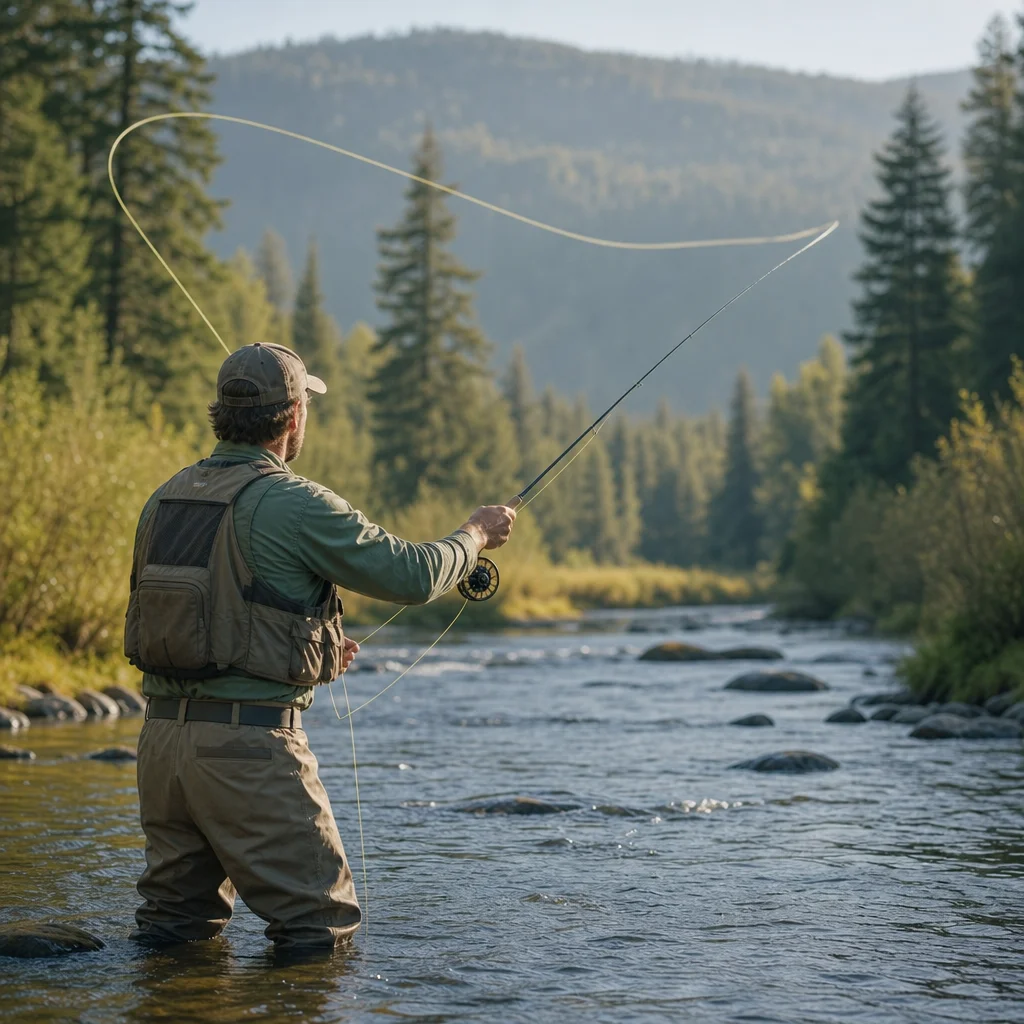
A headwind makes an ordinary cast feel underpowered, so the natural response is to work harder. That usually creates a wider loop, a louder presentation, and a fly that lands well short—or arrives in a tangled heap.
The better solution is to change how the cast uses the wind. You want a compact loop, a deliberate casting plane, well-timed acceleration, and a leader that turns over without demanding excessive force.
Start with the loop, not the power
A narrow loop is the foundation of a useful headwind cast. Its upper and lower legs travel close together, giving the wind less room to push the line off course and less line area for the wind to grab.
An open loop does the opposite. It may be comfortable for a relaxed dry-fly cast in calm weather, but into a headwind it behaves like a small sail. The forward loop loses speed quickly, and the fly can be blown back toward you before the leader straightens.
Build a compact loop
Use a shorter casting stroke than you might expect, with a crisp stop at the end of each stroke. Keep the rod tip traveling in a mostly straight path rather than sweeping through a deep arc. The rod should load and unload efficiently; it shouldn't need a dramatic bend to make the cast work.
A few habits help:
- Keep your casting hand controlled and avoid a large, fast arm swing.
- Accelerate smoothly, then stop firmly rather than pushing through the stop.
- Watch the line on the back cast if you need to confirm that the loop is narrowing.
- Carry only as much line in the air as you can control in the wind.
If the loop opens, throwing harder rarely fixes the underlying problem. It often makes the timing less precise and increases the chance of a tailing loop or a collision with your rod, hat, or ear—the three classic destinations of an ambitious cast.
Choose the casting plane for the wind and the surroundings
The casting plane is the path your rod follows through space. Changing it can be more effective than increasing force, but the best plane depends on both the wind and your surroundings.
A high back cast and lower forward cast
For a direct headwind, a useful starting point is to make the back cast higher and drive the forward cast on a lower trajectory. The elevated back cast gives the line room to straighten behind you, while the lower forward cast keeps the line closer to the water and away from the strongest wind above it.
This approach works best when you have adequate room behind you. It also requires awareness of trees, tall grass, fences, and other anglers. A headwind can make the back cast feel unusually slow, so don't begin the forward stroke before the line has had time to straighten.
A lower sidearm plane
A sidearm or slightly tilted casting plane can keep the forward loop under the wind. It may also help when you need to send the fly beneath overhanging branches. The trade-off is that the loop can become harder to control if you rotate your wrist or sweep the rod too far around your body.
Keep the plane consistent. A smooth, tilted path is useful; an abrupt change from overhead to sidearm usually produces a wide loop and poor line control.
A lower plane also brings the fly closer to people, rocks, and the water's surface. Before using it, check where the line and fly will travel on both the forward and back casts. Controlled casting is only useful if it remains controlled around other people and obstacles.
Casting over the opposite shoulder
If the wind is pushing toward your casting arm, moving the cast to the opposite side of your body can keep the fly and line away from you. This is often called a backhand cast, and it can be valuable when a normal cast would blow the fly across your body.
The trade-off is reduced familiarity. Your stroke may become longer, your stop less decisive, and your loop wider. Practice the motion before relying on it in a tight spot. The goal isn't to produce a powerful backhand cast; it's to make a compact one with a predictable landing point.
Time the haul late and smoothly
The double haul gives you line speed without requiring a large rod stroke. In a headwind, that extra line speed is useful—but only when the haul is timed with the rod's acceleration.
A common mistake is to pull hard on the line at the beginning of the stroke. This loads the rod abruptly and can make the rod tip dip or travel a concave path. The result is often a tailing loop, which loses its shape and can cause the leader to pile up.
Instead, begin the stroke smoothly and add the haul as the rod accelerates toward the stop. The hauling hand should move decisively, but the motion doesn't need to be violent. Finish the haul near the stop, then allow the shooting hand and line hand to reset for the next cast.
Match the haul to the cast
You don't need the same haul length on every cast. Use a shorter haul when you have little line outside the rod tip or when accuracy matters more than distance. Add more line-hand movement as the amount of line in the air increases, provided your loop remains narrow.
If the line shoots forward but the fly still falls short, check the sequence before adding effort:
- Let the back cast straighten.
- Begin the forward stroke smoothly.
- Add the haul during acceleration.
- Stop the rod firmly.
- Release the shooting line without squeezing the rod handle.
Many failed headwind casts come from rushing step one. The wind makes the back cast feel slow, and the angler starts forward too soon. Wait for the line to load the rod. A well-timed pause is usually more productive than a harder pull.
Adjust the leader to match the conditions
Leader design affects how much energy reaches the fly. In a strong headwind, a long, delicate leader can struggle to turn over, especially with a bulky fly or extra tippet. A somewhat shorter leader with a firmer butt section is generally easier to control.
Shorter leader: more control, less reach
Shortening the leader can improve turnover and reduce the amount of line the wind can push around. It also makes the cast feel more connected, which helps when you need to make repeated, accurate presentations.
The cost is a larger disturbance near the fly and a shorter distance between the fly line and the trout. That may matter in clear, shallow water or when fish are already cautious. Make the smallest reduction that solves the turnover problem rather than automatically switching to a very short leader.
Stiffer butt section: better energy transfer
A leader with a firm butt section transfers more of the cast's energy toward the tippet. This can help a fly turn over instead of collapsing in the wind. It is particularly useful when the fly has resistance, such as a large profile, foam body, or weighted component.
A stiff butt doesn't eliminate the need for a suitable tippet. If the terminal section is too light for the fly, the leader may still fail to straighten. If it is unnecessarily heavy, the presentation may become less subtle. Match the tippet to the fly, water clarity, and the level of delicacy the situation requires.
When a longer leader still makes sense
Don't shorten the leader simply because the day is windy. If the wind is moderate and the trout are wary, a longer leader may still provide the presentation you need. Compensate with a tighter loop, a lower forward trajectory, and more careful haul timing before changing the leader.
Leader changes are most useful when you can identify a specific problem: the leader repeatedly collapses, the fly turns over inconsistently, or the wind catches excessive slack. If the cast is already straightening well, changing the leader may create a new problem without solving the original one.
Prevent the most common mistakes
Casting harder with a wide loop
This adds speed to a poor shape. First narrow the loop and shorten the stroke. Then add only enough haul to maintain line speed.
Starting the forward cast too early
The back cast needs time to straighten, particularly when the wind slows it. Rushing the transition removes the rod load and forces you to compensate with muscle.
Carrying too much line
More line in the air gives the wind more to move. Strip in until you can maintain a compact loop, then work your way back out as your timing improves.
Using a heavy fly with a delicate setup
A bulky or weighted fly can overwhelm a long, fine leader in a headwind. Choose a more wind-resistant leader setup, open your stance so the fly has a clear path, and make sure your casting space is safe before accelerating.
Letting the line hand drift
The line hand should support the cast, not wander away from the body. A consistent hand position makes the haul easier to repeat and helps prevent accidental slack.
A simple headwind decision process
When the wind comes straight at you, make changes in this order:
- Narrow the loop with a shorter stroke and a firm stop.
- Wait for the back cast to straighten.
- Use a higher back cast and lower forward cast, if the surroundings allow it.
- Add a smooth, late haul rather than an early yank.
- Reduce the amount of line carried in the air if control is deteriorating.
- Shorten or stiffen the leader only when turnover remains the problem.
If the fly still isn't reaching the target, consider whether the target requires a different angle. A reach cast, a change in position, or a presentation from another bank may solve the problem more cleanly than trying to overpower the wind.
The best headwind cast is rarely the most forceful one. It is the cast with the smallest useful loop, the clearest timing, and just enough leader energy to turn the fly over. Practice those elements separately in moderate wind, and stronger conditions become a matter of adjustment rather than a contest with the weather.