How to Shoot Line Without Sacrificing Accuracy
I’ll compare the main ways to shoot fly line farther while keeping your loop, fly, and presentation aimed at a specific trout lie. You’ll learn how timing, line control, and dependable tackle maintenance work together instead of trading accuracy for distance.
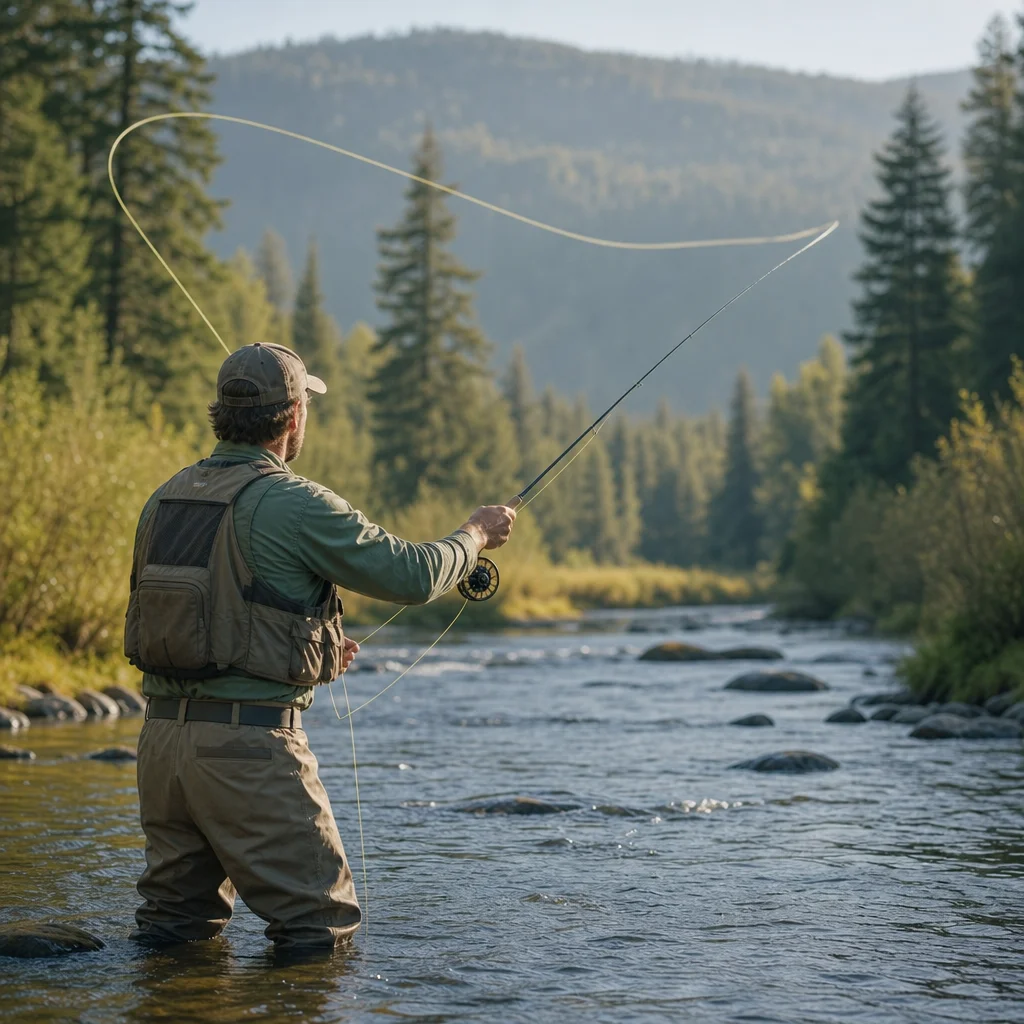
Distance is useful only when you can still steer the fly
Shooting line helps when the trout are holding just beyond your comfortable casting range. The problem is that extra distance magnifies small errors: a late haul opens the loop, too much loose line tangles around your feet, and an ambitious false cast can leave the fly landing nowhere near the target.
Accurate distance casting is less about forcing the rod to throw more line and more about preserving a repeatable cast while allowing the line to extend. Think of shooting as an extension of a good cast, not a separate power move.
The most reliable sequence is simple:
- Build a controlled back cast.
- Form a narrow, energetic forward loop.
- Release a measured amount of line as the loop travels toward the target.
- Stop the rod firmly and let the line straighten.
- Shoot again only if the first extension remains under control.
That sequence works in both rivers and lakes, though the best amount of line to shoot depends on wind, current, fly weight, and the accuracy the lie demands.
Start with the cast you can already control
Before shooting, carry enough line outside the rod tip to load the rod properly. If you begin with only a short length of line out, you may compensate by casting harder. That usually produces a wider loop and makes the line harder to direct.
A useful starting point is a comfortable amount of line that you can false cast without losing your loop shape. Intermediate anglers often get into trouble by treating every distance cast as a test of maximum range. Instead, establish a stable rhythm at a moderate distance, then add line in small increments.
Your back cast does most of the preparation. Let the line straighten behind you, or come close to straightening, before beginning the forward stroke. If you start forward while the back cast is still racing behind you, the rod won’t load efficiently. You’ll need more force, and the resulting forward loop will be less predictable.
Watch the line rather than trying to guess the timing. If looking behind you isn’t practical, use the feel of the rod and the change in tension in the line. A slight pause is usually better than a rushed stroke. The exact pause varies with line length, rod action, and casting plane.
The basic shoot: release after the stop
The cleanest way to shoot line is to hold the running line loosely in your line hand during the false cast, then release it after the forward stroke and stop.
The sequence should feel like this:
- Your rod hand accelerates smoothly toward the target.
- The rod stops crisply at the end of the forward stroke.
- Your line hand opens just after the stop.
- The line slips through your fingers while the loop carries it forward.
Don't open your line hand at the beginning of the stroke. If you release too soon, the rod loses tension and the cast may collapse. If you wait until the loop has nearly straightened, you’ve missed most of the opportunity to add distance.
Your line hand doesn’t need to throw the line forward. It only needs to stop gripping it. The airborne line supplies the pull; your job is to prevent friction, tangles, and sudden changes in tension.
Keep the running line organized in loose coils below your hand. Coils that are too tight develop memory and knots. Coils that are too large can catch on vegetation, rocks, wading boots, or the edge of a boat. A clean, consistent line layout is a small maintenance habit that has a direct effect on casting accuracy.
Use the haul to create speed, not chaos
A double haul can make shooting more efficient, especially when wind or a larger fly demands additional line speed. It doesn’t replace good timing. The haul should support the rod stroke, not overpower it.
On the back cast, pull down with the line hand as the rod hand accelerates and stops. Then return the line hand smoothly as the rod moves forward. On the forward cast, pull down again during the forward acceleration, stop the rod, and release the running line.
The line hand should finish close to the rod hand after each haul. If it remains low or extended, the next stroke begins with unnecessary slack. If you yank sharply before the rod has loaded, you may create a tailing loop or disturb the fly’s path.
A useful practice drill is to make several false casts with the hauling hand doing nothing. Once the loop is stable, add a modest haul without shooting line. When that feels consistent, shoot a short amount. This separates the three skills—loop control, hauling, and line release—so you don’t try to repair all of them at once on the water.
Choose the amount of line by the target, not your ego
The right amount to shoot is the amount that reaches the feeding lane with enough control left for the presentation. Maximum distance is rarely the same as useful distance.
If the trout lie is only a few feet beyond your normal range, shoot a small amount and keep the fly line in the air. If you need a substantial extension, use fewer false casts and make each one deliberate. Repeatedly carrying too much line increases fatigue and gives wind, current, and tangles more chances to interfere.
Use these trade-offs as a guide:
Shoot less when accuracy matters most
A short extension is easier to direct around a rock, seam, dock, or overhanging branch. It also reduces the amount of line that lands on the water before the fly arrives. That can help you avoid an unwanted wake or drag-producing curve.
Short shooting casts are often the best choice when you’re placing a dry fly, emerger, or lightly weighted nymph near a specific pocket. You may give up some reach, but you gain control over where the leader and fly land.
Shoot more when the water gives you room
Open lakes, broad pools, and unobstructed tailouts allow more room for a longer cast. You can let the line straighten fully and make a longer, controlled extension without immediately running into bankside obstacles.
Even there, add line gradually. If the loop begins to lose its shape, stop shooting and reset at a shorter distance. One clean cast is more useful than several frantic attempts that leave the fly, leader, and running line in separate places.
Favor a lower loop in wind, but don’t force it
A tighter loop can reduce the time wind has to push the line off course. Keep the casting plane controlled and adjust your stroke to the conditions. Casting harder often makes the loop wider, which gives the wind more line to act on.
If the wind is strong enough that maintaining a safe, controlled cast becomes difficult, shorten the cast or change your position if possible. Distance isn't worth losing control of the fly or hook.
Before you add another few feet: Identify the exact target, the direction of the wind, and where your line hand’s coils will fall. If you can’t predict those three things, shorten the cast and rebuild control before shooting more line.
Keep the fly and leader from ruining a good cast
A well-formed loop can still deliver a poor presentation if the leader is too long, tangled, or mismatched to the fly. Large streamers and heavily weighted nymphs carry different amounts of momentum than small dries. They may require a wider loop, a slower stroke, or less line in the air.
Check the leader before making a distance cast. A small wind knot can tighten under load, and a twisted section can prevent the leader from turning over. If the fly is catching the leader during the back cast, don’t solve the problem by adding power. Inspect the connection, adjust the casting plane, and consider whether the fly is too large for the setup.
When accuracy is the priority, aim the forward loop at a point slightly above the intended landing area. The loop should unroll toward the target, while the leader and fly settle down in front of it. If you stop the rod too low or drive the line directly at the water, the fly may slap down or the leader may pile up.
Maintenance habits that protect distance and accuracy
Shooting line consistently depends on equipment that releases line without unpredictable friction. A few simple checks make a noticeable difference over time.
Clean the fly line
Dirt and residue increase friction in the guides and can make the line hesitate when you release it. Follow the fly-line manufacturer’s cleaning recommendations, and inspect the line for cracks, rough sections, or excessive memory. A line that feels sticky or unusually stiff may not shoot smoothly even when your timing is sound.
Inspect the guides and tip section
Run a cotton swab carefully around the inside of each guide. Fibers catching on a rough insert can indicate damage. Also look for cracks, loosened guides, or a damaged stripping guide. Small hardware problems can create inconsistent resistance and may damage the line.
Keep the running line separated
Before casting, remove loops and knots from the line at your feet or in the boat. In a river, arrange coils where current and vegetation won’t catch them. In a boat, use a stripping basket or another method that keeps the line clear of seats, pedals, and hardware.
Store the line without permanent tight coils
After fishing, rinse away grit as appropriate for your line and store it according to the manufacturer’s guidance. Avoid wrapping it tightly around a small object for long periods. Excessive memory can make the line form stubborn coils just when you need a clean shoot.
These habits don’t make up for poor timing, but they keep equipment from adding a second problem to a technical cast.
Diagnose the common failures
The line shoots sideways
Your forward loop may be traveling off the target line, or the line hand may be releasing unevenly. Practice tracking the rod tip straight toward the target and keep the release smooth. A sidearm cast may be useful in wind or beneath branches, but it should still have a deliberate target path.
The line piles up short
You may be releasing before the rod has stopped, carrying too much slack, or failing to let the back cast straighten. Shorten the amount of line outside the tip and focus on a crisp stop followed by a delayed release.
The line shoots but the fly lands badly
The loop may be extending, but the leader isn't turning over. Check the leader, fly size, and final loop shape. Try shooting less line and allowing the leader to straighten fully before the fly touches down.
The cast works once and fails repeatedly
Look for inconsistency in your line layout or timing. Running line caught under your boot, around a reel handle, or in tangled coils can make the same cast feel different every time. Reset the line before changing your stroke.
A reliable distance-casting routine
When a trout is holding just beyond reach, use this short routine:
- Clear the running line and check the leader.
- Choose the smallest amount of extra distance that reaches the lie.
- Make a controlled back cast and let it straighten.
- Accelerate smoothly into the forward stroke.
- Stop firmly, then release the running line.
- Watch the loop and line direction instead of immediately adding more power.
- If the cast falls short, add a small amount of line on the next attempt.
- If accuracy deteriorates, return to the last distance you could control.
The long-term goal isn't to shoot the most line. It’s to make the same clean cast after several minutes of fishing, in changing wind, with a fly that may be wet, weighted, or awkward. Maintain the line, organize the running line, and preserve your timing. Those unglamorous details are what let extra distance remain useful rather than turning into a wider search pattern for your fly.