How to Cast a Fly Rod From a Kneeling or Low Position
Standing tall gives you reach, but it can also expose you to brush and spook fish along a tight bank. I’ll show you how a kneeling or low cast reduces movement while keeping the fly line and loop under control.
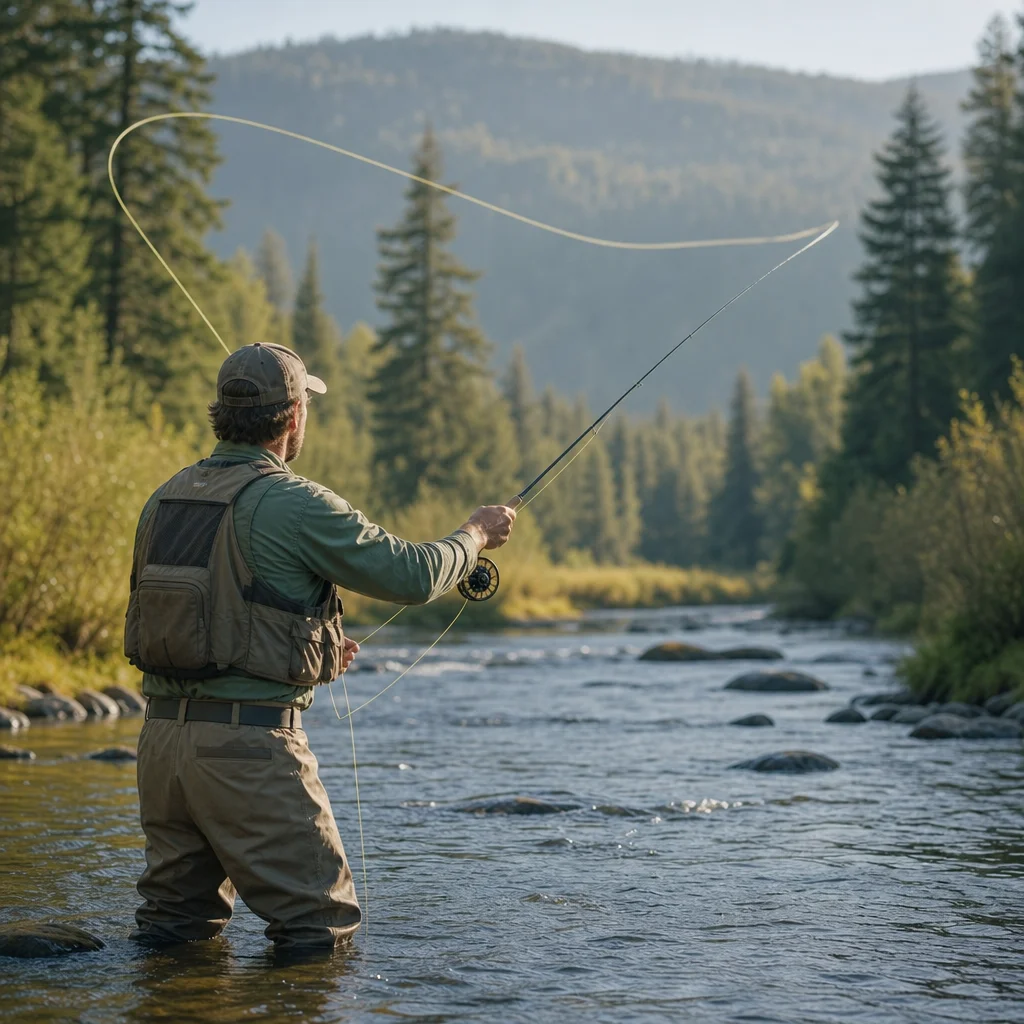
Standing upright is the natural way to cast, but it isn't always the best way to approach a trout beside an overgrown bank. A kneeling or low position can keep your profile down, reduce unnecessary movement, and help you work a narrow opening beneath branches.
The trade-off is that you lose some clearance and must manage the line more deliberately. Your backcast has less room, your rod tip is closer to the surface, and a poorly timed lift can turn a clean cast into a pile of leader and leaves.
The goal isn't simply to get lower. It's to create a compact, controlled cast that protects the loop and keeps the fly moving through the available window.
When a Low Casting Position Helps
A low position is useful when visibility and cover matter more than maximum casting distance. Common situations include:
- Casting from a kneeling bank beside a narrow stream
- Working under low branches or an overhanging shrub
- Approaching a shallow, clear run where a standing angler would be easy to see
- Casting across a small pocket from behind grass, roots, or rocks
- Keeping your rod and line below a low canopy during a short presentation
It works best when the target is relatively close and the casting lane is defined. If you need a long cast, a high line pickup, or a large open loop, standing or sitting in a more open position will usually be easier.
A low stance also helps with stealth, but only if the rest of your movement matches it. Kneeling while repeatedly false casting, shifting your knees across gravel, or waving the rod above the bank defeats much of the benefit.
Choose the Position Before You Draw Line
Look at the whole casting problem before you move into position. Identify four things:
- The target: Where should the fly land, and how much line is needed?
- The forward window: What space is available in front of you?
- The backcast window: Where can the line travel without catching brush, water, or your clothing?
- Your recovery path: If the cast fails, can you retrieve the fly and reposition without dragging line through the fish's holding water?
From a low position, the backcast window is often the limiting factor. A bank may look open at rod-tip height while a branch or grass stem blocks the line just a few feet behind you.
If the backcast is blocked, don't force a standard overhead cast. Consider a roll cast, a side cast, or a short water-loaded cast instead. Kneeling can improve concealment, but it can't create space that isn't there.
Set Up a Stable Low Stance
Kneeling is only useful if you can hold the position without wobbling. Place the knee closest to the bank or casting obstruction on the ground, and keep the other foot planted if the terrain allows. This gives you a stable base while leaving your casting shoulder free.
You can also use a low crouch rather than putting a knee down. A crouch is easier to leave quickly and works well on wet rocks or uneven ground, but it can become tiring. Keep your weight centered rather than leaning heavily toward the water.
Before casting, check for:
- Loose gravel, slick rocks, or unstable roots
- Deep edges or soft mud beneath your knee
- Wading staff placement, if you use one
- A hook or fly that could catch your clothing during a compact stroke
- Enough room to stand or move away if the bank gives way
Keep the rod hand relaxed and your elbow close to your side. The low position should reduce your body profile, not make you twist your shoulder or collapse your wrist.
Check Your Footing First
Before you settle into a kneel or crouch, make sure the surface is stable and that you can recover your balance without stepping into deeper or faster water. A quieter cast isn't worth an unstable position.
Keep the Rod Tip Low, Not Dragging
A common mistake is to lower the rod tip so far that it touches the water or nearby vegetation. That adds drag and makes the line harder to control. Keep the rod tip low enough to stay beneath the available cover, but high enough to maintain a clean path through the air.
The exact height depends on the situation. Over open water, the tip may sit a few inches above the surface during the forward stroke. Near grass or brush, you may need to keep it just above the obstruction. The important point is that the rod tip should travel smoothly rather than scrape, slap, or dip unpredictably.
Your casting stroke may need to become more compact. Avoid trying to duplicate the large arm motion you use while standing. Move the rod with a controlled forearm stroke and a small amount of wrist movement. The rod still needs to load, but the cast should come from timing and acceleration rather than a big sweep.
Protect the Loop With a Compact Stroke
A low cast succeeds when the loop travels through the open corridor without collapsing into the surface or nearby cover. Focus on these fundamentals:
Start with enough line outside the tip
A rod can't load effectively with only a few inches of line beyond the tip. At the same time, carrying too much line from a kneeling position increases the chance of contact with the bank or brush.
Begin with a manageable amount of line—often just enough for the intended short presentation—and extend only when the loop is stable. The correct amount depends on your rod, line, wind, and target distance.
Keep the casting plane consistent
If the forward stroke is low but the backcast suddenly rises, the loop may strike an overhead branch. If the rod moves from low sidearm to high overhead during the same cast, the loop can widen and lose its clearance.
Choose a plane that fits the opening. A low sidearm cast may be best beneath branches. A slightly higher stroke may be safer beside reeds if the water surface is crowded with stems. Whatever plane you choose, keep the rod tip traveling along it.
Accelerate, then stop cleanly
The rod loads during acceleration and straightens when the stroke stops. A slow, sweeping motion usually produces a wide loop. A sharp stop after a smooth acceleration helps the line turn over without requiring a large casting arc.
Don't overdo the stop. A forced jab can cause tailing, while an incomplete stop leaves the loop without direction. Think of the stroke as short, smooth, and decisive.
Let the line unroll before the next stroke
In tight cover, impatience is expensive. If you begin the next backcast before the forward loop has extended, the line can collapse, hit the water, or wrap around the rod tip.
You don't need a long pause, but you do need to feel the line straighten. Watch the leader if you can, or use the slight change in rod tension as a cue. Short casts often require less timing delay than longer ones, so keep the rhythm compact rather than artificially slow.
Use the Water to Load the Rod
When the backcast window is blocked, a water-loaded cast can keep the line below the surrounding brush. A roll cast is the familiar option: allow the line to form a D-loop behind the rod, then drive the rod forward with a smooth, low stroke.
From a kneeling position, the key is to avoid lifting the rod too high while forming the anchor. The line should contact the water in front of you in a controlled way, not slap down across the entire holding area.
A few adjustments make this easier:
- Use a shorter amount of line than you would in open water.
- Keep the anchor point outside the target lane when possible.
- Aim the forward stroke through the opening rather than straight upward.
- Pause long enough for the D-loop to form, but not so long that the fly sinks into weeds or drags across the surface.
A single-spey-style or other change-of-direction cast can also help when you need to redirect the line without a full backcast. These casts require room for the line to move beside you, so inspect the bank before attempting one.
Manage the Line at Your Feet
Low casting makes line management more important because the line is close to rocks, grass, roots, and your knees. Strip the amount you need into a clear area before beginning the cast. Avoid piling line on thorny plants or wet debris where it can snag.
If you're kneeling, keep loose line in front of your casting side rather than behind your legs. A small basket or clean stripping surface can help, but careful preparation is often enough for a short cast.
Watch for the line catching on:
- Your knee or boot
- The reel handle
- A wading staff
- Bank grass or exposed roots
- The edge of your jacket or pack
If the line snags, stop and clear it before trying to cast again. Pulling harder can jerk the fly toward you or disturb the water with a sudden splash.
Common Low-Cast Problems
The loop hits the water
This usually means the rod tip is dropping during the forward stroke, the loop is too wide, or the cast is being made with too little line outside the tip. Raise the rod tip slightly, tighten the stroke, or add a small amount of line.
The fly catches behind you
Your backcast may be too high or too wide for the available opening. Shorten the stroke and move to a sidearm plane. If there is no usable backcast window, switch to a roll cast or reposition.
The cast piles up in front
A collapsing forward loop often results from a weak stop, too much slack, or a leader that isn't turning over cleanly. Start with less line and make a firmer, smoother stop. Check that the leader and tippet aren't twisted or tangled.
You lose accuracy while trying to stay low
Don't sacrifice alignment to remain in an uncomfortable position. A crouch that lets you rotate naturally may be more accurate than a kneel that locks your hips and shoulders. If the fish isn't immediately threatened, move slowly to a better position and make one deliberate cast.
A Simple Sequence to Practice
On open ground or calm water, practice the movement before using it beside a wary fish:
- Begin in a stable crouch or kneel with the rod tip low.
- Strip a short, manageable length of line into a clear area.
- Make one false cast using a compact sidearm stroke.
- Watch the loop for width, height, and straightening.
- Deliver the fly with a smooth forward stop.
- Repeat with a roll cast when the backcast is unavailable.
The practice goal isn't distance. It is learning how little movement is needed to form a straight, controlled loop.
Practical Next Steps
Use a low position when it solves a specific problem: reduced visibility, low cover, or limited casting height. Before you kneel, inspect your footing and identify the line's full path. Then use the shortest stroke, smallest amount of line, and lowest practical casting plane that will reach the target.
If the loop stays narrow and the line remains clear of your body and the bank, the position is doing its job. If you find yourself fighting the rod, dragging line, or losing balance, stand or reposition. Staying concealed matters, but a calm, controlled cast matters more than being as low as possible.