How to Make a Low-Profile Cast Beside Brush and Willows
Willows turn an ordinary cast into a problem of angles, loop height, and recovery space. I’ll show you how to fit those pieces together so you can reach feeding lanes without donating flies to the brush.
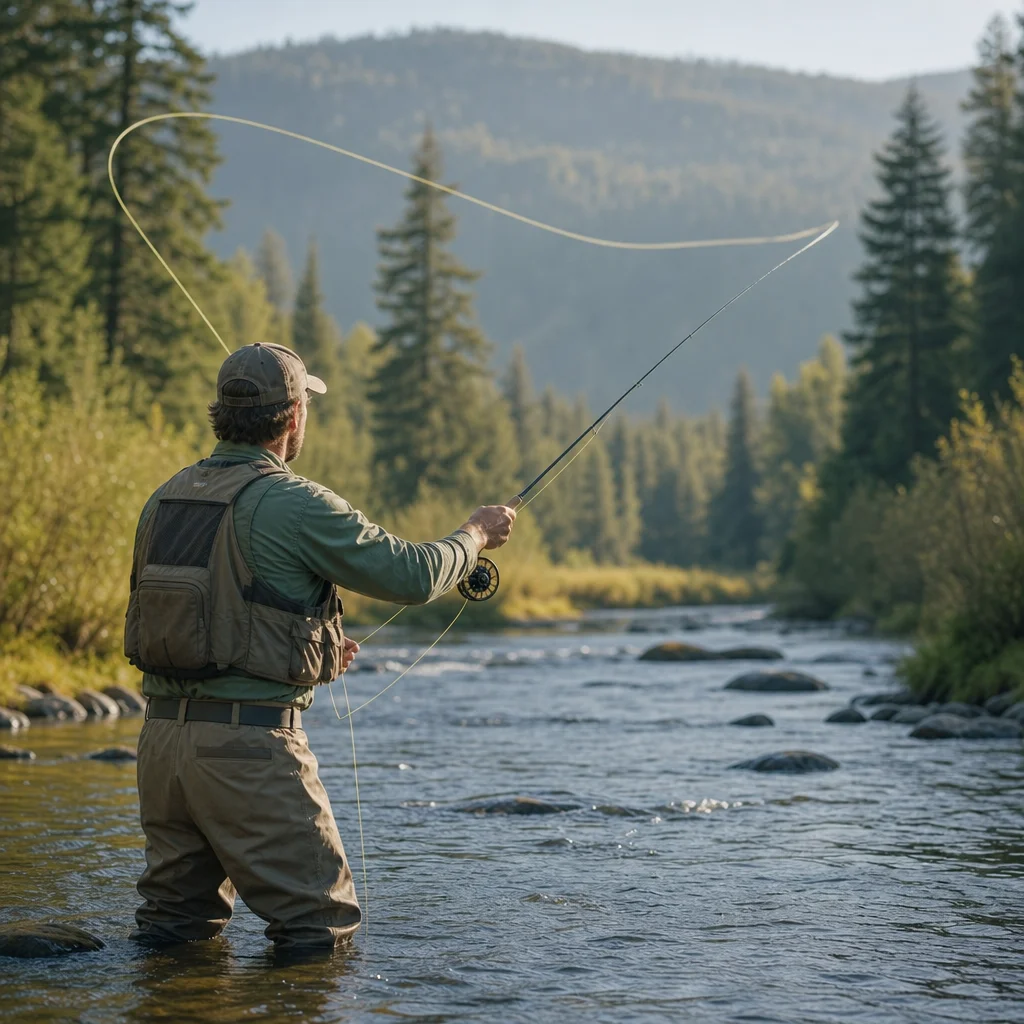
Brush and willows rarely block an entire stream; they usually remove one part of the cast. Your backcast may have no room, the forward loop may need to travel beneath a canopy, or the only open lane may sit on the wrong side of your casting shoulder.
A low-profile cast solves that problem by changing three connected variables: rod angle, loop height, and casting direction. The goal isn’t to force every cast into a dramatic sidearm. It’s to choose the smallest, cleanest motion that puts the fly in the water while keeping the line away from branches.
Start by Reading the Casting Lane
Before raising the rod, identify where the line can travel safely. Look at three zones:
- The backcast lane: space behind and above you for the line to straighten.
- The forward lane: the corridor between your rod tip and the target.
- The landing zone: the water where the leader and fly need to settle.
These zones don’t have to line up. That’s the important part. You might have open water to your left, a solid wall of willow behind you, and a clear target directly across the stream. A conventional overhead cast uses too much of the blocked space, while a sidearm or backhand cast can use the open corridor.
Walk a few steps upstream or downstream if the bank allows it. A small change in position can turn a nearly impossible cast into a simple one. Moving also changes the angle at which the fly approaches the target, so consider whether the new position will produce a useful drift rather than merely a successful cast.
Keep the rod tip low while you inspect the lane. This prevents an accidental false cast from putting the fly into the nearest branch, which is a particularly efficient way to alert every trout in the pool.
Match Rod Angle to Available Space
Rod angle controls the plane of the cast. A high rod position creates a more upright loop, while lowering the rod moves the loop closer to the surface and along the side of your body.
For a low-profile cast, begin with the rod angled roughly sideways rather than straight overhead. The exact angle depends on the vegetation and your stance, but the principle is consistent: keep the rod and line in the open corridor, not in the branches.
Your casting arm may be on the bank side or the water side. Choose the side that gives the line the most room. If brush crowds your right shoulder, a backhand cast to the right may keep the line away from the obstruction. If the left side is open, a normal sidearm cast may be simpler.
Don’t lower the rod so far that the tip drags through grass, rocks, or the water. The rod tip still needs enough room to move smoothly and form a loop. Low-profile means controlled and compact, not scraping the surface.
Keep Your Body Out of the Way
Turn your shoulders toward the target instead of trying to make the rod do all the work from a square stance. A slight rotation creates room for the casting arm and lets the rod travel in a flatter plane.
Stand with your feet stable before beginning. On a narrow lowland stream, the best casting position may be close to a steep edge or a soft bank. Avoid leaning farther over the water just to improve the angle. A modestly shorter cast from a balanced stance is usually more useful than a longer cast that leaves you struggling to recover your footing.
Build a Low, Narrow Loop
A low cast still needs a loop with enough shape to carry the leader. If the loop collapses, the fly will land in a heap or catch the surface before reaching the target.
Use a compact stroke with a firm stop. The rod tip should travel in a relatively straight path along the chosen casting plane. A wide, sweeping motion sends the line toward more branches and makes it harder to judge where the loop will unroll.
The usual sequence is simple:
- Lift enough line from the water to make the cast, but avoid carrying unnecessary line outside the rod tip.
- Make a short backcast or pickup in the open lane.
- Pause briefly as the line straightens behind or beside you.
- Drive the rod forward with a smooth acceleration.
- Stop the rod on the target line and allow the loop to unroll.
The pause matters more than speed. If you begin the forward stroke while the backcast is still moving, the loop loses shape and the fly may swing into the vegetation. In tight quarters, a deliberate rhythm is safer than trying to cast harder.
Control Loop Height With the Rod Tip
If the loop is too high, the line may reach the willow canopy. If it’s too low, the leader can slap the water or the fly can hit the bank before it reaches the feeding lane.
The rod tip should finish on the same general plane as the intended line. For a low sidearm cast, that may mean a finish only slightly above the water. Keep the movement smooth and avoid chopping downward at the end; that tends to throw the line into the surface rather than forward.
A tighter loop also helps, but don’t force an extremely narrow loop with an abrupt stop. The leader needs room to turn over. If you’re using a bulky fly, weighted pattern, or indicator, open the loop slightly and shorten the cast rather than trying to thread a heavy setup through a tiny gap.
Choose the Casting Direction Deliberately
Casting direction is often the most important decision beside brush. You have several useful options, and each has a different trade-off.
Sidearm Cast
The sidearm cast is the natural first choice when the open corridor runs beside you. Keep the rod low and cast parallel to the bank or just above the water’s surface.
Use it when:
- The backcast lane is open at shoulder height.
- The target lies across or slightly downstream.
- The brush is higher than the intended loop.
The main risk is allowing the rod tip to travel in a wide arc. Keep the stroke compact and watch the line’s path, not just the fly.
Backhand Cast
A backhand cast changes the line’s position relative to your body. For a right-handed angler, the rod moves across the left side of the body; for a left-handed angler, the arrangement reverses.
It’s useful when the vegetation crowds your casting shoulder or when the open lane lies on the opposite side. The cast may feel less natural at first because your wrist and shoulder are working in a different orientation. Rotate your body toward the target and let the arm follow the rod rather than trying to steer the tip with your wrist alone.
Backhand casting is particularly helpful when a normal sidearm motion would put the backcast directly into a wall of branches. It can also improve your line placement around a bend, where the bank blocks one casting plane but not the other.
Roll Cast
A roll cast is often the cleanest option when there’s no room behind you. Form a controlled D-loop with the line on the water, then make a forward stroke and stop the rod toward the target.
Keep the anchor point close and on the intended casting side. If too much line lies on the water, the cast needs more energy and may create a large, noisy loop. If the anchor is too far away, the line can stick and fail to lift.
Roll casts work best with enough line outside the rod tip to form the loop. If only a short leader and a few feet of fly line are out, first extend a small amount of line with a careful water-loaded movement. Don’t repeatedly roll cast a fly into branches while trying to find the right length; strip in, reset, and begin again.
Bow-and-Arrow Cast
When the target is very close and the overhead or sidearm lanes are unusable, a bow-and-arrow cast can place a fly into a small opening. Trap the line against the rod, bend the rod carefully, aim, and release.
This is a short-range tool, not a substitute for a normal cast. Keep the motion controlled, especially with weighted flies or larger hooks. Aim for a soft entry and avoid firing the fly through a narrow opening at high speed.
Use Less Line Than You Think
Most brush-side casts fail because the angler carries too much line. Extra line needs extra room, makes the loop harder to see, and increases the chance of wrapping a branch.
Start with the amount of line needed to reach the target plus a small margin for leader turnover. If the first cast falls short, extend gradually. This lets you find the maximum useful range without immediately filling every available lane with moving line.
Shorter casts also improve accuracy. In a lowland stream, trout holding beside willows may be close to the bank, tucked under a cutbank, or stationed behind a small seam. Reaching the exact edge of the shade is often more valuable than reaching the far bank.
Present the Fly Without Spooking the Pool
A successful low-profile cast can still ruin the presentation if the fly lands heavily or the leader crosses the fish’s window.
Aim to land the fly slightly upstream or to the side of the target, depending on the current. Keep the line off the surface when possible, but don’t sacrifice control just to create a perfect aerial presentation. A short, accurate cast with a manageable drift beats a longer cast tangled in willow stems.
After the fly lands, lower the rod and manage slack before making another cast. If the drift is wrong, strip in and reset rather than trying to mend aggressively in a tight space. Large mends can pull the fly, slap the water, or catch vegetation along the bank.
Troubleshoot the Common Failures
The fly keeps hitting the branches
Your loop is probably too high, too wide, or aimed into the vegetation. Lower the rod angle, shorten the stroke, and move your casting plane toward the open water. If the branches are behind you, switch to a roll or backhand cast rather than trying to overpower the obstacle.
The line lands in a pile
The forward loop may be collapsing because the rod stop is soft or the cast begins before the backcast has straightened. Slow down, use less line, and make a firmer stop. If the setup is bulky, open the loop slightly instead of adding force.
The fly lands well, but the drift is poor
The casting direction may be solving the vegetation problem while creating a current problem. Change your position, alter the target angle, or use a shorter cast that allows the leader to land closer to the fly line’s intended path.
You’re catching vegetation on every pickup
Avoid lifting the line straight through the branches. Strip in until only a manageable amount remains, then use a sidearm pickup or a short roll cast. Keep the rod tip on the water side of the obstruction and check the line before accelerating.
A Simple Decision Process
When you reach a brush-lined target, make the choice in this order:
- Find the open lane. Decide where the line can travel without touching branches.
- Choose the casting side. Use a normal sidearm cast, backhand cast, or roll cast based on that lane.
- Lower the rod angle. Keep the rod and loop within the available corridor.
- Shorten the line. Start with only enough line to reach the target.
- Make one compact practice motion. Confirm the loop’s path before presenting the fly.
- Cast for the drift, not just the distance. Put the fly where the current can carry it naturally.
If none of those options provides a clean path, move. A few careful steps can be more effective than a collection of increasingly desperate casts. Low-profile casting is about making a sensible adjustment, not proving that every willow has a hidden solution.
Before your next trip, practice sidearm and backhand casts on open water with a short amount of line. Add roll casts when the backcast space disappears. Once those motions feel controlled, brush and willows become a problem of choosing the right lane rather than fighting the entire riverbank.