How to Cast a Heavy Nymph Rig Without Letting It Lead the Rod
A tight overhead loop can turn a weighted nymph rig into a pendulum aimed at your rod. I’ll explain when to use compact strokes, open loops, water-loaded casts, or a simple reposition to protect your tackle and keep the presentation controlled.
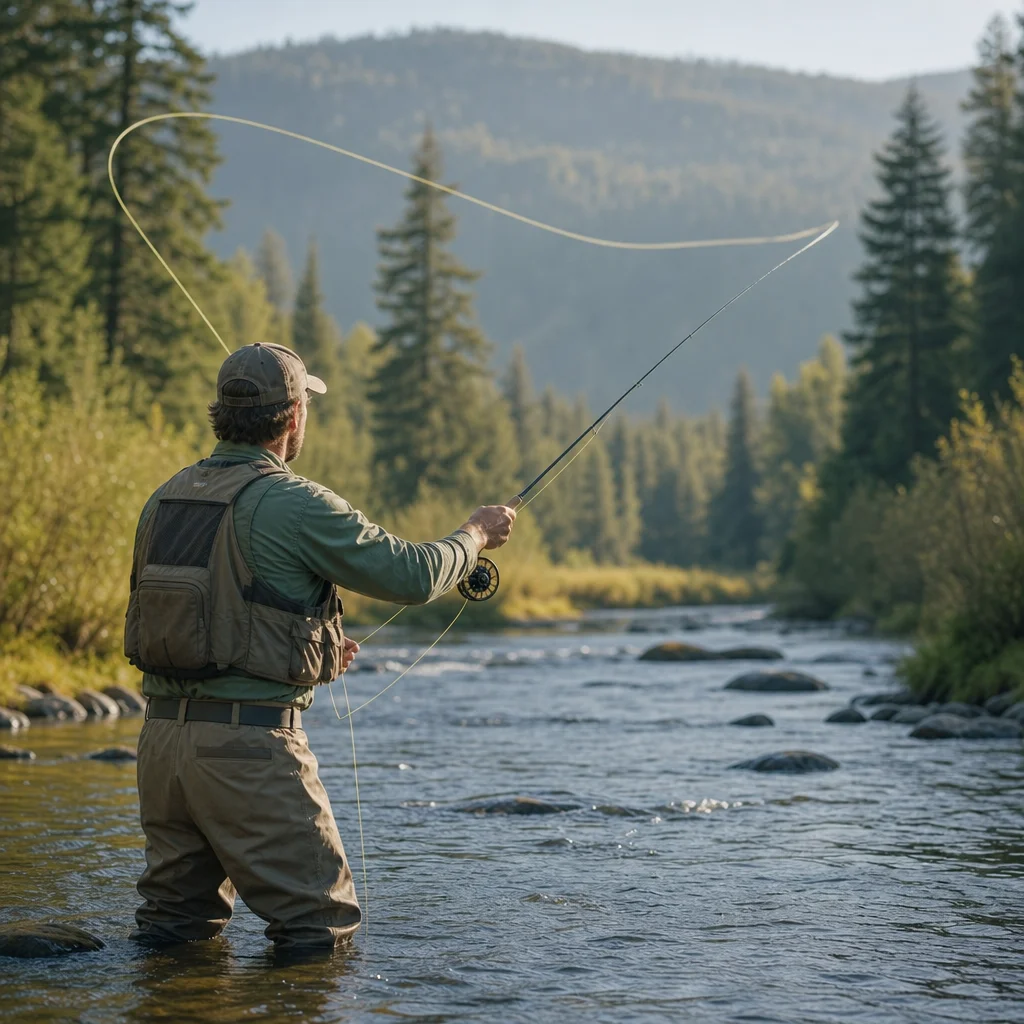
A heavy nymph rig rarely fails because you lack strength. More often, the problem is that too much weight, leader, and line are moving through the air at once. A large indicator may add another hinge point, while split shot can keep accelerating after the fly line has stopped. The result is a collapsing loop, a startled rod, or a rig that arrives somewhere you didn’t intend.
The solution isn’t to cast harder. It’s to reduce the amount of rig you move through the air, choose a casting stroke that suits its momentum, and reposition when the angle is working against you. These choices can protect a rod, save flies and leaders, and usually make your next cast more accurate.
Why a heavy nymph rig stresses the rod
A fly rod is designed to load from the weight of the line and then release that energy smoothly. A nymph rig adds weight at the end of the leader, often several feet beyond the fly line. That weight can behave unpredictably because it isn’t connected to the rod by a rigid section of line.
When you start a back cast abruptly, the shot and flies lag behind. When you stop the rod, they continue moving and then swing around the leader. If you immediately drive the forward cast, the rig can pull sharply against the rod tip. That sudden load is different from the gradual load created by a properly matched fly line.
The risk increases when you combine several factors:
- Multiple weighted flies
- Split shot placed close to the flies
- A large yarn, foam, or air-filled indicator
- A long leader with slack in it
- A short length of fly line outside the rod tip
- A high-sticking position with little room for a normal back cast
- Wind that pushes the rig back toward you
A heavy rig doesn’t automatically damage a rod. Poor timing, excessive acceleration, and repeated collisions are the more common problems. Still, you should treat the rig as a compact, swinging load rather than as an ordinary dry fly.
Check the tackle and local rules: Before adding weight or changing your setup, confirm the rod manufacturer’s line and rig recommendations and check the current regulations for your river. Restrictions on split shot materials, weighted flies, leader setups, and indicator use can vary by water and season.
Start by deciding whether the rig needs to leave the water
Many casts fail because the angler tries to make an overhead cast when a water-loaded cast would be safer and more efficient. In deep rivers, you may have limited room behind you, a steep bank, or a heavy rig that is difficult to control in the air. In those situations, keeping most of the rig on or near the water is often the better choice.
Before casting, ask three questions:
- Where is the rig now? Is it downstream, directly below you, or trapped in current behind your legs?
- Where do you want it to land? A short change in position may solve the problem more easily than a longer cast.
- What is behind you? Check for branches, other anglers, wading hazards, and a current seam that could pull the rig away during setup.
If the rig is downstream and you need to cast it upstream or across the current, a roll cast or other water-loaded cast may be enough. If it is directly below you in strong current, step or wade to change the angle before trying to lift it. Repositioning isn't giving up on the cast. It is choosing a lower-risk starting point.
Use a compact stroke, not a forceful one
A compact stroke keeps the heavy rig moving in a smaller, more predictable path. It doesn't mean snapping the rod or using only your wrist. Think of it as a short acceleration with a controlled stop.
To make a compact overhead cast:
- Lift only enough line to form a manageable loop. Don’t try to carry the entire leader, indicator, and weighted flies high above the water.
- Accelerate smoothly. Start the rod motion gradually, then increase speed through the stroke.
- Stop firmly but not violently. The stop creates the loop; extra force mostly adds speed to the rig.
- Allow more time for the back cast to straighten. Heavy rigs often need a slower rhythm than a dry fly.
- Make a short forward stroke. Let the loop unroll rather than trying to drive the rig into the water.
Keep the casting arc more compact than you would with a light fly, but avoid a narrow, high-speed loop. The rod tip should travel in a controlled path, not dart back and forth. If the rig begins to swing wide, pause and reset rather than adding power.
A useful adjustment is to shorten the amount of line outside the rod tip. This reduces the mass moving through the loop and gives you more control. You may sacrifice distance, but heavy nymphing is usually about reaching a productive drift lane, not winning a casting contest against the opposite bank.
Open the loop to create separation
A tight loop is efficient with a well-balanced fly, but it can be unforgiving with multiple nymphs, shot, and an indicator. An open loop gives the components more room to travel without colliding.
You can open the loop by casting with a slightly wider rod path, often with a modest sidearm angle. The back cast and forward cast should still be deliberate and smooth. You’re changing the shape of the loop, not flinging the rig sideways.
An open loop helps in several ways:
- It reduces the chance that the trailing fly catches the leader or indicator.
- It gives split shot more room to swing without striking the rod.
- It makes wind less likely to fold the leader directly into the rod tip.
- It provides a little more time to see where the rig is traveling.
The trade-off is that an open loop is less aerodynamic and usually less accurate at long range. That’s a sensible trade for a short-to-medium nymphing cast, especially when the alternative is a compact, fast loop carrying a heavy terminal rig.
Keep the casting plane away from your body. A sidearm or slightly tilted stroke can help separate the rig from your face and shoulder, but it doesn’t replace eye protection or awareness of people nearby. Weighted flies and shot can cause serious injuries even when the cast feels short.
Use a roll cast when the water can load the rod
A roll cast is often the most economical way to move a heavy nymph rig. The water holds the line and helps load the rod, so you don’t have to lift the entire rig into a back cast.
To make a controlled roll cast:
- Bring the fly line and leader into a position where they can form a small D-loop behind the rod.
- Keep the weighted flies and shot on or near the water rather than lifting them high.
- Raise the rod smoothly, allowing the line to anchor on the surface.
- Drive the rod forward with a steady stroke and stop high enough for the loop to unroll.
The anchor should be close enough to the rod that you aren’t dragging a long, heavy leader across the surface. If too much line is stuck downstream, the cast may stall. If too little is on the water, the rod may not load properly.
A roll cast won’t always deliver a heavy rig far upstream, particularly in fast current. It can, however, place the rig back into the right lane with much less aerial movement. You can then feed line or mend once the flies are fishing.
Try a water haul or change-of-direction cast
When you need to move the rig more than a roll cast allows, use the tension of the water before lifting the line. A water haul—sometimes used as part of a change-of-direction cast—lets the current and surface tension help redirect the line.
The basic sequence is simple:
- Bring the rig under control on the water.
- Lift and sweep the rod to form a small, open loop.
- Let the line’s tension load the rod.
- Make the forward stroke only after the loop has formed.
The exact motion depends on your position, current speed, and casting side. The important principle is to avoid lifting a fully extended, weighted leader straight into the air. Use the water to gather and redirect the line first.
Keep the sweep compact in tight quarters. A broad sweep can drag the rig through the surface and send shot or flies toward the bank, your wading partner, or your own legs.
When an oval or Belgian-style cast helps
An oval, or Belgian-style, cast keeps the back cast and forward cast on slightly different planes. The rod tip follows a continuous, oval-shaped path rather than making two abrupt stops in the same vertical plane.
This can be useful with a heavy nymph rig because it keeps the flies and indicator moving in a wider path and helps prevent them from colliding with the fly line. It also gives you a way to maintain momentum without relying on a sharp, high-speed stop.
Use it with restraint. A very wide oval cast is difficult to aim and can put the rig into nearby obstacles. Start with a small sidearm component and watch the loop. If the flies still cross the line or the indicator folds into the leader, widen the path slightly or reduce the amount of line in the air.
This cast is especially useful when you have clear space beside you but not much room directly behind. It’s less useful when bushes, steep banks, or other anglers occupy the side of your casting plane.
Know when to reposition instead of forcing the cast
Repositioning is usually the best choice when the rig is upstream of you, buried in a conflicting current, or too close to your body. Trying to lift it directly out of a strong current can create a large, sudden load and an uncontrolled swing.
Move a few steps—if the footing is safe—to create a better casting angle. You may also be able to lower the rod, draw the rig downstream with a controlled sweep, and then use a roll cast. In deep water, don’t make a casting adjustment that requires unstable footing. A shorter cast from a secure position is worth more than a longer cast made while leaning into the current.
Reposition when:
- The rig is caught behind you or around your legs.
- The leader is wrapped around the rod tip.
- The indicator and flies are moving in different current seams.
- You can’t identify where the weighted flies are during the cast.
- The available casting lane is crowded or obstructed.
- The rod is already deeply loaded before you begin the stroke.
If you have to rip the rig free, stop. Strip or hand-line it under control, or wade to a safer angle. A lost fly is cheaper than a damaged rod, and neither is worth an injury.
Adjust the rig before adjusting your casting
Casting technique can only compensate for an awkward rig up to a point. If your setup consistently feels difficult to move, make it simpler before reaching for more power.
Consider these changes:
Reduce unnecessary weight
Use only enough weight to reach the intended depth and maintain contact with the drift. Extra shot can make the cast harder without improving the presentation. In some water, a better angle or a longer drift may put the flies deeper more effectively than adding another piece of shot.
Shorten or simplify the leader
A long leader with several knots and a heavy indicator can create multiple hinges. A shorter, more coherent setup is easier to turn over. The right length depends on water clarity, depth, regulations, and the fish’s willingness to approach the rig.
Keep the indicator proportionate
A large indicator may be useful in deep or turbulent water, but it adds air resistance and can catch during the cast. Use the smallest indicator that remains visible in the conditions and is compatible with your rig and local rules.
Check the rod and line pairing
A rod rated for the line you’re using may still have practical limits for heavily weighted rigs. Follow the rod maker’s guidance, especially if you’re considering a permanently mounted heavy nymph setup or a specialized line. Don’t assume that a stronger cast makes a marginal setup safe.
A simple practice progression
Practice with an unweighted leader first, then add one factor at a time. Begin with a single unweighted fly, followed by a weighted fly, then an indicator or additional weight. Use an open area and wear eye protection.
Start at short range. Practice lifting only a small amount of line, forming an open loop, and allowing the rig to straighten before the next stroke. Then try roll casts and water-loaded change-of-direction casts. Pay attention to whether the rod loads smoothly or jolts at the end of the stroke.
If the rig collides with the rod, stop and diagnose the cause. The fix may be a wider loop, a slower pause, less line outside the tip, or a lighter rig. Simply casting harder usually makes the same mistake happen faster.
Practical next steps on the river
Before your next deep-river session, prepare one manageable rig rather than carrying every possible weight and indicator combination. On the water, begin with the lightest setup that should reach the depth, and add weight only when the drift shows you need it.
Use this short decision checklist:
- Enough room and a clear target? Use a compact, smooth overhead cast.
- Heavy components colliding? Open the loop and slow the rhythm.
- Line already on the water? Use a roll cast or water-loaded sweep.
- Poor angle or conflicting current? Reposition first.
- Unstable footing or uncertain rig location? Stop, regain control, and don’t force the cast.
The most efficient heavy-nymph cast is the one that moves only as much rig as necessary. Keep the stroke compact, give the load room to turn over, and let the water do some of the work. That approach saves tackle, reduces wasted casts, and leaves you better prepared for the drift that actually matters.