How to Cast Accurately to Small Pocket Water
I’ll explain how to make short, accurate casts in tight mountain-stream pocket water using compact loops, deliberate target selection, and simple slack control around rocks, seams, and awkward banks.
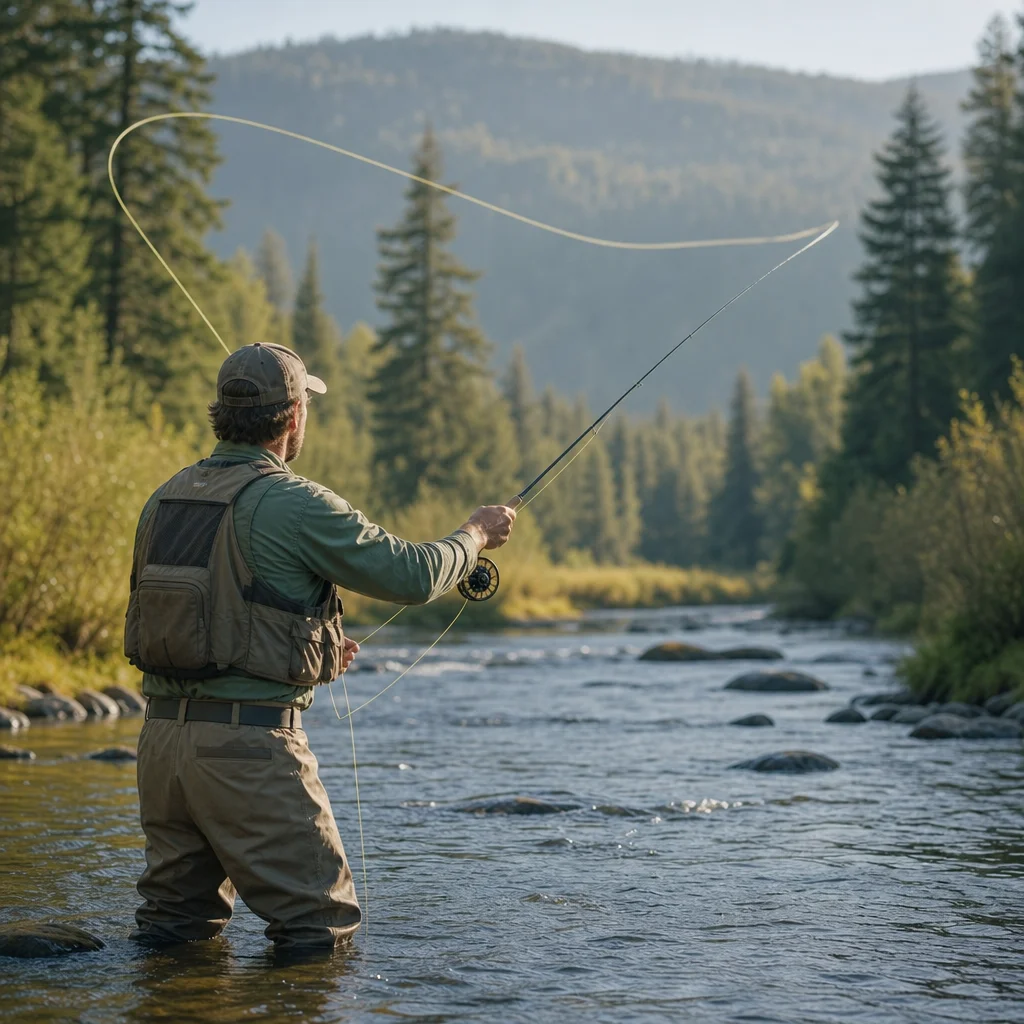
Small pocket water rarely gives you room for a comfortable backcast or a long, graceful presentation. The useful question isn’t how far you can cast—it’s whether you can place a fly in a narrow target without wrapping your line around a branch, rock, or your own boots.
For most pocket-water situations, accuracy comes from simplifying the cast. Use less line, make smaller movements, choose targets you can reach cleanly, and create only as much slack as the current requires. You don’t need a complicated setup. You need a repeatable one.
Start by Choosing the Right Target
Pocket water is made of small opportunities rather than one broad, obvious current. A trout may hold in the cushion in front of a rock, the softer water beside it, a seam between currents, or a short tongue below the obstruction.
Before you cast, pause long enough to identify the water you actually want to fish. Look for:
- The soft edge immediately beside a rock
- The slower pocket behind a rock or boulder
- A seam where fast and slow currents meet
- A small depression between submerged stones
- The head or tail of a short pool
- A darker patch suggesting depth or cover
Start with the closest worthwhile target. In clear, broken water, fish may be nearby, and reaching over them can disturb the area you could have fished first.
Favor Defined Targets Over Empty Water
A common mistake is casting toward the middle of a pocket because it looks open. Open water isn't automatically productive water. A rock, seam, or change in depth gives you a better reason to place the fly.
Pick one specific landing zone. It might be a patch of current no larger than a dinner plate. If you can describe the target in a few words—“left of that rock” or “two inches above the seam”—you’re more likely to make the cast with the right amount of line and power.
Use the Minimal Amount of Line
Short-range accuracy begins with line management. Keep only enough fly line outside the rod tip to reach the target and form a controlled presentation. Extra line creates extra problems:
- More line can land on conflicting currents.
- More line takes longer to lift or redirect.
- Loose coils can catch on rocks and vegetation.
- A larger loop is harder to control in tight quarters.
If the target is 15 feet away, don’t automatically carry 25 feet of line because that’s what you used in an open pool. Strip in until the amount outside the rod tip matches the cast you need.
Your leader and tippet still count as part of the delivery. Keep the setup tidy and avoid dragging unnecessary line across the water. In very tight places, a short, controlled cast is often more effective than trying to extend a long leader or delicate presentation beyond your ability to manage it.
Build a Compact Loop
A compact loop is useful around pocket water because it travels efficiently through small openings. It also reduces the chance of the line spreading into nearby branches or landing across several current lanes.
To make one, keep the rod stroke short and crisp. Move the rod tip in a relatively straight path rather than making a wide, sweeping arc. You don’t need to force the rod. A sudden stop at the end of the stroke helps the line turn over.
Think of the cast as a small movement from one position to another:
- Lift the line cleanly from the water.
- Move the rod back only as far as needed.
- Stop firmly enough to form a narrow back loop.
- Pause briefly while the line straightens.
- Make a short forward stroke toward the target.
- Stop the rod and allow the leader to turn over.
The pause doesn’t need to be long. At short range, the line straightens quickly, and waiting too long can cause the fly to fall behind you or the line to touch the water before the forward cast.
Don’t Overpower the Cast
Too much power usually makes pocket-water casting worse. It can create a wide loop, bounce the fly off the water, or drive the leader straight into a rock. If the fly lands hard, reduce the length of your stroke and the force behind it.
A useful adjustment is to accelerate smoothly and stop decisively. The rod supplies much of the energy when you load it with a controlled movement. Your job is to direct that energy, not wrestle it into the pocket.
Pick the Best Casting Angle
The same target can be easy or awkward depending on where you stand. Before wading farther, consider whether a small change in position gives you a cleaner cast.
Whenever possible, stand downstream and slightly to one side of the target. This can let you cast upstream or across-current while keeping more line away from conflicting flows. It may also give you a better view of the fly and the seam.
Avoid positioning yourself directly in the strongest current if a slower edge offers the same angle. Moving one or two steps can reduce the amount of line you need and improve both accuracy and drift.
Cast Around Obstacles, Not Through Them
If a boulder blocks the direct path, don’t automatically add power. Instead, change the casting angle or use a short sidearm cast. A sidearm delivery can keep the loop below overhanging branches and help you place the fly beside a rock.
You can also cast from the side opposite the obstruction, if doing so doesn’t force you into unstable footing or a poor downstream position. The best angle is the one that gives the fly a clear path and leaves you with a manageable line after it lands.
Choose the Right Short Cast
You don’t need to use a standard overhead cast for every pocket. Three simple deliveries cover many situations.
Short Overhead Cast
Use a compact overhead cast when you have enough room behind you and above you. It’s the most familiar option and works well for a target directly upstream or across a clear lane.
Keep the backcast narrow and watch for branches. With little line outside the rod tip, the cast may need only a modest lift and a short forward stroke.
Roll Cast
A roll cast is useful when a backcast is blocked by brush, a steep bank, or a wall of rock. Let the line settle in front of you, form a small D-loop behind the rod tip, and drive the rod forward toward the target.
The roll cast works best when the water holds the line and leader with some tension. If the line is completely slack or tangled around nearby obstacles, first recover it with a slow lift or reposition yourself.
Keep the roll cast small. A large anchor and broad loop can sweep across several current lanes or catch on a boulder.
Water-Loaded or Pickup-and-Lay-Down Cast
At very short range, you can often lift the line from the water and redirect it with one controlled motion. This is especially useful when there isn’t room for a full false-casting sequence.
Lift the rod smoothly, allow the line to load the rod, then guide the forward stroke toward the target. Avoid false casting repeatedly over fish. Every extra movement is another chance to spook them or place the fly in the wrong current.
Control Slack Without Creating Drag
Pocket water often requires some slack, but not every type of slack is helpful. You want enough loose line to let the fly drift through changing currents while keeping enough contact to see or feel what happens.
A useful starting point is to land the fly slightly upstream of the target and place a small amount of slack between the fly and the rod tip. This gives the fly time to enter the pocket before the current pulls the line tight.
You can create controlled slack with:
- A reach cast that places line upstream of the fly
- A short aerial mend before the line lands
- A slight angle in the rod tip after the cast
- A soft, curved delivery that avoids a straight line across the seam
Don’t pile line onto the water without a plan. Large coils can drift into the wrong current and pull the fly out of the pocket immediately.
Mend Only What You Need
In small water, a full, dramatic mend can move the fly, scatter the pocket, or put the line on top of the fish. Make the smallest correction that keeps the fly moving naturally.
If the current grabs your line immediately, try landing more line upstream rather than waiting to mend after the fly touches down. If the fly is already drifting well, leave the line alone. An unnecessary mend can turn a good presentation into a poor one.
Use Targeted Accuracy Drills
You can improve pocket-water accuracy without spending hours making long casts. Practice at short range with a few small targets placed at different angles.
Try this sequence:
- Place a target close to your casting side.
- Place a second target slightly upstream and across-current.
- Add an obstacle such as a chair, branch, or marker beside the target.
- Cast with only enough line to reach each target.
- Repeat using an overhead cast, roll cast, and sidearm delivery.
- Notice which movement gives you the narrowest loop and best control.
Focus on landing the fly or yarn marker inside the target rather than on how far the line travels. Accuracy at 20 feet is more relevant to tight pocket water than distance at 50 feet.
Practice lifting the line cleanly, too. Many missed casts begin with a poor pickup: the line sticks to the water, the rod tip travels too far, or the fly catches on something during the first movement.
Avoid These Common Mistakes
Carrying Too Much Line
Extra line makes short targets harder to reach accurately. Strip in before changing direction or moving into a tighter pocket.
False Casting Over Fish
Repeated false casts add noise and movement. Make one or two controlled casts, then adjust your position or target if they don’t work.
Casting Straight Across Fast Water
A straight line across several current speeds often creates immediate drag. Change your angle or land the line upstream of the fly.
Using a Full-Length Stroke
Long rod movements are difficult to control near obstacles. Shorten the stroke before adding power.
Ignoring the Landing Zone
The fly may reach the right pocket while the leader lands across a rock or the line falls into a faster current. Watch the whole presentation, not just the fly.
Wading Before You’ve Fished the Edge
The closest water may hold a fish, and stepping into it can disturb the pocket. Fish the water within reach before moving farther.
A Simple Pocket-Water Routine
When you arrive at a tight run, use the same short routine:
- Identify the nearest worthwhile pocket.
- Check the backcast and your footing.
- Choose the casting angle with the fewest obstacles.
- Strip in line until you have only what you need.
- Make one compact cast.
- Watch how the fly, leader, and line move through the currents.
- Mend or reposition only if the drift requires it.
- Move to the next target after a few thoughtful presentations.
This approach keeps the focus on placement rather than distance. It also helps you notice which current is causing trouble, so your next cast can be a deliberate adjustment instead of a hopeful repeat.
Practical Next Steps
On your next mountain-stream outing, leave the long casts for the open water. Start close, choose a target no larger than necessary, and use a compact loop with minimal line. If the fly drifts poorly, first change your casting angle or landing position before adding more power.
A reliable pocket-water cast is usually quiet, short, and unremarkable. That’s a compliment. When the fly reaches the soft water beside the rock and the line stays out of the competing current, the cast has done its job.