How to Use a Belgian Cast When a Tight Loop Keeps Collapsing
When wind or a bulky fly makes your tight loop collapse, I’ll show how a Belgian cast changes the casting path, where it helps, and how to keep its oval loop compact instead of surrendering control.
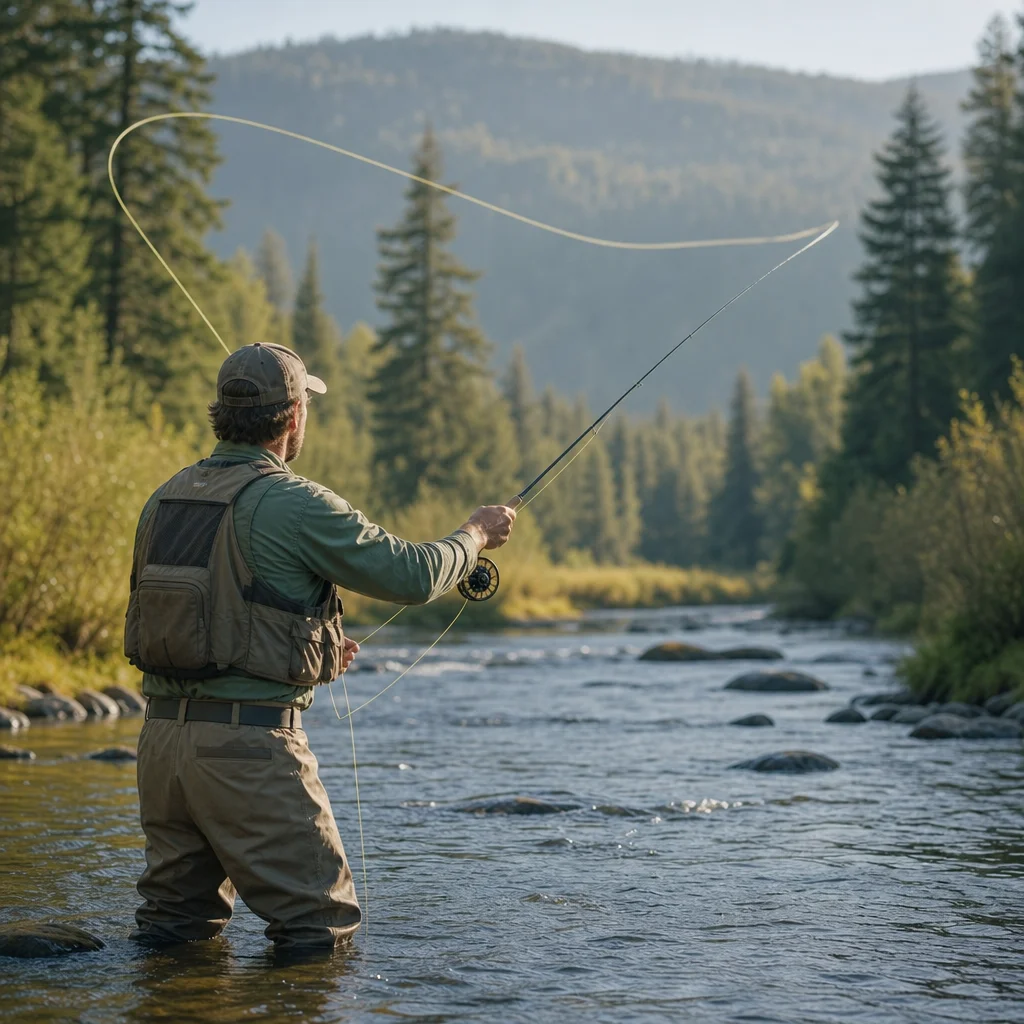
Your tight loop is usually an advantage—until a large streamer, weighted nymph, or stiff wind makes it straighten too soon and collapse. A Belgian cast, also called an oval cast, changes the rod’s path so the backcast and forward cast travel on slightly different planes. That can preserve control and keep a moving fly from colliding with the line or rod.
The trade-off is that the cast creates a more open loop than a standard overhead cast. Used well, it’s controlled and efficient. Used casually, it becomes a broad windshield-wiper motion that wastes energy and puts the fly farther from where you intended.
What makes the Belgian cast different?
In a conventional overhead cast, the rod travels mostly in one casting plane. The line straightens behind you, then the rod changes direction and sends it forward. That narrow loop is excellent for accuracy, distance, and turning over a tidy leader.
The Belgian cast uses an oval path instead. The backcast is driven more to the side, while the forward cast returns higher and more overhead. The changing planes keep the fly and line moving around one another rather than directly over the rod tip.
For a right-handed caster, the backcast commonly sweeps toward the right side before the forward stroke comes over the top. A left-handed caster reverses the sides. The exact path can vary with wind, available room, and the fly, but the basic idea stays the same: side on one stroke, overhead on the other, with continuous tension throughout.
The loop should be open enough to give the fly room, not so open that it loses shape.
When should you choose it?
A Belgian cast is worth trying when one of these problems appears:
- A bulky streamer or articulated fly refuses to turn over cleanly.
- A weighted fly drops into the backcast and threatens to hit the rod or line.
- A strong crosswind makes a narrow loop collapse or blow into your casting shoulder.
- You’re carrying a heavy fly and need a casting path that provides more separation.
- You need to maintain momentum between the backcast and forward cast instead of making a large, abrupt stop.
It isn’t automatically better in wind. Wind direction still matters. If the wind is blowing toward your body, keep the fly on the downwind side whenever possible. A Belgian cast can improve separation, but it doesn’t make a moving hook harmless.
You also don’t need it simply because your fly is large. If a standard cast turns over the fly safely and accurately, it’s usually the simpler choice.
Check your casting side: Before practicing with a weighted or barbed fly, make sure the fly’s path stays away from your face, hands, and nearby people. Wear eye protection and use a piece of yarn or a hookless practice fly while learning the motion.
How to make the cast
1. Start with enough line in the air
Begin with a manageable amount of line outside the rod tip—enough to feel the rod load, but not so much that a mistake becomes difficult to recover. Ten to thirty feet is a reasonable practice range for many anglers, depending on the rod, line, and fly.
Keep the line moving. The Belgian cast relies on continuous tension, so avoid allowing the fly or line to fall completely behind you before starting the next stroke.
2. Make the backcast to the side
Lift the line into the backcast, then sweep the rod toward your casting side rather than driving it straight overhead. Think of drawing the lower half of an oval beside you.
The motion should be smooth and deliberate. Don’t fling your arm sideways or rotate your whole body. Your forearm and wrist can guide the change in plane while your shoulder remains relaxed.
The sidearm portion gives the fly space from the rod. It also helps keep a bulky fly from traveling directly behind your head.
3. Bring the rod forward and higher
As the line moves around the side of the oval, guide the rod into a forward stroke that finishes higher than the backcast path. The forward stroke should still be firm and directed at the target; it shouldn’t become a sweeping circle.
Stop the rod crisply at the end of the forward stroke. A controlled stop lets the rod unload and gives the line a chance to straighten. If you continue pushing after the stop, the loop tends to widen and lose energy.
4. Keep the transition continuous
The change from backcast to forward cast is the heart of the Belgian cast. Don’t wait for a perfect, fully straightened backcast. Instead, begin the forward movement as the line approaches the end of the oval and the rod starts to load.
That doesn’t mean rushing. You’re looking for steady tension rather than frantic speed. If the fly falls behind you, you waited too long. If the line piles up beside you, you hurried the transition or pulled the rod too far around.
5. Adjust the oval to the conditions
Use a smaller oval when you need accuracy or have limited room. Use a slightly wider one when a particularly bulky fly needs more separation from the rod. The path should change only as much as necessary.
A useful image is an elongated loop, not a giant circle. The line should travel around the fly in a predictable path and then turn over toward the target.
How to avoid a wide, inefficient loop
The most common mistake is treating “oval” as permission to cast in a large circle. That creates extra line travel, consumes more effort, and makes the fly harder to direct.
Keep the rod movement compact
Your rod tip should travel through a controlled oval, not your entire arm through a broad arc. Excessive shoulder movement often causes the loop to open farther than intended.
Try making the sidearm portion lower and shorter. Then bring the rod forward with a clear stop. If your hand is traveling several feet sideways before every forward stroke, the path is probably too large.
Don’t drop the rod too far on the backcast
A low backcast can help keep a fly away from you, but dropping the rod excessively makes the line lose height and tension. The fly may drag behind the loop, then pull the rod out of its loading position.
Start with a modest sidearm angle. Lower it only when the wind, vegetation, or fly design gives you a specific reason.
Don’t overpower the forward stroke
Large flies tempt you to use more force. That usually produces a bigger loop rather than a better one. Let the rod load with the line’s weight, then apply a smooth acceleration and a firm stop.
If the fly turns over poorly, first check your timing and loop shape. More power is useful only after the path and sequence are working.
Maintain a suitable leader
A very long, fine leader can make a bulky fly harder to turn over, regardless of casting style. A shorter or stronger leader section may improve turnover, though the right choice depends on the fly, line, and presentation you need.
The Belgian cast can help a fly travel safely around the rod, but it can’t compensate for tackle that is poorly matched to the fly.
Belgian cast versus a standard cast
A standard overhead cast is usually the better option when you need a narrow loop, precise placement, or maximum distance with a streamlined fly. It’s also easier to repeat once the timing is established.
The Belgian cast becomes attractive when separation and continuous tension matter more than the narrowest possible loop. It can make a large fly feel more manageable and may be more comfortable when a crosswind repeatedly disrupts an overhead loop.
The cost is reduced simplicity. The changing casting planes require more coordination, and the open loop can be less accurate if you allow it to grow. In tight quarters, the sidearm portion may also run into grass, brush, boats, or other anglers.
Think of it as another tool, not a replacement for the overhead cast.
A simple practice progression
Practice with yarn or a hookless fly before trying the motion with a weighted pattern. Stand in an open area and watch the line rather than concentrating only on your rod hand.
- Make a normal overhead cast and notice the rod’s usual plane.
- Move the backcast slightly to the side while keeping the forward cast mostly overhead.
- Repeat the motion with less pause between strokes.
- Gradually add line while keeping the oval compact.
- Add a larger practice fly only after the loop remains controlled.
- Practice on both sides so you can position the fly away from your body and other people.
A video from the side can reveal problems that are difficult to feel. Look for a smooth oval, a firm forward stop, and a fly that stays separated from the rod and line.
Troubleshooting common problems
The loop becomes huge
You’re probably sweeping too far sideways or using too much shoulder. Shorten the sidearm portion and focus on an elongated oval. The loop may remain open, but it should still have a clear direction.
The fly hits the line or rod
You may be using too narrow a casting path, or you may be pausing until the fly drops into the backcast. Move the backcast farther to the side and begin the forward stroke while the line still has tension.
The cast feels weak
Check whether you’re allowing the rod to load. A rushed transition or a very low backcast can remove the line’s tension. Slow down slightly, keep more line in the air, and make a sharper stop rather than a harder pull.
The fly lands far from the target
An oval path can make directional control less intuitive. Keep the forward stroke aimed at the target and reduce the sideways movement on the final delivery. You can use the Belgian motion for the false casts, then make the final forward cast more direct.
Practical next steps
Start with the smallest change that solves your problem. If your tight loop only collapses occasionally, move the backcast a little to the side before adopting a full oval path. If a large fly consistently tangles with the line or rod, practice the Belgian cast with yarn until the continuous transition feels natural.
Choose the cast based on the trade-off: use the overhead cast for a narrow, efficient loop when conditions allow it; use the Belgian cast when fly separation, wind management, or continuous tension is more important. Keep the oval compact, stop the rod cleanly, and let control—not extra force—do the work.