How to Keep Your Back Cast Safe on Crowded Public Water
Crowded trout water makes back-cast safety a matter of space, angle, timing, and communication. I’ll show you how to check your casting lane, adapt your setup, and know when a roll cast is the better choice.
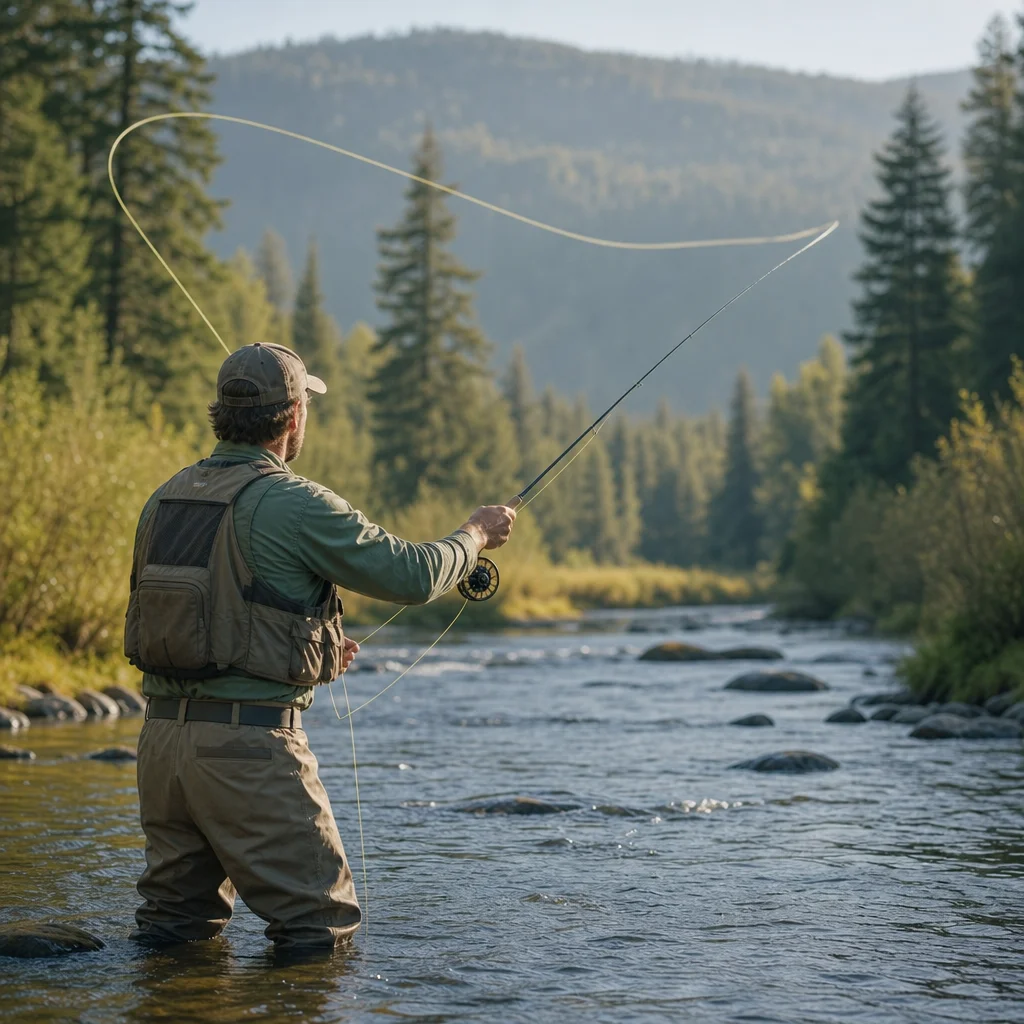
Crowded banks turn an ordinary back cast into a shared-space problem. The cast that feels harmless in an open meadow can send a fly toward another angler, a child, a dog, or a low branch when several people are working the same stretch of water.
You don’t need to stop fishing whenever another person is nearby. You do need a repeatable way to identify your casting space, communicate your intentions, and choose a cast that keeps the fly under control.
Start with a complete safety check
Before you make your first cast, pause and look around. Beginners often check only the water in front of them, but the back cast is where most crowded-bank problems begin.
Check these areas:
- Directly behind your casting shoulder
- Above and slightly behind you for branches, bridges, and overhead lines
- Along both sides of your casting arc
- The water and bank where your line may land during a false cast
- Nearby anglers who may move into your casting lane
- Paths, boat launches, and access points where people may appear unexpectedly
A quick glance isn’t always enough. If trees block your view, step to a position where you can see the full area behind you, or use a cast that doesn’t require a long back cast. A fly that you can’t see clearly is still a fly with a hook in it.
Check the local fishing setup: Before fishing a popular public area, confirm the current site rules, access restrictions, and any local requirements that affect casting space or tackle. Park rules, seasonal closures, and special-regulation waters can differ even within the same state.
Think in terms of a casting lane
Your casting lane is the area your rod tip, line, leader, and fly occupy as you cast. It isn’t limited to the narrow strip of water directly in front of you.
For a standard overhead cast, picture a long oval extending from your rod hand behind you and out over the water in front. The fly travels through that oval, while the line may spread wider than you expect. On a crowded bank, another person can enter the oval without realizing it.
Before casting, identify three zones:
- The forward zone: where the fly and leader will land.
- The back zone: where the fly and line will travel during the back cast.
- The side zones: where a wide loop, an angled cast, or a sudden change in direction may send the fly.
If any of these zones contains a person, pet, obstruction, or blind spot, change your position or casting method. This simple habit is more useful than trying to make a crowded situation fit a standard cast.
Position yourself before changing your cast
A small step can solve a problem that a complicated cast only disguises. If possible, stand with the open side of your body toward the water and keep the rod hand on the side with the clearest back-cast space.
For example, if trees are close behind your right shoulder but the left side is open, changing your stance may give the line more room. You may also be able to move a few feet along the bank and find a cleaner lane without disturbing another angler.
Avoid stepping backward until you’ve checked the ground. Crowded banks often include rocks, roots, drop-offs, and loose gravel. Look behind you before moving, and keep your footing stable before lifting the rod.
When you can’t create a safe lane, don’t force an overhead cast. The location is telling you to use a different angle or technique.
Communicate before you cast
Nearby anglers may be watching their own drift and may not notice your fly. A short, calm statement is usually enough:
- “I’m going to make a short cast to this pocket.”
- “I need a little room behind me for one cast.”
- “Could you let me know if anyone comes up behind me?”
- “I’ll wait until you’re clear.”
Communication works best before the line is moving. Don’t assume that someone who is standing still has seen you, and don’t assume that a person approaching from behind understands how far your line travels.
If another angler is actively fishing through a run, wait for a natural pause rather than casting across their position. On a busy river, patience is part of tackle management. It prevents tangled lines, damaged flies, and the conversation nobody wanted.
Reduce the amount of false casting
False casts are useful for drying a fly and changing line direction, but they also multiply the number of times your fly passes through a crowded space. If the fly is dry enough and your line is already at a workable distance, make the next cast a delivery cast.
You can also shorten the casting stroke. Keep less line outside the rod tip, make a compact loop, and place the fly in a target that doesn’t require maximum distance. Short casts are easier to see, easier to stop, and less likely to wander into someone else’s space.
A short cast isn’t a failure. On crowded water, it’s often the most controlled option available.
Use a side cast when the side lane is clear
A side cast lowers the line’s path and changes where the back cast travels. Instead of sending the line high behind you, you sweep the rod more horizontally to use open space beside your body.
This can help when branches hang above you or when a high back cast would pass near another person. It only helps if the side lane is actually clear, however. A horizontal cast can send the fly toward the angler beside you, so look along the entire side path before using it.
Keep the loop compact. A wide side cast is harder to control, especially with a long leader or weighted fly. If the space is narrow, shorten the line and slow down rather than trying to overpower the cast.
Choose roll casts when the back cast is unsafe
A roll cast is often the simplest solution when there isn’t enough room behind you. It uses the line already on or near the water to form an anchor, then sends the line forward without a conventional back cast.
For a basic roll cast:
- Bring the rod tip back until the line forms a smooth, shallow D-loop behind the rod.
- Make sure the line has an anchor point on the water.
- Sweep the rod forward smoothly toward the target.
- Stop the rod firmly and allow the line to unroll.
The anchor is important. If too little line touches the water, the cast may collapse. If too much line is stuck, you may need more space or a cleaner pickup before trying again.
Roll casts are particularly useful beside tall grass, brush, steep banks, and other anglers. They have limits: they generally won’t match the range or flexibility of an overhead cast, and they may be awkward when the line is heavily tangled or the fly is snagged. Those limits are preferable to putting a hook through someone’s hat.
Try a water-loaded or compact pickup
When you need to reposition a short amount of line, a water-loaded cast can keep the line close to the surface and avoid a large back cast. The basic idea is to use the water’s surface tension to load the rod, then direct the line toward the target.
This approach takes practice, but you can begin with modest distances. Keep the rod tip low, avoid ripping the line violently from the water, and use a smooth forward stroke. If the line splashes down in a crowded lane, stop and reset rather than repeating the same uncontrolled movement.
For many beginners, the practical progression is simple: use a shorter overhead cast first, then learn the roll cast for situations where even a short back cast isn’t safe.
Protect people when a cast goes wrong
Even careful anglers occasionally lose control of a loop. If the fly snags, the line crosses someone’s position, or a person enters the casting lane, stop the cast immediately if you can do so safely.
Don’t continue pulling hard on a snag near another person. Lower the rod, warn anyone nearby, and move to a safe position before trying to free the fly. If a fly lands on someone or their clothing, ask them to stay still while you handle the situation. Avoid yanking the line from a distance.
When fishing with barbed hooks or weighted patterns, extra caution is sensible. Eye protection is also worth considering for everyone near active casting, especially on tight banks where people can’t easily move away.
A crowded-water casting checklist
Before each new position, ask yourself:
- Can I see the complete back-cast area?
- Is the side space clear if my loop widens?
- Will my fly or leader pass near another person?
- Can I move a few feet to improve the angle?
- Do I really need a false cast?
- Would a shorter cast or roll cast solve the problem?
- Have I told nearby anglers what I’m about to do?
If the answer to any safety question is no, wait, reposition, or change casts. The fish won't be impressed by a hurried hook flying past someone’s ear.
Practical next steps
At your next uncrowded practice session, work on three skills: a compact short cast, a side cast to both sides, and a basic roll cast. Practice stopping the rod smoothly and watching where the loop travels.
Then use the same sequence on public water: check behind you, identify the full casting lane, communicate, and select the cast that needs the least space. Safe back casting isn’t about eliminating every challenge. It’s about recognizing the available space and making your technique fit it.