The Pickup-and-Laydown Cast for Tight Trout Runs
When branches crowd the bank and trout are holding close, a full back cast can be more trouble than help. I’ll walk you through the pickup-and-laydown cast, including how to recover from poor timing, heavy flies, and tangled line in tight water.
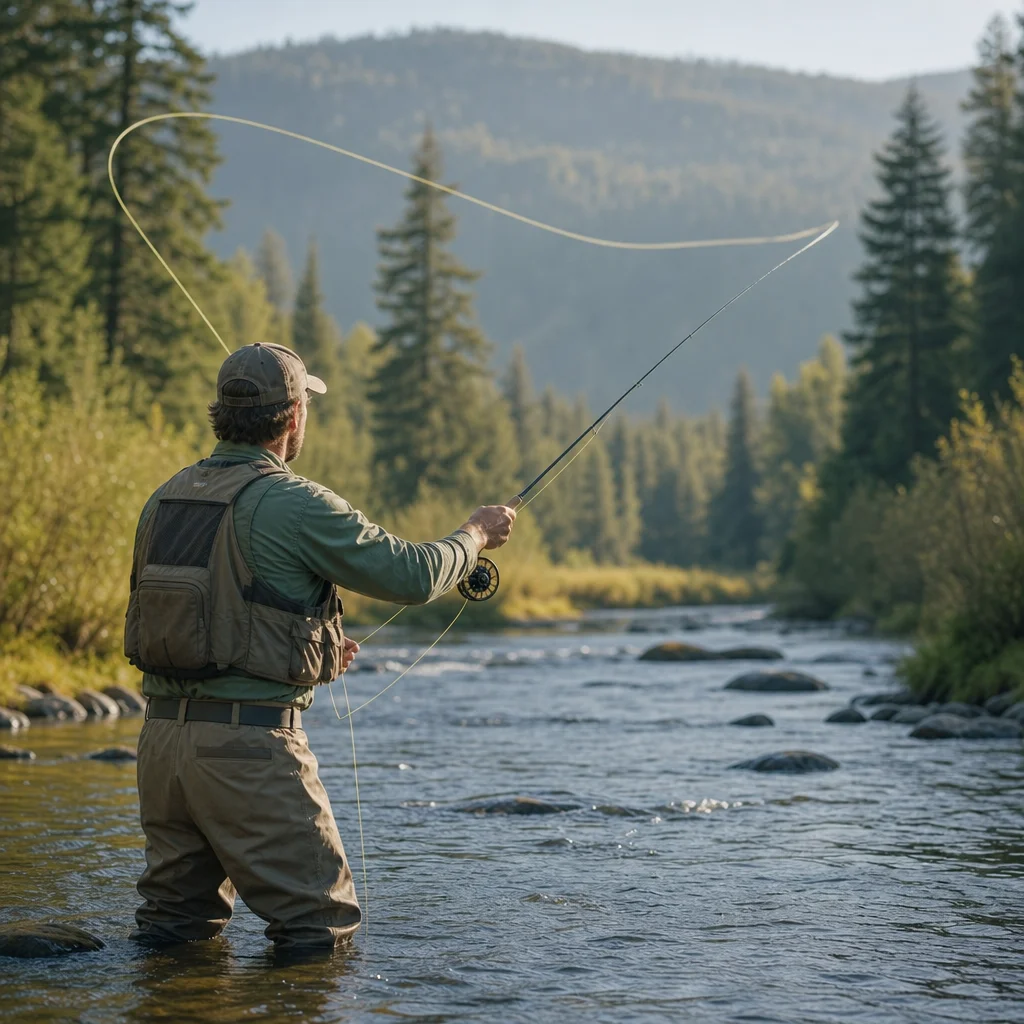
Why this cast works in tight water
A pickup-and-laydown cast lets you move the fly from the water into a forward cast without making a conventional back cast. You lift the line, load the rod briefly, and place the fly back down in the target area.
That makes it useful on small streams and wooded rivers where branches, tall grass, steep banks, or a person standing behind you leave little room. It also reduces false casting, which means less line moving overhead and less disturbance around cautious trout.
The cast isn't a shortcut for every situation. It works best at short to moderate distances when some fly line is already on the water. If you need substantially more distance, a roll cast, side cast, or change of position may be more effective.
Set up before you cast
The cleanest pickup-and-laydown cast begins before the rod moves. Take a moment to arrange the situation in your favor.
Choose a casting lane
Look at the space between you and the target, not just the trout. Identify branches, exposed roots, tall weeds, and any high bank that could catch the leader or fly.
If the overhead space is restricted, keep the rod tip low and use a sidearm or off-shoulder motion. You don't need a perfectly upright cast. You do need a clear path for the fly and leader.
A small change in your position can make the cast much easier. Step to the side, kneel if the bank allows it, or move a little downstream so the line has a cleaner route. Avoid trampling the shallow margin or scraping rocks with your boots; movement near a small stream can carry farther than expected.
Check the line and fly
Have enough fly line outside the rod tip to form a short casting loop. For many tight-run situations, this may be only the leader and a few feet of fly line. The exact amount depends on your rod, fly, current, and target distance.
Strip excess line from the reel before starting. If the line is lying in coils around your feet or caught on a branch, the cast won't fix the problem. Keep the line organized in loose coils in your line hand or on a clear patch of water.
Check that the fly isn't buried in weeds, pinned against a rock, or carrying too much water. A soaked or bulky fly needs more force to move, and extra force is usually what causes a tight-water cast to become noisy.
The pickup-and-laydown sequence
Use a smooth, compact motion rather than trying to create a large loop. The basic sequence is simple:
- Point the rod toward the fly. Keep the rod tip low and the line reasonably straight on the water.
- Lift the line with the rod. Raise the rod smoothly, using your forearm and a little wrist rather than snatching upward.
- Pause briefly as the line lifts. Let the rod bend under the weight of the moving line. This is the loading part of the cast.
- Drive the rod forward toward the target. Accelerate smoothly, then stop the rod high enough for the line to unroll over the water.
- Lower the rod as the line settles. Follow the fly down with the rod tip and allow the leader to land softly.
- Manage slack immediately. As the fly drifts, keep only enough slack for a natural presentation and maintain contact with the line.
The lift and forward stroke are one connected motion. You aren't trying to lift the entire line high into the air, hold it there, and then throw it. The line should come off the water, load the rod, and travel forward with minimal delay.
Start with a short target
For practice, place a yarn marker or an unhooked fly near a target at a short distance. Begin with a few feet of line outside the rod tip. Concentrate on making the fly land quietly rather than reaching far.
As the motion becomes familiar, add a little line. If the rod fails to load, you may not have enough line outside the tip, or you may be lifting too quickly. If the loop opens too widely, reduce the size of the motion and make the forward stroke more deliberate.
Timing the lift and forward stroke
Timing is the main challenge. Lift too early or too sharply, and the fly may jump, splash, or snag behind you. Wait too long, and the line may settle back onto the water before you send it forward.
A useful rhythm is: lift, feel, go.
The “feel” is the moment you sense the line’s weight bending the rod. It may be subtle with a short length of line, but it gives you the information needed to start the forward stroke. You don't need a dramatic pause. You need enough time for the rod to load.
Keep the casting stroke compact. A large arm movement encourages the rod tip to travel in a wide path, producing a broad loop and more opportunities to contact branches. Think of moving the rod from a low starting position to a controlled forward stop.
Your line hand matters, too. Release or feed line smoothly as the cast goes forward. If you hold the line tightly against the handle, the line can't travel. If you drop it too early, the line may fall short or pile up.
Making the presentation quiet
A good pickup-and-laydown cast should place the fly and leader on the water before the heavier fly line whenever possible. The leader should straighten toward the target, and the fly should arrive without a hard slap.
Several small adjustments help:
- Use less force. A short cast needs less power than most beginners expect.
- Stop the rod cleanly. A soft, indefinite stop makes the line collapse.
- Aim slightly above the target. This gives the leader room to unroll before the fly settles.
- Lower the rod tip after the landing. This reduces a sudden pull on the fly and helps the drift begin naturally.
- Match the cast to the current. Place the fly where it can enter the intended lane, not necessarily directly over the trout.
If your fly lands hard, don't immediately cast again. Let the water settle and reassess. A trout that refuses a poor presentation may still respond to the next careful drift, but repeated noisy casts can turn a small problem into a spooked fish.
Troubleshooting common failures
The fly splashes down
You may be using too much force, stopping the rod too abruptly, or allowing the fly to lead the line into the water. Shorten the stroke and reduce power. Try to let the leader extend before the fly touches down.
A waterlogged fly can also create a heavy, abrupt landing. Lift it cleanly and allow a moment for excess water to shed before making the forward stroke.
The line falls in a heap
A collapsed cast usually comes from poor rod-tip movement, insufficient loading, or a weak forward stop. Make sure the line is moving before you cast forward. Then accelerate smoothly and stop the rod with purpose.
If there is very little line outside the tip, extend a small amount of line before trying again. The rod needs some weight to bend. Don't compensate by making a larger, harder motion.
The fly snags behind you
The line may not be fully free from the water, or your lift may be too vertical. Check for submerged grass, sticks, and rocks. Then use a smoother lift and a sidearm path if overhead clearance is limited.
You can also rotate your body so the rod points into the open space beside you. The pickup-and-laydown cast doesn't require the line to travel directly over your shoulder.
The cast falls short
First check whether you are trying to cast more line than the rod can comfortably load. With a short line, a controlled stroke is more effective than extra arm speed.
Add line in small amounts, keeping the motion compact. If the target is still beyond comfortable pickup-and-laydown range, change tactics rather than forcing the cast.
The fly lands correctly but the drift is poor
The cast may be fine while the line management isn't. After the fly lands, lower the rod tip and remove excess slack without dragging the fly. Keep an eye on conflicting currents that can pull the leader in different directions.
On narrow streams, a short reach with the rod or a careful mend may improve the drift. Make the adjustment early and minimally; large movements often disturb the fly.
When to use another cast
The pickup-and-laydown cast is a useful recovery tool, but it has limits. Choose a roll cast when you need to move line without taking it behind you and have enough water tension to form an anchor. A side cast can help when branches block the overhead path. A change of position may be best when the target is too far away or the current is too complicated.
If the fly is heavily weighted, attached to a bulky indicator, or carrying several pieces of split shot, the pickup can require more control. Lift smoothly and keep the rod away from your body and other people. A heavier setup can also make a roll cast or sidearm cast more practical than a quick pickup-and-laydown motion.
Check your casting lane: Before lifting the line, confirm that the fly, leader, and rod tip have a clear path. In wooded water, a few seconds spent checking branches and footing can prevent a snag, a broken leader, or an awkward recovery.
A simple practice routine
Practice the cast away from fish before relying on it in a tight run. Use yarn or a barbless, unhooked practice fly and mark targets at several short distances.
Start with the rod tip low and a small amount of line on the ground or water. Make ten quiet pickup-and-laydown casts, focusing on a soft landing. Then repeat while casting to the side. Finally, practice lifting line that has stopped moving, as this resembles the real situation after a drift ends.
Evaluate three things after each cast:
- Did the line lift without a splash?
- Did the leader straighten toward the target?
- Could you begin the drift without pulling the fly?
If one answer is no, fix that part before adding distance. The goal isn't a dramatic cast. It's a repeatable way to put a fly into a tight trout run without giving the water unnecessary reasons to complain.
Practical next steps
Before your next small-stream outing, practice the sequence at short range: point, lift, feel, go, and lower the rod. Start with a light fly and a clear lane, then adapt the motion for sidearm clearance and longer targets.
When a cast goes wrong, recover calmly. Check the fly, reset the line, and decide whether a smaller pickup-and-laydown cast, a different casting angle, or a change of position will give you the quietest presentation.