How to Use a Single Haul Without Losing Accuracy
I’ll break down the single haul step by step, showing how to add line speed without overpowering short trout casts. You’ll learn where accuracy usually disappears, how to practice the timing, and when a simple pickup-and-laydown cast is the better choice.
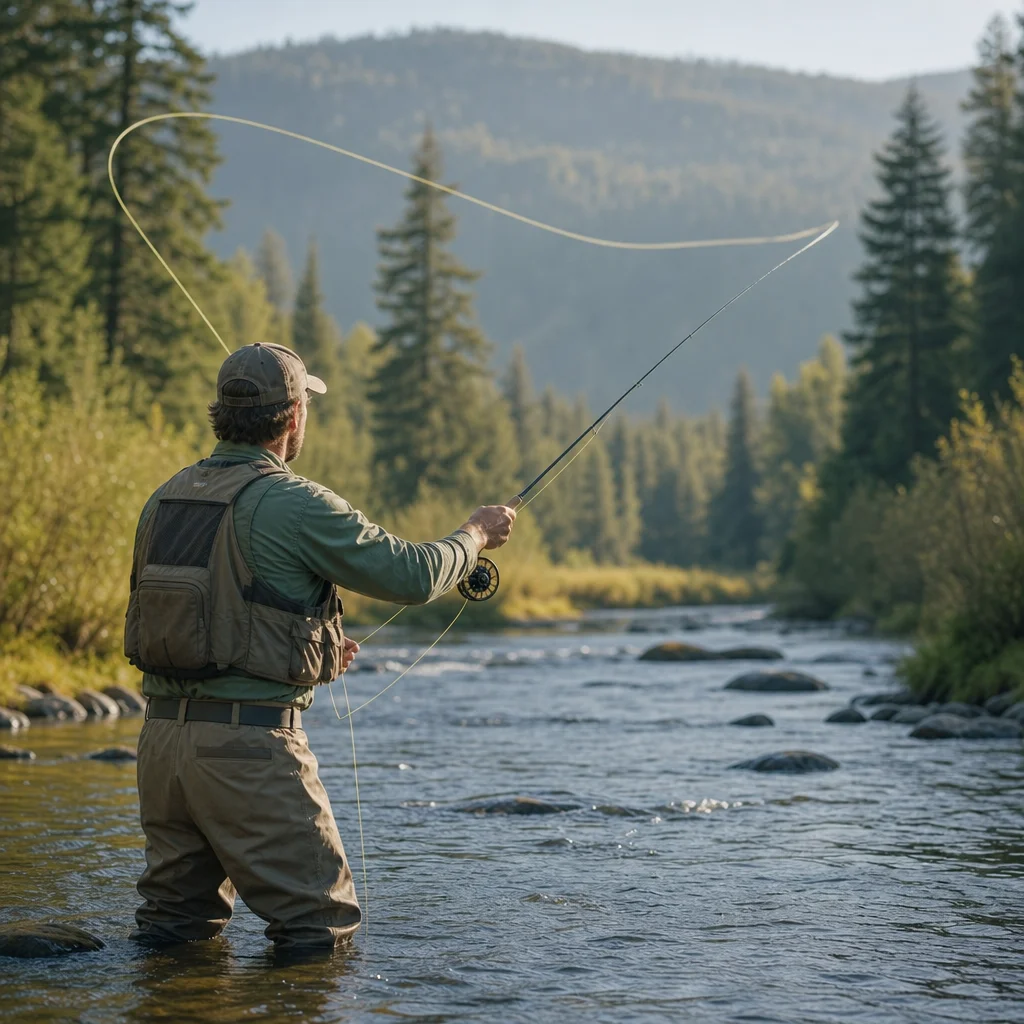
The single haul can make a trout cast feel faster and more controlled, but only if the added hand movement supports the rod instead of competing with it. The common beginner mistake is to pull hard with the line hand, speed up the cast, and then wonder why the fly lands in a pile or misses the target entirely.
A single haul is a short, sharp pull on the fly line with your non-casting hand during one part of the casting stroke. That pull increases line speed by briefly adding tension to the rod and line. Used gently, it can tighten a loop, help you cast into a modest breeze, or lift extra line from the water. Used too aggressively, it can destroy accuracy.
What the single haul is supposed to do
For a right-handed caster, your right hand holds the rod and your left hand controls the line. During a single haul, the left hand moves quickly downward or slightly toward your body while the rod hand accelerates through the cast. The line hand then returns to its starting position so you’re ready for the next stroke.
The haul isn't a separate cast. It’s a brief addition to the rod stroke.
Think of it as briefly tightening the connection between your rod, line, and fly. The rod still supplies the primary casting motion. Your line hand simply helps the rod load more efficiently and sends the line forward with greater speed.
For short trout casts, you usually need only a small haul. A movement of a few inches can be enough. If your line hand travels from your chest to your hip, you’re probably adding far more power than the cast requires.
Learn the movement without a fly
Before practicing on the water, remove the fly or use a short piece of yarn. This lets you focus on timing without worrying about a hook, a snag, or a missed fish.
Start with the line-hand position
Hold the rod in your casting hand and pinch the fly line lightly against the grip with the fingers of that hand. Let the line-hand fingers hold the section of line below the rod.
Begin with both hands fairly close together. You don’t need a dramatic starting position. For most short casts, a comfortable position near your waist or lower chest is sufficient.
Keep the line hand relaxed. A tight grip makes it harder to feel the line and encourages a large, jerky movement.
Add a short pull during the forward stroke
Make a normal false cast with the rod hand. As the rod moves forward toward the target, pull the line sharply with the other hand for a short distance.
The pull and the rod acceleration should happen together. If you pull before the rod moves, you’ll create slack or disturb the back cast. If you pull after the rod has already stopped, much of the useful timing has passed.
After the pull, return the line hand to its starting position. This reset matters. Without it, you’ll have no line available for another haul and may accidentally strip line through the guides.
Practice the sequence slowly:
- Pause with the line hand in front of you.
- Begin the forward cast with the rod hand.
- Pull the line hand a few inches as the rod accelerates.
- Stop the rod cleanly.
- Return the line hand to its starting position.
At first, exaggerate the timing slightly without increasing the force. Your goal is to make the two hands work together, not to throw line as far as possible.
Keep the haul small for short trout casts
Accuracy is usually lost when the haul becomes too long or too forceful. Short casts to rising trout often require only a modest amount of line speed. The fly needs to land softly near the fish, not arrive like it has an appointment to keep.
Use a smaller haul when:
- You’re casting less than roughly 30 feet.
- The fly is light and the leader is turning over easily.
- You’re presenting a dry fly or small nymph on calm water.
- The target is surrounded by branches, grass, or other obstructions.
- The trout is already feeding comfortably and doesn’t require extra reach.
Use a slightly firmer haul when you need to lift line from the water, tighten a loop, or make a short cast into a noticeable breeze. Even then, increase the speed gradually. More power isn’t automatically more control.
A useful rule is to change one variable at a time. If you need more distance, first add a little haul while keeping the casting stroke steady. Don’t lengthen the stroke, speed up the arm, and pull harder all at once.
The timing that preserves accuracy
The single haul works best when the rod is already loading. The rod hand accelerates smoothly, and the line hand adds tension during that acceleration. You’re looking for a connected feeling rather than two separate actions.
Watch the line loop as you practice. A well-timed haul can produce a narrower, more energetic loop. A poorly timed haul often produces one of three results:
- The line falls behind or collapses because the haul began too early.
- The loop opens or kicks sideways because the hands moved in different directions.
- The leader piles up because the haul was too strong for the amount of line in the air.
Your stop still matters as much as the haul. After the rod accelerates, stop it firmly and allow the line to straighten. A haul can increase line speed, but it can’t compensate for a soft or drifting rod stop.
Common mistakes and how to prevent them
Pulling too hard
A hard pull often feels productive because the line moves quickly. On a short cast, though, it can make the loop too narrow, cause the fly to snap down, or pull the rod tip off its intended path.
Start with a gentle haul and increase it only if the cast needs more speed. If the fly lands noisily or the leader straightens with a sharp kick, reduce the force before changing anything else.
Hauling at the wrong time
Many anglers pull the line hand as soon as they begin moving the rod. This can make the cast feel rushed and may prevent the rod from loading smoothly.
Wait for the rod to begin accelerating. The haul should be a quick addition to the forward stroke, not an instruction for the rod to start moving.
Forgetting to reset the line hand
After the haul, the line hand needs to move back into position. If it stays low or close to the body, you may have no room for a second haul. You may also create inconsistent line lengths between casts.
Make the reset part of the movement from the beginning. The line hand pulls, then returns. It shouldn’t remain parked at the end of the pull.
Using the haul to fix poor rod control
A single haul won’t correct a wide casting arc, excessive wrist movement, or an inconsistent stop. If the unhauled cast already lands unpredictably, adding the line hand usually makes the problem harder to diagnose.
Practice a reliable basic cast first. The haul should make a sound cast more efficient, not serve as a substitute for one.
Watching the line hand instead of the target
It’s tempting to stare at your hands while learning. That can be useful for a few practice movements, but trout fishing requires you to manage the target, the water, and nearby hazards.
Once the movement begins to feel familiar, look toward the intended landing point. Your hands will become more coordinated through repetition, while your eyes stay available for the important information in front of you.
A simple accuracy drill
Place three targets on open grass or water at different angles. Use a short amount of fly line and begin with a normal cast to the nearest target.
Next, make the same cast with a very small single haul. Compare the landing position and the sound of the fly. If the hauled cast is less accurate or noticeably louder, reduce the haul rather than trying to compensate with the rod.
Then repeat the drill with a target slightly farther away. Add only enough line or power to reach it. The point is to learn how little haul you can use while maintaining the same landing control.
You can also practice alternating casts:
- One cast without a haul.
- One cast with a small haul.
- One cast without a haul.
- One cast with a small haul.
This comparison helps you notice whether the haul is improving the cast or simply making it faster. Faster is useful only when the fly still lands where and how you intended.
When not to use a single haul
You don’t need to haul every cast. On a close, delicate presentation, a basic cast may be quieter and easier to control. If you’re casting beneath low branches or around a tight bank-side opening, extra line speed can make the fly travel too aggressively or increase the chance of a snag.
A haul may also be unnecessary when the rod is already loading well with the amount of line you have in the air. Adding movement just because you’ve learned it can introduce a problem that wasn’t there before.
Use the technique when it solves a specific problem: insufficient line speed, a little wind, a need to lift line, or a requirement for a tighter loop. Otherwise, keep the cast simple.
Practical next steps
Practice the single haul in this order:
- Learn the short line-hand pull without a fly.
- Match it to the rod’s acceleration, not the start of the cast.
- Keep the movement to a few inches for short trout presentations.
- Reset the line hand after every haul.
- Judge success by accuracy and a quiet turnover, not distance.
- Add the haul only when it gives you a clear advantage.
Once the timing feels natural, use it sparingly on the water. The best single haul is often the one that adds just enough speed to improve the cast while leaving the trout unaware that you did anything special.