The Reach Cast for Trout Streams: When and How to Use It
A reach cast isn't a stronger version of a regular cast; it is a way to place line safely and deliberately before your fly lands. I’ll show you when it helps, how to practice it, and which timing mistakes quietly ruin the drift.
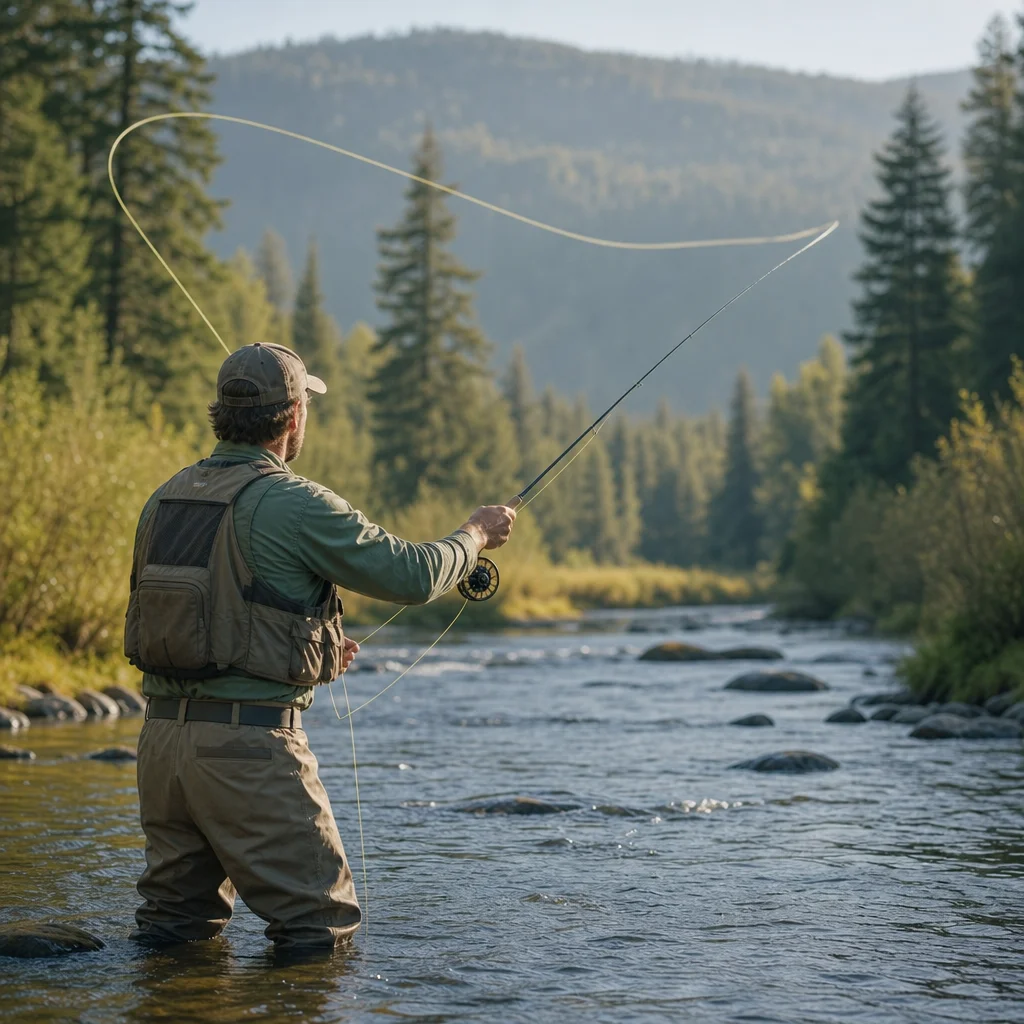
When a trout stream has conflicting currents, a straight cast can put your fly in the right place while leaving your line in the wrong water. The reach cast solves that problem by moving the rod and line sideways during the forward cast, creating useful slack before the fly lands.
That slack can delay drag, improve your first drift, and help you keep more line away from awkward currents. It can also become a tangled mess if you add too much movement or make the reach at the wrong time. The goal isn’t to throw the line farther. It’s to place the line where it will behave better.
What the reach cast does
In a standard overhead cast, the line usually straightens in front of you, and the fly lands shortly afterward. That presentation works well when the current between you and the fly is fairly uniform.
A reach cast changes the line’s position before it touches down. As the line travels forward, you extend the rod to one side—upstream, downstream, or across your body—so the line lands in a curve or with slack between the rod tip and fly.
That extra slack gives the fly more time to drift naturally before the current pulls the line tight. It doesn’t eliminate drag forever, and it doesn’t replace mending. It simply gives you a better starting position.
The reach is usually made during the forward stroke, after the back cast has loaded the rod. You’re redirecting the line as it unrolls, not waving the rod around after the fly has already landed.
When to use a reach cast
When currents move at different speeds
Suppose your fly is landing in a slower lane while your line crosses a faster one. The faster current will pull the line downstream, which can drag the fly unnaturally toward the bank or across the stream.
A reach cast can place the line farther upstream of the fly, creating slack that offsets that faster current. The stronger the conflicting current, the more deliberate your reach may need to be—but start with a modest adjustment.
When you’re casting across the current
Cross-stream presentations often create a difficult angle between your position, the fly, and the current. A reach can put the line on the upstream side of the fly while allowing the fly to land in the feeding lane.
This is especially useful when you can’t easily reposition your feet without getting closer to the fish or disturbing the water.
When you want a longer first drift
A reach cast can help you begin a drift with slack already in the line. That’s valuable when the likely holding water is close to the far bank, behind a seam, or beyond a pocket that would quickly grab a straight line.
The cast won’t make an unlimited drift possible. It only buys time. You’ll still need to watch the line and mend when the existing slack begins to disappear.
When a backcast is safer or more practical
The reach cast is also useful when you can make a normal backcast but want to keep the forward presentation away from brush, overhanging branches, or a steep bank. It gives you some control over where the line settles without requiring a large change in casting direction.
Always look behind and beside you before casting. A reach cast changes the line’s path, but it doesn’t make hooks, trees, or nearby anglers less real.
Check the water before reaching: Before making the cast, identify your footing, the direction of the current, and the space your rod and line will occupy. If reaching forces you to lean, step into unstable water, or lose awareness of obstacles, move to a safer position or use a shorter cast.
How to make a basic reach cast
The following sequence assumes you’re making a standard overhead cast with enough line outside the rod tip to load the rod comfortably.
1. Read the currents first
Pick a target and identify the current between you and that target. Look for fast water beside slow water, a visible seam, swirling water near an eddy, or a current that angles across your intended drift.
Decide where you want the line to land—not just where you want the fly to land. If the fly should land near the far edge of a seam, you may want the line to settle upstream of that seam.
This decision should happen before the cast. A reach made as a last-second reaction often becomes a rushed, exaggerated movement.
2. Make a controlled back cast
Lift the line cleanly from the water and make a back cast with enough pause for the line to straighten behind you. The rod should load from the weight of the line, not from a hard, hurried arm motion.
Keep the casting stroke compact. A reach cast still depends on a sound basic cast; it doesn’t correct a collapsing loop, poor timing, or too much false casting.
3. Start the forward cast normally
Begin the forward stroke toward your target. The rod tip should travel forward and slightly upward in a controlled path, allowing the line to form a loop.
At this stage, don’t push the rod sideways too early. If you move laterally before the forward loop has formed, the cast may lose energy or open in an unpredictable direction.
4. Move the rod to the desired side
As the forward loop travels toward the target, extend the rod to the side where you want the line to land. For an upstream reach, move the rod upstream. For a downstream reach, move it downstream. The exact movement depends on your casting side, bank position, and target.
Think of the rod tip drawing a smooth path rather than making a sharp jab. The rod should finish away from the original forward target line, while the fly continues toward the target.
Your arm may extend, your shoulder may rotate slightly, and your wrist may help guide the rod. Keep the motion relaxed. The reach should redirect the line, not launch the rod into a dramatic side sweep.
5. Stop and let the line settle
Once the line is traveling forward, stop the rod in the new position and allow the leader and fly to turn over. The line should land with a curve, a slight upstream bow, or controlled slack between the rod tip and fly.
Don’t immediately pull the rod back toward the target. That can remove the slack you just created. Lower the rod as needed and follow the drift with the tip.
Upstream, downstream, and across-body reaches
Upstream reach
An upstream reach places the line on the upstream side of the fly. It’s often the first version beginners practice because it can delay drag when the fly is drifting downstream through a seam.
The amount of reach depends on the current. In moderate conflicting currents, a small upstream adjustment may be enough. Too much can leave excessive slack, make the line difficult to control, or prevent you from detecting a subtle take.
Downstream reach
A downstream reach can be useful when the line would otherwise fall into a slower current than the fly or when you need to control where slack develops. It’s less commonly the first reach beginners learn because the desired result can be less intuitive.
Watch the fly and line together. If the fly is moving naturally but the line is piling up too far downstream, reduce the reach or change your casting angle.
Across-body reach
When casting from your dominant side, you can usually move the rod toward that side with relatively little adjustment. Reaching across your body requires more coordination and may be less comfortable, especially with bulky clothing or limited space.
Use a smaller motion at first. If the across-body reach makes you twist, lean, or lose your balance, change your position instead. A slightly different stance is safer and often easier than forcing a complicated cast.
Common timing mistakes
Reaching before the forward loop forms
If you move the rod sideways too early, the line may lose speed or roll out poorly. The fly can land short, the leader can collapse, or the line can pile up in an unintended place.
Practice beginning the forward cast toward the target, then adding the side movement as the loop travels forward. The reach is part of the forward presentation, not a separate cast made after it.
Reaching after the fly lands
Once the fly is already on the water, moving the rod sideways usually creates line movement rather than useful pre-landing slack. It may pull the fly, disturb the drift, or produce a wake that alerts fish.
If you’re trying to repair the drift after the fly lands, use a careful mend instead. Plan the reach during the cast and reserve mending for adjustments that become necessary afterward.
Making the reach too large
A dramatic reach can produce a large pile of line that’s difficult to track and nearly impossible to lift cleanly for the next cast. More slack isn’t automatically better slack.
Start with a small lateral movement and observe the first few feet of drift. Add only enough reach to keep the line from being immediately captured by the wrong current.
Stopping the rod abruptly to the side
A hard sideways stop can create a wide, unstable loop and send the line toward trees, rocks, or another angler. It can also make the leader turn over harshly.
Use a smooth acceleration and a controlled stop. If you need more reach, improve the timing and rod path before adding force.
Watching only the fly
The fly is important, but the line tells you whether the reach worked. Watch where the line rests relative to the current seam and how quickly it straightens toward the fly.
A good reach may leave the fly moving naturally while the line forms a manageable curve. If you can’t see the line, shorten the cast, adjust your angle, or use a brighter indicator of line position such as a visible leader section.
A simple practice routine
Start on grass or calm water with a yarn practice fly if appropriate for your setting. Use a short, manageable amount of line and choose a target directly in front of you.
- Make a normal back cast and controlled forward cast.
- On the next cast, move the rod slightly upstream during the forward stroke.
- Watch where the line lands and how much slack remains.
- Repeat with a smaller reach, then a slightly larger one.
- Practice both sides without forcing an uncomfortable body position.
- Move to gentle current and repeat the exercise with a clear seam as your target.
Your first goal is consistency, not distance. You should be able to predict where the line will land and how much slack it will contain. Once that feels repeatable, add a fly and leader and practice lifting the line without disturbing the target water.
Reach cast or mend?
Use a reach cast when you can anticipate the current problem before the fly lands. Use a mend when the line is already on the water and needs a correction.
You can also combine them. A small upstream reach may delay drag, followed by a small mend if the current still begins to pull the line tight. Combining both requires restraint: too much pre-cast slack and too large a mend can leave you disconnected from the fly and slow your hook set.
If the current is so complicated that you need repeated, aggressive mends, consider changing your position, shortening the cast, or choosing a different angle. The best cast is often the one that makes the water easier to manage.
Practical next steps
Practice the reach cast in this order:
- Learn a controlled overhead cast first.
- Identify the current that would cause drag.
- Begin the forward cast normally.
- Move the rod smoothly toward the side that creates useful slack.
- Stop and let the line settle before lowering the rod.
- Watch both the fly and the line.
- Use the smallest reach that improves the drift.
On the stream, prioritize stable footing and clear surroundings over a perfect presentation. A reach cast is valuable because it lets you solve a current problem before it reaches the fly—but it should make your fishing more controlled, not more precarious.