How to Keep a Fly Line Off the Water During a Roll Cast
When a roll cast drags, piles up, or never lifts cleanly, I’ll help you diagnose the anchor, D-loop, rod load, and forward-stroke timing so you can recover the cast without adding unnecessary force.
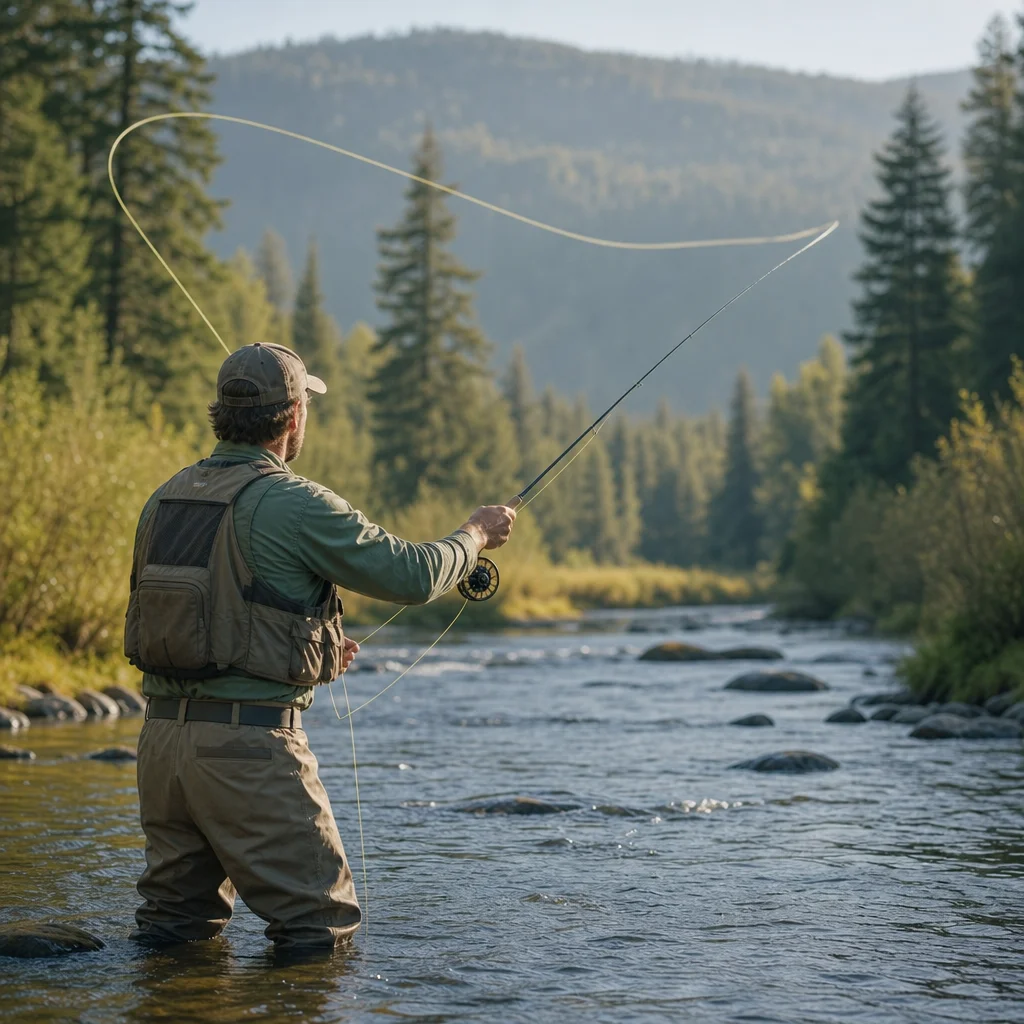
A roll cast needs a small part of the fly line to touch the water. That contact creates the anchor that lets the rod load and sends the line forward. The problem is that too much line on the water acts like an anchor of the wrong sort: it sticks, stretches the cast, and encourages you to overpower the rod.
If your fly line keeps lying flat instead of lifting into a controlled forward loop, focus on four connected pieces: anchor placement, D-loop shape, rod loading, and timing. Fixing them in that order usually works better than simply casting harder.
What “keeping the line off the water” really means
A roll cast isn’t an aerial cast. The line needs some water contact, usually near the rod tip, to provide resistance. Your goal is to keep the working portion of the line off the water while leaving a compact anchor in place.
A useful anchor is:
- Small enough that it doesn’t pin down the whole line
- In front of or slightly to the side of your casting position
- Close enough to the rod tip that the D-loop can form behind you
- Stable enough to remain in place until the forward stroke begins
Think of the anchor as a punctuation mark, not a full stop. It should briefly hold the line while the rod loads, then release as the forward loop rolls out.
Start by checking the anchor
Most failed roll casts begin before the forward stroke. If the anchor is too far away, too large, or badly positioned, the rest of the cast has little chance.
The anchor is too far from you
When too much line lands well in front of your rod tip, the line sticks across a broad area. You then have to pull against water tension before the rod can do useful work. The result is often a slow, collapsing cast.
To recover, lift the rod smoothly and move the line into position with a compact setup. Avoid making a large overhead motion that dumps more line onto the water. The anchor should finish close to the rod tip, not several feet away.
The anchor is too large
A large, wet pile of line may look like an anchor, but it behaves more like a brake. This often happens when you let the rod tip travel too far behind you during the setup, or when you make a wide sweep instead of a controlled lift.
Use less line outside the rod tip while you practice. A shorter line makes it easier to see whether the anchor is a small, tidy contact point or a heap of line. Add length only after the basic shape is consistent.
The anchor is in the wrong direction
The anchor should be positioned where the forward cast can unroll without crossing your body or nearby obstacles. If it lands directly behind you, you may pull the line across your shoulder. If it lands too far to the side, the D-loop may form at an awkward angle and lose energy.
Adjust the setup so the anchor sits slightly to your casting side. The exact position depends on your stance, current, and available space, but the principle is constant: the line should have a clear path from the anchor to the forward target.
Build a D-loop with enough room
The D-loop is the portion of line and leader that forms behind the rod as you prepare to cast. It supplies the moving mass that loads the rod. A narrow or incomplete D-loop gives the rod very little to work with.
A useful D-loop has three characteristics:
- It forms behind the rod rather than beside it
- It has enough depth to carry the line’s weight
- It remains clear of the water except at the anchor
Lift before you sweep
If you sweep the rod backward too early, the line may drag across the surface instead of rising behind you. Start with a smooth lift. Once the line has separated from the water, continue into the backward sweep that forms the D-loop.
The lift and sweep should feel connected, not like two separate jerks. A deliberate pause can help you sense the line straighten behind the rod, but don’t hold the rod motionless so long that the D-loop collapses.
Keep the rod path compact
A very wide sweep often creates a broad, low D-loop. That loop touches the water in multiple places and loses energy. Keep the setup movement compact, with the rod moving on a path that allows the line to gather behind you without spreading across the surface.
If you can, practice beside calm water where the line’s shape is easy to see. Watch the line rather than trying to judge the D-loop entirely by feel. Beginners often discover that what feels like a deep loop is actually a short, flat one.
Load the rod instead of overpowering it
The rod loads when the moving line and anchor create resistance against the rod tip. You don’t need a violent pull. You need steady pressure applied in the right direction.
During the setup, keep the rod moving smoothly into position. Then let the rod bend as the D-loop grows. If your casting hand accelerates aggressively before the loop is formed, the rod may straighten too soon and the line will lose its shape.
A common symptom is a forward cast that starts fast but falls apart immediately. That usually indicates premature effort, not insufficient effort. Try making the setup slower and the final stroke more decisive.
Time the forward stroke correctly
The forward stroke should begin after the D-loop has formed, but before it falls apart. This is the moment many roll casts miss.
If you start too early, the line is still rising behind the rod. The rod won’t be properly loaded, and the forward loop may collapse into the anchor. If you wait too long, the D-loop settles onto the water and creates extra drag.
Look for the line to straighten behind the rod or reach the intended depth of the loop. Then drive the rod forward with a smooth acceleration and a firm stop. The stop allows the rod tip to unload and the loop to travel forward.
The forward stroke should finish high enough to let the loop unroll above the water. If you drive the tip downward, the line follows it and lands in a heap. If you stop too softly, the rod continues moving and the loop loses its narrow shape.
Check your casting lane: Before adding line or power, make sure the forward path is clear of people, branches, and other obstacles. A compact roll cast still carries a moving hook and leader.
A simple troubleshooting sequence
When the line won’t lift cleanly, change one variable at a time.
The line stays stuck to the water
Your anchor is probably too large, too far away, or spread across the surface. Shorten the amount of line outside the rod tip and make the setup more compact. Concentrate on lifting the line before sweeping it backward.
The D-loop forms but collapses
You may be waiting too long, or the loop may be too shallow. Keep the rod moving smoothly into position and begin the forward stroke as the line straightens behind you. A deeper, more distinct loop gives you a longer window for the stroke.
The forward loop piles up
Check the forward stop and rod-tip path. A low tip, soft stop, or early stroke can all produce a collapsing loop. Finish the stroke with the rod tip traveling in a clean, slightly elevated path.
The cast works only when you use force
This usually points to poor timing or excessive water contact. Reduce the line length, make a smaller anchor, and slow down the setup. If the cast improves with less line, rebuild it gradually rather than returning immediately to the longer distance.
The line lifts but travels to the wrong side
Your D-loop and anchor may not be aligned with the target. Set the anchor slightly toward your casting side and keep the rod path pointed along the intended casting lane. Your shoulders and forearm should support that direction instead of pulling across your body.
Practice the recovery, not just the perfect cast
A useful drill is to begin with a short amount of line and deliberately make a modest anchor. Form the D-loop slowly, pause just long enough to feel it straighten, and make a controlled forward stroke. Repeat until the line lifts without a splash or large spray of water.
Then introduce small errors on purpose. Let the anchor land too far out, or wait slightly too long before the forward stroke. Notice how the failure feels and what adjustment restores the cast. Real fishing rarely provides a perfect setup, so recovery skills matter as much as clean repetitions.
You can also practice with a yarn leader or fly removed when space is limited. That reduces snagging risk while you work on the sequence, but use the same rod movements and keep your practice area clear.
Your next adjustments
When a roll cast leaves too much line on the water, don’t begin by casting harder. Work through this checklist:
- Shorten the line outside the rod tip.
- Lift the line before sweeping it into the D-loop.
- Keep the anchor small and close to the rod tip.
- Form a deep loop behind the rod, with only the anchor touching the water.
- Start the forward stroke as the D-loop straightens.
- Accelerate smoothly and stop the rod firmly on a slightly elevated path.
Once those pieces work together, add distance gradually. A clean roll cast comes from a well-placed anchor and well-timed rod load—not from trying to rip every inch of line off the water at once.