Why Your Fly Cast Collapses at Longer Distance
I’ll compare the common causes of a fly cast that falls apart at distance, from poor tracking to late hauling, and help you choose safer, more efficient fixes instead of simply adding force.
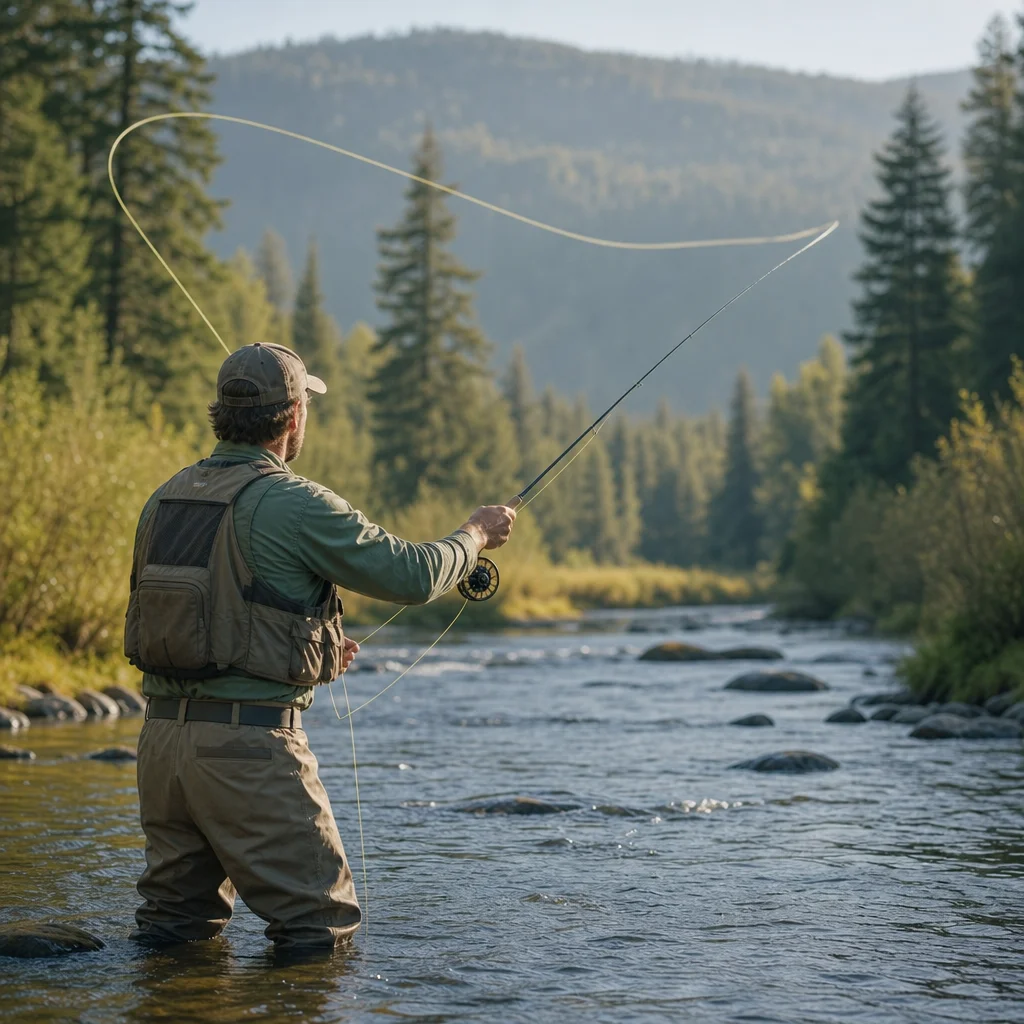
Long casts rarely fail because you need to throw harder. More often, the loop has widened, the rod tip has traveled in the wrong path, or the line has lost tension before the next stroke begins. Extra force then magnifies the original mistake—and can send the fly somewhere you didn’t intend.
The useful question isn't “How do I cast farther?” It’s “What breaks first when I extend the cast?” Once you identify that failure point, the correction is usually smaller than expected.
Start by identifying the collapse
Watch the line rather than judging the cast by effort. A failing distance cast usually shows one of four patterns:
- The loop opens vertically: The fly line rolls out in a wide arc, often with the leader falling heavily.
- The loop crosses itself: The forward and back casts travel on different paths, creating a tailing loop or wind knot.
- The line loses speed: The cast runs out of energy before the leader turns over.
- The line piles up: The loop may look acceptable, but the line lands in loose coils instead of extending.
These symptoms can overlap. For example, poor tracking may create a tailing loop, while a weak haul or mistimed stroke may leave too little energy to straighten the leader. Diagnose the visible result first, then change one variable at a time.
Before You Stretch the Cast
Check the space behind and ahead of you, including other anglers, overhead branches, and the direction of the wind. Wear eye protection, keep bystanders outside the casting arc, and shorten the cast if a longer stroke would make your movements rushed or uncontrolled.
The main distance problem: a stroke that is too short
As more line leaves the rod tip, the rod needs enough time and travel to bend and unload. If you use the compact stroke that works at short range, the rod may never load fully. The result is a weak loop, a stalled line, or a forced acceleration at the end of the cast.
A longer cast generally needs a longer stroke, but not a wild one. Let your hand travel farther during both the back and forward cast while keeping the rod moving in a controlled path. Your arm may contribute more, but your shoulder should stay relaxed and your grip shouldn't tighten into a fist.
Think of the stroke as a smooth change of direction rather than a shove. The rod bends because the line resists the movement. If you abruptly overpower it, the rod can unload before the line is positioned to benefit from that energy.
Use the pause to load the rod
The pause isn't dead time. It allows the line to straighten and gives the rod a chance to bend before the next stroke. At longer distances, the pause usually becomes longer because more line takes time to straighten.
If you begin the next stroke too soon, you’ll pull the line out of alignment and rob the rod of its load. If you wait too long, the line may fall behind you and lose height and momentum.
Watch the back cast when possible. Start the forward stroke as the line is nearly straight behind you, not when it is still a deep, sagging loop. On the forward cast, allow the line to straighten before beginning the next back cast or shooting line.
Tracking errors make distance expensive
Tracking describes the path the rod tip follows during the stroke. For a clean overhead cast, the tip should travel in a narrow path, generally above and slightly behind the casting shoulder. The forward and back casts should remain on the same plane.
A common error is moving the rod in an arc around the body. The hand may feel as if it is traveling smoothly, but the rod tip swings widely. That produces a large loop with less concentrated energy.
Another error is letting the rod drift sideways during the pause. When the forward stroke begins from a different plane, the loop crosses or twists. This is especially common when you watch the target and unconsciously rotate your upper body toward it.
A simple tracking drill
Practice on grass or calm water with a short amount of line outside the rod tip:
- Point the rod toward a target.
- Make a relaxed back cast without pulling the hand far away from your casting shoulder.
- Pause until the line is almost straight.
- Make the forward cast along the same path.
- Gradually extend the amount of line only when the loop remains narrow.
You can also cast beside a fence, trail edge, or other straight reference, provided it’s safe. The reference helps reveal whether the rod is wandering sideways. Don’t use a tree line or crowded bank as a practice target; a good loop isn’t worth a hook in the scenery.
Hauling helps—but timing matters more than strength
The double haul can increase line speed and help you carry more line, but it won’t repair a poor rod path or a mistimed stroke. If the loop is already collapsing, hauling harder may make the collapse sharper.
The hauling hand should pull down and return smoothly during the casting stroke. On the back cast, the haul helps load the rod; on the forward cast, it adds line speed as the rod moves toward the stop. Then the hauling hand returns so you’re ready for the next stroke or to shoot line.
The key is synchronization. A haul that begins too early can pull the line out of the rod’s loading phase. A haul that happens after the rod has already stopped contributes little. Start with small, crisp movements and coordinate them with the rod hand rather than trying to make the hauling hand do all the work.
Practice the haul without adding distance
Strip a manageable amount of line outside the tip and false cast at a comfortable range. Add a small haul on each stroke while keeping the same loop shape. If the loop becomes wider, the haul is probably too large, too early, or disconnected from the rod stroke.
Once the loop remains stable, let a little line shoot on the forward cast. Distance should come from improved line speed and timing, not from increasing effort on every movement.
Creep quietly shortens the next stroke
Creep is the rod hand moving forward during the pause before the next stroke. It often happens when you’re trying to cast farther and anticipating the next movement. By the time the cast begins, the rod has less available travel and the stroke becomes cramped.
You may notice the back cast getting lower, the forward loop opening, or your casting hand ending up close to your shoulder. The correction is to maintain a clear pause without letting the hand drift. Some anglers find it helpful to pause with the rod hand at a consistent position and focus on waiting for the line to straighten.
A slow-motion practice cast can expose creep quickly. Use less line, make deliberate stops, and feel whether the hand remains still during the pause. Don’t turn the pause into a rigid freeze; the goal is controlled timing, not mechanical stiffness.
The rod stop shapes the loop
A cast needs a distinct stop, but the stop shouldn’t be a violent jab. The stop changes the rod’s direction and lets it unload. If you continue pushing after the stop, the tip can travel in a broad arc and the loop opens.
If you stop too abruptly with excessive force, the line may form a tailing loop, especially when the rod tip dips and then rises. This often feels powerful because the hand is moving quickly, but the loop has been given an uneven path.
Aim for a firm, clean stop followed by a relaxed drift as the line turns over. The exact hand position depends on your casting style, rod, and line, so prioritize the shape and turnover of the loop over copying a particular angle.
Shooting line: don’t feed a collapsing cast
Shooting line works only when the cast has enough speed and the loop is traveling in a useful direction. If you release slack into a weak or wide loop, the line will usually land in a pile.
Before shooting, carry a consistent amount of line in the air and keep the running line organized at your feet or in a stripping basket. On the forward cast, open the fingers of the line hand after the haul and allow the running line to move through. Avoid throwing the line forward with the non-casting hand; its job is to release, not propel.
If the leader fails to straighten, shoot less line and rebuild the loop. A shorter, controlled cast is more useful than a longer cast that leaves slack between you and the fly.
Wind changes the correction, not the fundamentals
Wind can make a sound cast look faulty. A headwind may require a lower loop and a more compact trajectory. A tailwind can reward a higher back cast, but it may also expose poor timing by pushing the line downward or sideways.
Adjust your casting plane and loop height to the conditions while keeping the basic priorities: good tracking, adequate line tension, a complete stroke, and a clean stop. Don’t compensate for wind by swinging harder without changing the loop shape. That often increases the risk of a wayward fly and makes fatigue arrive sooner.
For safety, cast with the wind in a direction that keeps the fly away from people whenever the stream layout allows. If the wind makes the back cast unpredictable, change position, use a shorter cast, or wait for a safer opening.
A practical troubleshooting sequence
When your cast collapses beyond a certain distance, work through these checks in order:
- Reduce the amount of line. Find the distance at which the loop still works.
- Check tracking. Keep the forward and back casts on the same plane.
- Lengthen the stroke. Give the rod enough travel for the amount of line outside the tip.
- Wait for the line to straighten. Extend the pause as the cast gets longer.
- Remove creep. Keep the rod hand from drifting during the pause.
- Add a modest haul. Coordinate it with the rod stroke rather than pulling harder.
- Shoot line gradually. Release only when the loop has speed and direction.
Change one item at a time. If you alter your stroke, haul, loop height, and timing simultaneously, you may cast farther temporarily without knowing why—and lose the improvement on the next outing.
When the best fix is a shorter cast
Distance is useful only when it improves your presentation or reaches water you can’t otherwise cover. A long cast creates more line to manage, more current to influence the drift, and more difficulty setting up a clean mend or hook set. It may also force you to cast with less control near other people or obstacles.
If a shorter cast gives you a straighter leader, better fly placement, and a safer casting arc, it’s the better cast. Move your feet, wade only when necessary, change your angle, or work the water in sections before treating extra distance as the solution.
Your next practice session
Start with a line length you can cast cleanly. Make several false casts while watching the back loop, then add a small amount of line and repeat. Stop as soon as the loop begins to widen or the line starts to pile up.
At that point, don’t add force. Check the rod path, lengthen the stroke slightly, and allow a little more time for the line to straighten. Add the haul only after the basic loop remains stable. Finish by practicing a few accurate, controlled casts at fishing distance.
The goal isn’t to make every cast long. It’s to know which part fails first, correct it without rushing, and keep enough control to place the fly—and protect everyone nearby—when distance finally does matter.