When a Sidearm Cast Improves Accuracy—and When It Creates New Problems
A sidearm cast can solve wind and low-cover problems, while an overhead cast often preserves control and clearance. I’ll compare both approaches so you can choose the lower-risk, more repeatable option for accurate fishing on windy rivers and lakes.
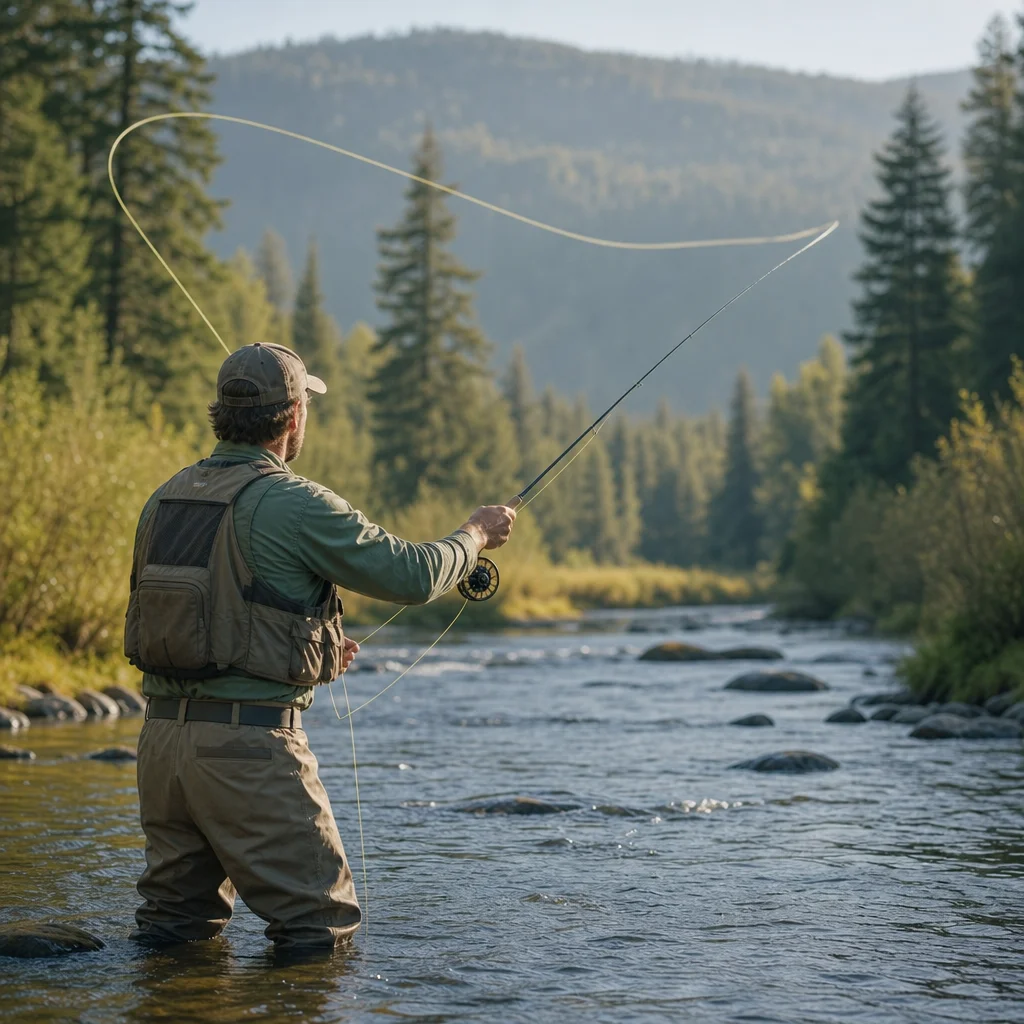
If your overhead cast keeps catching branches, fighting a crosswind, or landing too high above the target, a sidearm cast can look like the obvious fix. It lowers the line path and can place a fly neatly under cover. But changing the casting plane also changes how the rod loads, how the line unrolls, and how much room you need beside you.
For intermediate anglers, the useful question isn’t whether a sidearm cast is better. It’s whether it gives you a more repeatable delivery in the conditions in front of you without creating new problems in control, clearance, or safety.
What changes when you cast sidearm
An overhead cast sends the rod tip through a mostly vertical plane. A sidearm cast rotates that plane closer to horizontal, with the rod moving beside your body rather than above it. The basic casting principles remain the same: the rod loads against the moving line, the loop travels toward the target, and the line needs enough space to unroll.
The difference is where that loop travels and what influences it. A sidearm cast usually produces a lower trajectory, which can be valuable around overhanging branches or when a strong wind is pushing across the water. It also makes your timing and tracking more visible. If the rod tip wanders up, down, or around the target line, the loop will show the error quickly.
A sidearm cast isn’t automatically a shorter cast. It’s a change in delivery angle. You still need an appropriate amount of line outside the rod tip, a clean stop, and enough room behind you for the back cast.
When a sidearm cast improves accuracy
Crosswinds that punish a high loop
A high overhead loop gives a crosswind more line to act on. The wind can push the loop sideways, alter the leader’s turnover, or carry the fly away from the seam you’re trying to reach.
A lower sidearm loop reduces the time the line spends exposed above the water. It may also let you cast under the strongest part of the wind, especially on an open lake or a broad riverbank. The gain is greatest when the wind is blowing across your casting shoulder and the target is relatively close or moderate in distance.
You still need to account for the wind’s direction. A sidearm cast into a strong crosswind can be useful, but a low loop traveling directly across the wind may be pushed sideways. Adjusting your casting angle, choosing a safer bank position, or shortening the line can be more effective than forcing a flatter cast.
Low branches and narrow overhead openings
Overhead clearance is one of the clearest reasons to use a sidearm delivery. A cast that would hook a branch above you may pass cleanly beneath it when the rod and line stay low.
This works best when there’s open space beside your casting arm. If the bank is lined with brush, reeds, rocks, or other anglers, you may trade one obstacle for another. A sidearm cast is only a solution if the entire line path—from back cast through forward delivery—has room to travel.
For especially tight openings, keep the casting stroke compact rather than simply rotating your whole arm harder. A short, controlled stroke gives you more chance to stop the rod on the intended line.
Targets that require a low entry
Some presentations benefit from a fly and leader arriving on a shallow path. A low sidearm cast can help place the fly beneath a low canopy, along a shaded bank, or close to the surface beside a structure.
The cast doesn’t guarantee a gentle presentation. A fast rod stop, an overly tight loop, or too much power can still cause the fly to slap down. If the target is close, reduce the amount of line in the air and let the leader extend with a controlled stop.
Better visual alignment beside the body
Some anglers find it easier to watch a sidearm loop because it travels in their peripheral vision rather than above their head. That can make it easier to identify a wide loop, a collapsing loop, or a drifting rod tip.
This benefit depends on maintaining a consistent casting plane. If you’re looking over your shoulder and changing the stroke each time, the added visibility won’t improve accuracy. Use the sidearm position as a repeatable reference: the rod, forearm, and target should stay connected through the stroke rather than moving independently.
When sidearm casting creates new problems
The back cast becomes a bank-level hazard
A lower loop is useful around overhead cover, but it also travels closer to people, gear, vegetation, and the water’s edge. A fly that clears a branch above you may now catch a bush behind your shoulder or pass close to someone standing along the bank.
The risk increases when you turn your body to make room without first checking the casting lane. Before false casting, look behind and beside you. If the space is limited, shorten the line, change your position, roll cast, or wait for a clearer angle.
Check the sidearm lane: Before you make a low back cast, confirm that the full line path beside and behind you is clear of people, brush, rocks, and loose gear. If it isn’t, change the cast or move before adding power.
Accuracy can degrade when the rod tip wanders
Sidearm casting often exposes poor tracking. A rod tip that moves in an arc instead of along the target line creates a loop that opens to one side. The fly may land left or right of the target even when the forward stroke feels strong.
The correction is usually not more force. Keep the casting shoulder relaxed, move the rod along the intended line, and stop the rod crisply at the end of the stroke. Practice with a short length of line first. Add line only after the loop travels consistently in the desired direction.
The loop can become too wide or too low
A sidearm cast doesn’t require a loop that skims the water. If the loop is too low, it may touch the surface, catch submerged vegetation, or lose energy before the leader turns over. If it’s too wide, it needs more lateral space and is more vulnerable to wind.
Your rod tip path controls much of this. A smooth acceleration followed by a defined stop helps the line unroll. Abruptly sweeping the rod sideways tends to produce an open, uneven loop rather than a controlled low one.
The fly may cross your body or casting hand
A sidearm cast can bring the fly closer to your arm, shoulder, or torso, particularly during the back cast. This is more likely when the stroke is rushed, the line is too long for the available space, or the caster pivots the rod behind the body.
Keep the casting stroke in a consistent lane beside you. Don’t let the rod tip drift across your body during the back cast. If you’re changing direction, use a deliberate repositioning movement instead of trying to redirect a loaded rod at the last moment.
Repeated awkward mechanics can reduce reliability
One sidearm cast won’t harm a sound rod, but inconsistent mechanics can put unnecessary strain on equipment and the angler. Forcing a heavy line through a cramped stroke, stopping the rod abruptly with excessive effort, or repeatedly striking the water and bank can damage flies, leaders, guides, and line coatings over time.
The long-term solution is to make the cast smaller and more efficient. Use the rod’s loading rather than muscular effort, carry less line when space is limited, and avoid trying to turn a sidearm delivery into a distance cast when the situation calls for a short presentation.
Sidearm versus overhead: a practical comparison
| Situation | Sidearm cast | Overhead cast |
|---|---|---|
| Strong crosswind | Often keeps the line lower and reduces exposure | Can work well with a controlled loop and adjusted angle |
| Low branches | Provides useful clearance above the rod and line | More likely to contact overhead cover |
| Brush beside you | May catch the bank-side back cast | Can be better if overhead space is open |
| Maximum distance | Usually less forgiving when rushed | Often easier to repeat with a clean back cast |
| Long, straight accuracy | Requires precise tracking in a narrow plane | Usually offers a familiar reference and more room |
| Close targets | Useful with a compact stroke | Simple when overhead clearance is available |
| Heavy or wind-resistant flies | Can be controlled, but needs room and timing | May offer more vertical separation from your body |
These are tendencies, not rules. A skilled caster can adapt either plane. The best choice is the one that gives the fly a clear route and lets you repeat the same stroke without forcing the equipment or your body.
How to build a reliable sidearm cast
Start with a manageable amount of line
Begin with enough line to load the rod, but not so much that you need a large stroke. For many casts in the fishing range, a short head of line outside the tip is sufficient for practice. The exact length depends on the rod, line, and fly.
Make a few false casts beside you and watch the loop. Look for a path that stays low without touching the water. If the loop collapses, lengthen the stroke slightly or soften the stop rather than immediately adding power.
Choose a target line and keep the rod on it
Pick a point on the far bank, a floating leaf, or a mark on the water. Track the rod toward that point on both the back and forward strokes. Your hand shouldn't swing in a broad semicircle.
If the fly consistently lands to one side, check your rod tip path before changing your aim. The fly often follows the loop’s direction more faithfully than your eyes do.
Use your body to adjust direction
When you need to change the casting direction, rotate your body and reposition your casting arm rather than twisting the wrist sharply. A small body adjustment keeps the stroke organized and reduces the tendency to throw a wide loop.
This also helps with long-term comfort. A cast that depends on repeated wrist flicks is harder to repeat and more tiring than one supported by the forearm and torso.
Match the cast to the fly
A small dry fly and a compact leader may turn over easily with a modest sidearm stroke. A weighted nymph rig, indicator, streamer, or bulky articulated fly needs more space and a more deliberate tempo.
Slow down enough to let the rod load. Keep the line away from your body, and don’t accelerate simply because the rig feels heavy. If the cast feels crowded or unstable, shorten the line or change to a roll cast or other water-loaded delivery.
Maintenance habits that support consistent casting
Reliable casting begins with equipment that behaves consistently. After fishing around sand, grit, or vegetation, inspect the guides and clean them according to the rod manufacturer’s care recommendations. A rough or dirty guide can increase friction and make a familiar stroke feel unexpectedly heavy.
Check the fly line for cracks, deep nicks, or a coating that has become unusually rough. Clean it with a product intended for that line rather than using household solvents. Inspect the leader and tippet where they pass through the guides, especially after contact with branches or rocks.
Store the rod straight and protected, and don’t leave a sharp bend in the line for long periods if it affects turnover. These small habits won’t replace good technique, but they reduce the equipment variables that make accuracy difficult to diagnose.
Practical next steps
On your next windy outing, test both casting planes before committing to one. Start with a short length of line and make several controlled casts beside you, then overhead if clearance permits. Compare the loop height, target accuracy, effort, and available space.
Use a sidearm cast when it gives you a clear low route under cover or through a manageable wind. Stay with the overhead cast when the side bank is crowded, when you need maximum repeatability at distance, or when the sidearm lane is less safe than the overhead lane.
The most dependable cast is rarely the most dramatic one. Choose the plane you can track, maintain, and repeat—and keep enough room around you to do it without turning a clean presentation into a tangled repair job.