How to Cast When Your Fly Line Lands in Piles
Pile casts usually come from a small mismatch between timing, loop shape, slack, or leader setup. I’ll help you identify the weak link and build a more reliable cast through simple, repeatable corrections.
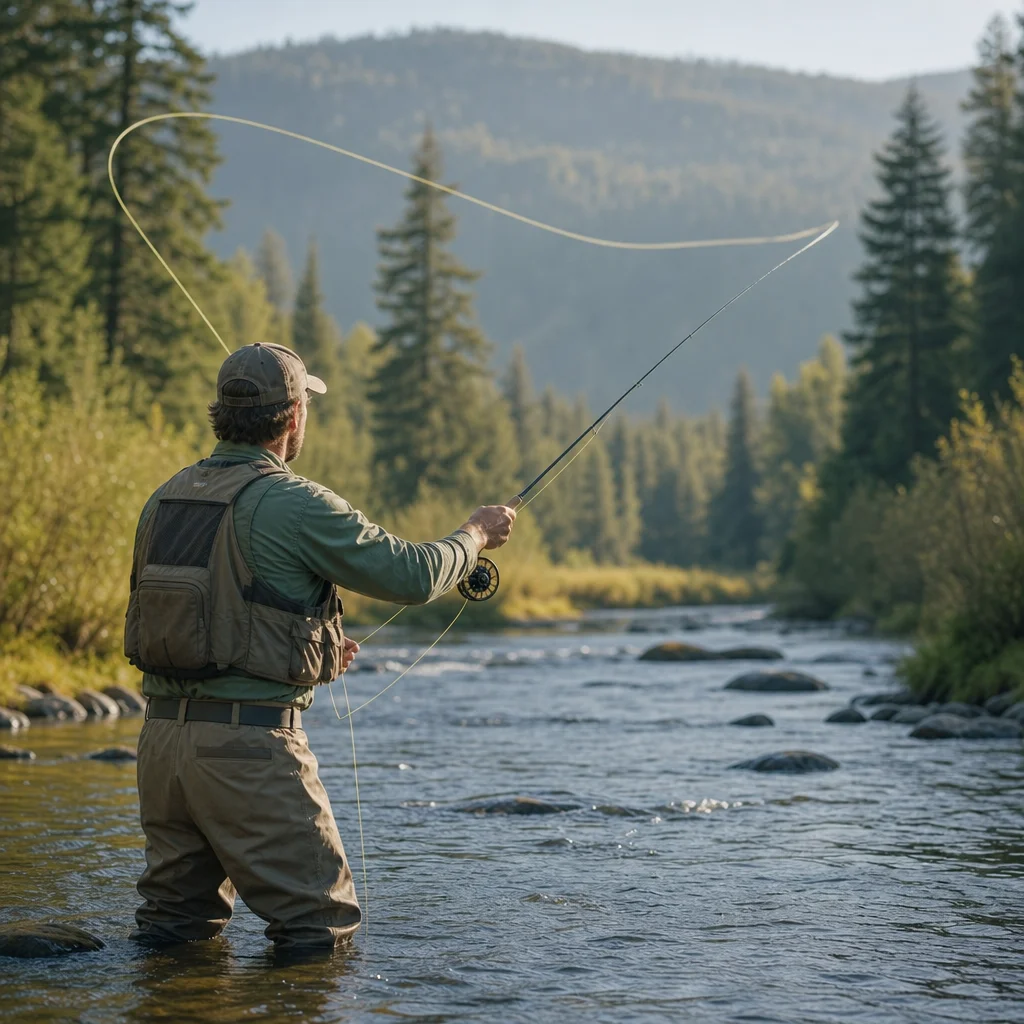
Start by identifying where the pile forms
A fly line that lands in a heap usually isn’t failing for just one reason. The line may be losing energy in an open loop, carrying slack into the forward cast, or transferring energy poorly through the leader. Your first job is to notice when the pile appears and what the loop is doing immediately beforehand.
Watch the line during a few slow false casts. If possible, have someone observe your backcast from the side. You’re looking for four clues:
- The loop opens wide: The top and bottom legs of the loop separate noticeably.
- The line sags before the cast begins: Slack is present in the rod tip or between your hand and the water.
- The loop looks reasonable, but the leader collapses: The leader may be too long, too soft, badly tapered, or carrying excess material.
- The line straightens, then drops in a heap: The cast may be stopping too low, too late, or without enough speed.
Make one correction at a time. Changing your stroke, line length, leader, and fly all at once makes it difficult to learn what actually helped.
Fix the timing before adding power
Many beginners start the forward cast while the backcast is still unfolding. The rod then has no firm load to work against, so the line travels forward with little authority and lands in loose coils.
Allow the backcast to straighten before beginning the forward stroke. You don’t need to wait for the line to fall; you’re waiting for it to extend behind you and create tension. With a short amount of line outside the rod tip, this pause may be brief. With more line in the air, the pause needs to lengthen.
A simple practice drill helps:
- Lift the line from the water with a smooth backcast.
- Stop the rod firmly around the one-o’clock position.
- Watch or listen for the line to extend behind you.
- Begin the forward cast only after you feel the rod load.
- Stop the rod around the ten-o’clock position and let the line roll out.
The clock positions are only approximate. The important parts are a clean stop and enough time for the line to straighten.
If you’re consistently throwing the forward cast too soon, count quietly: “back—wait, forward.” The pause should adapt to the amount of line you’re carrying rather than become a rigid rhythm.
Close an open casting loop
An open loop wastes energy because the line travels through a large, rounded path. It can also allow the leader and fly to drift sideways or collapse before reaching the target. An open loop often comes from a casting stroke that follows a wide arc instead of directing the rod tip along a relatively straight path.
Try these changes:
- Keep your casting hand in a compact path rather than sweeping far around your shoulder.
- Move the rod primarily with your forearm and wrist in a controlled way; avoid excessive wrist movement.
- Make the backcast and forward cast roughly parallel when conditions allow.
- Stop the rod crisply instead of slowly lowering it at the end of the stroke.
- Use less force at first. Extra power usually makes a poor loop wider and faster, not better.
A narrow loop doesn’t mean an extremely tight loop. If you force the rod into a sharp, abrupt path, the fly may collide with the line or leader. Aim for a moderately compact loop that turns over smoothly.
The rod tip’s path matters more than how hard you feel yourself casting. If your hand travels in a large circular motion, the tip usually follows a similarly wide path. Shorten the stroke and make the stops clearer before increasing speed.
Remove slack before the forward cast
Slack is one of the most common causes of pile casts. It can sit in the line on the water, between your stripping hand and the rod, or in a sagging loop during the backcast. When you begin the forward stroke, the first part of your movement merely removes slack. The rod loads late, and the cast runs out of energy before the line and leader straighten.
Before the backcast, lift the line smoothly rather than snatching it from the water. During false casts, keep the line under light tension with your line hand. Don’t let several loose coils gather between the rod and your fingers.
Your line hand should also support the cast. As the rod accelerates, pull the line sharply with the non-casting hand, then relax that hand so the line can shoot forward. This is the basic hauling motion. Start with a small haul; a large pull can create new slack or upset your loop.
If you’re casting from a seated position, around brush, or with the rod held at an unusual angle, some slack is difficult to avoid. In those situations, make the initial lift deliberate and use a shorter casting stroke. A controlled pickup is more useful than trying to recover a line that has already fallen into loose coils.
Check your stop and rod position
A cast can have good timing and still pile up if the rod stop is weak or in the wrong direction. The stop transfers the rod’s stored energy into the line. If you keep moving the rod after the stop, the tip follows a rounded path and the loop opens.
On the forward cast, stop the rod firmly and allow the tip to recover. Don’t immediately drop the rod toward the water. Lower it after the line has begun to straighten. If you lower it too early, the leader may lose the elevation and energy needed to turn over.
A very low forward stop can also send the line toward the surface before it has enough room to unroll. Try a slightly higher stop, especially when you’re practicing on grass or casting across calm water. Once the line is extending properly, lower the rod to place the fly quietly.
The backcast deserves the same attention. A soft backcast stop can produce a wide, sagging loop that gives you little tension for the forward stroke. Firm doesn’t mean violent. Think of stopping the rod and allowing it to do the work.
Decide whether the leader is the problem
If the fly line forms a good loop but the leader collapses into a pile, your casting mechanics may not be the main issue. The leader is the final link in the energy transfer. Its length, taper, stiffness, knots, and fly size all affect turnover.
Look for these setup problems:
- A leader that is too long for your current casting skill: More length gives the leader more room to straighten, but it also magnifies timing and slack errors.
- A leader with an abrupt change in diameter: A poorly matched section can interrupt the transfer of energy.
- A tippet that is too light for the fly: A large or air-resistant fly can overpower fine tippet and cause the end to collapse.
- A damaged or heavily coiled leader: Old material, repeated knots, and storage memory can prevent smooth turnover.
- A bulky connection or excess knot material: This can catch in the guides or disrupt the leader’s path.
For troubleshooting, use a shorter, uncomplicated leader and a modestly sized fly. This isn’t necessarily your final fishing setup; it’s a diagnostic setup. If the cast improves, add length or change fly size one variable at a time.
Avoid treating a longer leader as an automatic upgrade. It can improve presentation once your loop and timing are dependable, but it also demands more control. Build reliability first, then add delicacy.
Account for wind and fly resistance
Wind can turn a serviceable cast into a pile, particularly when it blows toward you or across the casting path. A headwind slows the line and can push the loop back toward you. A tailwind may carry the line forward quickly but leave the leader without enough energy to turn over.
Adjust rather than simply casting harder. In a headwind, use a more compact loop and a firmer stop. Keep the forward cast lower when that helps you stay beneath the strongest moving air, while leaving enough room for the line to unroll safely.
A bulky, weighted, or highly air-resistant fly also needs more deliberate turnover. Use a smooth acceleration and a controlled loop. If the fly is repeatedly causing pile casts, switch temporarily to a simpler pattern to separate fly resistance from casting faults.
Be aware of your surroundings when changing the casting plane or using more force. Brush, other anglers, and the backcast area can turn a technical correction into a practical problem. A reliable cast is one you can repeat safely, not merely one that looks good in open space.
Use a short practice sequence
Rather than fishing through dozens of failed casts, reset your technique with a short sequence:
- Strip in enough line to make a manageable cast.
- Remove visible slack before lifting the line.
- Make a smooth backcast and wait for it to straighten.
- Use a compact forward stroke with a clear stop.
- Keep light tension with the line hand and add only a small haul.
- Let the line unroll before lowering the rod.
- Repeat until the line lands in a controlled loop.
Then increase the amount of line gradually. If the pile returns at a particular distance, you’ve learned something useful: your current timing, rod load, or hauling control isn’t yet supporting that much line. Practice at the distance where the cast remains dependable, then extend it in small increments.
Keep the equipment from creating new problems
Reliable casting also depends on basic line and leader maintenance. Dirt and fine grit can make a fly line feel less slick and can interfere with smooth shooting. Clean the line according to the manufacturer’s care instructions, and inspect it for cracks, rough spots, or sections that have become unusually stiff.
Store the leader without crushing it under heavy gear. Replace sections that remain tightly coiled, are abraded, or have weakened near knots. Check the rod guides for damage or an obstruction; a rough guide can catch the line and imitate a casting problem.
Your reel should also release line smoothly. If the line is pinched under another wrap or the spool is overfilled, it may hesitate as you shoot it. That extra resistance can leave the cast short and disorganized.
Check your setup between sessions: Before changing your casting technique, run the line through each guide, inspect the leader and knots, and confirm that the reel releases line without snagging. Small equipment faults can repeatedly recreate the same pile cast.
A quick diagnosis checklist
Use the symptom to choose your first correction:
- The line never straightens behind you: Wait longer on the backcast and check for slack.
- The loop is broad and rounded: Shorten the casting stroke and sharpen the stop.
- The fly line turns over but the leader collapses: Test a shorter or better-matched leader and a less bulky fly.
- The cast works at short range but piles at longer range: Improve line control, hauling, and timing before carrying more line.
- The cast fails only in wind: Change the loop shape and casting plane rather than adding uncontrolled power.
- The cast fails after the line has been stored: Inspect for memory, damage, dirt, or reel-related resistance.
Build the correction in the right order
Start with timing and slack, then refine loop shape and rod stops. After those are consistent, evaluate the leader, fly, wind, and equipment. This order keeps you from replacing gear to solve a problem caused by beginning the forward cast a fraction too early.
With a manageable amount of line, a clean stop, and enough patience for the backcast to straighten, most pile casts become much easier to diagnose. Once the cast is repeatable, extend your distance or lengthen your leader gradually—and keep the setup that lets you fish with control rather than constantly repair the same collapse.