Stop Tailing Loops: Find the Casting Fault and Fix It
When your fly line piles into a narrow, tangled loop, the fault is usually in the casting stroke rather than the fly or rod. I’ll show you how to identify whether timing, rod-tip path, creeping, or excess power is causing the problem and how to correct one variable at a time.
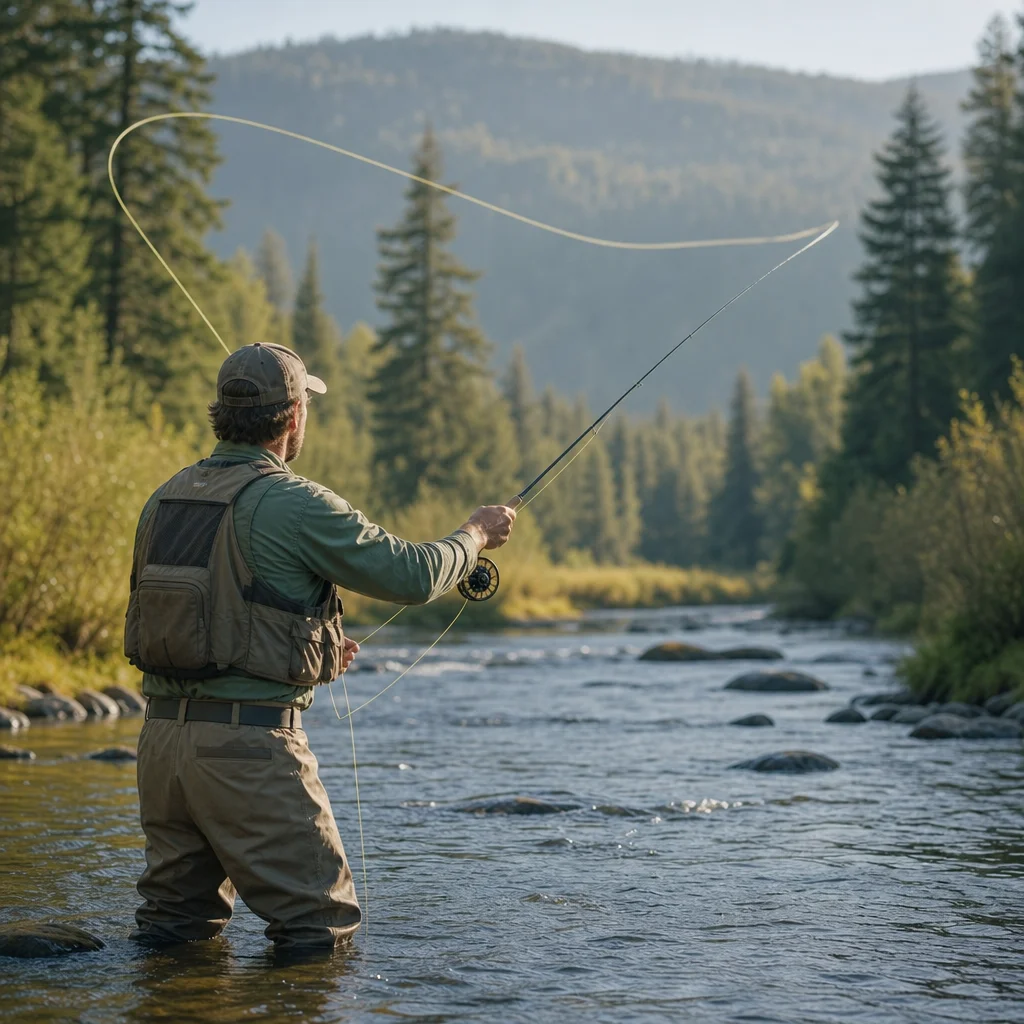
What a tailing loop looks like
A tailing loop is a casting loop in which the lower leg of the line crosses or collapses toward the upper leg. Instead of traveling in a clean, narrow loop, the line dips, twists, or piles up behind the leader. The result may be a wind knot, a fly that lands short, or a leader that arrives in a heap.
The important point is that a tailing loop is usually created by the shape of the rod tip’s path. If the rod tip moves through a concave path—downward or inward during part of the stroke—the line follows that shape. Extra power can make the problem more dramatic, but power alone isn’t the root cause in every cast.
You can see tailing loops on either the forward or back cast. Many casters notice them first on the forward cast because that’s where the fly and leader become obvious. Watch the line behind you as well. A backcast that tails often sets up a poor forward cast, even if the forward stroke feels reasonable.
Start with the casting stroke, not the fly
Before changing flies, leaders, or rods, isolate the cast. Remove the fly or use a short piece of yarn. Keep enough line outside the rod tip to form a visible loop, but don’t try to cast for distance yet.
Make a gentle false cast and watch the line from the side. A healthy loop generally has a fairly straight upper leg and a lower leg that travels behind it without crossing. It doesn’t need to be perfectly narrow. For diagnosis, a relaxed loop is more useful than a tight one.
Then ask four questions:
- Does the loop tail on the forward cast, backcast, or both?
- Does the rod tip dip at the end of the stroke?
- Do you feel yourself pushing hard with the arm or shoulder?
- Does the line straighten before you begin the next stroke?
These observations help you choose a correction instead of making several changes at once.
If the tail appears on both casts
A problem on both the forward and backcast often points to the basic stroke. You may be driving the rod tip through a curved path, applying power too abruptly, or stopping the rod with a downward movement.
Start by reducing the amount of line in the air and casting more slowly. Keep the casting hand moving in a mostly straight path during the working part of each stroke. The hand doesn’t need to travel in a perfectly literal line, but avoid a pronounced dip or scoop.
If the tail appears mainly on the forward cast
A forward-only tail commonly comes from a rushed forward stroke, a low stopping point, or too much power at the beginning of the stroke. It can also happen when you begin the forward cast before the backcast has fully straightened.
Pause long enough to feel the backcast load the rod. Then begin the forward stroke smoothly, building speed rather than punching immediately. Finish with a firm stop that sends the rod tip upward and forward rather than down toward the water.
If the tail appears mainly on the backcast
A backcast tail often comes from pulling the rod too sharply behind you or stopping it low. Some casters also rotate the shoulder and elbow excessively, causing the hand to travel in a curved path.
Try a shorter, more controlled backcast. Let the rod load, stop it cleanly, and allow the line to straighten behind you before starting forward. A good backcast doesn’t need to be dramatic. It only needs to put the line in position for the next stroke.
The four common faults behind tailing loops
1. A concave rod-tip path
This is the central mechanical fault. If the rod tip drops during the stroke and then rises again, it traces a concave path. The fly line copies that path, producing a tailing loop.
A useful practice drill is to cast beside a wall, fence, or row of tall grass with plenty of room and no risk of snagging. The reference gives you a visual sense of whether the rod tip is dipping. You can also practice with the rod unloaded, moving the hand through a smooth, slightly rising path without trying to generate distance.
Don’t force the hand into an artificially rigid straight line. The goal is a smooth path with no sudden downward detour, not mechanical-looking motion.
2. Too much power too soon
A powerful stroke can still produce a good loop, but sudden power applied before the rod has loaded tends to bend the rod deeply and pull the tip off its intended path. The line then follows the error with enthusiasm.
Use a progressive stroke. Begin smoothly, increase speed through the stroke, and stop decisively. Think “accelerate and stop,” not “snatch and shove.” At short distances, you often need much less force than expected.
A simple test is to cast the same amount of line at half your usual effort. If the loop improves, excess force is contributing to the fault. Keep the smoother acceleration and add power only when the stroke remains controlled.
3. Creep during the pause
Creep occurs when the casting hand drifts forward or backward while you wait for the line to straighten. The rod loses useful travel, so you compensate with a rushed or forceful stroke. That compensation can create a tailing loop.
After the backcast, allow the rod hand to remain in position while the line straightens. If you need to prepare for the next stroke, move gradually rather than making a sudden early motion. Many casters find it helpful to say “wait” quietly during practice, then begin the stroke only after the line has nearly straightened.
The pause isn’t a fixed count. It changes with the amount of line, the rod, and the wind. Watch or feel for the line’s straightening instead of following a memorized rhythm.
4. Starting before the line straightens
If you begin the next stroke while the previous loop is still traveling, the rod may be overloaded or poorly positioned. The result can look like a tailing loop even when your hand path is fairly sound.
Shorten the line and exaggerate the pause until you can clearly see the backcast straighten. Then gradually add line. As you lengthen the cast, the pause usually needs to become longer because more line takes more time to turn over.
A focused correction routine
Work through this sequence rather than changing everything at once.
Step 1: Shorten the cast
Bring most of the line inside the rod tip and false cast a manageable amount. Shorter line makes timing errors easier to see and reduces the force required to load the rod.
Step 2: Slow the acceleration
Make the stroke deliberate and smooth. Your goal isn't a tight, high-speed loop. Your goal is a line that travels without crossing itself.
Step 3: Watch the rod-tip path
Use a side view, a reflection, or a practice partner’s observation. Look for a dip in the rod tip during either stroke. If possible, record a few casts from the side. Video often reveals a downward hand movement that isn’t noticeable while casting.
Step 4: Improve the stop
A clean stop gives the rod a chance to unload and directs the loop. Avoid continuing the hand downward after the stop. On the forward cast, a slightly elevated stop is often helpful while learning, provided it suits the cast and doesn’t force the line into an excessively high trajectory.
Step 5: Add line gradually
Once the short cast is clean, let a little more line out. If the tail returns, note exactly when it appears. That point tells you when the stroke, timing, or available power needs adjustment.
Check the correction before adding distance: Make several relaxed casts with the same amount of line and confirm that the loop stays clean on both the forward and backcast. Distance practice should come after control, not replace it.
What not to “fix” first
Don’t simply cast harder
More force may straighten a poor loop temporarily, but it usually makes the underlying fault less predictable. It can also increase fatigue and make timing harder to sense.
Don’t automatically widen the loop
A wide loop can hide a tailing problem because the line has more room to avoid crossing. That may be useful in certain conditions, but it doesn’t correct the cause. First establish a clean, controlled loop at a comfortable width.
Don’t blame the rod immediately
Different rods have different actions and loading characteristics, so equipment affects timing and feel. Still, a tailing loop is commonly a stroke issue that can appear with many rod types. Before changing equipment, test your stroke with less line, less force, and a clearer pause.
Don’t chase every variable at once
Changing the rod, line, leader, casting plane, and timing together makes diagnosis difficult. Pick one adjustment, make several casts, and observe the result. Casting improves faster when the feedback is specific.
When conditions complicate the diagnosis
Wind can make loops appear worse and can alter how quickly the line turns over. A tailing loop that occurs only when casting into a strong headwind may involve an unsuitable loop shape or too much line for the conditions. First practice in calmer air if you can. Then adapt by using a controlled, efficient stroke rather than simply adding force.
A heavy fly or long leader can also expose timing problems. Practice with yarn or a less demanding setup, then return to the fishing rig. If the loop fails only with one particular fly, check that the leader and tippet are appropriate for its size and weight, but continue examining the stroke as well.
A simple decision checklist
When a loop tails, work through this list:
- Which cast tails? Forward, back, or both?
- Is the rod tip dipping? Look for a concave path.
- Are you starting too soon? Wait for the line to straighten.
- Are you creeping? Keep the hand stable during the pause.
- Are you using too much force? Try half-power with smooth acceleration.
- Does the problem return with more line? Add line in small increments.
- Does it happen only with one rig or in one wind? Check equipment and conditions after testing the stroke.
The fastest route out of tailing loops is usually a smaller cast, a smoother acceleration, a clearer pause, and a better stop. Once those pieces work together, add line gradually and let distance develop from the same controlled motion.