Fixing the Most Common Beginner Fly-Casting Problems
When your loop collapses, your fly lands with a slap, or extra line turns into a tangled heap, I’ll help you identify the likely casting fault and correct it without adding unnecessary effort or distance.
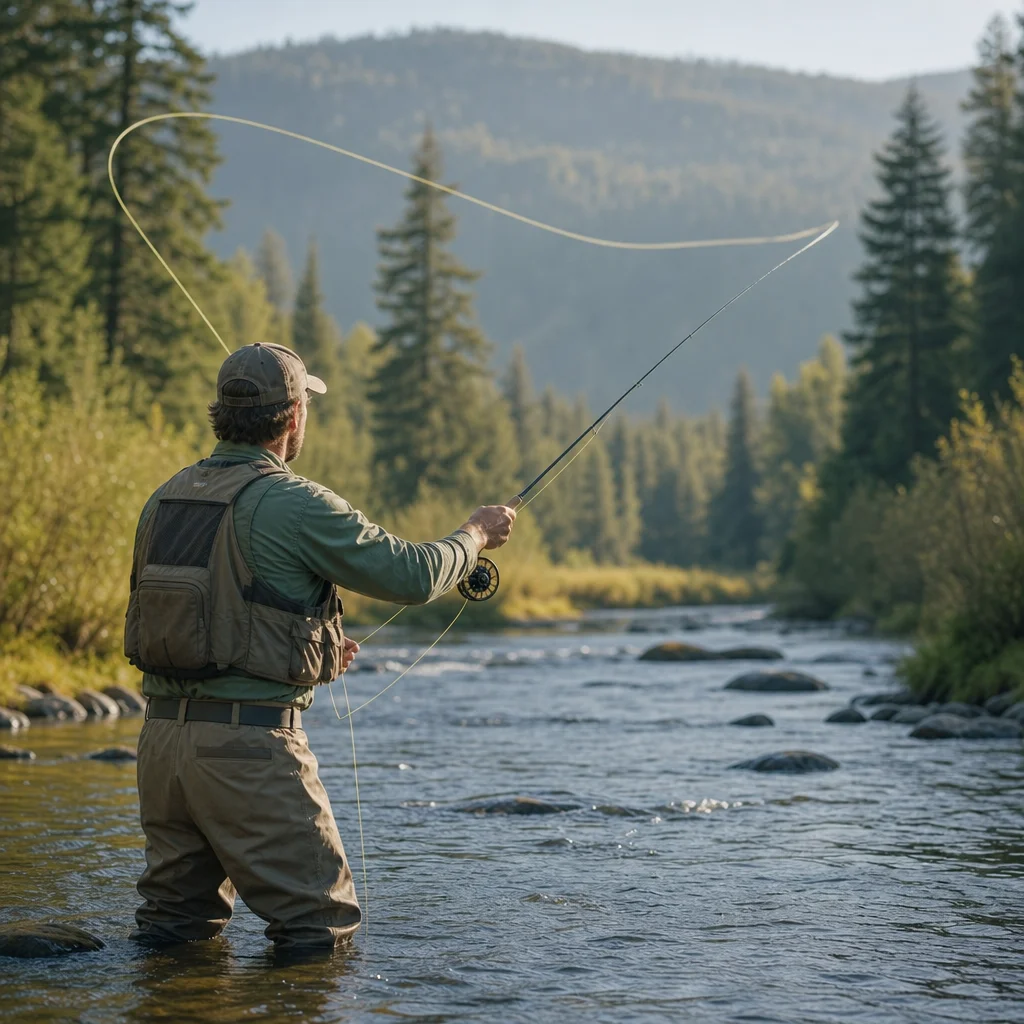
Start by watching the loop, not the fly
Beginner casting problems often look more complicated than they are. A poor presentation may come from timing, rod movement, line control, or simply trying to cast farther than the situation requires. The useful question isn’t “Why won’t this cast work?” but “What is the line doing just before it fails?”
Watch the shape of the loop, listen for the line touching the water or grass, and notice whether the fly travels straight, drops, or swings sideways. Those clues usually point toward a specific correction.
Before troubleshooting, keep the practice area clear behind and beside you. Check for people, branches, and other obstacles, and wear eye protection such as sunglasses when a fly is attached. A slower cast with a controlled stop is safer—and usually more instructive—than forcing the line.
Check your casting space: Before each practice session or back cast, look behind you and overhead for people, brush, fences, and other hazards. If the area isn’t clear, change position, shorten the cast, or remove the hook while practicing.
Collapsing loops
A loop collapses when the line loses its shape before it straightens. Instead of traveling in a narrow, stable loop, it falls in a pile or drops toward the water. This often happens when the rod tip follows a curved path, the casting stroke is too slow, or the stop is missing.
Common causes
- The rod tip travels in a wide arc rather than a mostly straight path.
- You move the rod too far before stopping it.
- You begin the forward cast before the back cast has straightened.
- You creep forward after the stop instead of allowing the rod to load and recover.
- Too much line is outside the rod tip for your current timing and control.
How to fix it
Start with less line outside the rod tip—roughly enough to form a manageable loop, not enough to fill the whole casting area. Make a compact back cast and wait for the line to straighten. Then make a forward cast with a firm, controlled stop.
The stop matters because it allows the rod to bend and then direct the line. Don’t hold the rod rigidly, but don’t continue sweeping it forward after the stop. Think of the rod tip traveling forward, stopping, and allowing the line to carry itself.
If the loop still collapses, shorten the casting stroke and slow down your movements. More force rarely repairs a poorly shaped loop.
Tailing loops
A tailing loop happens when the fly line dips and the upper part of the loop crosses or nearly crosses the lower part. The line may form a narrow, twisted loop, and the leader can pile up or tangle before the fly lands.
The most common beginner cause is applying power too abruptly, especially at the beginning or end of the stroke. Another cause is dropping the rod tip during the forward cast. The rod then travels on a concave path rather than a smooth, slightly convex one.
Correct the power curve
Try this sequence:
- Begin the cast smoothly.
- Increase speed gradually through the stroke.
- Stop the rod firmly at the end of the stroke.
- Keep the rod tip from dipping immediately before the stop.
- Allow the line to straighten before starting the opposite direction.
You don’t need to punch the cast. A smooth acceleration followed by a clean stop usually creates a better loop than a sudden burst of strength.
If your tailing loop appears only when you cast farther, reduce the amount of line in the air and rebuild the cast gradually. Distance magnifies small timing and path errors. It’s more productive to make ten controlled casts at moderate distance than to repeatedly force one long cast into a tangle.
Noisy presentations and splashing flies
A fly that lands with a slap can spook fish, but noise is also a useful diagnostic. It may indicate too much downward force, a leader that is turning over poorly, or a cast that has lost its loop before reaching the target.
If the line is noisy
Check whether the line is striking the water before the fly. A low back cast, a collapsing loop, or too much loose line can cause this. Lift the back cast higher, make a cleaner stop, and keep the line under control with your non-casting hand.
If the fly is noisy
The fly may be falling vertically instead of arriving on a controlled turnover. Avoid stopping the rod too abruptly with excessive force. Instead, improve the loop and allow the leader to extend. A longer leader or a bulky, air-resistant fly may require a more open loop and a gentler delivery, but the basic solution is still good line control rather than brute force.
For close targets, don’t make a full false-cast routine if a short lift and forward cast will do. Less movement often produces less disturbance.
Poor timing and premature direction changes
If the back cast hasn’t straightened before you begin the forward cast, the rod won’t load efficiently. The line may fall behind you, the loop may collapse, or the cast may feel weak even when you’re using plenty of effort.
Beginners often watch the fly and rush the next stroke. Instead, listen for the line and learn the feel of the rod loading. You can also briefly turn your head to watch the back loop during practice. On the water, a quick glance is enough; you don’t need to stare behind you while standing near uneven ground or moving water.
Use a simple rhythm: cast, pause, cast, pause. The pause should change with the amount of line in the air. More line generally requires more time to straighten, while a short cast needs only a short pause. Don’t use a fixed count for every cast.
If the line falls behind you, wait a little longer. If it straightens completely and drops, you’ve waited too long or stopped the rod too low. The goal is to begin the next stroke while the line is straightening—not after it has already lost momentum.
Uncontrolled distance and too much line
A common misconception is that better casting means carrying as much line as possible. For fishing, the best cast is the one that places the fly accurately with enough control to manage the drift and set the hook.
Too much line creates several problems:
- You need more precise timing.
- Loose line becomes harder to manage.
- Wind has more line to push around.
- The fly may land farther away than intended.
- A missed target takes longer to recover.
Start each cast with only the line you need. If the target is close, use a short, controlled cast. If you need more distance, add line in small increments while maintaining the same smooth stroke and pause. Don’t lengthen the cast and speed up at the same time; change one variable at a time so you can tell what helped.
Your non-casting hand is important here. Use it to control the line near the rod handle, strip in excess line, and keep slack from building between the rod and the water. A well-formed loop can't compensate for unmanaged slack.
When the cast works in practice but fails on the water
Practice conditions are often easier than fishing conditions. Grass doesn’t move like water, an open field doesn’t create the same obstacles as a streambank, and a calm day doesn’t reveal every weakness in your loop.
Make the transition gradually. Practice shorter casts with the fly you’ll actually fish, then work around realistic obstacles while keeping the area safe. Change your stance when possible rather than trying to force a back cast through branches. Roll casts, side casts, and shorter presentation casts can solve problems that a standard overhead cast can't.
Wind also changes the correction. In a breeze, keep the casting plane controlled, avoid unnecessary false casts, and adjust your position when that’s safer and more effective than overpowering the line. If the wind makes the cast unpredictable, shorten the line and focus on placing the fly rather than fighting for distance.
A quick troubleshooting sequence
When a cast breaks down, use this order:
- Shorten the line. Remove extra variables and regain control.
- Check the loop. Look for collapse, crossing, or an overly wide shape.
- Slow the acceleration. Apply power smoothly instead of abruptly.
- Wait for the line to straighten. Don’t rush the change of direction.
- Improve the stop. Stop firmly without continuing the rod sweep.
- Add distance gradually. Change only one part of the cast at a time.
If the problem appears only with a particular fly, leader, or wind direction, the casting stroke may not be the only factor. Bulky flies, heavy indicators, and unusual rigs can require an open loop and more deliberate turnover. Treat that as an equipment-and-delivery adjustment, not proof that you need to cast harder.
Practical next steps
Next time you practice, choose one fault rather than trying to repair everything at once. Start with a short length of line, make smooth casts with a clear pause, and watch the loop whenever it fails. Once the loop stays stable, work on accuracy. Only then add distance.
A reliable beginner cast is controlled, repeatable, and safe. It doesn’t need to be dramatic. If the fly lands where you intended, the line stays manageable, and you can repeat the motion without strain, you’re solving the right problem.