When Is a Shorter Cast Better Than a Longer Cast on a Large Trout River?
I’ll explain when a shorter cast gives you better drag control, cleaner mends, and more reliable hookups on a large trout river, then compare distance, current speed, wind, wading position, and the amount of line you can actually manage.
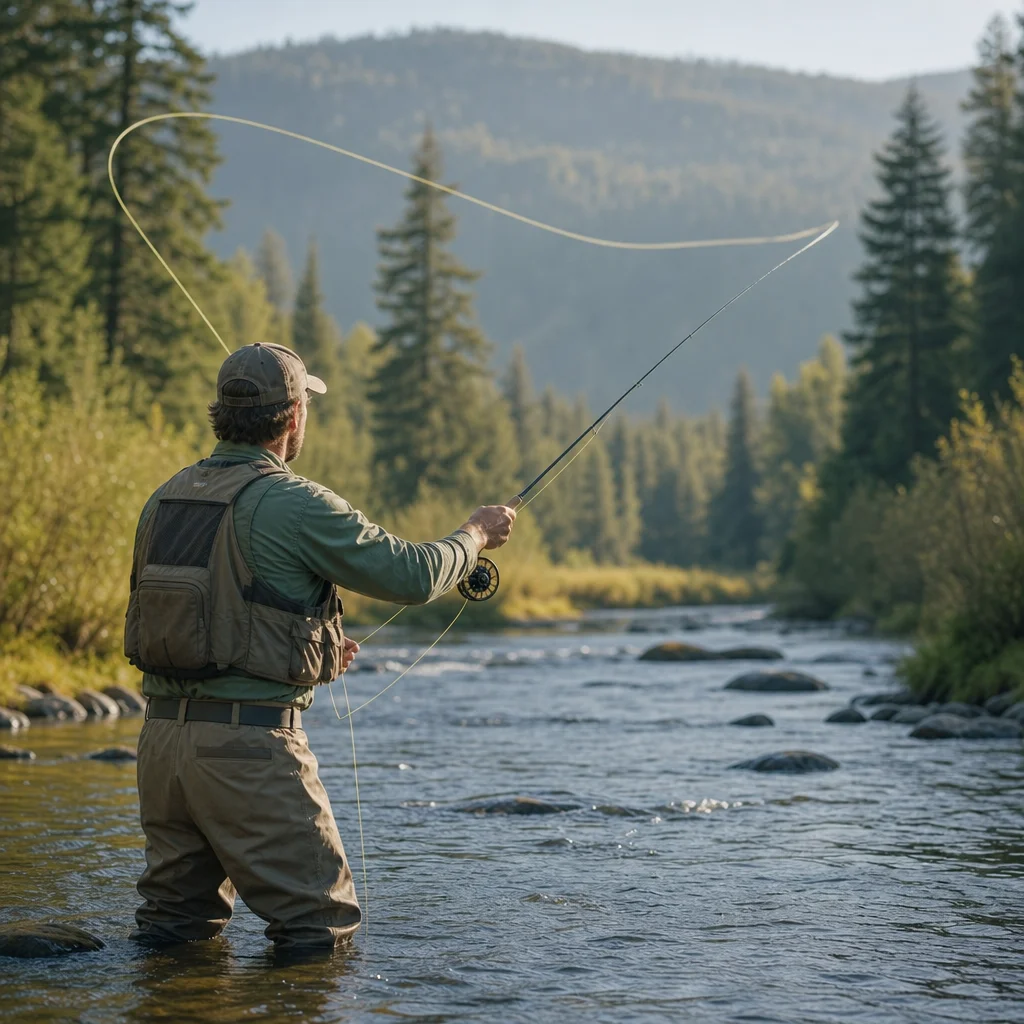
Large trout rivers make long casts look tempting. Wide water seems to demand wide coverage, and reaching the far seam can feel more productive than working close to your bank. But distance only helps when you can control the fly, leader, and line after they land.
A shorter cast is often better when it gives you a more natural drift, a quicker hook set, or a safer way to manage changing currents. The best distance isn't the farthest one you can cast. It’s the farthest one you can control consistently.
Start with the drift, not the river’s width
A large river may offer several fishable lanes within a few rod lengths of you. Trout commonly use soft edges, current seams, submerged shelves, drop-offs, and slower water beside faster flows. Many of these features are close enough to reach without making a long cast.
Before adding line, study the water nearest you. Look for:
- A seam where fast and slow currents meet
- A soft cushion behind a rock or obstruction
- The inside edge of a bend
- A shallow shelf dropping into deeper water
- A lane along the bank or beside a weed bed
- Foam, bubbles, or drifting debris moving at a consistent speed
If a nearby lane has the right depth and current, fishing it first can simplify everything. You’ll have less line on the water, fewer conflicting currents to cross, and a better view of the fly and leader.
A long cast may reach more water, but it can also place your line across several current speeds. That creates drag before the fly has traveled very far.
Shorter casts improve line control
The main advantage of a shorter cast is control. With less fly line between you and the fly, you can mend more effectively, lift line off conflicting currents, and respond sooner when the fly moves unnaturally.
This matters most when your line crosses water moving in different directions. For example, your fly may be in a slow seam while the line lies in a faster tongue. The faster current pulls the line downstream, creating drag at the fly. A shorter cast reduces the amount of line exposed to that problem.
It also gives you more direct contact for a hook set. You may still need to keep slack in the system for a natural drift, but you’ll have less excess line to move when a trout takes.
Short doesn’t mean tight or careless. You still want enough distance to avoid spooking fish and to present the fly from a sensible angle. The goal is controlled slack, not a straight, rigid connection.
When a short cast is usually the better choice
The current is fast or divided
Fast water magnifies small mistakes. A long cast may cross a rapid center current, a slow inside seam, and another fast channel before reaching the target. Each section pulls on the line differently.
In this situation, shorten the cast until most of your line rests in one manageable current. You may need to reposition your feet or cast from a different angle rather than trying to solve the problem with larger mends.
If the fly is repeatedly skating, lifting, or swinging unnaturally, distance may be part of the problem. Bring the presentation closer and see whether the drift improves.
Wind makes line control difficult
Wind can turn a long cast into a wide loop of loose line. That extra line is harder to place accurately and more likely to land in piles or catch on nearby vegetation. A shorter cast gives you a smaller system to control.
In a headwind, a compact casting stroke and a shorter delivery can help you maintain control. You can also lower the rod tip after the cast, depending on the presentation, to reduce the amount of line exposed to the wind.
A tailwind may carry line farther, but it can still create slack or knock the leader off its intended path. Don’t confuse extra distance with better turnover.
You’re wading in a poor position
Your wading position determines the angles at which currents affect your line. If you’re standing too far downstream, too far across, or in a channel with water moving around both legs, a long cast may force you to manage several bad angles at once.
A shorter cast can be the right temporary solution while you improve your position. It lets you fish the water available from where you are instead of extending the presentation beyond your ability to control it.
If the close water is empty or unsuitable, consider moving carefully to a better position rather than simply adding more line. In many cases, a few deliberate steps change the presentation more than a longer cast would.
Check the footing before extending your range: If reaching a farther lane would require deeper or faster wading, reassess the position rather than treating distance as the answer. Water levels, flows, and safe crossings can change, so use current local conditions and your own comfort as limits.
You’re still learning the water and the cast
Intermediate anglers often have enough casting ability to reach distant targets but not yet enough consistency to manage every consequence of that distance. That’s normal. Casting farther and fishing farther are separate skills.
A shorter cast gives you more chances to observe what the fly, leader, and line are doing. You can identify drag earlier, adjust the mend, and see how the fly responds. Those observations become harder when the fly is far away.
Start close, make the drift work, and add line only when the current or fish position requires it. This turns distance into a deliberate adjustment instead of a default setting.
When a longer cast is justified
A longer cast can be useful when the fish are holding beyond your effective wading position or when approaching closer would disturb the water. It may also help you reach a bank, seam, or structure that can't be covered from nearby.
Distance makes sense when:
- The target lane is clearly defined
- The line can travel mostly over one current speed
- You can see or track the drift well enough
- You have a plan for mending and line pickup
- The wind allows a controlled delivery
- You can set the hook without excessive slack
The question isn't whether you can reach the target. Ask whether you can maintain a useful drift after reaching it.
For example, suppose trout are rising along the far bank. A long cast may be worthwhile if the current is uniform and your line lands in the same flow as the fly. If the line must cross a fast middle channel to reach that bank, a shorter angled cast from a better position may produce a longer effective drift.
Compare effective distance, not casting distance
Think of a cast in three parts:
- Delivery: Can you place the fly and leader where you want them?
- Drift: Can you keep the fly moving naturally for enough time?
- Connection: Can you detect and respond to a take?
A long cast that succeeds only at delivery may be less useful than a short cast that succeeds at all three.
You can use a simple comparison on the water. Make a controlled cast to a reachable target and watch the fly for several seconds. Then extend the cast and compare the portion of the drift that remains drag-free and observable.
If the longer cast adds distance but reduces the useful drift, it isn’t improving your presentation. If it reaches a new feeding lane while preserving control, the extra line is earning its place.
How to shorten a cast without losing the target
Shortening your cast doesn’t always mean abandoning the fish. You have several ways to reduce line while keeping the presentation effective.
Change your casting angle
A cast made directly across the river often crosses more current bands than an angled cast made upstream or downstream. Adjusting your angle can reduce conflicting flow and let you fish the same general target with less line.
The best angle depends on the species, fly, and presentation, so avoid treating one direction as universally correct. Watch how the leader turns over and how the fly begins its drift.
Move along the bank
A small change in position can put you opposite the seam you were trying to reach. Stay aware of vegetation, steep banks, private property, and other anglers, but don’t overlook lateral movement as a casting solution.
Walking a short distance may reduce the required cast more effectively than adding another section of line.
Use reach and mend techniques
A reach cast can place the line upstream or to one side of the fly, giving you more drag-free time without requiring a much longer delivery. Mending after the cast can also reposition line away from conflicting currents.
These techniques work best when you have enough line control to make a specific adjustment. If you’re making repeated large mends simply to keep up with the current, shorten the cast or change position.
Fish the near water before wading farther
Wading farther can push you into the fish’s feeding zone and may remove the water you could have fished from the bank. Before moving, cover the near seam, edge, and soft pocket with short, controlled casts.
Trout may be closer than expected, especially where current delivers food along a bank or drop-off. A long cast can bypass productive water in front of you.
Common mistakes with distance
Casting long because the river looks large
A broad surface doesn’t mean the fish are spread evenly across it. Large rivers often concentrate food and shelter in specific features. Identify the feature first, then choose the minimum distance needed to reach it.
Carrying too much line while false casting
Extra line in the air can make timing, accuracy, and turnover less predictable. If you’re struggling to place a cast, bring some line in and rebuild the cast with a manageable amount outside the rod tip.
Mending after the drift is already lost
A late mend may move line without saving the fly. Watch the leader and the water immediately around it. If drag begins as soon as the fly lands, shorten the cast, change the angle, or mend earlier.
Ignoring the hook-set problem
A distant fly requires more line movement before you can apply pressure. If the take is subtle or the current is strong, excess distance can make a timely response difficult. Keep only as much line out as your drift and target require.
A simple decision process
Before making the next cast, ask:
- Where is the most likely feeding lane?
- How much line must cross conflicting currents?
- Can you see and control the leader at that distance?
- Is the wind helping or compromising the delivery?
- Would a small change in position shorten the cast?
- Can you respond quickly if the trout takes?
Start with the shortest cast that reaches the target. Extend it in small increments only when the closer presentation can't cover the water effectively.
On a large trout river, shorter is often better when it keeps the fly in the right lane, reduces drag, and preserves your connection to the fish. Use a longer cast when it reaches water you genuinely need and when you can still control the entire presentation. Your next step is straightforward: choose one nearby seam, fish it with the minimum effective line, and add distance only when the drift—not the river’s width—demands it.