How to Cast Under Low Branches Without Sacrificing Accuracy
I’ll compare sidearm, underhand, roll-cast, and bow-and-arrow casts so you can reach trout beneath wooded banks with fewer snags, steadier accuracy, and a setup that stays dependable through a full day on a small stream.
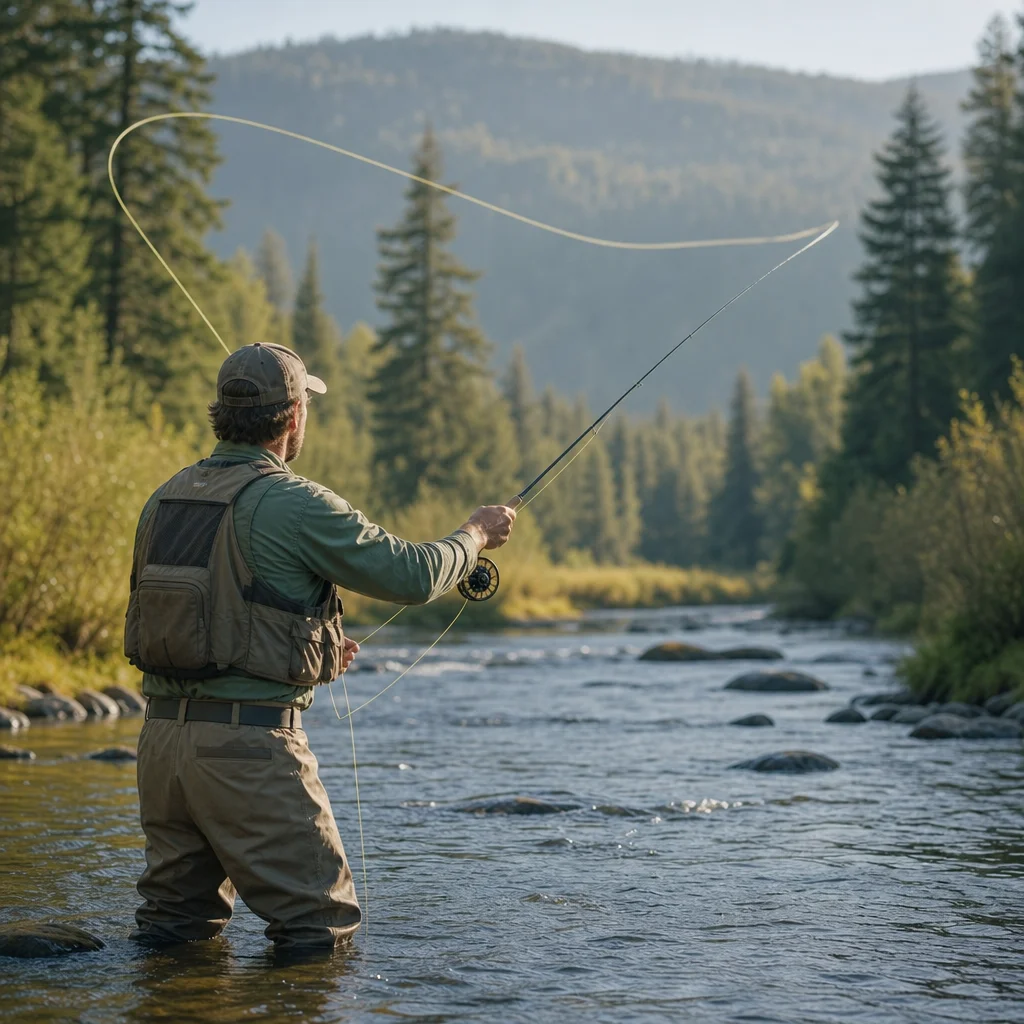
Low branches turn a routine cast into a choice between poor presentation and a fly lodged in the nearest alder. On small wooded streams, the most useful cast isn’t always the one that sends the line farthest; it’s the one you can repeat without striking branches, collapsing the leader, or constantly rebuilding your rig.
The reliable approach is to match the cast to the space behind and above you, then make accuracy easier by shortening the amount of line in motion. Sidearm, underhand, roll-cast, and bow-and-arrow casts each solve a slightly different problem.
Start by reading the casting lane
Before choosing a cast, look at three spaces:
- Behind you: Is there room for a back cast, or will the fly hit leaves, rocks, or a hiker?
- Above you: How much clearance is available for the rod tip and the moving line?
- In front of you: Is the target open, or will the fly need to travel beneath a branch tunnel?
Also check where your line and fly will land. A cast can clear the branch overhead and still sweep into a bush beside you. On narrow streams, changing your position by a few steps is often more reliable than forcing a difficult cast from the wrong angle.
Turn your body so your casting shoulder faces the target when possible. This gives a sidearm or underhand cast a cleaner path and keeps your rod hand from working across your body. Keep the rod tip low during the casting motion, but not so low that it drags through grass or strikes the water before the cast is ready.
Check your escape route: Before casting beneath a branch, confirm where the fly, leader, and line can travel if the cast falls short. A clear recovery path makes an imperfect cast much easier to manage.
Sidearm casting: the dependable first option
A sidearm cast is usually the best starting point when the problem is low overhead cover but you still have some room beside you. Instead of sending the line high behind and above you, you move it in a more horizontal plane.
How to make it accurate
- Point the rod toward the target and keep the rod tip relatively low.
- Make a compact back cast to the side, stopping the rod before it drifts behind you.
- Let the line straighten beside you rather than waiting for a high, dramatic loop.
- Drive the forward cast toward the target with a short, controlled stroke.
- Lower the rod tip as the fly lands so the leader settles quietly.
The key isn't simply holding the rod sideways. Your casting stroke still needs a clear stop. If you sweep the rod continuously, the line follows a wide, lazy path and often touches the very branch you were trying to avoid.
For a dry fly or lightly weighted nymph, a narrow sidearm loop can provide a clean delivery. With a heavier fly, open the loop slightly and shorten the stroke. A tight loop close to a branch has little margin for error, particularly when the fly carries extra mass.
When sidearm casting fails
If the line keeps hitting the bank behind you, your back cast is probably traveling too far rearward. Keep the motion in front of your casting shoulder and use less line. If the fly lands hard, reduce the force of the forward stroke and allow the leader to unroll rather than throwing the rod tip down at the target.
Sidearm casting is also a useful long-term habit because it keeps you from repeatedly scraping the rod through branches. Fewer collisions mean fewer damaged guides, frayed leaders, and flies that need replacing.
Underhand casting: useful when the ceiling is especially low
An underhand cast uses a compact motion that keeps the rod and line low. It works well when branches hang just above shoulder height and a normal sidearm cast still has too much vertical movement.
Keep the rod hand close to your body. Rather than lifting the rod high on the back cast, load it with a short, low movement and direct the forward stroke under the branch. The cast should feel deliberate, not hurried. The available room is small, so a long casting stroke usually creates more problems than it solves.
Underhand casting is especially effective with a short length of line outside the rod tip. Strip in until you have only the amount needed to reach the target, then add distance gradually if the cast is repeating cleanly.
Preserve accuracy with a low anchor
The line still needs to load the rod. If you pull the rod too far backward or lift it abruptly, the line may rise into the branches. Keep the back portion of the cast low and let the rod load through a compact change of direction.
A common mistake is trying to make an underhand cast behave like a miniature overhead cast. The better approach is to accept a shorter stroke and a lower line speed. You’re trading distance for control, which is usually the right trade on a tight bank.
Roll casting: when there’s no room behind you
A roll cast is the natural choice when the bank, brush, or your position leaves almost no room for a back cast. It uses the line on the water as an anchor, so you don’t need to lift a full loop behind you.
A reliable roll-cast sequence
- Bring the rod tip back slowly, forming a small D-loop behind the rod.
- Keep the line touching the water in a controlled anchor rather than lifting everything free.
- Move the rod forward in a smooth stroke.
- Stop the rod at the target and let the loop unroll.
- Lower the rod tip after the fly lands.
The D-loop should be large enough to load the rod but not so large that it reaches into the branches. A slow setup and a firm stop usually produce more accuracy than a fast, forceful cast.
Roll casts need an anchor. Wet grass, rough water, or a fly that catches on debris can make the line stick too much or too little. If the line won’t lift cleanly, shorten the amount outside the tip and reposition your feet. If the fly drags across the surface during the setup, lift the rod more smoothly and avoid snatching it upward.
A roll cast can also be converted into a change-of-direction cast when you need to redirect the line. Set the line on the water to one side, form the D-loop, and send the cast toward the new target. Keep the motion compact beneath the branches.
Bow-and-arrow casting: the last-resort precision tool
Bow-and-arrow casting is useful when branches close in from both sides and there’s no practical room to form a normal loop. You pull the line or leader back with your free hand, bend the rod, aim, and release the line so the fly shoots toward the target.
Use only a short amount of line for this cast. Hold the line or leader securely, keep the rod pointed toward the target, and release smoothly. The cast is more like a controlled sling than a conventional loop cast.
Accuracy and equipment care
Bow-and-arrow casting can be remarkably precise at short range, but it puts unusual tension on the leader, tippet, and fly connection. Avoid pinching a delicate section of tippet if you can hold a thicker part of the leader instead. Don’t overbend the rod, and don’t use the technique with a fly that could swing back toward your face or another angler.
It’s also easy to create a small knot when the line springs forward unevenly. After several attempts, inspect the leader and tippet rather than assuming every problem is a poor release. A tiny wind knot can become a breakoff on the next fish.
Choosing the right cast
Use this quick comparison when the bank gets crowded:
| Situation | First choice | Main adjustment |
|---|---|---|
| Open space beside you, blocked overhead | Sidearm | Keep the loop horizontal and compact |
| Very low branches above shoulder height | Underhand | Shorten the stroke and keep the rod low |
| Little or no room behind you | Roll cast | Build a controlled D-loop and anchor |
| Brush closes in on both sides | Bow-and-arrow | Use short line and moderate rod tension |
| Heavy or bulky fly | Sidearm or roll cast | Open the loop and reduce force |
| Delicate dry-fly presentation | Sidearm or short underhand | Slow the delivery and lower the rod tip |
These aren’t strict categories. You may use a roll cast to lift the line, then finish with a sidearm delivery. You may also change your position first and use a simpler cast. Reliable fishing often comes from removing difficulty rather than demonstrating every cast you know.
Common mistakes under branches
Carrying too much line
Extra line makes every tight-space cast harder. Strip in until the leader and only the necessary fly line are outside the rod tip. More line can be added once the target is reached consistently.
Watching only the fly
The fly gets your attention, but the moving line is what catches branches. Track the back cast, leader, and fly together. If you can’t see the line, use a shorter stroke and lower line speed until the cast becomes predictable.
Casting with the rod tip too high
A high rod tip sends the line toward the canopy. Keep the casting plane low, particularly during the back portion of a sidearm or underhand cast. The rod still needs to load, but it doesn’t need to point at the leaves.
Using force to compensate for poor alignment
Power rarely fixes a casting lane that’s pointed at a branch. Rotate your body, move your feet, shorten the line, or change casts. A softer, better-aligned stroke is usually more accurate and kinder to your tackle.
Ignoring the leader after a snag
A snag can stretch or abrade the leader even when nothing breaks. Run the leader and tippet between your fingers, checking for rough spots, kinks, and weakened knots. Replace the damaged section before continuing, especially if the next target requires a firm hook set.
Practice for repeatability, not distance
Practice these casts beside a lawn, driveway, or open bank using a yarn fly or other harmless practice substitute. Place targets at realistic stream distances and practice with obstacles above or beside the casting lane. A branch or overhead line you can see while practicing helps you learn where the loop travels.
Begin with a short line and a large target. Make ten controlled casts with one technique before changing anything. Then reduce the target size or add a little distance. This develops a repeatable stroke instead of encouraging you to throw harder whenever accuracy drops.
Maintain your equipment as part of the technique. Clean and inspect rod guides, replace nicked tippet, check knots after snags, and keep the fly line free of grit when conditions allow. A rough guide or damaged leader can make a good cast appear unreliable.
Practical next steps
On your next wooded stream, start by moving into the best available casting lane. Use a sidearm cast if you have lateral room, a roll cast when your back is blocked, an underhand cast when the ceiling is very low, and a bow-and-arrow cast only when the others can’t fit.
Keep the line short, make the stroke compact, and stop the rod cleanly. If a cast keeps snagging, don’t simply add power—inspect the casting plane, reposition your feet, and check the leader for damage. Those small adjustments make tight-bank casting more dependable long after the first successful delivery.