How to Diagnose Trout Refusing a Perfect-Looking Drift
A perfect-looking drift can still fail when the fly, leader, approach, depth, or timing is wrong for the trout. I’ll show you how to isolate one variable at a time and turn refusals into useful information on clear, technical water.
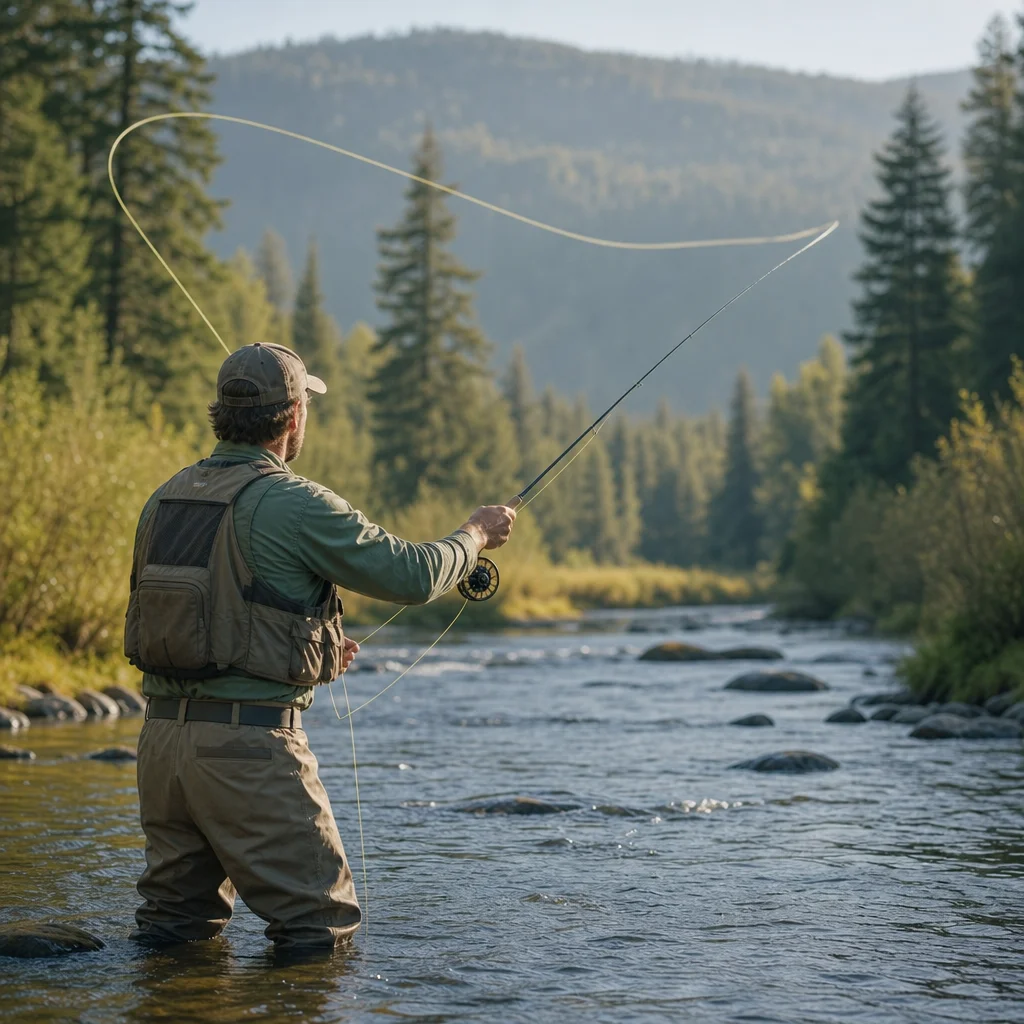
The fly lands softly, drifts at the right speed, and passes directly over a trout. The fish still ignores it. On clear, technical water, “perfect-looking” usually means perfect from the angler’s position—not necessarily from the trout’s window below the surface.
The useful response isn’t to change everything at once. Diagnose the refusal by asking what the fish can see, how the fly is moving, where it sits in the water column, and whether the trout is feeding at all. Change one factor, make another careful presentation, and treat the result as evidence.
First, confirm that you’re seeing a refusal
Not every ignored drift is a refusal. You may be casting to a fish that has stopped feeding, misidentified a shadow as a trout, or placed the fly just outside the fish’s feeding lane.
Watch the trout’s reaction closely:
- No visible response: The fish may not have seen the fly, may be out of range, or may not be feeding.
- A turn or short movement: The trout detected something but rejected the presentation, fly, or drift.
- A follow that stops: The fly may look plausible at first but reveal a problem as it approaches.
- A quick dart away: Your fly, leader, splash, or body movement may have alarmed the fish.
- A mouth movement without a clear take: The fish may have inspected or tasted the fly and rejected it before you reacted.
Make sure you’re watching the fish rather than only the indicator or fly line. In clear water, the trout’s body language often tells you which part of the presentation needs attention.
Use the trout’s reaction to choose your first adjustment
A refusal is more useful when you classify it before changing flies. Start with the smallest change that addresses the most likely problem.
| What you observe | Likely issue | First adjustment |
|---|---|---|
| The fish never looks | Wrong lane, depth, or feeding assumption | Recheck the target and water column |
| The fish looks but doesn't move | Fly is unconvincing or too visible | Alter fly size, profile, or leader presentation |
| The fish moves, then turns away | Drift, drag, depth, or pattern mismatch | Improve movement or change one fly characteristic |
| The fish follows downstream | Fly or leader may be noticeable | Refine angle, tippet, or pattern size |
| Several fish ignore the same drift | The problem may be depth, timing, or activity | Reassess the hatch and feeding behavior |
This prevents the common cycle of changing flies repeatedly while leaving the real problem untouched.
Check the fly’s movement from the trout’s perspective
A fly can travel at the same speed as the surface and still move incorrectly beneath it. Subsurface currents often differ from what you see above the water. A nymph may lift, swing, or accelerate while the indicator appears to drift neatly. A dry fly may skate slightly, twist on its tippet, or drag across a seam too subtly for you to notice.
Look for these movement problems:
Drag across a current seam
If the fly moves faster or slower than the water around it, the trout may see an unnatural pull. This is especially common when your line crosses faster current than the fly’s lane.
Try a higher reach cast, a mend made before the line settles, or a different casting angle that keeps less line on conflicting currents. The best mend is often the one you make early and lightly, before drag has started.
A fly that rises or sinks at the wrong time
A nymph may be drifting correctly along the bottom but lifting as it enters slower water. A dry fly may sit well until its leader pulls it toward an adjacent current. Watch the fly’s depth through the entire drift, not just its entry point.
If the trout reacts near the end of the drift, the problem may be the fly’s changing depth or speed rather than its initial position. Shorten the drift, alter weight, adjust the cast, or approach from a better angle before abandoning the pattern.
Tippet twist or pattern rotation
Small flies can rotate when the tippet is twisted, the knot is poorly aligned, or the fly is tied with materials that act like a small propeller. The presentation may look natural at a distance while the fly presents an odd silhouette up close.
Inspect the fly after a few casts. Replace a damaged pattern, straighten the tippet, and check whether the knot is allowing the fly to sit as intended.
Reconsider depth before changing the fly
Trout often feed within a narrow vertical band. Being six inches too high can be as ineffective as being several feet too high, particularly when the fish is holding beneath broken surface water or feeding on nymphs close to the bottom.
A good surface drift doesn't prove that a subsurface fly is in the right place. Similarly, a weighted nymph that reaches the bottom may be too deep if it repeatedly bumps rocks, hangs in weeds, or moves below the feeding lane.
Use the trout’s position and behavior as clues:
- A trout holding high and tracking surface activity may respond better to a dry fly or lightly presented emerger.
- A fish stationed near the bottom may require more depth, but not necessarily more weight; a longer leader or altered angle may be the better adjustment.
- A fish moving between levels may be responding to emerging insects, making a suspended or soft-bodied pattern more useful than a heavier imitation.
- If the trout moves only when the fly is near a particular seam, focus on reaching that lane consistently rather than covering more water randomly.
Change depth in controlled steps. Add or remove weight, adjust leader length, alter the indicator position if you’re using one, or change the cast angle. Avoid making a large adjustment that changes both depth and drift speed unless you have a clear reason.
Decide whether the leader is the problem
Clear water gives trout more time to inspect the connection between fly and angler. Leader visibility can matter, but it’s easy to blame the leader when the actual problem is drag or an inaccurate fly.
Look for evidence before changing it. If the fish turns away as the tippet enters its window, or if multiple trout reject the same fly despite a convincing drift, a leader adjustment is reasonable. If the fish never notices the fly, changing tippet diameter won’t solve a depth or presentation problem.
Potential adjustments include:
- Extending the tippet when the water is clear and the fly can be presented accurately.
- Reducing tippet diameter when the fly’s size, wind, and knot strength allow it.
- Using a more supple or appropriately stiff section when turnover or drag is the issue.
- Replacing abraded or cloudy material that may be more conspicuous than intended.
- Checking knots and connections after every change.
Thinner isn’t automatically better. It can reduce visibility, but it may also make turnover less precise, increase break-offs, or allow a larger fly to behave poorly. Match the leader to the fly, the current, the required cast, and the size of fish you’re likely to encounter.
Reevaluate your approach and casting position
A trout can reject a flawless drift because it saw you before the fly arrived. Clear, technical water magnifies small mistakes: a bright shirt above the bank, a shadow crossing the fish, a rod tip lifted too high, or repeated false casts in the trout’s view.
After one or two refusals, ask whether you’re standing in the right place. A slightly longer route along the bank may let you cast from downstream, reduce line over the fish, or keep your profile below the background. Sometimes the most effective fly change is moving several feet and waiting for the water to settle.
Approach considerations include:
- Keep your movements slow and deliberate.
- Stay low when the bank or surface angle exposes you.
- Avoid false casting directly over a visible fish.
- Cast from an angle that keeps line and leader away from the trout’s primary view.
- Use the current to carry the fly into position rather than forcing a long, noisy cast.
- After an alarmed fish reacts, give it time before presenting again.
If the trout spooks repeatedly, stop casting at it. Mark its position, move away, and return after conditions or light change if that’s practical. Repeatedly testing an alarmed fish rarely produces useful information.
Check whether the trout is actually feeding
A perfect drift can't persuade a fish that isn’t interested in eating. Trout may hold in feeding water while resting, watching for food, avoiding bright conditions, or responding to activity that isn’t obvious from the surface.
Look for feeding signals rather than assuming that a visible fish is available:
- Regular rises or subtle surface dimples suggest consistent surface activity.
- Repeated sips in one lane can indicate small insects or emerging insects.
- Short, deliberate movements within the current may signal subsurface feeding.
- A stationary fish with no tracking, body movement, or mouth activity may not be feeding actively.
- Multiple trout refusing different presentations may indicate a timing or activity problem rather than a fly problem.
If the fish isn't showing interest, reduce the amount of disturbance. Observe for a few minutes, inspect the surface, and watch other water for feeding activity. Moving to a different fish can be a better decision than making increasingly elaborate casts to one inactive trout.
Change the fly only after you understand the refusal
Fly changes are useful when they test a specific idea. They’re less useful when they become a collection of guesses.
Change one characteristic at a time:
- Size: Go smaller when the fish inspects the fly closely or the natural food is tiny. Go larger when the fish is feeding on a prominent item and your imitation is difficult to track or recognize.
- Profile: Try a slimmer, fuller, nymph-like, or emerger-style silhouette when the fish follows but won’t commit.
- Color: Adjust color when the fly’s outline is right but the fish consistently turns away at close range.
- Buoyancy or weight: Alter how the fly sits in or moves through the water when depth or emergence appears to be the issue.
- Movement: Choose a pattern that better matches the behavior of the food rather than relying on color alone.
After each change, make enough presentations to judge it fairly. One poor cast doesn’t disprove a pattern, and one clean drift doesn’t prove that the fly is correct.
Use a controlled troubleshooting sequence
When a visible trout refuses several good presentations, work through this order:
1. Verify the target
Confirm that the fish is a trout, that it is still present, and that your fly is entering its feeding lane.
2. Watch the drift closely
Look for drag, unnatural acceleration, poor depth, leader movement, or a fly that rotates.
3. Improve your position
Change your angle, reduce line over the fish, and limit false casts before making another presentation.
4. Adjust depth
Make a small, deliberate change based on where the fish is holding and how it is feeding.
5. Alter one fly characteristic
Change size, profile, color, weight, or buoyancy—not all of them together.
6. Reassess timing
If the fish still shows no interest, determine whether it is feeding before continuing to experiment.
This sequence keeps each cast informative. If you change position, depth, fly, and tippet at once, a successful cast won’t tell you which adjustment solved the problem.
Know when to stop solving the same fish
Persistence is useful until it becomes predictable disturbance. If the trout has seen repeated casts, moved away, or stopped displaying feeding behavior, your next adjustment may be less valuable than a quiet reset.
Move to another fish, change the angle significantly, or wait for a meaningful change in light, wind, hatch activity, or water disturbance. Technical trout fishing rewards patience, but patience doesn’t require presenting the same flawed idea indefinitely.
Practical next steps
When a trout refuses a drift that looks perfect, use this short checklist:
- Did the trout actually see the fly?
- Did the fly move naturally through the entire drift?
- Was it in the feeding lane and at the right depth?
- Could the fish see the leader, line, angler, or shadow?
- Did the fish inspect, follow, turn away, or ignore the presentation?
- Is the trout feeding actively enough to justify more casts?
- What single change will test your best current theory?
Treat the refusal as information rather than a verdict on the fly. Once you separate movement, depth, visibility, approach, timing, and feeding behavior, a “perfect-looking” drift becomes easier to diagnose—and much less mysterious.