How to Improve When You Keep Fishing the Same Water Too Long
When the same run keeps producing fewer takes, I’ll show you how to diagnose the slowdown, set sensible move-on rules, and turn a stagnant session into useful practice without abandoning productive water too soon.
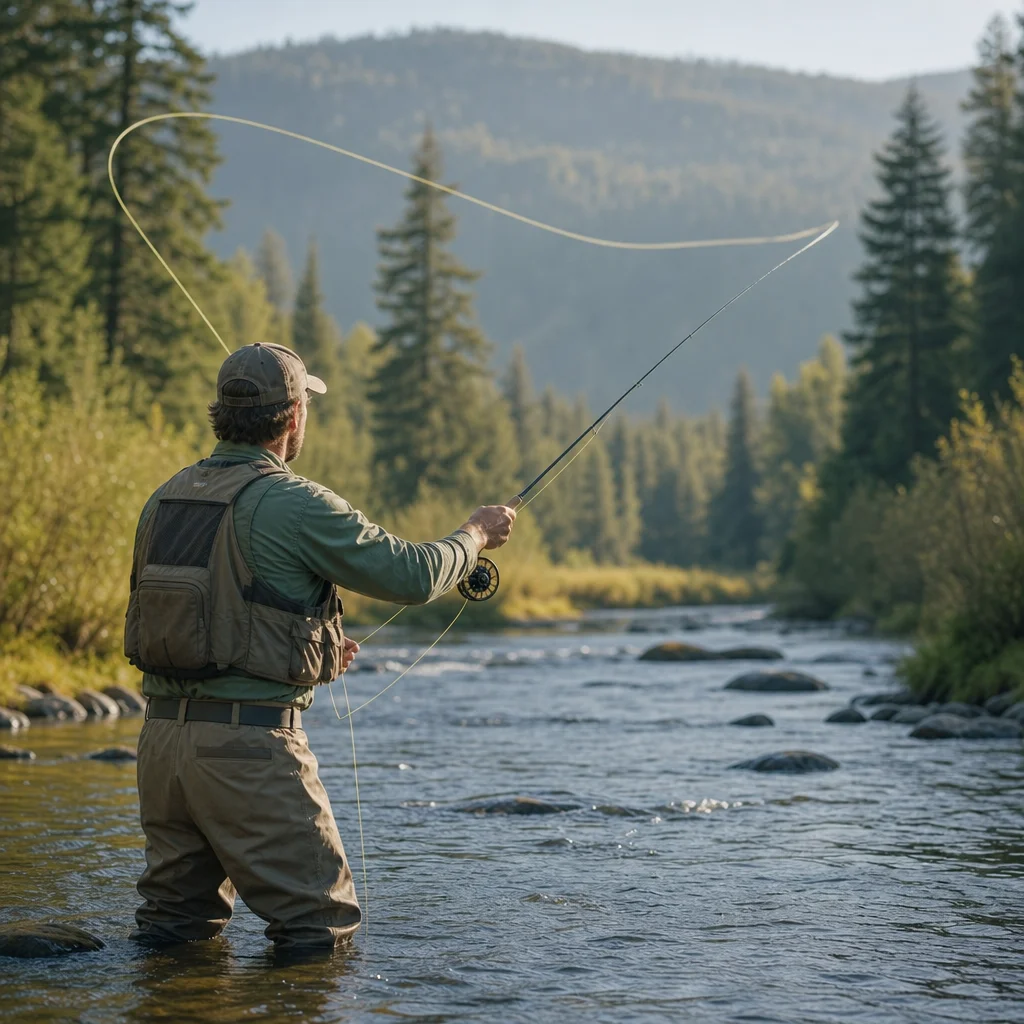
The first few casts in a familiar run often feel productive: you know where the current breaks, where trout may hold, and how to reach the likely lies. Then the action slows. Instead of moving, you make another cast, change flies repeatedly, or keep covering the same seam because it produced earlier.
That habit is common, and it isn’t always wrong. Good water can hold more than one fish, and a careful second pass sometimes pays off. The problem is staying long enough that you stop learning. When every cast becomes a slightly altered version of the last one, you’re no longer fishing methodically—you’re waiting for the water to change its mind.
Recognize when a run has stopped giving you information
The most useful question isn’t simply, “Have I caught a fish here?” Ask instead: Is each new attempt testing something different?
You may still be making good casts, but if the answers remain the same, the run is probably no longer teaching you much. Signs include:
- You’ve covered the main holding areas from sensible angles.
- Your fly has drifted at the right depth and speed several times.
- You’ve adjusted one meaningful variable, such as position, depth, or presentation.
- You’re repeating casts because you don’t know what else to try, not because the fish are showing interest.
- You’re becoming focused on forcing a take rather than observing the current and the trout’s response.
A refusal is useful when you can explain it. Perhaps the fly was too large, the drift dragged, or you approached from the wrong side. A refusal becomes less useful when you keep repeating the same presentation and merely hope the next cast will be different.
Separate a slow run from a poorly fished run
Before you leave, make sure the problem isn’t an obvious execution error. Moving too soon can cost you a fish that was available all along.
Check your position
Look at the angle of your line and the direction of your drift. If your line lands across conflicting currents, the fly may drag almost immediately. Moving a few steps, lowering the rod, or changing the casting angle may improve the presentation more than changing flies.
Check your depth
A fly that rides above the feeding level may look perfectly natural to you while passing well over the trout. If the water is deep, fast, or broken, give your presentation a reasonable chance to reach the likely holding zone. If you can’t tell whether you’re fishing too high or too low, make one deliberate depth adjustment rather than rotating through several flies.
Check your coverage
A single seam can contain several lanes. Your first casts may reach only the near edge, while trout farther out remain untouched. Work from close to far when practical, and avoid wading farther than necessary before you’ve covered water near your feet.
Check your approach
A careless step, bright movement, or shadow across calm water can end the opportunity. If you suspect the fish are aware of you, changing flies probably won’t solve the problem. Pause, lower your profile, reposition carefully, or give that lie time before trying again.
Once you’ve corrected the most likely mistake, make a small number of purposeful casts. If the result doesn’t change, you have better grounds for moving on.
Use a reset sequence instead of endless experimentation
When a run goes quiet, follow the same short sequence each time. A repeatable process keeps frustration from controlling your decisions.
1. Observe before casting again
Watch the surface, current, banks, and nearby water for a minute. Look for rising fish, flashes, drifting food, bait movement, or changes in the current. Even when nothing obvious appears, observation can reveal that the productive water is somewhere other than where you’ve been casting.
2. Change one major variable
Choose the adjustment most connected to the evidence. For example:
- If the drift is dragging, change your position or mend rather than immediately changing flies.
- If the fly is likely too high, adjust depth.
- If fish are rising but ignoring your offering, change size or pattern.
- If you’re reaching only one side of the seam, change your casting angle.
Changing several things at once makes it difficult to know what worked. You may catch a fish, but you won’t know whether the fly, depth, angle, or timing made the difference.
3. Make a focused set of casts
Give the adjustment enough attempts to produce useful evidence. That doesn’t mean launching dozens of casts into the same water. Cover the likely lane with clean, controlled presentations, and pay attention to how the fly behaves.
4. Decide what the result means
A take confirms that your new approach reached at least one willing fish. A refusal doesn’t necessarily mean the water is empty, but repeated refusals after a sound adjustment lower the value of staying.
This sequence turns “try something else” into a controlled troubleshooting process. It also gives you a clear reason to leave when the evidence points elsewhere.
Set your move-on point: After you’ve checked position, depth, and drift and made one deliberate adjustment, decide in advance how many focused attempts you’ll give the run before exploring new water.
Create move-on rules that fit the water
There is no universal number of casts that tells you when to leave. A rule that works on a small pocket water stream may be wasteful on a long, complex pool. Build your decision around the kind of water you’re fishing.
Short pocket water
Small pockets usually deserve a quick, efficient presentation. Cover the entry, the soft edge, and the deeper cushion behind structure if you can reach them cleanly. If the likely lies have been covered and nothing responds, move. The next pocket may offer more information than another dozen casts in the first one.
Long runs
A long run needs a coverage plan. Break it into sections based on current speed, depth, structure, or bankside features. Work each section rather than standing in one place and repeatedly reaching for the same line.
If the run is broad enough, changing your position may open an entirely different presentation. Before abandoning it, ask whether you’ve truly covered the water or only the easiest part to reach.
Deep pools and complicated seams
Complex water can justify a longer stay, especially when several currents overlap. Give yourself a reason for each change: a different lane, angle, depth, or fly. If you’re still standing in one spot making nearly identical casts, you probably aren’t using the pool’s complexity to your advantage.
Learn more water without abandoning good water too quickly
Moving on doesn’t have to mean walking away permanently. Think of it as gathering information in stages.
Start with a high-confidence lie, such as a visible current break or a shaded edge. If it doesn’t produce after a sound presentation, move to the next likely feature. You can return later with a different angle, light level, or water condition.
This approach prevents two opposite mistakes. You don’t abandon every spot after one imperfect cast, but you also don’t let one earlier fish turn the entire day into a campaign against a single rock.
A useful rhythm is to fish a promising area thoroughly enough to understand it, then explore nearby water before returning. The return visit may be more productive because you now know how the current behaves, which lanes you covered, and where you still have questions.
Keep a simple record of your decisions
You don’t need a detailed fishing journal. A few notes can expose patterns that are difficult to notice during a session:
- Where you started and where you moved.
- Which water produced activity.
- What changed before a take or refusal.
- Whether fish responded to location, depth, fly, or presentation.
- How long you stayed after the action slowed.
The most valuable note may be, “Stayed too long after covering the near seam.” That gives you a specific correction for next time. Avoid recording only the fly name or the number of fish. Those details matter less than the decisions that led to the result.
Common mistakes that keep you stuck
Changing flies before fixing the drift
A new pattern can’t compensate for a fly that is dragging or never reaching the feeding zone. Presentation problems deserve attention first.
Treating one successful cast as a permanent answer
A fish taking one fly from one lane doesn’t prove that every trout in the run wants the same thing. The fish may have responded to depth, speed, or location more than pattern.
Moving only after frustration peaks
When you wait until you’re irritated, your next move may be random. Set a decision point while you’re still calm, then follow it.
Exploring without a plan
Walking farther isn’t automatically productive. Choose water you can fish thoughtfully, and notice why it differs from the run you left. You’re trying to improve your reading of the stream, not simply increase your mileage.
Confusing persistence with discipline
Persistence means staying engaged with a sensible process. Discipline sometimes means stopping before the process turns into repetition.
A practical decision checklist
Before making another cast into the same water, ask:
- What am I testing with this cast?
- Is my fly drifting at the likely feeding depth and speed?
- Have I covered the important lanes, or only the easiest one?
- What single adjustment would address the strongest clue?
- How many focused attempts will I give that adjustment?
- Where will I fish next if the result doesn’t change?
If you can answer those questions, staying may be reasonable. If you can’t, move a short distance and look for water that gives you a clearer problem to solve.
Improvement comes from both better casts and better decisions about where to spend them. Give productive water a fair test, correct the obvious errors, and then let the stream offer you a new question. Sometimes the best way to understand one run is to stop fishing it for a while.