Turn a Bad Wind Day Into a Useful Casting Practice Session
I’ll show you how to use a difficult wind day to sharpen loop control, casting plane, timing, target selection, and restraint, with a small set of drills that don’t require extra gear or heroic distance.
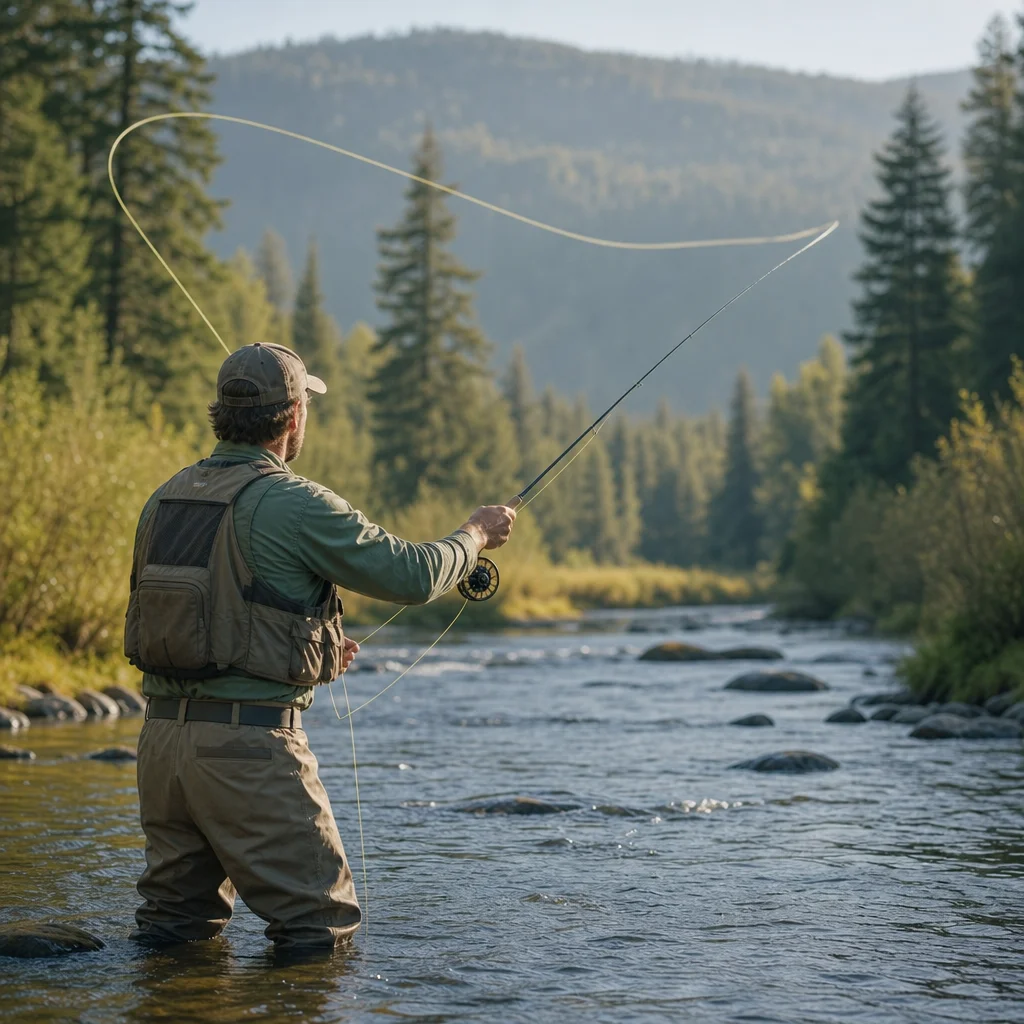
Wind can turn a comfortable cast into a tangle, a slap on the water, or a fly heading somewhere you didn’t intend. The tempting response is to add power and try to cast farther. Usually, that gives the wind more line to punish.
A bad wind day can still become a useful practice session. You can work on the parts of casting that matter in every condition: compact loops, a sensible casting plane, clean timing, realistic targets, and the judgment to stop forcing a cast that isn’t available.
The goal isn’t to defeat the wind. It’s to make better decisions inside it.
Start by Making the Session Safer
Before practicing, decide which directions are acceptable for your backcast and forward cast. Wind can move a fly unpredictably, especially when you’re working with a weighted streamer, a beadhead nymph, or a large bushy dry fly.
Choose an open area with a clear casting lane. Keep other people well outside the path of the fly and line, and wear eye protection. If the wind is strong enough that you can’t maintain control of the rod or know where the fly is traveling, casting practice should wait.
Check Your Casting Window
Before you begin, check the current forecast and local conditions for gusts, storms, cold exposure, and access restrictions. Pick a position where an errant cast won’t cross a trail, road, boat lane, or another angler.
You don’t need a river full of rising trout for this session. A safe grass field, shoreline, or open bank can be enough. If you’re practicing on the water, use a blunt or yarn practice fly when appropriate and avoid false casting near people, trees, and overhead hazards.
Use the Wind to Expose Loose Loops
Wind quickly reveals whether your loop is compact and stable. A wide loop has more surface area for the wind to catch, so it tends to drift, collapse, or blow sideways. A narrow loop gives you better control, even when it doesn’t travel as far.
Start with short casts. Hold less line outside the rod tip and make smooth, controlled strokes. Watch the loop rather than trying to increase distance. Look for these signs:
- The line travels in a narrow path.
- The loop keeps a recognizable shape instead of spreading open.
- The leader follows the fly without piling up excessively.
- You don’t need a sudden burst of force to straighten the line.
If the loop opens, don’t immediately cast harder. First, shorten the line and reduce the size of your stroke. A smaller casting motion often gives the rod a clearer load and leaves less line for the wind to disrupt.
Drill: Short-Line Loop Control
- Begin with only a short length of line outside the rod tip.
- Make a few relaxed backcasts without trying to shoot line.
- Pause long enough for the line to straighten, but don’t wait for it to fall.
- Send the line forward with a compact stroke.
- Repeat while changing only one variable at a time: casting speed, stroke length, or line length.
This drill is intentionally plain. It teaches you to recognize a controlled loop before adding distance, drift, or a complicated presentation.
Adjust the Casting Plane Instead of Fighting the Wind
Many anglers instinctively cast overhead, regardless of wind direction. That can place the line and fly in the most exposed part of the air. A lower or side-oriented casting plane may give you more control, provided it keeps the fly safely away from your body and surroundings.
If the wind is blowing toward your casting side, be especially cautious. A side wind can push the fly and line toward you during either the backcast or forward cast. Changing your position may be wiser than trying to repair the cast with a stronger stroke.
Think through the entire loop:
- Where will the backcast travel?
- Where will the forward cast travel?
- Which direction will a gust push the fly?
- Can you keep the fly on the safe side of your body?
- If the cast fails, where will the line end up?
A useful practice position is one that lets the wind carry the line away from you rather than across you. The best position depends on the wind, bank, vegetation, and available space, so treat repositioning as part of the technique rather than as a last resort.
Drill: Three Casting Planes
Choose a short target and work through three comfortable planes:
- A normal overhead cast.
- A lower side cast with the line traveling away from you.
- A compact roll-style or water-loaded cast, where conditions and space allow.
You’re not trying to prove that one plane always wins. You’re learning which plane gives you the safest, most repeatable loop in the current wind. If a plane sends the fly toward your body or causes repeated tangles, remove it from the session.
Practice Timing Without Waiting for Perfect Conditions
Wind makes timing errors more obvious. If you begin the forward cast before the backcast has straightened, the rod won’t load as well and the loop may collapse. If you wait too long, the line can fall, catch grass, or lose the tension needed for the next stroke.
The solution isn’t to memorize a universal pause. The correct timing changes with line length, rod action, casting plane, and wind. Instead, listen and watch. The line should be moving into position before the next stroke begins, and your hand should accelerate smoothly rather than jerk the rod into motion.
Drill: One Change at a Time
Make several casts with a short amount of line. Then add a small amount of line and repeat. Notice how the required timing changes. If the wind is pushing the line, experiment with a slightly more deliberate pause on the cast that faces the wind, while keeping your stroke smooth.
Don’t make the pause so long that the line drops. You’re looking for the moment when the line has nearly straightened and the rod can load into the next motion.
A simple way to test timing is to stop shooting line altogether. If you can make a controlled pickup and delivery with the line you have out, you can then add distance without changing the basic rhythm.
Replace Distance Goals With Target Goals
A windy day is a poor time to measure success only by how much line you can carry or shoot. Distance can encourage you to use more false casts, more effort, and less judgment. Those aren't always useful fishing habits.
Set several targets at practical fishing distances. They can be patches of grass, leaves, cones, or marks on the bank. Keep them varied rather than arranging them in a straight line.
Practice delivering the fly to:
- A target directly in front of you.
- A target slightly to one side.
- A target that requires a lower trajectory.
- A target that can be reached with a short cast and a good position.
- A target you decide not to cast to because the angle is unsafe or unrealistic.
That last target matters. Good casting includes declining bad opportunities. On a river, moving a few steps, shortening the cast, waiting for a gust to ease, or leaving a difficult lie alone may produce a better result than forcing the line through the air.
Work on Tactical Restraint
The minimalist approach is to carry fewer variables into the wind. Use a familiar rod and line. Start with a simple, manageable practice fly. Keep the leader from becoming unnecessarily long or complicated while you’re working on mechanics.
This isn’t a rule that every fishing situation requires the same setup. It’s a way to separate casting practice from gear troubleshooting. If a large fly, long leader, or extra line makes the cast difficult, change one item and observe the result rather than changing everything at once.
Use a simple decision sequence:
- Can you make the cast safely?
- Can you keep the fly away from your body and other people?
- Can you present the fly with the line and leader under control?
- Is the target valuable enough to justify the difficulty?
- Would repositioning or shortening the cast improve the odds?
If the answer to the first two questions is no, don’t cast. If the later answers are no, choose a different target or practice a different angle.
Learn From the Tangles
Tangles are useful when you diagnose them instead of simply stripping them out and starting again. After each failure, identify what happened immediately before it:
- Did the loop open because the stroke was too wide?
- Did the line collapse because the forward cast started too early?
- Did the leader land in a pile because the delivery was too abrupt?
- Did the fly drift across your body because of the casting plane?
- Did you carry more line than the conditions allowed?
- Did you keep casting after the wind had already changed?
Make one adjustment, then repeat the same cast. If you change your stroke, position, line length, and fly all at once, you won’t know which decision helped.
Sometimes the answer isn't mechanical. A gust may have arrived at the wrong moment, or the target may have required a poor angle. Recognizing an uncontrollable event keeps you from overcorrecting a sound cast.
A Compact Wind-Day Practice Plan
You can get useful work done in 20 to 30 minutes:
- Safety check: Choose a clear casting lane and identify the safest casting direction.
- Short loops: Make controlled casts without shooting line.
- Plane changes: Compare overhead, low side, and water-loaded options where safe.
- Timing: Add small amounts of line while maintaining loop shape.
- Targets: Cast to several practical targets rather than chasing maximum distance.
- Restraint: Deliberately reject one unsafe or low-percentage cast.
- Review: Note the wind direction, the most reliable plane, and the mistake that appeared most often.
Stop while you can still make clean casts. Fatigue tends to add force, widen the stroke, and reduce awareness of where the fly is traveling. A short session with clear observations is more valuable than an hour of increasingly desperate line management.
Take These Lessons Back to the River
A useful wind session should leave you with a smaller, clearer set of choices. You should know how much line you can control, which casting plane keeps the fly safest, how your timing changes with line length, and when a target isn’t worth forcing.
On your next windy trout day, begin close, cast compactly, and choose position before power. Keep the setup simple enough that you can identify the real problem. Let the wind show you where your loop, timing, and judgment need work—and then practice only that part.