A Simple Debrief for Improving After Every Trout Trip
Small details from a trout trip often explain more than the final catch count. I’ll show you how to review conditions, choices, flies, presentations, mistakes, and one next-trip experiment without turning fishing into paperwork.
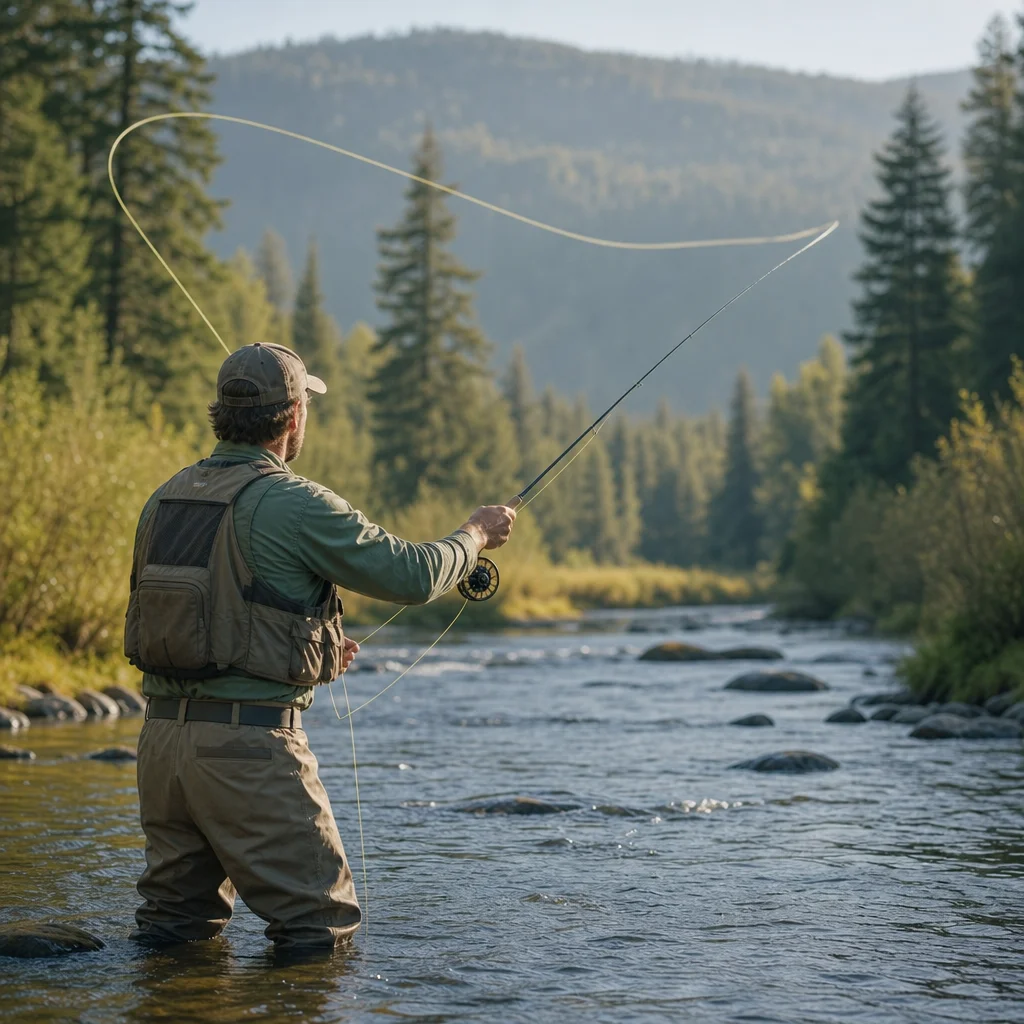
A trout trip can feel unproductive even when it gives you useful information. Maybe the fish rose once, followed a fly without taking, or disappeared after you changed position. If you only remember the number of trout caught, those clues are easy to lose.
A short debrief helps you turn a confusing outing into a clearer next step. The goal isn’t to produce a perfect fishing report. It’s to identify what the water gave you, what you did with that information, and what you’ll test next time.
Keep the debrief short and consistent
Write your notes soon after you leave the water, while the sequence is still clear. Five to ten minutes is enough. Use a pocket notebook, phone note, or a repeatable form—whatever you’re most likely to use.
A useful debrief answers six questions:
- What were the conditions?
- What did you decide, and why?
- Which flies and presentations did you use?
- What responses did you get?
- What went wrong or remained uncertain?
- What is one experiment for the next trip?
The final question matters most. If you list ten changes, you won’t know which one made a difference. Choose one manageable experiment and leave the rest for later.
1. Record the conditions before interpreting them
Start with observations rather than conclusions. Write down the details that could have affected trout behavior:
- Date and approximate fishing time
- Stream, river section, lake, or pond
- Water level and clarity
- Weather, light, wind, and recent changes
- Air and water temperature, if you measured them
- Current speed, depth, and notable water features
- Signs of insect activity or baitfish
- Whether other anglers were present
You don’t need scientific precision for every item. “High and slightly stained” is more useful than leaving water conditions blank, even if you didn’t measure the level. The purpose is to create a pattern you can compare later.
Separate what you saw from what you assumed. “No visible surface activity” is an observation. “The trout weren’t feeding” is an interpretation that may or may not be correct. Keeping those apart makes troubleshooting easier.
2. Review your decisions in sequence
Rather than asking whether the trip was good or bad, reconstruct the important choices. Note where you started, how long you stayed, when you changed flies, and when you moved.
For example:
- You began with a dry fly because the water was low and clear.
- After twenty minutes without a response, you added a dropper or changed to a subsurface pattern.
- You saw one refusal near a bank seam.
- You moved upstream but continued fishing the same type of water.
- You finished by testing a deeper run.
This sequence reveals more than “the dry fly didn’t work.” Perhaps the fly was wrong, but perhaps the fish were in a different depth, your drift was poor, or you changed locations before fully testing the first one.
Ask what evidence supported each choice
For every major change, ask:
- What did I observe?
- What did I think it meant?
- What did I change?
- What happened afterward?
This prevents hindsight from making every decision look obvious. You’re not trying to criticize yourself for choosing incorrectly. You’re checking whether the choice was reasonable given the information available at the time.
3. Track flies without treating them as magic solutions
Record the fly type, size, color, and approximate time used. Include whether it was fished dry, beneath an indicator, tight to the bottom, swung, stripped, or presented another way.
A simple entry might look like this:
Small dark dry fly, early afternoon, upstream dead drift, two refusals, no solid takes.
That note is more useful than “dry fly failed.” It leaves room for several explanations: the pattern, size, position, drag, leader arrangement, or timing.
When a fly produces a response, record the response precisely:
- A trout rose but refused
- A fish followed and turned away
- A take occurred but the hook didn't hold
- The fly was lost to a snag
- Several fish responded in one type of water
- No visible response occurred
A successful fly can still hide a presentation problem. If a subsurface pattern catches one trout after a long search, that doesn’t prove it was the only correct choice. It does, however, give you a useful starting point for future comparisons.
4. Describe the presentation, not just the fly
Many debriefs overemphasize fly selection because flies are easy to name. Presentation is harder to describe, but it often explains the result.
Note the practical details:
- Direction of the cast
- Distance from the target
- Whether the fly landed above, beside, or beyond the likely holding water
- Drift length
- Amount of drag or slack
- Retrieve speed, if applicable
- Depth and weight
- Leader or tippet changes
- How many casts you made before moving
If you had a refusal, ask whether the trout saw the fly in a convincing way. If you had no response, ask whether the fly reached the depth or lane where a fish could reasonably find it.
A good debrief uses neutral language. Instead of writing “the fish ignored my fly,” try “the fly passed through the likely lane six times with no visible response.” The second version gives you something to adjust.
5. Separate mistakes from unknowns
Not every unsuccessful outcome is a mistake. Some trips simply provide limited evidence. Mark the difference between these three categories:
Clear mistake
You can identify a specific problem, such as leaving a loose loop that caused repeated drag, failing to check a damaged tippet, or wading through water you intended to fish.
Plausible problem
You have a reasonable suspicion but not enough evidence. The fly may have been too large, the presentation may have been too fast, or the fish may have been holding deeper.
Unknown
You didn’t see enough to explain the result. There may have been no feeding activity, too much disturbance, or simply too few opportunities.
This distinction keeps you from overcorrecting. A clear mistake deserves a direct fix. A plausible problem deserves a controlled experiment. An unknown should be recorded without pretending you solved it.
6. Use missed fish as information
Missed fish are frustrating, but they can reveal where your system needs attention. Record what happened immediately before and after the miss.
Consider whether:
- The fish was hooked briefly or never connected
- You struck too hard or too late
- The hook point may have been dull
- The fly was fouled
- The line or leader was tangled
- The fish took during a difficult angle or long drift
- You changed rod position before the hook was secure
If several misses occurred with the same fly or technique, inspect the equipment and mechanics before replacing the pattern. If misses happened across different setups, your timing, line control, or hook-setting approach may deserve attention.
You don’t need to turn this into a judgment about your skill. “Three short connections on long downstream drifts” is a useful note. “I’m terrible at fishing” isn't a troubleshooting diagnosis.
7. Choose one experiment for the next outing
Your experiment should be specific enough to recognize and small enough to complete. Good examples include:
- Fish the same fly one size smaller in similar water.
- Make three controlled casts from a lower position before moving.
- Start with a subsurface pattern if there’s no surface activity after scouting.
- Replace the tippet before the first cast rather than after a break-off.
- Spend ten minutes comparing a shallow seam with a nearby deeper pocket.
- Practice one reach cast or mend on every suitable drift.
Avoid experiments that change everything at once. If you change fly, depth, location, retrieve, and leader simultaneously, a better result won’t tell you which change helped.
A useful experiment has three parts:
- Situation: When will you try it?
- Action: What exactly will you do?
- Observation: What result will you record?
For example: “If the water is clear and there’s no surface activity, I’ll fish a smaller subsurface fly through two different depths and record which lane produces a response.”
A reusable post-trip debrief
Copy this template into your notes:
Trip basics
- Location:
- Date and time:
- Target species:
- Time actually spent fishing:
Conditions
- Water level and clarity:
- Weather and light:
- Wind:
- Temperature, if known:
- Visible insects, baitfish, or surface activity:
Decisions
- Where did I start, and why?
- What water did I focus on?
- When did I move or change tactics?
Flies and presentations
- Fly, size, and setup:
- Depth and retrieve or drift:
- Number and type of responses:
- Where the presentation worked or failed:
Problems and uncertainties
- Clear mistake:
- Plausible issue:
- Still unknown:
Next experiment
- On the next similar trip, I will:
- I’ll look for this result:
Look for patterns after several trips
One debrief can be misleading. Review several entries before changing your general approach. You may notice that refusals occur when your casts land too close, that your best responses come from deeper water, or that you routinely stay too long in unproductive areas.
Look for repeated combinations rather than isolated successes. A single trout on a particular fly is interesting. Similar responses on that fly, in similar water, under similar conditions, are stronger evidence.
Also look for process patterns that have little to do with trout behavior. You may discover that rushed rigging causes tangles, that fatigue affects your casting late in the day, or that you stop observing the water after changing flies. Those are often easier to improve than fish behavior—and more reliably within your control.
Practical next steps
After your next trout trip, spend a few minutes recording conditions, decisions, flies, presentations, and responses. Label each problem as a mistake, a plausible explanation, or an unknown. Then choose one experiment for the next outing.
The best debrief isn’t the longest one. It’s the one that helps you make a clearer decision on the water next time.